
Quiz
MD5 - 6 Chemical Degradation by Oxidation and Hydrolysis
This quiz has question types that open in the usual player.
Questions in this quiz (9)
1Select the two most common chemical degradation methods.
- AOxidation
- BHydrolysis
- CPhotolysis
- DIsomerisation
- EPolymerisation
2A negative slope in a pH-rate profile indicates specific [blank_start]base[blank_end] catalysis, while a positive slope indicates specific [blank_start]acid[blank_end] catalysis. A water reaction can contriute to a flat part ([blank_start]pH independent part[blank_end]) in the intermediate range of the curve, where specific catalysis still continues but is [blank_start]less prominent[blank_end] than the water reaction.
- Aacid
- Bbase
- CpH independent part
- Dless prominent
- Emore prominent
- FpH dependent part
3Label the rule of thumb factors with temperature change.
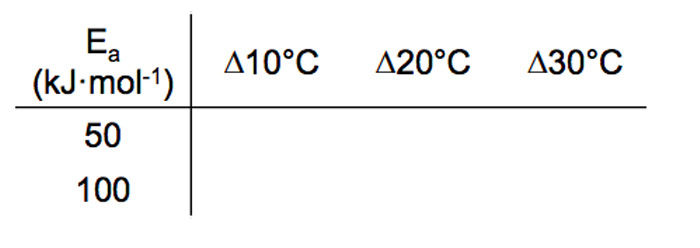
- Ax2
- Bx4
- Cx8
- Dx4 (2)
- Ex16
- Fx64
4A drug with an ionised and unionised form will have six degradation rate constants, k, because each form can undergo acid catalysis, base catalysis, and a reaction with water.
- ATrue
- BFalse
5Generally ionisation gives rise to more [blank_start]complex[blank_end] pH-rate profiles (not simply V-shaped curve), but [blank_start]not all reactions[blank_end] are necessarily [blank_start]significant[blank_end]. We can determine the pH-rate profile [blank_start]experimentally[blank_end] by keeping a constant temperature and changing the pH to measure rate constants.
- Acomplex
- Bnot all reactions
- Csignificant
- Dexperimentally
6B-lactams are hydrolysable groups.
- ATrue
- BFalse
7Amides are ionisable groups.
- ATrue
- BFalse
8If procaine has a hydrolysable group and two ionisable groups, and so can be unionised, mono-protonated or di-protonated, how many potential hydrolysis reactions does it have?
- A9
- B6
- C12
9Generally, general acid/base catalysis will lead to [blank_start]slope deviation[blank_end] (different from +/- 1) eg. buffer catalysis. Other factors, such as [blank_start]ionic strength[blank_end], may also
lead to apparent deviations in the pH-rate profile.
Electrolytes are often added to formulations to control [blank_start]tonicity[blank_end], and they [blank_start]increase[blank_end] the ionic strength of the formulation.- Aslope deviation
- Bionic strength
- Ctonicity
- Dincrease
Information
- Description
- PHCY211 (Medicines) Quiz on MD5 - 6 Chemical Degradation by Oxidation and Hydrolysis, created by Mer Scott on 12/05/2018.
- Author
- Mer Scott
- Language
- English
- Views
- 11
- Tags
- Rating
- No ratings yet Rate this quiz