
Test
Biological molecules
Este test tiene tipos de pregunta que se abren en el reproductor de siempre.
Preguntas del test (55)
1What is covalent bonding?
- A2 non-metals sharing an eloctron to complete their outer shells
- BA metal and a non-metal bonding through electrostatic attraction
2In hydrogen bonding, the individual bonds are very strong.
- AVerdadero
- BFalso
3The sub-unit of a polysaccharide is a [blank_start]monosaccharide[blank_end]. Two of these together form a disaccharide.
- Amonosaccharide
- Bmononucleotide
- Cdisaccharide
- Dglucose
4Formation of polypeptides and polysaccharides are ____________ reactions.
- Acondensation
- Bhydrolysis
- Cmagic
5A molar solution is a solution that contains [blank_start]1 mol of solute in a litre of solution[blank_end]
- A1 mol of solute in a litre of solution
6[blank_start]Monomers[blank_end] join together to make [blank_start]polymers[blank_end].
- AMonomers
- BPolymers
- CNucleotides
- Dpolymers
- Emonomers
- Fglucose
7Monosaccharides are...
- ASweet-tasting
- BInsoluble
- CStarchy
- DSoluble
- EHave the general formula (CH2O)n
8The test for reducing sugars involves adding hydrochloric acid
- AVerdadero
- BFalso
9A reducing sugar is a sugar that can reduce another substance by [blank_start]donating its electrons[blank_end]
- Adonating its electrons
10To test for reducing and non-reducing sugars we use...
- ATollen's reagent
- BBenedict's reagent
- CStarch
- DIodine
11What are the results of the Benedict's test for reducing sugars?
- ATurns red for a high concentration
- BStays blue for no reducing sugars
- CTurns green for a high concentration
- DTurns yellow/orange for a medium concentration
- ETurns purple for a low concentration
12Glucose plus [blank_start]glucose[blank_end] forms maltose.
- Aglucose
- Bfructose
- Clactose
13Glucose plus [blank_start]fructose[blank_end] forms sucrose.
- Afructose
- Bglucose
- Cgalactose
14Glucose plus [blank_start]galactose[blank_end] forms lactose.
- Afructose
- Bgalactose
- Csucrose
15What is this molecule?
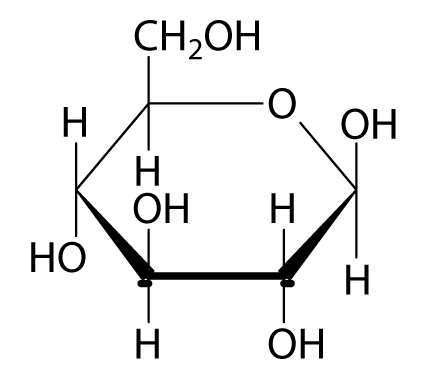
- ABeta glucose
16What is this molecule?
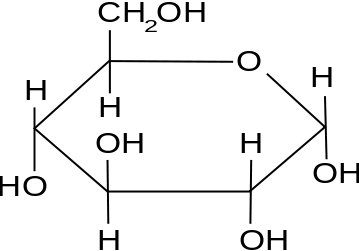
- AAlpha glucose
17How does the Benedict's test for non-reducing sugars differ to that of reducing sugars? (tick all appropriate)
- AThe colour changes are different
- BYou have to add hydrochloric acid after the first round of heating
- CYou add nitrogen sulphide to neutralise the acid
- DYou add sodium hydroxide to neutralise the acid
- EThere is a temperature change after you add the iodine
18Polysaccharides are insoluble
- AVerdadero
- BFalso
19The test for starch uses [blank_start]iodine[blank_end]. If starch is present it will turn from [blank_start]orange[blank_end] to [blank_start]black[blank_end].
- Aiodine
- BTollen's reagent
- Corange
- Dred
- Eblue
- Fsilver
- Gblack
- Hpurple
20Starch is made of alpha glucose.
- AVerdadero
- BFalso
21Tick the correct answers.
- ACellulose is found in plants
- BCellulose is made of alpha glucose
- CGlycogen is found in bacteria
- DGlycogen is made of alpha glucose
- EStarch is linked by glycosidic bonds
- FStarch is a straight molecule
- GGlycogen is short coils with lots of branches
- HCellulose is branched
- ICellulose has hydrogen bonds that form cross-linkages
22Lipids are insoluble in [blank_start]water[blank_end] but soluble in [blank_start]organic solvents[blank_end]
- Awater
- Borganic solvents
23What are some roles of lipids?
- AInsulation
- BWater-absorbant
- CProtection
- DSource of energy
- ESource of nitrogen for plants
24Phospholipids...
- Aallow the transfer of lipid-insoluble substances across membranes
- Bcontribute to the flexibility of membranes
25What is this molecule?
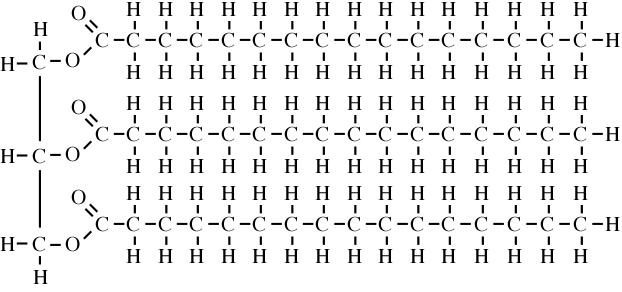
- ATriglyceride
26The fatty acids in triglycerides are unsaturated.
- AVerdadero
- BFalso
27Structure and functions of triglycerides:
The high ratio of carbon-hydrogen bonds to carbon atoms means they are a good [blank_start]source of energy[blank_end].
The low mass to energy ratio means they are good [blank_start]storage molecules[blank_end].
The large and insoluble molecules are [blank_start]good storage molecules[blank_end] and don't affect the [blank_start]water potential[blank_end] of the cells.
The high ration of hydrogen to oxygen atoms mean they are a good [blank_start]source of water[blank_end].- Asource of energy
- Bstorage molecules
- Cgood storage molecules
- Dwater potential
- Esource of water
28What is this molecule?
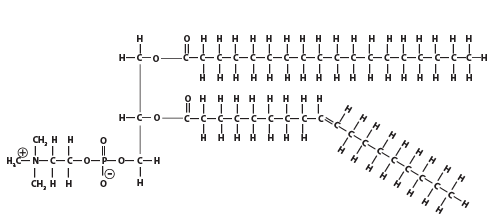
- APhospholipid
29Phospholipids have...
- AA hydrophilic head
- BA hydrophobic head
- CA hydrophilic tail
- DA hydrophobic tail
30Structure and function of phospholipids:
The hydrophilic heads and hydrophobic tails form a [blank_start]bilayer[blank_end] in [blank_start]aqueous[blank_end] environments.
The [blank_start]hydrophilic[blank_end] heads help hold the surface of the cell-surface membrane.
They can form [blank_start]glycolipids[blank_end] with carbohydrates which are important for cell recognition.- Abilayer
- Baqueous
- Cgaseous
- Dhydrophilic
- Eglycolipids
- Femulsions
31Test for lipids:
1. Add 2cm^3 of your sample and 5cm^3 of [blank_start]ethanol[blank_end] to a test tube
2. Shake the tube to dissolve any [blank_start]lipids[blank_end] in the sample
3. Add 5cm^3 of [blank_start]water[blank_end] and shake gently
4. If lipids are present then the solution will turn [blank_start]cloudy-white[blank_end]- Aethanol
- Biodine
- Clipids
- Dglucose
- Ewater
- FBenedict's reagent
- Gcloudy-white
- Hyellow
- Iblue
- Jblack
32Amino acids are the basic [blank_start]monomer[blank_end] units for proteins and the polymer is called a [blank_start]polypeptide[blank_end].
- Amonomer
- Bpolymer
- Csugar
- Dpolynucleotide
- Epolypeptide
- Fpolysaccharide
33Amino acids provide indirect evidence for...
- AEvolution (the same 40 are in everything)
- BMeiosis (each is split in two for gametes)
- CEvolution (the same 20 are in everything)
- DMitosis (the same ones are in the daughter cells)
34Label this amino acid structure
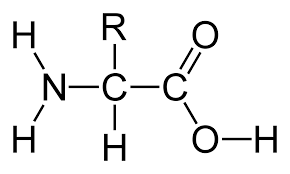
- AR group
- BNitrogen
- CAmino group
- DPhosphate
- ECarboxyl group
- FCarbohydrate
- GHydrochloric acid
- HHydrogen
- ICentral carbon atom
- JCentral carbon ion
35The process of joining many amino acid monomers together is called polymerisation.
- AVerdadero
- BFalso
36The primary structure of a protein is formed by the specific sequence of [blank_start]amino acids[blank_end]. The primary structure determines its [blank_start]shape[blank_end] and therefore function so changing just a single amino acid in the chain could potentially change the way the whole protein works.
- Aamino acids
- Bshape
37The [blank_start]secondary[blank_end] structure of a protein is the long polypeptide chain being twisted into a [blank_start]3D[blank_end] shape. This is caused by the [blank_start]hydrogen[blank_end] bonds that form between the H from the [blank_start]positive[blank_end] NH group of one and the O of another's [blank_start]negative[blank_end] C=O.
- Asecondary
- Btertiary
- C2D
- D3D
- Ehydrogen
- Fdisulfide
- Gpositive
- Hnegative
- Ipositive
- Jnegative
38The tertiary structure of the protein is formed by the secondary structure being further coiled and twisted into a more [blank_start]complex[blank_end] and recognisable shape. This shape is maintained by three types of bonds: hydrogen bonds, [blank_start]ionic[blank_end] bonds and disulfide bridges. The [blank_start]hydrogen[blank_end] bonds are numerous but easily broken. The ionic bonds are stronger than the hydrogen bonds however they are easily broken by a change in [blank_start]pH[blank_end]. The disulfide bridges are the [blank_start]strongest[blank_end] out of the three.
- Acomplex
- Bhydrogen
- CpH
- Dtemperature
- Epressure
- Fstrongest
- Gweakest
- Hionic
39The [blank_start]quaternary[blank_end] structure is the most complex and consists of many individual polypeptide chain linked in various ways. Some of these molecules have non-protein ([blank_start]prosthetic[blank_end]) groups associated with them e.g. the [blank_start]iron[blank_end] containing haem group in haemoglobin.
- Aquaternary
- Btertiary
- Csecondary
- Dfake
- Eprosthetic
- Fpseudo
- Giron
- Hnitrogen
- Icalcium
- Jmagnesium
40What is the test for proteins called?
- ATollen's
- BSterilisation
- CBiuret
- DBenedict's
41What are the steps in the test for proteins?
- A1. Place your sample and an equal volume of sodium hydroxide in a test tube
- B1. Place your sample and an equal volume of sodium disulphate in a test tube
- C!. Place your sample and an equal volume of hydrochloric acid in a test tube
- D2. Add a few drops of high concentration copper sulphate and mix gently
- E2. Add a few drops of very dilute copper sulphate and mix gently
- F3. If it goes red there are peptide bonds and therefore proteins present but stays blue in their absence
- G3. If it goes purple there are peptide bonds and therefore proteins present but stays blue in their absence
- H3. If it goes green there are peptide bonds and therefore proteins present but stays blue in their absence
42Enzymes are globular proteins that act as [blank_start]catalysts[blank_end]. They do this by lowering the [blank_start]activation energy[blank_end] of a reaction by providing an alternative pathway for the reaction without being [blank_start]used up[blank_end] themselves.
- Acatalysts
- Bactivation energy
- Cused up
43The functional region of an enzyme is called the...
- Asubstrate
- Bactive site
- Ccomplex
44The molecule upon which the enzyme acts is called the...
- Asubstrate
- Bactive site
- Cprotein
45Scientists used to use the [blank_start]lock and key[blank_end] model to explain how enzymes work but this is now out-dated. Instead, we use the [blank_start]induced-fit[blank_end] model. It suggests that the enzyme's active site changes shape when in close proximity to the [blank_start]substrate[blank_end] as a result of the [blank_start]charges[blank_end] in each molecule. The active site [blank_start]moulds[blank_end] itself around the substrate to form an [blank_start]enzyme-substrate complex[blank_end] which distorts bonds in the substrate to lower the [blank_start]activation[blank_end] energy.
- Alock and key
- Binduced-fit
- Csubstrate
- Dcharges
- Emoulds
- Fenzyme-substrate complex
- Gactivation
46For an enzyme to work, it must...
- ACome into contact with the substrate
- BBe diluted in solution
- CHave the correct orientation so the active site and substrate collide
- DHave a complementary active site to the substrate
- EBe at body temperature (37°C)
47The two changes most frequently measured to measure the rate of enzyme-catalysed reactions are...
- ADissapearance of substrate
- BAmount of gas released
- CFormation of products
- DTemperature fluctuation
48Measuring rate of change on a graph involves drawing a tangent to the curve and then working out the change in x divided by the change in y.
- AVerdadero
- BFalso
49Label this graph of the effects of temperature on enzyme activity
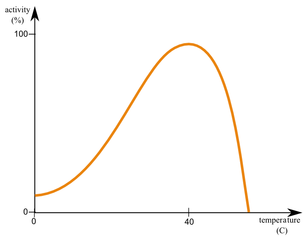
- AOptimum temperature
- BTemp too high, enzymes start to denature
- CAs temp increases, kinetic energy does
- DTemp too low, not enough energy to work
- ENo enzymes left, no activity
50Label this graph of the effects of pH on enzyme activity
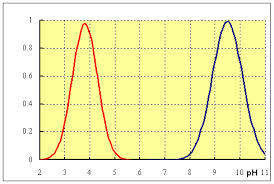
- AOptimum pH
- BNarrow range
- CpH too low
- DpH too high
- EH+ ion concentration denaturing enzymes
51Label this graph of the effects of enzyme concentration on enzyme activity
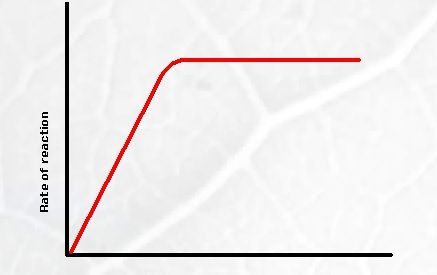
- AToo few enzymes for amount of substrate
- BAll substrate has an active site
- CAlready enough active sites for sub.
- DTemperature too high
- ENot enough kinetic energy
- FOptimum pH
52Label this graph of the effects of substrate concentration on enzyme activity
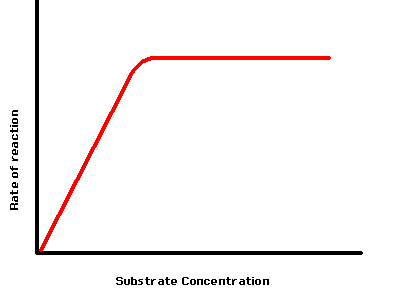
- ANot enough sub. to fill all active sites
- BMax rate, all sub in an active site
- CAll active sites already occupied
- DTemperature too high
- EOptimum pH
- FNot enough kinetic energy
53[blank_start]Competitive[blank_end] inhibitors interfere with the functioning of an enzyme by binding to the active site and getting in the way of the substrate. [blank_start]Non-competitive[blank_end] inhibitors interfere with the functioning of an enzyme by binding to it in a place other than the active site, changing its shape so the active site is no longer [blank_start]complementary[blank_end] to the substrate.
- ACompetitive
- BNon-competitive
- Ccomplementary
54What is this?
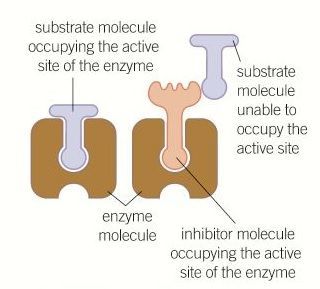
- ACompetitive
- BNon-competitive
55What is this?
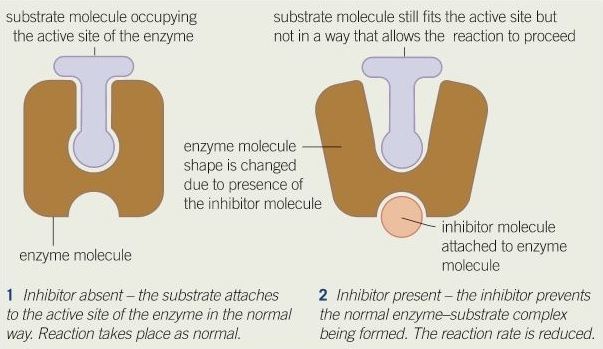
- ACompetitive
- BNon-competitive
Información
- Descripción
- Chapter 1 of AQA AS Biology
- Idioma
- English
- Visitas
- 304
- Etiquetas
- Valoración
- 4,3 de 5 · 6 valoraciones Valora este test