
Fichas
Lecture Test 2
Fichas del conjunto (36)
- 1Why do we need to monitor aquatic ecosystems?Source of biodiversity
The Support of a wide range of organisms e.g. microorganisms, invertebrates, insects, plants and fish
Over-extraction of water and overuse results in terrestrial impacts e.g. marine populations decline, plants die. - 2What are the benefits of dams?Recreation
Flood control
Water supply
Hydroelectric power
Waste management
River navigation
Wildlife habitat - 3What are the tradeoffs of dams?Sediment storage
Large-scale wildlife habitat destruction due to flooding
Disrupts marine migration patterns
People displacement
Reduces the number of areas for recreation
Expensive
Interferes with the natural flow
Can interfere with the fishing business:.
Harming livelihoods of people who rely on fisheries
Maintenance
Can catastrophically fail - 4What causes salinity?rock erosion
Sedimentary rocks
salt from the ocean carried by the wind and rain
Removal of vegetation
Applying additional water through irrigation
Salt and water - brought in, lost in evapotranspiration, salt accumulates at plant roots - 5What is primary salinisation?causes but naturally occurring salts (rock erosion)
Sedimentary rocks formed under marine conditions e.g. salt from the oceans that are carried by the wind and rain - 6What is secondary salinisationIrrigation with slightly saline water
Evaporation
Root zone salinity
Water table rise with change of vegetation - 7What is salinitySalinity impacts on vegetation, salt transport and deforested areas
- 8What is sodicitySodium attached to clay and modified particles, it is less sticky, erodes quicker, becomes impermeable to water and soils and makes vegetation productivity very minimal
- 9How is salinisation linked to land clearingPlants absorb water and transport it to the roots however they lose water through their leaves in a process of transportation (evapotranspiration)
Plants keep hydrology in balance, imbalance - water table rise & effected vegetation
Deep roots keep salt at bay
Farmers cleared land for pasture and planted crops with shallow roots
Plants have become salt adapted - 10What are the management actions are available to counter salinity?More rain for salt flush
Maintain natural water balance processes
Land use: high water-use cropping and pasture, revegetation of trees or Agro-forestry, retire marginal irrigation properties
On paddock surface: banks and drains
Larger scale measures: deep drains, sub-surface drains, pumps, interception and diversion
Reuse water
Introduce salt tolerant plants
Introduce salt tolerant aquaculture - 11Why are rivers regulatedRegulation provides:
Water for irrigation
Domestic consumption
Industry - 12How does this impact the hydrology?Occasional increase - inter-basin transfer
Reduction of variability in river flow
Changes of small and medium flood frequencies
Changes in water temperature - de-oxygenates water, affects marine life
Changes rates of rising water, recession and duration
Geomorphological change e.g. bank slumping
Plant response to changing water levels
Energy resources - 13What are the environmental benefits can be achieved by the return of river flow?Gets rid of pollutants
Improved water quality for marine and terrestrial flora and fauna
Can virtually 'reset' lakes
Balancing effect on nutrient content
Hydroelectric power
Helps nutrient transportation
Brings silt and fertile soils - 14What is a natural floodan overflow of a large amount of water beyond its normal limits, especially over what is normally dry land
- 15What is watering with a regulator or pumpweir-like structures that are built to raise water levels to enable inundation of large areas
- 16What conditions lead to algal blooms in the river Torrens?high nitrogen and phosphorous levels
runoff of fertilisers
erosion of riverbanks
land clearing
sewage flow into river system
Thermal stratification: temperature at surface is higher than river floor therefore forms water column, reduces turbulent mixing and allows algae to grow more rapidly - 17What management options are available to improve water quality in the catchment and the lake?Hydrogen peroxide
Environmental flows which dilate nutrient levels and keeps waters well mixed. Will be occurring from kangaroo creek reservoir to henley beach
Sediment management
Capping agents
Phoslock
Wetland and pondweed for nutrient removal
Mixers aerators
Re-establish habitats - 18What is a point sourceLocalised and stationary source of pollution
e.g. discharges from wastewater treatment plants, operational industry waste, sewer outfalls
Pollutes water, makes it murky, too much can kill the marine life, water becomes toxic - 19What is diffuse pollutionRelease of potential pollutions from activities that may have no effect on water environments but can have a significant effects on the catchment scale.
E.g. loss of nutrients (nitrate and phosphorous), pesticides, soil loss, sedimentation, bacteria from manures.
Not noticeable at first but becomes a detrimental thing overtime. Little amounts build up. - 20Describe how mining has impacted on water quality with particular reference to heavy metals and acid mine drainage?Acid mine drainage increasing toxicity of water
Metal contamination of water with heavy metals e.g. mercury and zinc
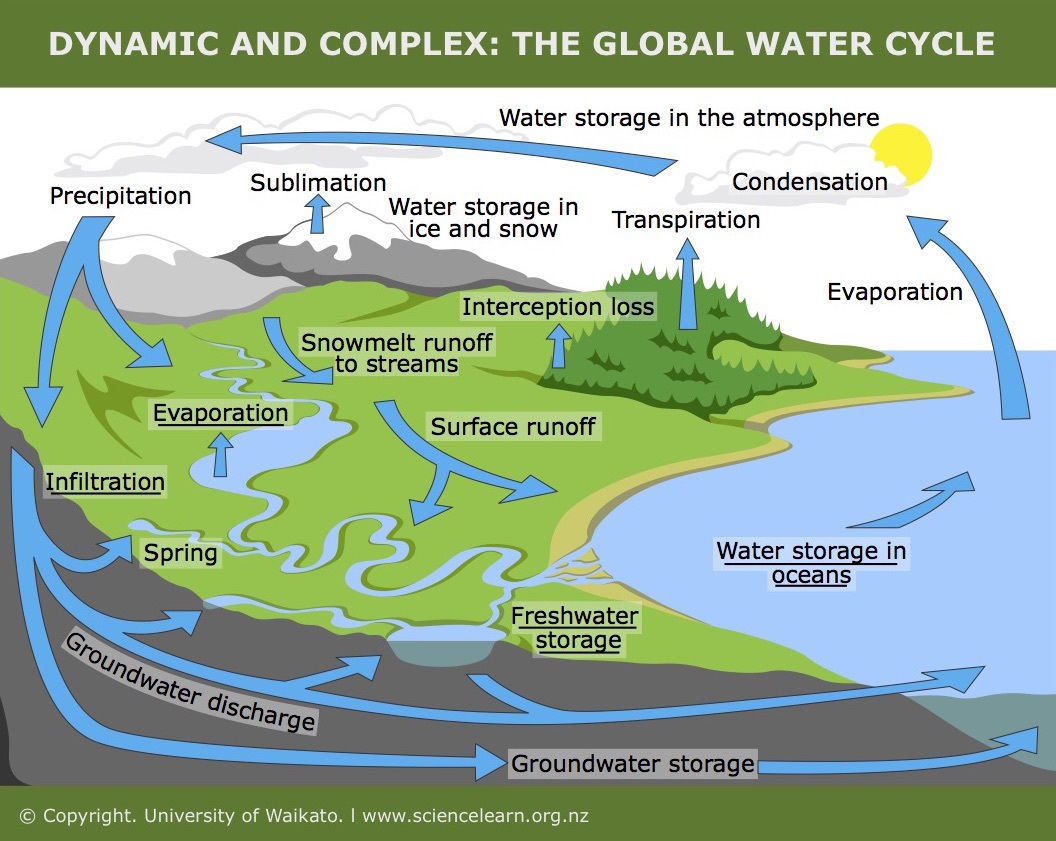
Increased sediment levels - 21Draw a conceptual model of the hydrological cycle including groundwater?
- 22What are the imputs to the hydrological cyclePrecipitation
Rain
Hail
Sleet
Snow
Frost
Dew - 23What are the major outputs of the hydrological cycleEvaporation- water on surface can turn to vapour from suns energy, wind can also aid this process
Transpiration - from plant leaves which has been taken up from the roots and transported to leaves
Evapotranspiration
River discharge - when river reaches sea/lake and ends - 24Describe how the water budget can inform water allocationone way to manage the state's water resources
sets out how much water is available from a particular resource and how much water needs to be left in the system to ensure its sustainability - 25what does the water allocation doprovides consistent, transparent process for liscensing
ensures the long-term sustainability of a region's water resources
brings certainly for water users
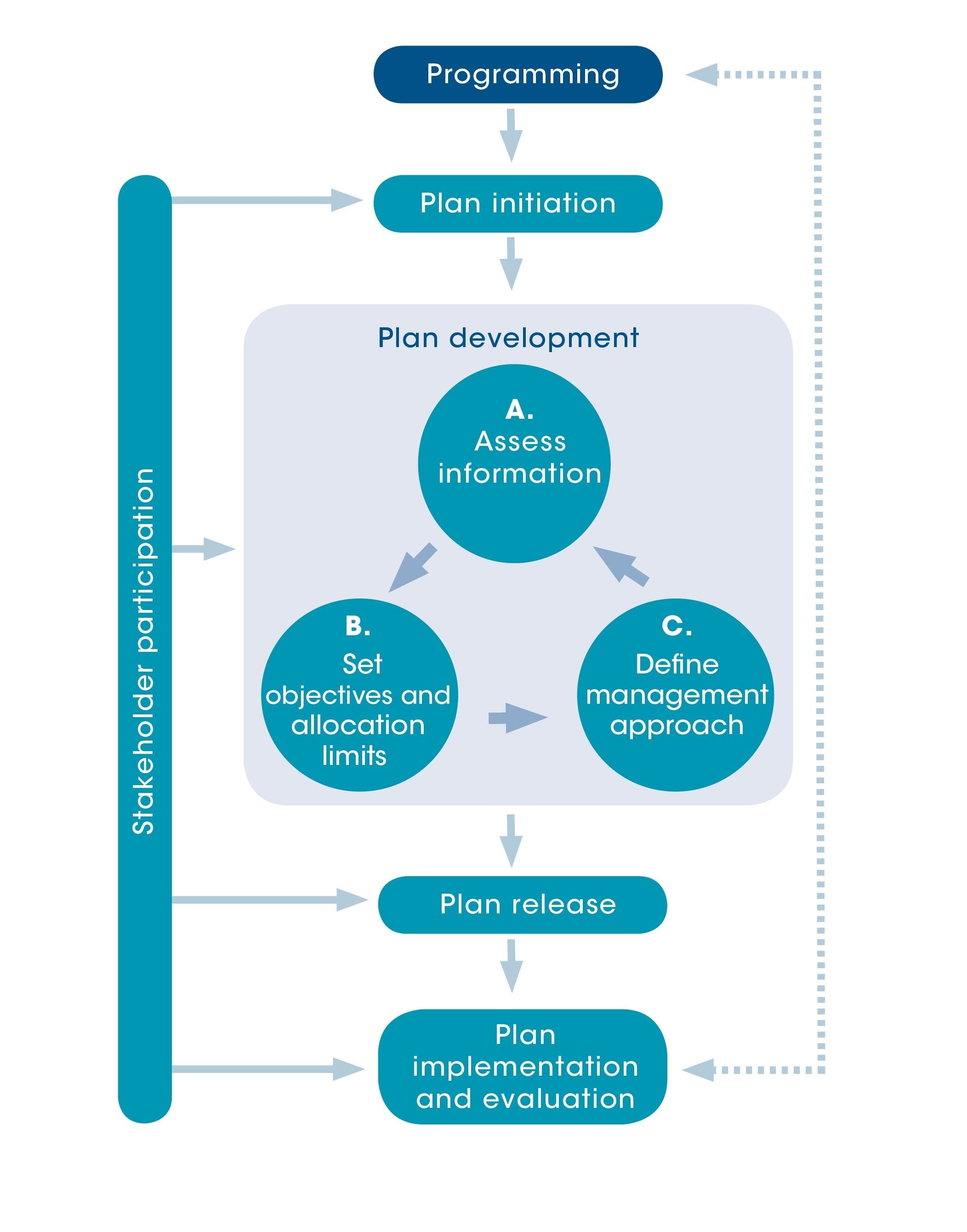
protects water resources and water dependent environments - 26what is the water allocation planning model?
- 27How does the water budget identify whether the system is over-allocateddrought and overuse of resources leads to fresh water levels falling
increased salinity levels damaged the ecosystem and threatened water supplies for people and livestock
loss of soi
l
native flora and fauna under strain due to saltier environment - 28how does land use change affect the hydrological cycleHuman activities can affect evapotranspiration, interception and infiltration from plants can have detrimental impacts of surface and subsurface flows
Temperatures can affect with altered precipitation patterns and intensity may have substantial hydrological consequences e.g. accelerating the hydrological cycle, increasing frequency of hydrological extremes particularly in the arid regions
Desertification can affect biodiversity in marine and terrestrial ecosystems - 29why can forestry affect groundwater resources?Prevent groundwater recharge
Improve crop productivity and natural regeneration
Groundwater management depends on ability to use or evaporate water from the soil
Can use more water than other vegetation types
Trees can only use as much water as it has been provided with
Energy for evaporation for trees comes from sun
As leaf area of trees increases so does its water use - 30What is logical inductionlogic of evidential support
e.g.
1. the three coins i pulled out of my bag are pennies :. all the coins in my bag are pennies (false)
2. All men that are bald are grandfathers, Harold is bald :. he's a grandfather
(false) - 31What is logical deductionthe premises of valid deductive argument logically entail conclusion
1. all men are mortal, Harold is a man :. he's mortal
2. All men that are bald are grandfathers, Harold is bald :. he's a grandfather - 32Describe some of the effects of Co2 pollution on the marine environmentOcean acidification
Changes in pH
Animal population decline
Coral bleaching - 33Given increased nutrient runoff into the ocean causes environmental problems, what solutions could you offer.Upgrade water treatment plants
Detention basins
Constructed wetlands
Vegetative swales
Bioretention facilities (rain gardens)
Bagging of dog waste
Prohibitions on phosphorous in lawn fertilisers - 34What is a top down systemconsumers depress the trophic level on which they feed, and this indirectly increases the next lower trophic level
- 35What is a bottom up systemincreased production results in greater productivity at all trophic levels
- 36describe why fishing causes cascading change within systems sensitive to changes in predator numbers?exploitation has depleted many marine mammal and bird populations
decreasing levels in exploitation have led to increases of predators
alters productivity, species assemblages, coastal erosion
Información
- Descripción
- Tertiary Environmental Biology: Ecological Issues Fichas sobre Lecture Test 2, creado por Olivia Gniadek el 10/09/2018.
- Creado por
- Olivia Gniadek
- Visitas
- 57
- Etiquetas
- Valoración