
Flashcards
Core concepts, Preliminary Phase, Phase A Level 2
Cards in this deck (73)
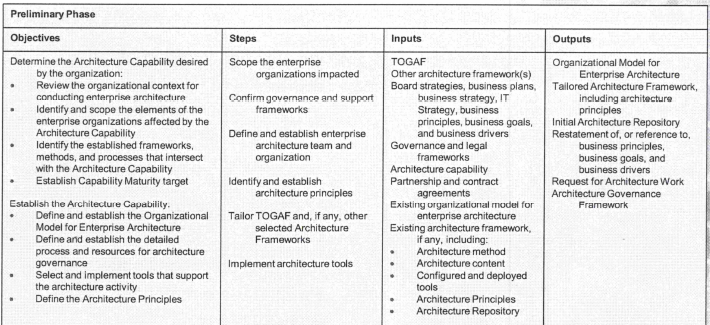
- 1Preliminary Phase1.Understanding business environment
2.High Level management commitment
3.Agreement on scope
4.Establish principles
5.Establish governance structure
6.Customization of TOGAF - 2Preliminary Phase Determine Architecture Capability (AC) desired by the organization1.Review orga. context for conducting EA
2.Identify and scope elements of the enterprise organizations affected by the AC
3.Identify established frameworks, methds & processes that intersect with AC
4.Establish a Capability Maturity target - 3Preliminary Phase Establis the Architecture Capability (AC)1. Define & establis the organizational model for EA
2.Define and establish the detail process and resources for Arch Governance
3.Selct and implemnt tools that support AC
4.Define architecture principles - 4Preliminary Phase Approach Define the Enterprise (1/2)1.Identify key drivres & elements in organization context
2. Define requirements for architecture work
3.Define arch principles that will inform any architecture work - 5Preliminary Phase Approach Define the Enterprise (2/2)4.Define the framework to be used
5.Relationships between management frameworks
6.Evaluate the enterprise architecture maturity - 6Preliminary Phase Steps (1/2)1. Scope the Enterprise Organizations Impacted
2. Confirm Governance and Support Frameworks
3. Define & Establish the Enterprise Architecture Team - 7Preliminary Phase Steps (2/2)4. Identify Architecture Principies
5. Tailor TOGAF, and other Architecture
Frameworks
6. Implement Architecture Tools - 8Preliminary Phase Principles Template1. Statement
2. Rationale
3. Implications - 9Preliminary Phase Principles Template StatementPrincipies apply throughout the enterprise and override all other considerations when decisions are made
- 10Preliminary Phase Principles Template RationaleThe only way we can provide a recognized, consistent and measurable level of operations is if all parts of the enterprise abide by the principies when making decisions
- 11Preliminary Phase Principles Template Implications (1/2)Without this principie, short-term consideration, supposedly convenient exceptions, and inconsistencies would rapidly undermine the management of information.
- 12Preliminary Phase Principles Template Implications (2/2)- Infor. manag. initiatives will not be permitted to begin until they are examined for compliance with the principles.
- A conflict with a principie will be resolved by changing the conflicting initiative, which could delay or prevent the
initiative - 13Preliminary Phase Qualities of Principles1. Undestandable
2. Robust
3. Complete
4. Consistent
5. Stable - 14Preliminary Phase Summary
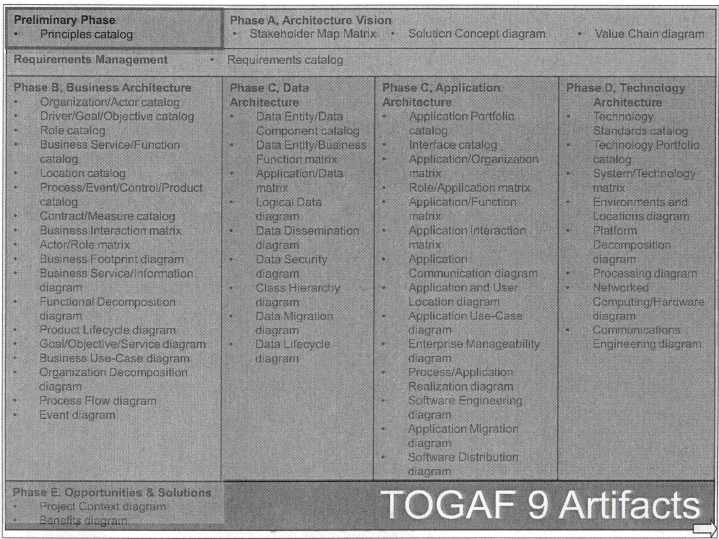
- 15Preliminary Phase Artifacts
- 16Phase A Architecture Vision1.Initiates one iteration of the arch process
2. Create the arch. Vision
3. Validates business context
4.Creates Statement of arch. work - 17Phase A Architecture Vision Objectives (1/2)1. Develop a high-level aspirational visión of the capabilities and business valué to be delivered as a result of the proposed enterprise architecture
- 18Phase A Architecture Vision Objectives (2/2)2. Obtain approval for a Statement of Architecture Work that defines a program of works to develop and deploy
the architecture outlined in the Architecture Vision - 19Phase A Architecture Vision Approach (1/3)1. Establish the architecture project
2. Identify stakehs., concerns & buss req.
3. Confirm buss goals, drivers & constraints
4. Evaluate business capabilities
5. Assess readiness for businesss transformation - 20Phase A Architecture Vision Approach (2/3)6. Define Scope
7. Confirm and elaborate arch. principies
including business principies
8. Develop Architecture Vision
9. Define the Target Arch. Value
propositions and KPIs - 21Phase A Architecture Vision Approach (3/3)10. Identify business transformation
risks and mitigation activities
11. Develop Statement of Architecture Work, secure approval - 22Phase A - Architecture Vision Stakeholder Management-Discipline used to win support from others
-This technique should be used in Phase A to identify key players and updated throughout each phase
-The output of this process forms part of the Communications Plan - 23Phase A - Architecture Vision Stakeholder Management Benefits (1/3)- Identifies the most powerful stakeholders early and ensures their input is used to shape the architecture
-Achieving support from the most powerful stakeholders can help achieve necessary resources - 24Phase A - Architecture Vision Stakeholder Management Benefits (2/3)- Early communication with stakeholders helps with ensuring all understand the architecture process and are engaged in it
- Can be used to anticipate likely reactions and develop a strategy to address them - 25Phase A - Architecture Vision Stakeholder Management Benefits (3/3)- Can be used to identify conflicting or competing objectives amongst stakeholders and develop strategies to manage
- 26Phase A - Architecture Vision Stakeholders What are them?Are people who have key roles in, or concerns about, the enterprise architecture. Stakeholders can
be individuáis, teams,
organizations, etc. - 27Phase A - Architecture Vision Stakeholders Approach Step by StepStep 1: Identify Stakeholders
Step 2: Classify Stakeholder Positions
Step 3: Determine Stakeholder Management Approach
Step 4: Tailor Engagement Deliverables - 28Phase A - Architecture Vision Stakeholders Approach Step 1: Identify Stakeholders (1/2)Look at who is impacted by the enterprise architecture project, WHO:
1. Gains and loses from this change?
2. Controls change managnt of processes?
3. Designs new systems? - 29Phase A - Architecture Vision Stakeholders Approach Step 1: Identify Stakeholders (2/2)4. Who will make the decisions?
5. Procures IT syst & decides what to buy?
6. Who Controls resources?
7. Has special skills the project needs?
8. Who has influence? - 30Phase A - Architecture Vision Stakeholders Approach Step 2: Classify Stakeholder PositionsClassify and record positions in a Stakeholder Analysis Matrix
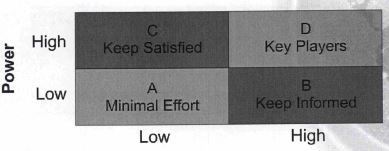
Group/Name/Ability to Distrupt the change/Current undestanding/Required Commitment/Required Support - 31Phase A - Architecture Vision Stakeholders Approach Step 3: Determine Stakeholder Management Approach (1/2)-Workout stakeholder power, influence and interest, so as to focus the engagement on the key individuals.
- These can then be mapped onto a power/interest matrix, which is used to determine the strategy for engaging with
them. - 32Phase A - Architecture Vision Stakeholders Approach Step 3: Determine Stakeholder Management Approach (2/2)
- 33Phase A - Architecture Vision Stakeholders Approach Step 4: Tailor Engagement Deliverables- Identify the viewpoints that the arch. engagement needs to produce and validate with each stakeholder group
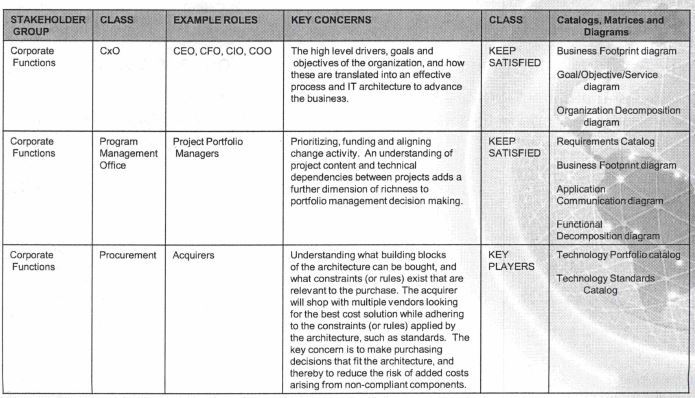
- Define specific viewpoints, matrices, and views of the enterprise architecture model - 34Phase A - Architecture Vision Stakeholders Approach Step 4: Stakeholders Map Example
- 35Phase A - Architecture Vision Stakeholders Approach Step 4: View (1/2)A view is a representation of a system from a viewpoint:
- An architect creates architecture models. A view consists of parts of these, chosen to show stakeholders that their concerns areeing met. - 36Phase A - Architecture Vision Stakeholders Approach Step 4: View (2/2)A viewpoint defines the perspective from which a view is taken.
- It defines how to construct and use a view, the information needed, the modeling techniques for expressing and analyzing it and a rationale for these choices - 37Phase A - Architecture Vision Stakeholders Approach View ElementsStakeholders/Concerns/ModelingTechniq
Modeling Techiques:
1.Nested Boxes diagrams
2. Outer Boxes = locations
3.Inner Boxes = buss. functions
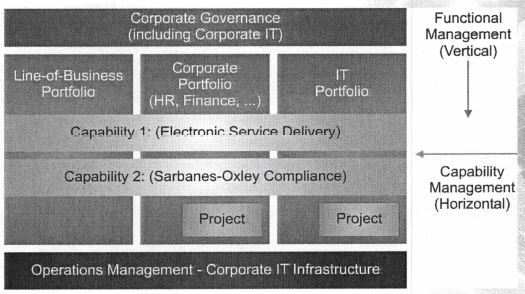
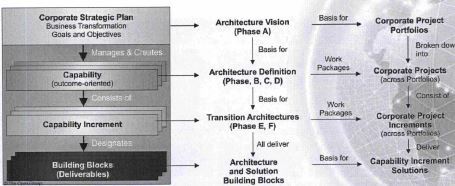
4. Semantic of Nesting = func. in locations - 38Phase A - Architecture Vision Capability Based Planning (1/2)CBP is a technique that focuses on the planning, engineering and delivery of strategic business capabilities.
- 39Phase A - Architecture Vision Capability Based Planning (2/2)It frames all phases of the architecture development in the context of business outcomes, clearly linking the IT visión,
architectures (ABBs and SBBs), and the Implementation and Migration Plans with the corporate strategic, business, and line of business plans. - 40Phase A - Architecture Vision Capability Based Planning Capabilities Diagram
- 41Phase A - Architecture Vision Capability Based Planning Capabilities Derived (1/2)Capabilities are directly derived from the corporate strategic plan.
They must satisfy the enterprise goals, objectives, and strategies. Most orgs. will also have an annual business plan. - 42Phase A - Architecture Vision Capability Based Planning Capabilities Derived (2/2)All of the arch. will be expressed in terms of business outcomes and value.
• PA: corporate strategic direction drive this
• Ps B, C & D: specific capabilities must be targeted for completion.
• PE: capability increments must drive this - 43Phase A - Architecture Vision Capability Based Planning Capabilities Based Planning Diagram
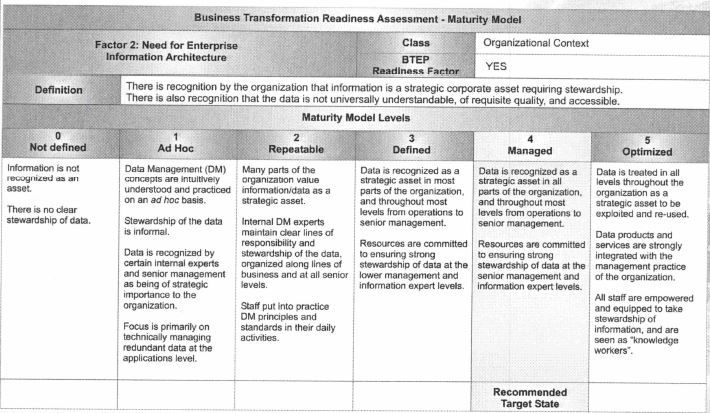
- 44Phase A - Architecture Vision Business Transformation Readiness Assessment (BTRA) (1/2)1.Enterprise architecture often invoives considerable change.
2.Understanding the readiness of an org. to accept change, identifying issues, dealing with them in the Implementation and Migration Plans is key to successful arch.transformation in Phases E & F. - 45Phase A - Architecture Vision Business Transformation Readiness Assessment (BTRA) (2/2)3. An Initial assessment is carried out in Phase A.
4. This is a joint effort between corporate (especially human resources) staff, lines of business and IT planners. - 46Phase A - Architecture Vision Recommended activities when assessing BTRA (1/2)1. Determine the readiness factors
2. Present the readiness factors using maturity models
3. Assess the readiness factors, and determine the readiness factor ratings - 47Phase A - Architecture Vision Recommended activities when assessing BTRA (2/2)4. Assess the risks for each readiness factor and identify mitigating actions
5. Work these actions into Phase E and F
Implementation and Migration Plan - 48Phase A - Architecture Vision Readiness Factors (BTRA) (1/2)1. Vision - the ability to clearly define and communicate what is to be achieved.
2. Desire, Willingness, and Resolve
3. Need, 4. Business Case, 5.Funding
6. Sponsorship and Leadership
7. Governance, 8. Accountability - 49Phase A - Architecture Vision Readiness Factors (BTRA) (2/2)9.Workable Approach and Execution Model
10. IT Capacity to Execute
11. Enterprise Capacity to Execute
12. Enterprise Ability to Implement & Operate - 50Phase A - Architecture Vision Assess Readiness Factors (BTRA) Diagram
- 51Phase A - Architecture Vision Business Scenario What is a Good Business Scenario?1. Is representative of a significant businesss need or problem
2. Enables vendors to understand the value of a developed solution to a customer.
3. Is"SMART" - 52Phase A - Architecture Vision Business Scenario SMART (1/2)1.Specific: defines what needs to be done to done in the business;
2.Measurable: clear metrics for success;
3. Actionable: clearly segments the problem, and provides the basis for finding a solution - 53Phase A - Architecture Vision Business Scenario SMART (2/2)4. Realistic: defines the bounds of technology capability and cost constraints
5. Time-bound: gives a clear understanding of when a solution expires - 54Phase A - Architecture Vision Business Scenario Benefits (1/2)A business scenario should be a complete description of a business problem,
Without this:
• Danger of incomplete requirements
•Unclear buss value to solve the problem
• Unclear relevance of potential solutions. - 55Phase A - Architecture Vision Business Scenario Benefits (2/2)A scenario:
1. Can play an important role in engaging the stakeholders
2. Can help to establish good communication with vendors early on. - 56Phase A - Architecture Vision Business Scenario Who Contributes to a Business Scenario? (1/2)1.Creation of a business scenario is not solely the province of the architect.
2. Business line management and other stakeholders must be involved - 57Phase A - Architecture Vision Business Scenario Who Contributes to a Business Scenario? (2/2)3. It may also involve an organization's IT vendors
4. Typically involvement of management is greatest in the early stages whereas the involvement of the architect is
greatest in later stages - 58Phase A - Architecture Vision Business Scenario Contents of a Business Scenario "Models"SHOULD:
1. Capture business and technology views
graphically to help comprehension
2. Provide a starting point for requirements
3. Relate actors and interactions - 59Phase A - Architecture Vision Business Scenario Contents of a Business Scenario "Descriptions"1. Capture the critical steps between actors in the right sequence
2. Partition the respnsabilty. of the actors
3. List pre-conditions that have to be met prior to proper system functionality
4. Provide technical requirm. to ensure the service is of acceptable quality - 60Phase A - Architecture Vision Business Scenario Template for Business Scenario (1/2)1. Business scenario problem description
2. Detailed objectives
3. Views of environments and processes
4.Actors, roles and responsabilities
5.Principies and constraints - 61Phase A - Architecture Vision Business Scenario Template for Business Scenario (2/2)6. Requirements
7. Next steps
8. Glossary of terms and abbreviations, 9.References - 62Phase A - Architecture Vision Business Scenario Some reminders1. Business Scenarios are a part of (and enable) a larger process
2. Business Scenarios are just a technique, not an objective
3. Use them, don't get lost in them - 63Phase A - Architecture Vision Risk Management Readiness Factor Risks & Actions1. Assess each factor using Risk Management techniques
2. Identify a series of improvement actions
3. Incorporate into the Implementation and Migration Plan - 64Phase A - Architecture Vision Risk Management1.A technique used to mitígate risk when implementing an architecture project.
2. It is important to identify, classify, and mitigate these risks before starting so that they can be tracked throughout the
transformation effort. - 65Phase A - Architecture Vision Risk Management in the ADM (1/3)1. Risks are identified in Phase A as part of the initial Business Transformation Readiness Assessment
- 66Phase A - Architecture Vision Risk Management in the ADM (2/3)2. The risk identification and mitigation assessment worksheets are maintained as governance artifacts and are kept up-todate in Phase G (Implementation Governance) where risk monitoring is conducted.
- 67Phase A - Architecture Vision Risk Management in the ADM (3/3)3. Implementation governance can identify critical hsks that are not being mitigated and might require anotherfull or partial
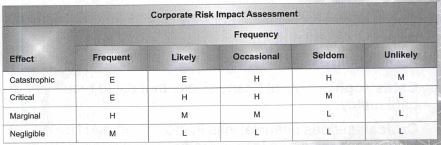
ADM cycle. - 68Phase A - Architecture Vision Risk Management Initial Risk Assessment Clasification (1/2)1. Catastrophic: critical financial loss that could result in bankruptcy.
2. Critical: serious financial loss in more than one line of business leading to a loss in productivity and no ROI - 69Phase A - Architecture Vision Risk Management Initial Risk Assessment Clasification (2/2)3. Marginal: minor financial loss in a line of business and a reduced ROI on the IT investment.
4. Negligible: minimal impact on services and/or products. - 70Phase A - Architecture Vision Risk Management Initial Risk Assessment Effect and frequency (1/2)1. Extremely High Risk (E): The transformation will most likely fail with severe consequences.
2. High Risk (H): Significant failure of parts of the transformation resulting in certain goals not being achieved. - 71Phase A - Architecture Vision Risk Management Initial Risk Assessment Effect and frequency (2/2)3. Moderate Risk (M): Noticeable failure of parts of the transformation, threatening the success of some goals.
4. Low Risk (L): Some goals will not be wholly successful. - 72Phase A - Architecture Vision Risk Management Risk Classification Diagram
- 73Phase A - Architecture Vision Risk Management Risk Identification and Mitigation Worksheet

Information
- Description
- Togaf Core Conceps Level 2 Preliminary Phase Level 2 Phase A Level 2
- Created by
- Juda Osejo
- Views
- 140
- Rating