Flashcards
Bios3081
Cards in this deck (50)
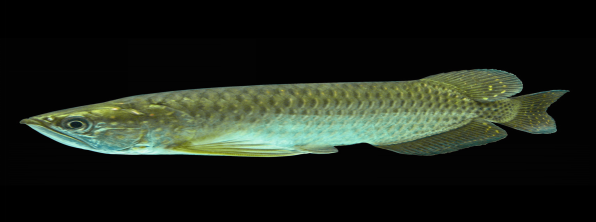
- 1—1.0 O. OSTEOGLOSSIFORMES: Dorsal fin 15-19; Anal fin 25-27; Lateral line scales 32-35.
Head scaleless; thick, bony scales with canals which form a mosaic-like pattern covering the body. Soft dorsal placed posteriorly; pectorals pointed, reaching pelvic bases; anal fin underneath dorsal. - 2—3.0 O. CLUPEIFORMES-Herring
Clupeids have a relatively small mouth with the jaw not extending behind the level of the eye, teeth usually small or absent and abdominal scutes usually present.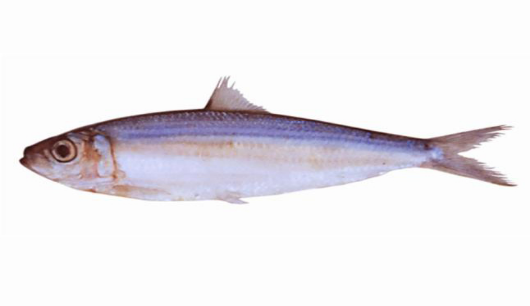
- 3—3.0 O. CLUPEIFORMES
Engraulidae (anchovies):
Most species have a characteristic long snout over a subterminal mouth which extends far behind the level of the eye. Some species have striking posterior extensions to the upper jaw and one non-Australian species has photophores.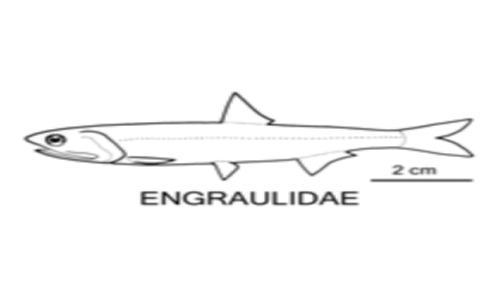
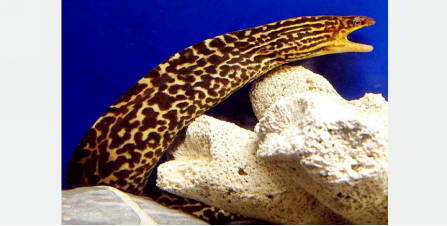
- 4—5.0 O. ANGUILLOFORMES (eels)
- 5—7.0 O. CYPRINIFORMES-incl. minnows, goldfish/carp, piranhas, U.S. suckers
-Thickset, deep-bodied, moderately compressed; dorsal profile sharply convex from snout to short, deep peduncle; head large, broadly triangular, without scales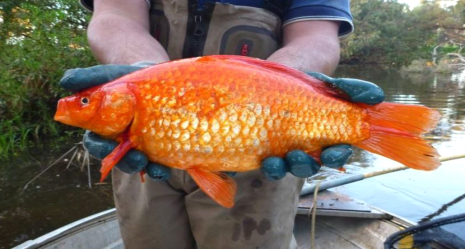
- 6—8.0 O SILURIFORMES catfishes
Australian species range in size from 300 mm to 1.3 m, but some species from Asia reach a larger size.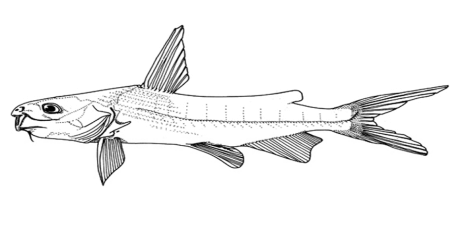
- 7—6.0 O. SALMONIFORMES-Salmonidae
Meristic features: Dorsal fin 10-12; Anal fin 8-12; Caudal fin 19; Pectorall fin 11-17; Pelvic fin 9-10; Gill rakers on first arch 16-22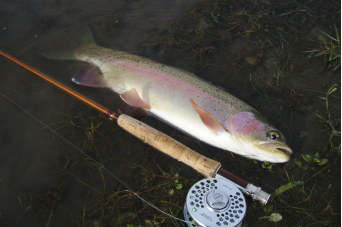
- 8—6.0 O. SALMONIFORMES-Galaxidae:
Most galaxiids have no fin spines, scales or adipose fins, the dorsal and anal fins are posterior and opposite and the body is elongate and tubular.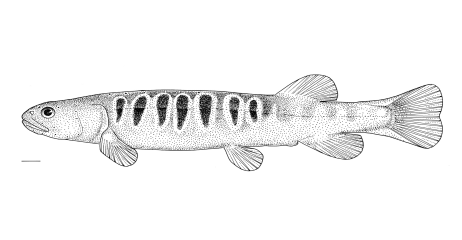
- 9—9.0 O.MYCTOPHIFORMES-Myctophidae
Body slightly compressed, elongate, eye large, diameter usually much greater than snout length; mouth large, usually terminal jaws moderate to large with bands of small, simple, closely set teeth; maxilla excluded from gape of mouth by premaxilla. Single dorsal over or in front of anal fin,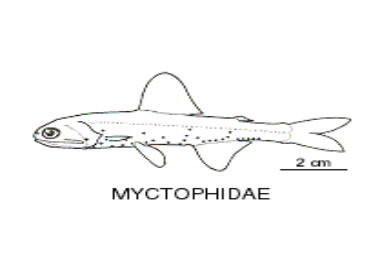
- 10—11.0 O. LOPHIFORMES
Mouth enormous, jaws up-turned, with irregular rows of small villiform teeth. The small gill opening is usually behind and below pectoral-fin base.
The spinous dorsal fin is highly modified, with three dorsal-fin spines, the first modified as a fishing lure on the tip of the snout.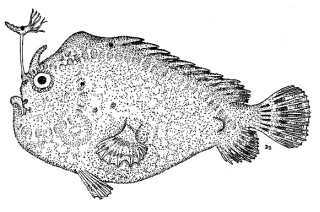
- 11—ATHERINIFORMES - BELONIFORMES
wings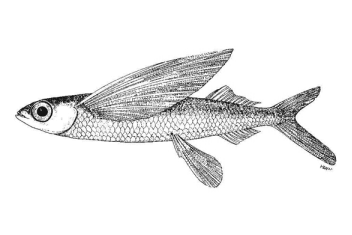
- 12—12.0 O. ATHERINIFORMES-Hemiramphidae
Garfishes are distinguished by an elongate lower jaw and short upper jaw, found in all species except the snub-nosed garfishes of the genus Arrhamphus.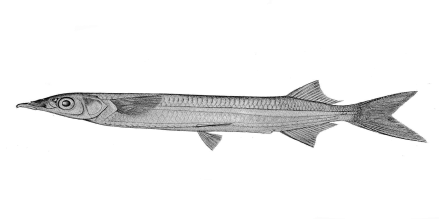
- 13—12.0 O. ATHERINIFORMES--Belonidae
Beloniformes are long, silvery streamlined fishes that live near the surface and feed on plankton, small fishes and invertebrates.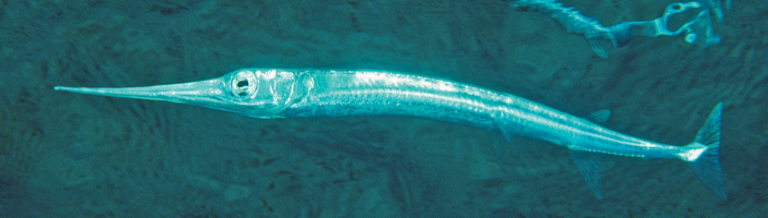
- 14—13.0 O. BERYCIFORMES-Berycidae
Dorsal fin VI, 14; Anal fin IV, 14; Caudal fin 19; Pectoral fin 14; Pelvic fin I, 7; Lateral line scales 48-51.
Body rather shallow (approx. 38% SL), moderately compressed. Head large (approx. 32% SL), with finely serrated bony ridges; eye large (approx. 40% HL); mouth large, oblique,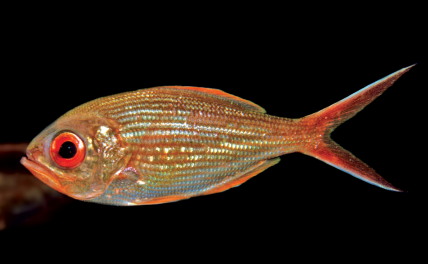
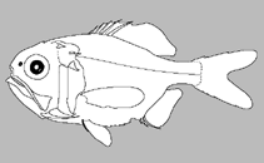
- 15—13.0 O. BERYCIFORMES-Trachichthyidae
- 16—15.0 O. GASTEROSTEIFORMES
Syngnathidae (based off Bighead seahorse):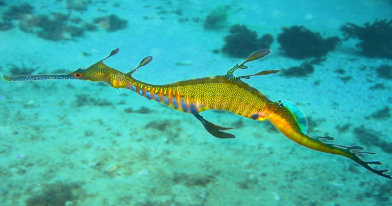
- 17—16.0 O. SCORPAENIFORMES-Scorpaenidae
Dorsal fin XII, 9; Anal fin III, 5; Pectoral fin 17-18; Longitudinal scale series 44--48.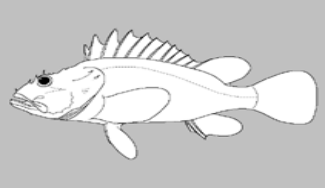
- 18—16.0 O. SCORPAENIFORMES-Platycephalidae:
Body elongate; head moderately to strongly depressed; bony ridges of head frequently bearing sharp spines and serrations; body mostly bearing ctenoid scales, cycloid scales often present ventrally; pelvic fins behind pectoral base; mouth large; lower jaw extending beyond upper when mouth closed.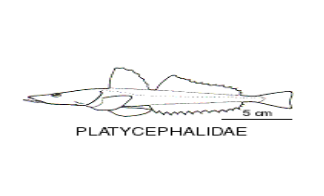
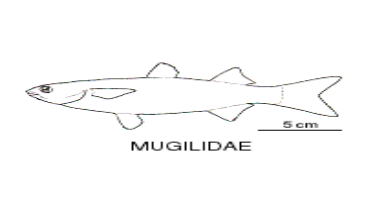
- 19—MUGILIFORMES-Mugilidae:
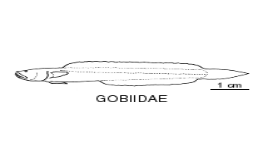
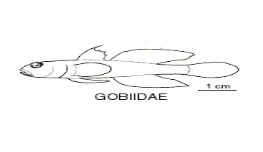
- 20—17.0 O. PERCIFORMES-Gobiidae:usually with pelvic fins fused into a cup-shaped disc and positioned below, or below and just behind the pectoral fin bases, two dorsal fins and no lateral line on the sides of the body.
- 21—17.0 O. PERCIFORMES-Labridae
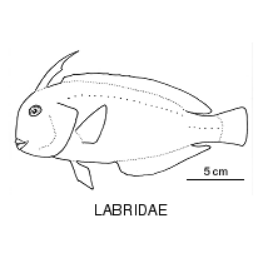
Wrasses usually have a long slender, somewhat compressed body, with a pointed snout, large canine teeth in the front of their jaws, large cycloid scales, and a long-based dorsal fin that lacks a notch between the spinous and soft-rayed portions.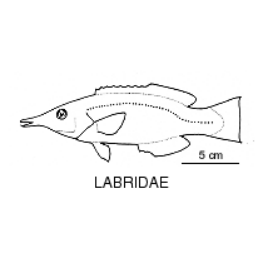
- 22—17.0 O. PERCIFORMES-Sillaginidae
s.mall to medium-sized, bottom dwelling fishes with conical snouts, small mouths, two separate dorsal fins, a weakly forked tail, and small scales.
Schooling fishes on sandy or silty bottoms in bays, estuaries and along the coast to about 50 m.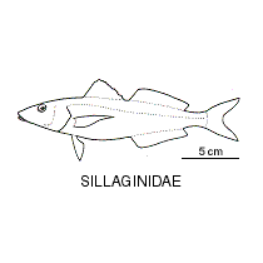
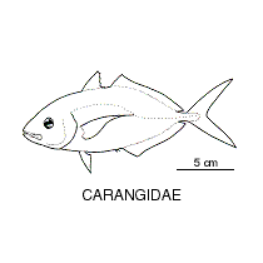
- 23—17.0 O. PERCIFORMES-Carangidae
Jacks are marine fishes in tropical and temperate waters around the world, some species entering brackish and even freshwater environments. Some species attain a maximum length of 1.3 m, and many species are valuable food and game fish.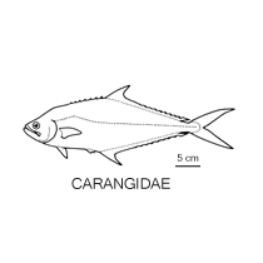
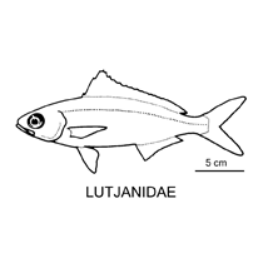
- 24—17.0 O. PERCIFORMES-Lutjanidae (snapper):
Meristic features: Dorsal fin X-XII, 8-18; Anal fin III, 7-11; Vertebrae 24.
Lutjanids are generalised percoid fishes with a robust, relatively elongate body; single dorsal fin (frequently containing 10 or 11 spines); upper jaw somewhat protrusible, maxilla expanded posteriorly, sliding beneath suborbital bone for much of its length; jaws usually with well-developed canine teeth; scales absent from snout and preorbital region.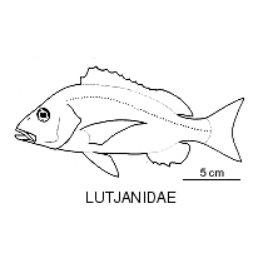
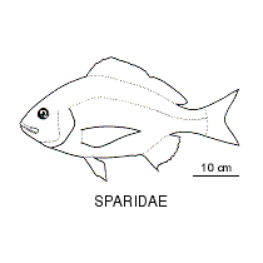
- 25—17.0 O. PERCIFORMES-Sparidae (Bream, Tarwhine, Porgies, Snapper)
- 26—17.0 O. PERCIFORMES-Girellidae (based off Western Rock Blackfish)
Body of moderate length and depth (approx. 38% SL), compressed, dorsal and ventral profiles evenly arched; caudal peduncle moderately shallow. Head small, (approx. 30% SL), forehead strongly convex; eyes small (approx. 22% HL); mouth small,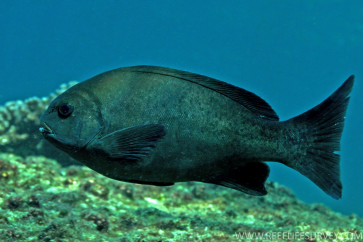
- 27—17.0 O. PERCIFORMES-Mullidae (goatfish):
Meristics: D VI-viii, 8-9; A I-II, 5-8; P 13-17; V I, 5;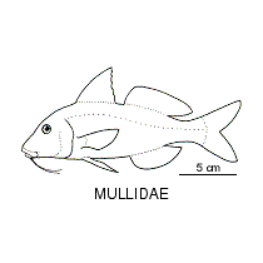
- 28—17.0 O. PERCIFORMES-Scombridae (mackerel)
Dorsal fin XIII-XV, 19-22 + 8-10 finlets; Anal fin 19-22 + 7-10 finlets; Pectoral fin 22-25; Vertebrae 44-46; Gill rakers 6-13.
Body elongate; strongly compressed; jaws with a single series of 5-38 sharp triangular teeth. Dorsal fins separated by a narrow space. Body covered in small scales, anterior corselet absent.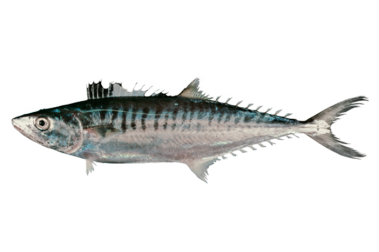
- 29—17.0 O. PERCIFORMES-Centropomidae [Clarify this group with Iain] (barramundi):
Dorsal fin VIII-IX, 10-11; Anal fin III, 7-8; Pectoral fin 15; Gill rakers (lower limb of 1st arch) 16-17; Horizontal scale rows ~19; Lateral line scales 52-61.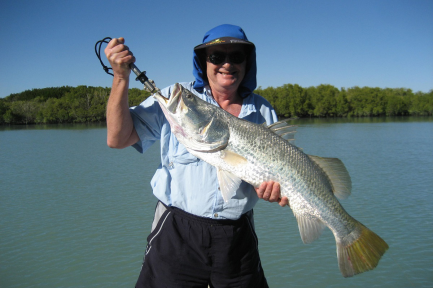
- 30—17.0 O. PERCIFORMES-Pomatomidae:
Body slender, streamlined, moderately compressed; mouth large, oblique, with a single row of knife-like teeth; two dorsal fins, the first low with weak spines, the second long-based, elevated anteriorly; anal fin similar to, but lower than second dorsal fin; pectoral and pelvic fins small; tail forked.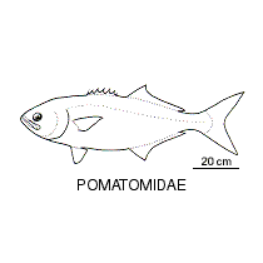
- 31—17.0 O. PERCIFORMES-Trichiuridae (based off Largehead Hairtail):
Dorsal fin III, 130-135; Anal fin 100-105. Body extremely elongate, compressed and tapering to a point. Mouth large with a dermal process at the tip of each jaw. Dorsal fin relatively high; anal fin reduced to minute spinules usually embedded in the skin or slightly breaking through; anterior margin of pectoral fin spine not serrated.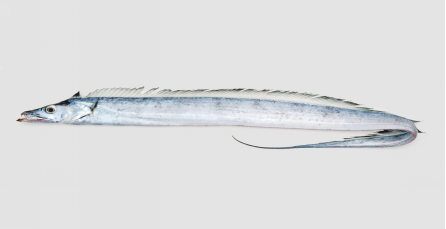
- 32Flounder21.0 O. PLEURONECTIFORMES
Bothidae (left eye flounders):
Pleuronectidae (right eye flounders): - 33—22.0 O. TETRADONTIFORMES
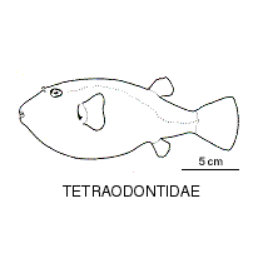
- 34—22.0 O. TETRADONTIFORMES-Tetradontidae (puffer fish):
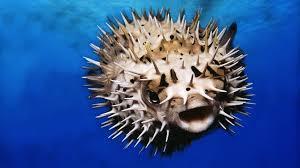
- 35—22.0 O. TETRADONTIFORMES-Ostracidae (boxfish)
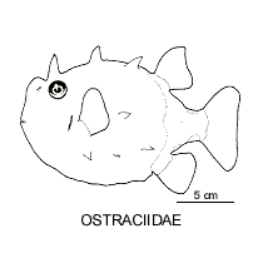
- 36Porcupine fish22.0 O. TETRADONTIFORMES-Diadontidae
- 37—22.0 O. TETRADONTIFORMES-Monocanthidae (leatherjackets)
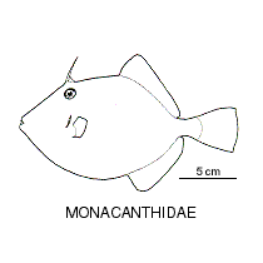
- 38—Chondrichthyes-order
1.0 Chimeriformes-chimera
lower jaw and two pairs of grinding tooth plates in their upper jaw that stick out of their mouth like a rabbit's teeth! They have thick bodies that taper to a long, thin rat-like tail. Males have three grasping organs.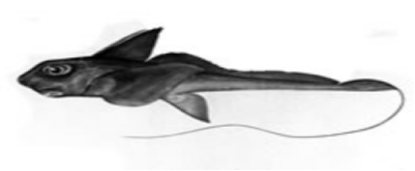
- 39—2.0 * Hexanchiformes – cowsharks, frilled shark
Anal fin present; 6 or 7 gill slits, one dorsal fin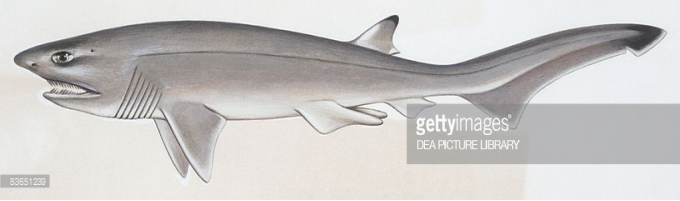
- 40—3.0 * Squaliformes
No anal fin; body not raylike; mouth vental; short snout (no saw!)
Fa. Squalidae (dogfish, 2 females)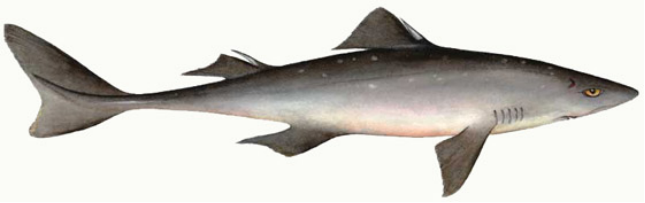
- 41—4.0 * Pristiophoriformes – sawsharks (7-9 species)
No anal fin; body not raylike; mouth vental; elongated sawlike snout
(note the lateral gill slits, the teeth arrangement and barbels compared to the
sawfish)
Spiracles !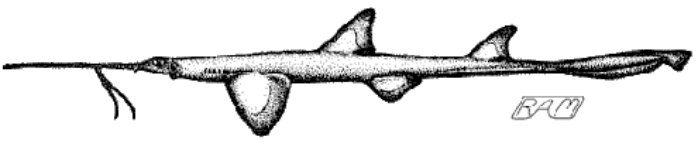
- 42—5.0 * Squatiniformes – angel sharks
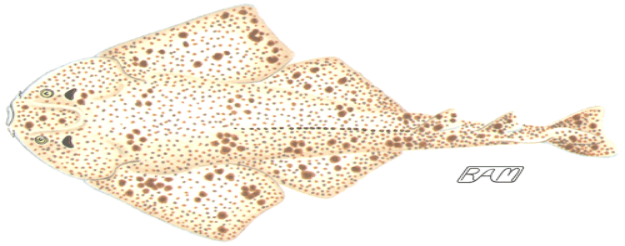
- 43—6.0 * Heterodontiformes – Port Jackson shark, horn sharks, bullhead (9
species)
Anal fin, 5 gill slits, 2 dorsal fins, strong dorsal fin spines
Fa. Heterodontidae, PJ : Heterodontus portjacksoni 3 specimens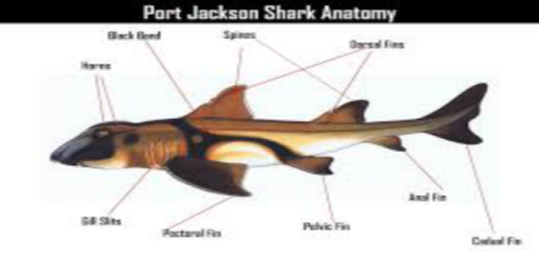
- 44—Galea: 7.0 * Orectolobiformes - 40 species in seven families in 13 genera
carpet sharks, including zebra sharks, nurse sharks, wobbegongs and the
whale shark
Anal fin, 5 gill slits, 2 dorsal fins, no fin spines; mouth well in front of eyes
Spiracles !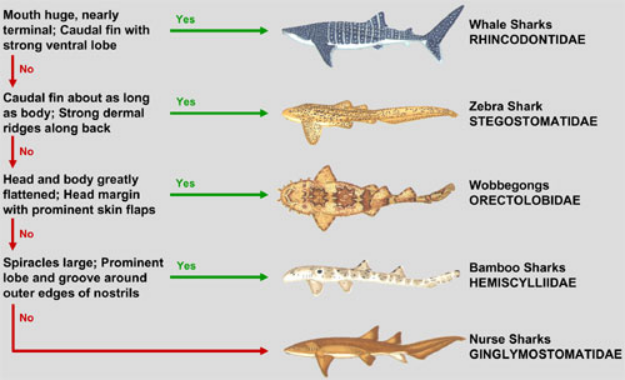
- 45—9.0* Lamniformes - mackerel sharks. They include the goblin shark, basking
shark, grey nurse (!), megamouth shark, the thresher sharks, shortfin and
Longfin mako sharks, and great white shark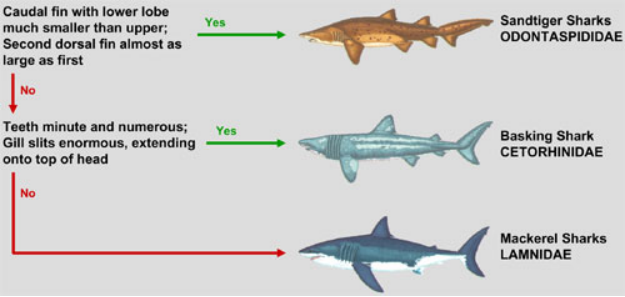
- 46—Order Batoidea-10.0 * Torpediniformes
Family Narcinidae (numbfishes)
e.g. numb ray Hypnos monopterygium
1 baby numbfish, Hypnos, 2 Narcine tasmaniensis
Family Torpedinidae (torpedo electric rays)
Spiracles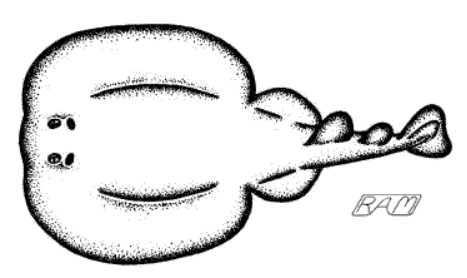
- 47—11.0 * Pristiformes
Family Pristidae (sawfishes)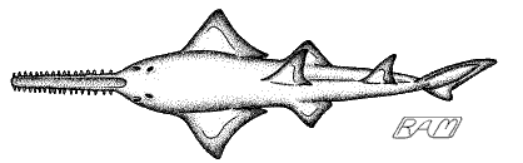
- 48—12.0 * Rajiformes- Family Rajidae (skates, 200 species in 27 genera)
2 subfamilies, Rajinae (hardnose skates) and
Arhynchobatinae (softnose skates).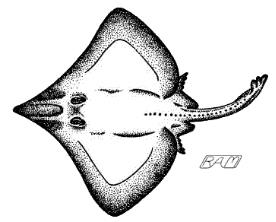
- 49—14.0 * Myliobatiformes
* Family Dasyatidae (whiptail stingrays)
Dasyatis fluvorum the estuary stingray.
Specimen and Picture
The Short-tail Stingray, Dasyatis brevicaudata, also
sometimes known as the ‘Bull Ray’ is
the largest Stingray in the world, ~1.8 m across and ~4 m
long.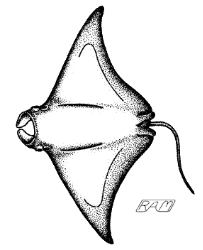
- 50—Perciformes-Pomacentridae