
Flashcards
Intrapersonal Communication
Cards in this deck (24)
- 1Intrapersonal Communicationthe type of communication that occurs within an individual making the “sending out” communicator also the “receiving” communicator.
- 2The Selfrefers to the entire person; the union of elements (such as body, emotions, thoughts, and
sensations) that constitute his individuality and identity. - 3Self-Conceptthe ways in which we think about and describe ourselves
- 4Self- Esteemthe degree to which we like those descriptions of ourselves
- 5Self-Concept Formation1. Reflected Appraisals
a. The Principle of Direct Reflections
b. The Principle of Perceived Self
2. Social Comparisons - 6The Principle of Direct ReflectionsSelf concept is largely shaped by the responses of others. You are deeply influenced by other people’s attitudes towards you.
(Veblen 1934) - 7The Principle of Perceived SelfSelf- concept is formed based on our imagination of others’ judgments of us. The question here is not “What is the other person’s attitude towards me?” but “What do I perceive to be his attitude towards me?”
(based on “looking glass self” by Cooley, 1912) - 8Social Comparisons (Self-Concept Formation)“Human beings learn about themselves by comparing themselves with others.”
(Pettigrew, 1967) - 9Summary A : Self Conceptthe perception or the view we have of ourselves with regard to our physical a. appearance, b. intelligence, c. personality, d. strengths and e. weaknesses.
- 10Summary B: Self-Conceptis formed through a. one’s interaction with others; through b. our self-perception of our own behavior; through c. social comparison; and through d. influences of our culture.
- 11Positive Self-Conceptwill likely lead to a more confident and improved communication transactions.
If a person sees himself as one with positive qualities, his communication attempts will also be more positive and relaxed. - 12Negative Self-Conceptwill most likely affect one’s communication skills badly.
This kind of negative point of view towards one’s personality can lead to poor communication skills. - 13Ways to Improve One’s Self-Concept by Arthur Koch (1995)a. Be willing to change.
b. Be will to forgive yourself.
c. Set realistic goals.
d. Develop your uniqueness.
e. Stand up for what you believe.
f. View yourself in the proper perspective. - 14Self- Awarenessthe degree to which a person can claim knowledge and understanding about himself
- 15Self-Disclosureis the degree to which he is willing to share parts of himself with others
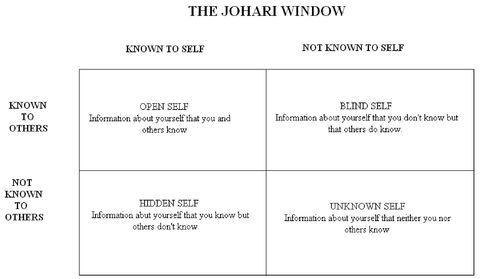
- 16JOHARI Windowconceptualized by Joe Luft and Harrington Ingham
The self is analogous to a window composed of four (4) panes or quadrants: - 17Visual: JOHARI Window
- 18Open Self (JOHARI Window)represents various types of information or knowledge known to the self and
known to others, or that which you are willing to divulge or share with others - 19Blind Self (JOHARI Window)quadrant that represents information which is known to others but unknown to self
- 20Hidden Self (JOHARI Window)represents things or information known to self but unknown to others
- 21Unknown Self (JOHARI Window)represents information unknown both to you and to others
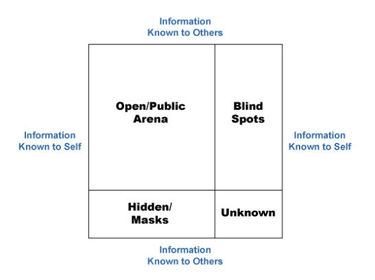
- 22Visual: Ideal JOHARI Window (according to the standards of effective communication)
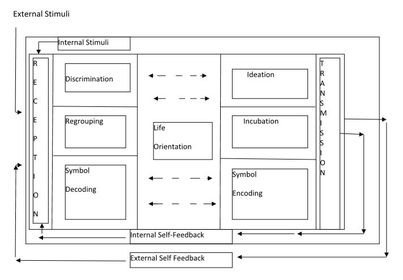
- 23Wiseman and Barker ModelIntrapersonal communication is the “creating, functioning, and evaluation of symbolic processes which operate within the originating or responding communicator.” (1974)
- 24Visual: Wiseman and Barker Model
Information
- Description
- Content originally prepared by Prof. Grace Bernadette Mendoza
- Created by
- Shar MB
- Views
- 52
- Tags
- Rating