
Flashcards
med chem 2 final exam
Cards in this deck (200)
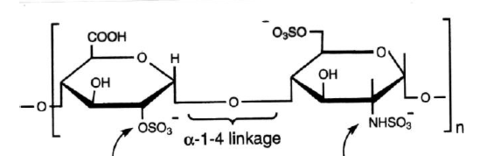
- 1—heparin
anticoagulant
parenteral
mucopolysaccharide
source: pig lungs, pig intestinal mucosa
isolated from liver
high/low (higher affinity) molecular weight
acidic: carboxylic acid and sulfate groups
anion: at physiological pH
given as Na+ salt/poor GI absorption
IV/SQ (not IM: cause hematoma)
-MOA: accelerates binding of antithrombin to thrombin (inhibit it + inhibit factor 10a)
-metabolism (partially): depolymerization, desulfuration --> inactive mtb (liver)
-prolonged effect if: renal, hepatic dysfunction
-SE: hemorrhage, alopecia (after 3-4m), thrombocytopenia
if high dose (>50mg) --> heparin like effects
-antidote: protamine sulfate - 2—warfarin
anticoagulant
oral
4-hydroxycoumarin derivative
racemic mixture: S(-)>R(+)
given Na+, K+ salts
bioavailability: 100%
onset of action: 12-48h --> slow
DOA: 2-5d
MOA: vitamin K antagonist (inhibit vit K epoxide reductase, vit K quinone reductase, gamma carboxylation) --> reduce factors 10,9,7,2
metabolism: S--> CYP2C9/ R--> CYP2C19
2'-hydroxywarfarin (active)
caution in pregnancy: crosses placenta
SE: hemorrhage, skin rash, nausea, thrombocytopenia, diarrhea, skin necrosis
antidote: blood transfusion, give factors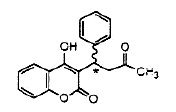
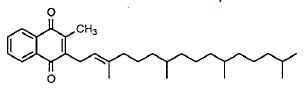
- 3—vitamin K
- 4—hemiketal form of warfarin
similar to hemiketal form of vit K
compete for same enzyme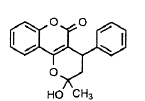
- 5—hemiketal form of vit K
share similarities with hemiketal form of warfarin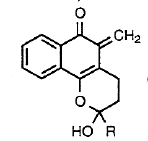
- 6—(S)-7-hydroxywarfarin
metabolite of warfarin by CYP2C9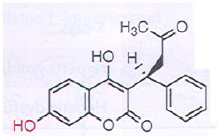
- 7—(S)-6-hydroxywarfarin
metabolite of warfarin by CYP2C9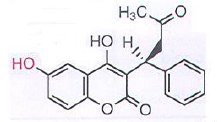
- 8—2'-hydroxywarfarin
metabolite of warfarin
active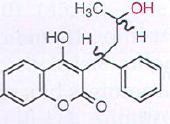
- 9—(R)-warfarin
can be metabolized by CYP2C19 on C7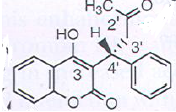
- 10—anisindione
anticoagulant
oral
1,3-indandione derivative
onset of action: 12-48h --> slow
DOA: 2-5d
MOA: same as warfarin
alkaline urine (red-orange color)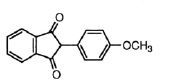
- 11—phenindione
anticoagulant
oral
1,3-indandione derivative
onset of action: 12-48h --> slow
DOA: 2-5d
MOA: same as warfarin
alkaline urine (red-orange color)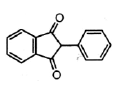
- 12—citric acid
in vitro anticoagulant
chelate Ca2+ (inhibit factor 4)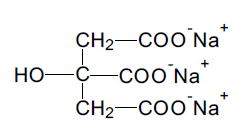
- 13—EDTA
in vitro anticoagulant
chelate Ca2+ (inhibit factor 4)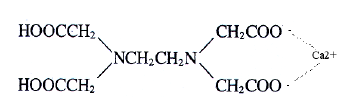
- 14—aspirin (ASA)
antiplatelet
inhibit COX 1 irreversibly --> inhibit PGI2 and TXA2
acidic
active as such
GI disturbance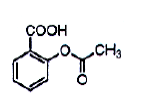
- 15—trifusal
antiplatelet
inhibit COX 1
inhibit PDE
active as such
metabolized to: deacetylated form (2-hydroxy-4-trifluromethylbenzoic acid HTB) --> active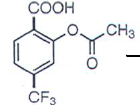
- 16—sulfinpyrazone
antiplatelet
inhibit COX 1 reversibly
metabolism: inactive metabolites--> p-hydroxysulfinpyrazone, sulfone, p-hydroxysulfide, sulfide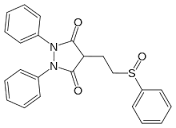
- 17—dipyridamole
antiplatelet
inhibit PDE (phosphodiesterase) --> increase cAMP --> inhibit release of aggregating agent
inhibit adenosine reuptake --> increase cAMP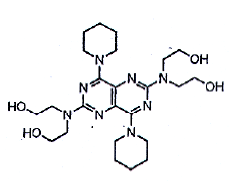
- 18—cilostazole
antiplatelet
quinolinone derivative
inhibit PDE3A
inhibit adenosine reuptake
orally active
well absorbed
increase absorption with high fat meal
metabolism: CYP3A4, CYP2C19--> active: DHC, HC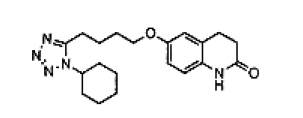
- 19—3,4-dehydrocilostazol
antiplatelet
major active metabolite of cilostazol by CYP3A4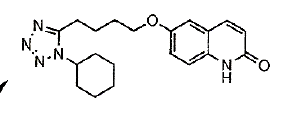
- 20—4'-hydroxycilostazol
antiplatelet
minor active metabolite of cilostazol by CYP2C19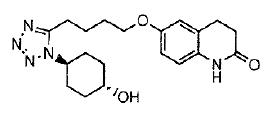
- 21—ticlopidine
antiplatelet
thienopyridine derivative
prodrug
orally active
MOA: ADP pathway inhibitor, inhibit GP2b/3a receptor
t1/2: 24-36h --> long
onset of action: 48h --> slow
metabolism (liver): 2-keto metabolite, thiol metabolite (active), M5 and M6 (toxic)
SE: neutropenia, thrombocytopenia, skin rash, GI effects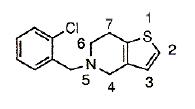
- 22—clopidogrel
antiplatelet
thienopyridine derivative
prodrug
orally active
MOA: ADP pathway inhibitor
t1/2= 24-36h --> long
metabolism: hydrolyzation of the thiol--> active metabolite (bind to P2Y and prevent binding of ADP--> t1/2= 8h)
SE: rare neutropenia, thrombocytopenia, GI effects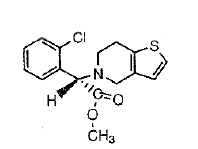
- 23—prasugrel
antiplatelet
thienopyridine derivative
orally active
metabolism: hydrolyzed to thiolactone then thiol --> active
used in combination with aspirin
like clopidogrel: non competitive antagonist of P2Y12 (irreversibly)--> block ADP for the life of platelets (10days)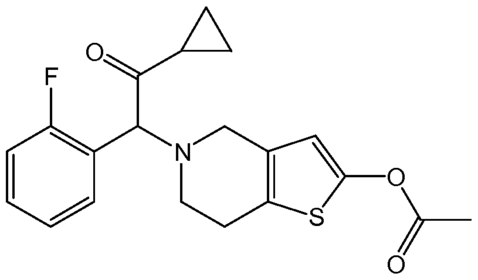
- 24—eptifibatide
antiplatelet
GP2b/3a receptor antagonist
cyclic heptapeptide (KGD sequence)
IV
t1/2= 2.5h --> short
excretion: renal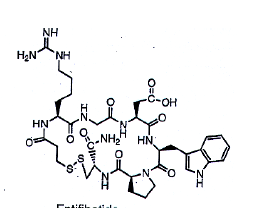
- 25—tirofiban
antiplatelet
GP2b/3a receptor antagonist
non peptide (distance btw COO- and NH+ is identical to RGD sequence--> compete with fibrinogen)
t1/2= 2h --> short
IV
excretion: renal (unchanged)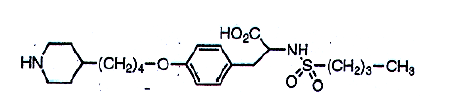
- 26—epoprostenol
antiplatelet
prostaglandin metabolite of arachidonic acid
PGI2
potent vasodilator
IV
t1/2= 3-6min
increase in cAMP--> decrease release of aggregation mediator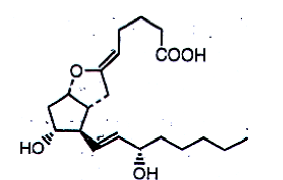
- 27Abciximabantiplatelet
GP2b/3a receptor antagonist
monoclonal antibody
IV
short t1/2= 30min - 28urokinasefibrinolytic agent
from human urine and renal cells
act on plasminogen to produce plasmin
nonantigenic - 29streptokinasefibrinolytic agent
from hemolytic streptococci
generates more plasmin than urokinase (via 2 steps)
allergic reactions (due to Ab formation) - 30anistriplasefibrinolytic agent
prodrug
2nd generation plasminogen activator
acetylated-plasminogen-streptokinase-activator complex (APSAC)
p-anisoyl derivative of Lys-plasminogen-streptokinase - 31alteplasefibrinolytic agent
2nd generation plasminogen activator
tissue plasminogen activator (tPA)
formed by recombinant DNA techniques - 32reteplasefibrinolytic agent
3rd generation plasminogen activator
modified alteplase
less affinity to fibrin clot than alteplase - 33ananasefibrinolytic agent
mixture of proteolytic enzymes
from pineapple plant
non selective to fibrin clot
anti-inflammatory agent
cheap - 34tenecteplasefibrinolytic agent
3rd generation plasminogen activator
composed of 527a.a.: 103 a.a: Thr--> Asp
117 a.a: Asp--> Glu
296-299 a.a: Lys-His-Arg-Arg--> Ala (x4)
15X higher fibrin selectivity
elimination: hepatically - 35—prostaglandin
prostanoic acid derivative
must have: 15-alpha OH
13-14 trans double bond
alpha/beta chain: trans
A,B,C,D,E,F,G,H,I (differ in C9-11)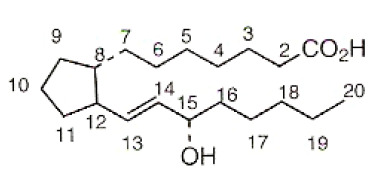
- 36—PGD
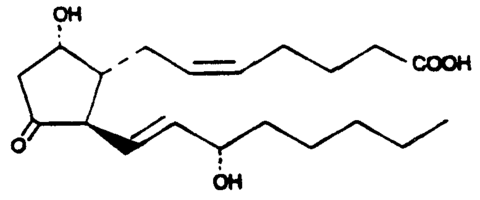
- 37—PGE
PGE1: dilation of bronchiol smooth muscle
PGE2: dilation of bronchiol smooth muscle, dilation of blood vessel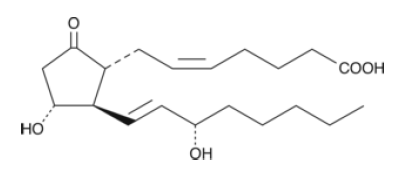
- 38—PGF2alpha
constriction of bronchiol smooth muscle, constriction of blood vessels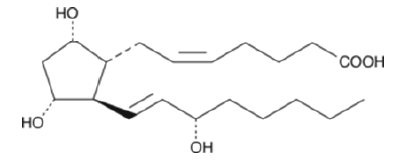
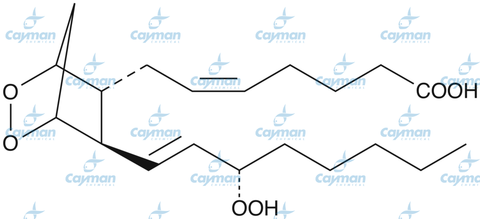
- 39—PGG/PGH
- 40—PGI2 (prostacyclin)
from PGH2
inhibit platelet aggregation
dilation of blood vessels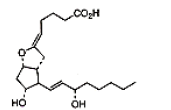
- 41—TXA2
from PGH2
aggregation of platelet
constriction of blood vessels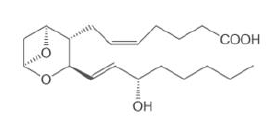
- 42—arachidonic acid
cis 5,8,11,14-eicosatetraenoic acid
precursor of prostaglandins by COX
and leukotrienes by LOX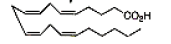
- 43—acetanilide
NSAID
removed from market
form: acetaminophen/ aniline --> toxic
SE: methemoglobenemia, skin rash, jaundice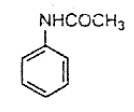
- 44—phenacetin
NSAID
removed from market
form: acetaminophen/ aniline --> toxic
SE: nephritis, carcinogenecity in rats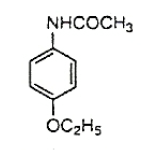
- 45—acetaminophen
NSAID
antipyretic, analgesic
little antiinflammatory activity
MOA: reversible inhibitor of COX3 (brain)
metabolism: by CYP2E1--> N-acetylmidoquinone (reactive metabolite)
by glucuronidation and sulfation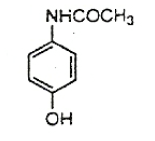
- 46—N-acetylimidoquinone (NAPQI)
metabolite of acetaminophen
metabolism: N-acetylcysteine, glutathione (renal excretion), hepatic protein (hepatic necrosis)
- 47—salicylic acid
metabolite of aspirin
- 48—aspirin
NSAIDs
MOA: irreversibly inhibits COX1 (10-100X)> COX2 enzymes by acetylating serine 530
pKa=3.49
salicylate anion essential for activity
stable in dry condition
-absorbtion: upper small intestine (depend on gastric pH, tablet formulation, presence of food in stomach)
high pH: increase ionization--> more soluble --> less absorbed
buffering agent: if high dose --> decrease absorption
if low dose --> increase absorption
-formulation: tablet of small particles --> absorbed faster
absorption from rectal--> slow
absorption after topical--> fast
-metabolism: hydrolyzed to salicylic acid and acetic acid (in aqueous solution) by glucuronidation, glycine conjugation
stable in: alcohol, glycerin
-SE: GI disturbance, salicylism (high dose) --> tinnitis, fatal --> respiratory failure (medullary depression) at high dose, Reye's syndrome in children with viral infection :influenza, chicken pox (encephalopathy, liver damage, violent headache), GI: (PGs--> cryoprotective for the gastric mucosa) gastric distress/bleeding, acute hemorrhage (dose dependent)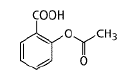
- 49—salicylamide
NSAIDs
analgesic and antipyretic (not antiinflammatory)
fairly stable to heat and moisture
poor water solubility
for aspirin sensitive patients
no gastric irritation
more CNS effect than aspirin
metabolism: inactive --> not hydrolyzed to salicylic acid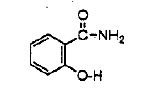
- 50—salsalate
NSAIDs
dimer of salicylic acid
insoluble in gastric acid juice
-metabolism: partially hydrolized in intestine --> 2 salicylic acid molecules (site of absorption), forms less salicylic acid than aspirin (15%)
-less gastric upset than aspirin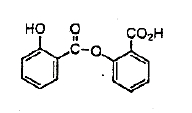
- 51—diflunisal
NSAIDs
analgesic, little antipyretic
insoluble in water
slightly more potent than aspirin
t1/2= longer than aspirin
-metabolism: ether/ester glucuronide
not metabolized to salicylic acid--> no gastric upset
-SE: few, GI disturbances, diarrhea, skin reaction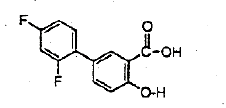
- 52—mesalamine
NSAID
5-amino salicylic acid
metabolite of sulfasalazine and olsalazine
MOA: inhibit COX in the bowel mucosa--> decrease colonic inflammation
inhibit LOX --> decrease leukotrienes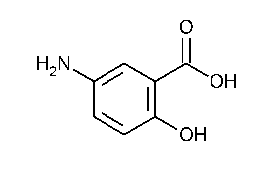
- 53—sulfasalazine
prodrug
precursor of mesalamine
metabolized by azo reductase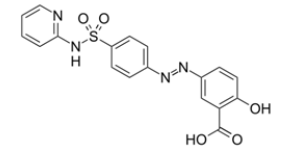
- 54—olsalazine
prodrug
precursor to mesalamine in GI tract
by bacterial flora
act locally (not systemically)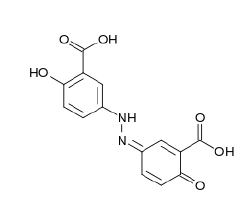
- 55—phenylbutazone
NSAIDs
4-butyl-1,2-diphenyl-3,5-pyrazolidinedione
not a drug of choice
analgesic, antipyretic, antiinflammatory
slight water soluble
-to treat: painful symptoms of gout (uricosuric), rheumatoid arthritis, bursitis
-metabolism: to oxyphenbutazone (active NSAID), glucuronidation, gamma-hydroxyphenylbutazone (uricosuric), gamma-ketophenylbutazone (antiinflammatory)
-SE: abdominal discomfort, nausea, skin rashes, peptic ulcer, blood disorder
-contraindicated: in children <14y --> due to Na+ retention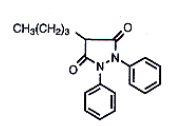
- 56—oxyphenbutazone
NSAIDs
metabolite of phenylbutazone
same potency as phenylbutazone
same SE but with less GI effect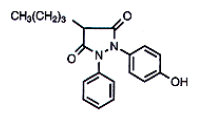
- 57—indomethacin
NSAIDs
arylalkonic acid
indole acetic acid derivative
most potent (analgesic agent: more than aspirin,
antipyretic agent: more than phenylbutazone,
antiiflammatory agent: more than phenylbutazone)
weak water soluble
light sensitive
rapid absorption after oral dose
highly bound to plasma protein
metabolized to inactive
SE: GI disturbance, headache, vertigo, dizziness, severe depression, suicide attempts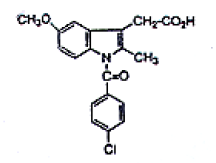
- 58—sulindac
NSAIDs
arylalkonic acid
indene derivative
prodrug
water soluble (at alkaline pH)
stable at alkaline aqueous solution, air, 100C
t1/2= 8h (sulfide t1/2=16h)
absorbed: as sulfoxide
-metabolism: to sulfide derivative (in the cirulation)
-analgesic activity: equal to indomethacin
-antiinflammatory/antipyretic activity: less than indomethacin
-for: rheumatoid arthritis, osteoarthritis, gouty arthritis, ankylosing spondylitis
-SE: gastric irritation, headache, vertigo, dizziness, skin rash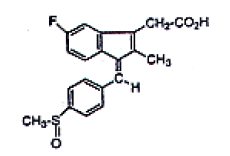
- 59—sulfide
NSAID
active metabolite of sulindac
t1/2= 16h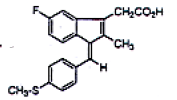
- 60—tolmetin sodium
NSAIDs
arylalkonic acid
N-methylpyrrole acetic acid derivative
very water soluble
free acid form--> water insoluble
t1/2= 1h --> short
-potency: more than phenylbutazone, less than indomethacin
-for: different types of arthritis
-metabolism: to inactive metabolites
-SE: GI disturbance (less than aspirin)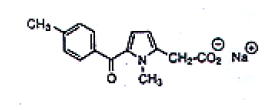
- 61—diclofenac sodium
NSAIDs
arylalkonic acid
most used NSAID in the world
poor water soluble
complete absorption after oral dose
highly bound to plasma protein
50% bioavailabilty (first pass)
analgesic, antipyretic, antiinflammatory
analgesic/antipyretic agent: more potent than aspirin
more potent than indomethacin
-MOA: inhibit COX1 and LOX
inhibit arachidonic acid release, stimulate uptake --> decrease AA availability
-for: rheumatoid arthritis, osteoarthritis, ankylosing spondylitis
-metabolite: 4'OH (30-40%)--> weak act.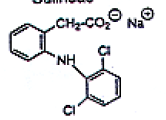
- 62—etodolac
NSAIDs
arylalkonic acid
tetrahydropyrano acetic acid derivative
rapid GI absorption
highly bound to plasma protein
-antiinflammatory: more potent than aspirin, sulindac
less potent than indomethacin
-racemate--> S(+) active
-metabolized: to inactive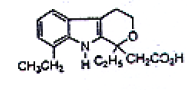
- 63—nabumetone
NSAIDs
prodrug
non acid derivative
water insoluble
analgesic: less active than aspirin
-metabolism (rapid): acetic acid derivative --> 6-methoxynaphtalene-2-acetic acid (6MNA) (38%) --> active
-less gastric damage (absorbed as ketone, converted to 6MNA in circulation)
-for: osteoarthritis, rheumatoid arthritis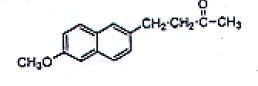
- 64—6MNA
active metabolite of nabumetone
in circulation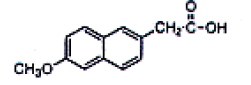
- 65—ibuprofen
NSAIDs
arylpropionic acid
2(p-isobutylphenyl)propionic acid
most used NSAID
orally active
-same effect as aspirin (less SE)
racemic mixture--> S(+) more potent than R(-)
-for: osteoarthritis, rheumatoid arthritis, antipyretic, mild to moderate pain
-metabolism: to inactive metabolite
give ibufenac (active)--> less potent, hepatotoxic
-excretion: (+) isomer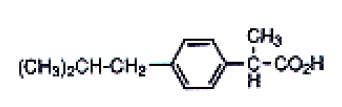
- 66—ibufenac
p-isobutylphenyl acetic acid
active form of ibuprofen
less potent
hepatotoxic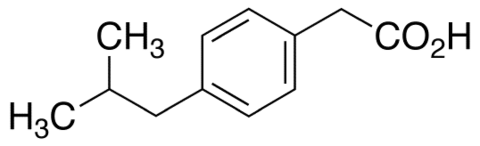
- 67—fenoprofen calcium
NSAIDs
arylpropionic acid derivative
2(3'-phenoxyphenyl)propionic acid
slightly water soluble
rapid absorption after oral dose
highly bound to plasma protein
Na+ and Ca2+ salts (less hygroscopic): similar pharmacokinetic
-antiinflammatory: less potent than ibuprofen
PG synthesis inhibitor: more potent than aspirin, less potent than indomethacin
metabolism: to inactive metabolites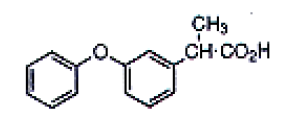
- 68—ketoprofen
NSAIDs
arylpropionic acid derivative)
2(3'-benzoylphenyl)propionic acid
insoluble in water and many organic solvent
rapidly completely absorbed after oral dose
-MOA: inhibit COX, inhibit LOX, lysosomal mb stabilizer--> decrease release of lysosomal enzymes--> decrease tissue damage
-for: osteoarthritis, rheumatoid arthritis, antipyretic, mild to moderate pain, dysmenorrheal
-metabolism: glucuronidation, carbonyl reduction, ring hydroxylation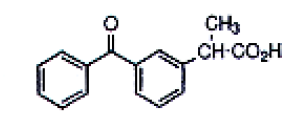
- 69—naproxen
NSAIDs
arylpropionic acid derivative
2(6'-methoxy-2'-naphtyl)propionic acid
both enantiomer marketed: (-)--> anaprox (naproxen Na+)
complete GI absorption after oral dose
99% bound to plasma protein
-PG synthesis inhibitor: more potent than aspirin, phenylbutazone, ibuprofen
-antiinflammatory: less potent than indomethacin
-analgesic/antipyretic: more potent than phenylbutazone, aspirin, indomethacin
-ulceration: less--> than aspirin, indomethacin, ketoprofen, tolmetin
more--> than sulindac
-for: different types of arthritis, ankylosing spondylitis, tenditis, bursitis, mild-moderate pain
-metabolism: to inactive--> glucuronidation and O-demethylation
-SE: GI irritation, nausea, dizziness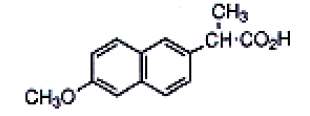
- 70—suprofen
NSAIDs
arylpropionic acid
2(4'(2'thienyl carbonyl)phenyl)propionic acid
removed from market because renal failure
reintroduced as mydriatic agent: for ophtalmic use --> inhibit intraoperative miosis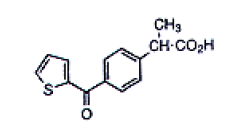
- 71—flubiprofen
NSAIDs
arylpropionic acid derivative
2(2'-fluoro-4'-biphenyl)propionic acid
Na+ salt: topical for ophtalmic use(ocufen)--> mydriatic agent (inhibit intraoperative miosis)
free acid form: oral use (ansaid)--> top prescribed use (osteo, rheumatoid arthritis)
well GI absorption after oral dose
99% bound to plasma protein
antiinflammatory: more potent than aspirin, phenylbutazone
antipyretic: more potent than aspirin
analgesic: more potent than ibuprofen
-metabolized: to inactive metabolite--> glucuronidation, sulfation, 4'OH, 3',4'OH, 3'OH, 4'-OCH3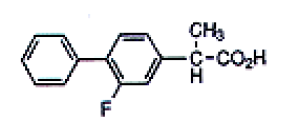
- 72—ketorolac
NSAIDs
arylpropionic acid derivative
5-benzoyl-2,3-dihydro-1-pyrrolidine-1-carboxylic acid
orally active
highly bound to plasma protein
analgesic activity: comparable to morphine
for: ophtalmic use, injection, for short term management of pain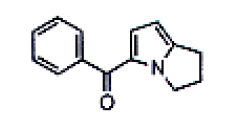
- 73—oxaprozin
NSAIDs
arylpropionic acid derivative (not alpha methyl acetic acid derivative)
complete absorption after oral dose
highly bound to plasma proteins
t1/2= 59h--> long
onset: rapid
long acting
antiinflammatory: equal to aspirin
-for: short, long term treatment of osteoarthritis, rheumatoid arthritis
-metabolism: (in liver) p-hydroxylation --> active
-SE: skin rash, mild photosensitivity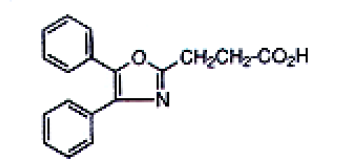
- 74—fenamic acid
NSAIDs
arylanthranilic acid derivatives
antiiflammatory/analgesic activities: little or no advantage over salicylates
-MOA (like salicylates): COX inhibition
-SE (like salicylates): GI disturbances, headache, dizziness, skin rash, transient hepatic and renal abnormalities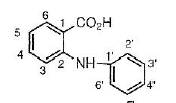
- 75—mefenamic acid
NSAIDs
N(2',3'-xylyl)anthranilic acid
Orally active
water insoluble (except at high pH)
Highly bound to plasma proteins
analgesic (mainly), anti-inflammatory
t1/2=2-4h --> short
for short term pain management
Metabolized: to inactive metabolites--> ester glucuronide, hydroxymethyl and dicarboxylic acid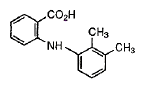
- 76—meclofenamate sodium
NSAID
arylanthranilic acid derivative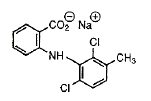
- 77—meclofenamic acid
NSAID
arylanthranilic acid derivative
Rapidly, completely absorbed after oral dose
Highly bound to plasma proteins
t1/2= 2-4h --> short
-potency: 25% more than mefenamic acid
-Metabolism: oxidation of methyl, ring hydroxylation and monodehalogenation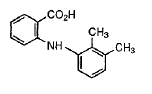
- 78—meclofenamic acid metabolite
active
by oxidation of methyl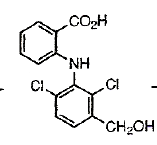
- 79—piroxicam
NSAIDs
oxicam
4-hydroxy-1,2-benzothiazine carboxamides
pKa=4-6 (acidic)
orally active
highly bound to plasma protein
more potent than fenamate
-potency: piroxicam> indomethacin> ibuprofen
Long t ½ 38 hrs
-anti-inflammatory agent: more potent than aspirin and phenylbutazone, equal to indomethacin
analgesic agent: less potent than indomethacin, equal to fenoprofen, ibuprofen, naproxen and phenylbutazone
-MOA: Inhibitor of COX, lysosomal enzymes release and migration of polymorphonuclear cells into inflammatory sites, inhibits collagen induced platelet aggregation
-Metabolism: pyridine and aromatic benzothiazine ring hydroxylation (inactive metabolites)
-SE: Same like other NSAIDs
-for (most commonly used NSAIDs): osteoarthritis and rheumatoid arthritis, ankylosing spondylitis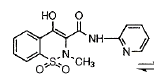
- 80—meloxicam
NSAIDs
oxicam
4-hydroxy-1,2-benzothiazine carboxamides
pKa=4-6 (acidic)
orally active
highly bound to plasma protein
more potent than fenamate
-MOA: selectivity to COX2
-metabolism: CYP2C9 (extensively) and CYP3A4 (less)
-SE: Less GI side effects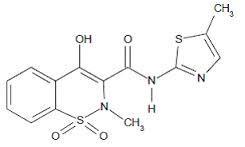
- 81—celecoxib
First NSAID marketed as selective COX-2 inhibitor
Diarylpyrazole derivative
does not contain carboxylate anion
Orally active
t1/2= 11h
-metabolizm: into inactive metabolites
-SE: Less GI disturbances than other NSAIDs, causes edema and hypertension (caution in case of CHF)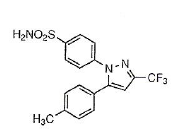
- 82—valdecoxib
NSAIDs
selective COX2 inhibitor
oxazole moiety
Orally active
t1/2= 7-8h
-metabolizm: by CYP3A4 and CYP2D6
(substrate and inhibitor of these enzymes)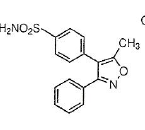
- 83—parecoxib
NSAIDs
selective COX2 inhibitor
Prodrug
IV and IM (only parenterally administered coxib
-metabolism: rapidly metabolized (in vivo) --> valdecoxib
-analgesic: more potent than ketorolac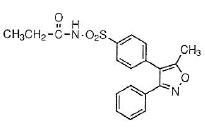
- 84—etoricoxib
NSAIDs
selective COX2 inhibitor
Orally active
t1/2= 22h --> long
-metabolism: by CYP3A4 (but is not inhibitor)--> 6'-hydroxymethyl and 1-N-oxide , glucuronides-->inactive
-excretion: mainly renal elimination as metabolites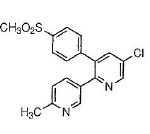
- 85—prontosil
antimetabolite
sulfonamide
prodrug
ozo moiety
only active in vivo
metabolism: to sulfanilamide
poor water soluble
forms crystalluria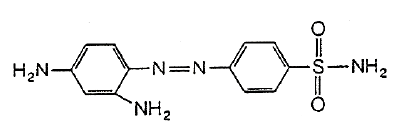
- 86—sulfanilamide
antimetabolite
aniline sulfonamides
White
colorless
bitter tasting crystals
weak acids
water insoluble
-More soluble in alkaline solutions than acidic
-available as Na+ salts --> moderately water soluble
-structurally analogues of PABA --> compete with dehydropteroate synthase (get incorporated in folic acid synthesis)
-do not affect mammalian cells
-cross placenta
-metabolism (in liver): to inactive
-Activity against: gram-ve/ gram +ve, E.coli, nocardia.
-SE: urinary tract disturbances, hypersensitivity, hematopoietic disturbances
rare: aplastic and hemolytic anemia, agranulocytosis, thrombocytopenia
kernicterus and jaundice, anorexia, nausea, vomiting and diarrhea
-DDI: Potentiation of sulfonylurea oral hypoglycemics, oral anticoagulants and hydantoin (due to displacement from plasma proteins)
-Drug resistance: altered enzyme (major), overproduction of PABA, reduced cellular reuptake of drug, enhanced drug inactivation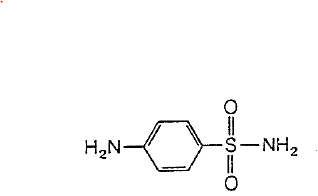
- 87—sulfamethoxazole
antimetabolite
Sulfonamide
rapidly absorbed and rapidly eliminated
t1/2= 10h --> short
ppb: 70%
highly water soluble--> rarely produce crystalluria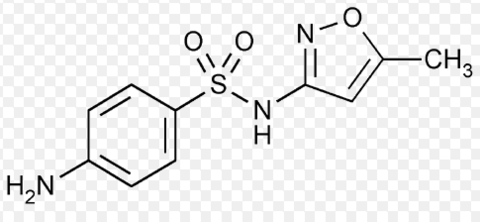
- 88—sulfisoxazole
antimetabolite
Sulfonamide
rapidly absorbed and rapidly eliminated
t1/2= 6h --> short
ppb: 90%
highly water soluble--> rarely produce crystalluria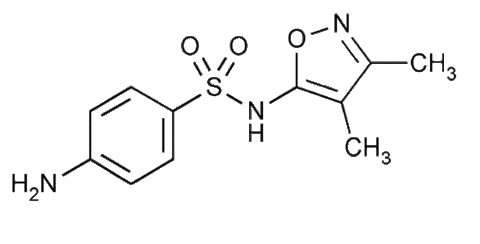
- 89—Sulfadiazine
antimetabolite
Sulfonamide
rapidly absorbed and rapidly eliminated
t1/2= 10-17h
most active
ppb: 45% --> low
relatively water soluble --> crystalluria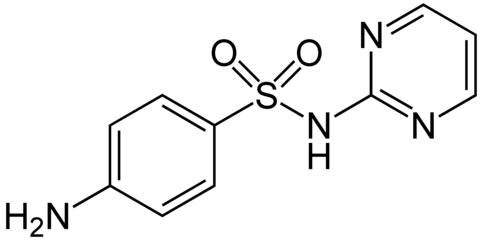
- 90—sulfamethizole
antimetabolite
Sulfonamide
rapidly absorbed and rapidly eliminated
t1/2= 9h -->short
ppb: 90% --> highly bound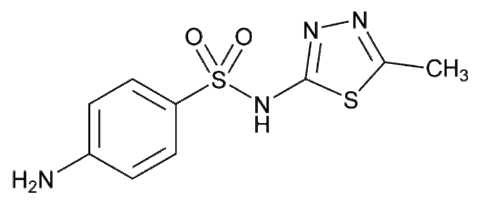
- 91—sulfasalazine
antimetabolite
Sulfonamide
poorly absorbed
prodrug
for: treating GI infections
metabolizm: by bacteria flora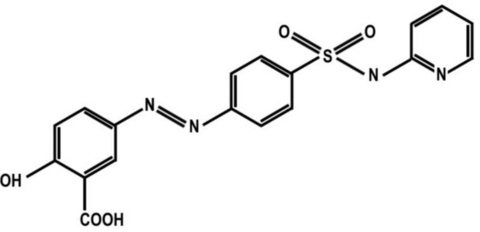
- 92—sulfapyridine
toxic mtb of sulfasalazine
absorption: from GI
excretion: in urine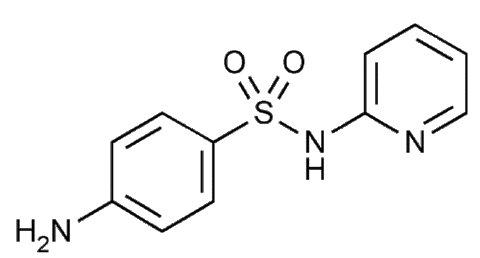
- 93—mesalamine
5-para-amino salycilic acid
active mtb of sulfasalazine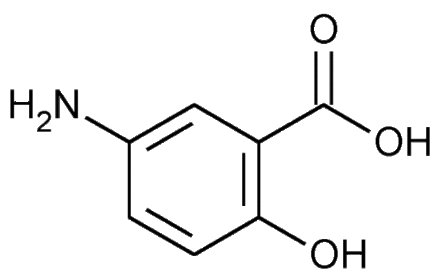
- 94—sulfadoxine
antimetabolite
Sulfonamide
rapidly absorbed (from GI) but very slowly eliminated
ppb: 98% --> highly bound
t ½ 7-10 days--> extraordinary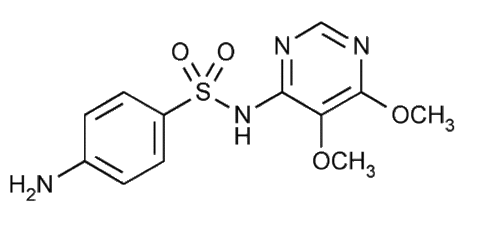
- 95—Silver sulfadiazine
antimetabolite
sulfonamide
Topically administered
their salts are very potent antimicrobial in the treatment of burns, scald & wound infection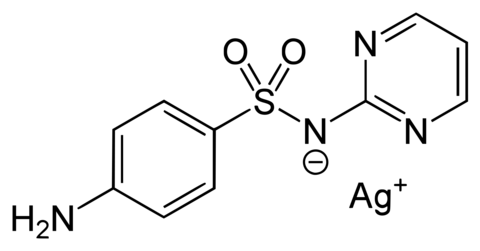
- 96—sulfacetamide
antimetabolite
sulfonamide
Topically administered
their salts are very potent antimicrobial in the treatment of burns, scald & wound infection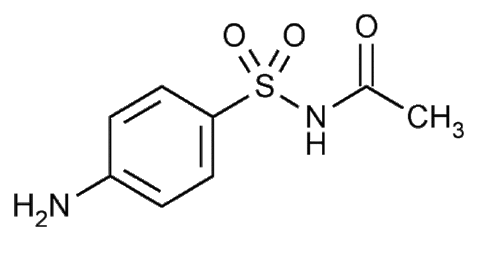
- 97—Mafenide
antimetabolite
not a true sulfonamide
Topically administered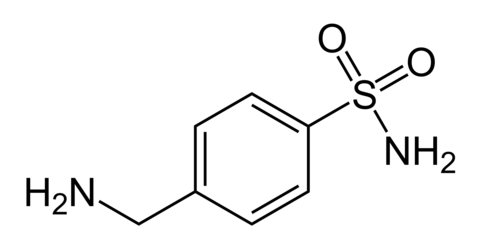
- 98—trimethoprim
antimetabolite
Not a sulfonamide
Trimethoxy benzyl diaminopyridine, Bacteriostatic
-MOA: Potent inhibitor of DHF reductase, Similar antibacterial spectrum to sulfonamides
Higher affinity to bacterial DHF reductase than mammalian
-Mostly compounded with sulfamethoxazole TMP/SMX (Cotrimoxazole)
oral and IV
-potency: TMP (20-50X) > SMX
-absorption: TMP well absorbed from GI
-ppb: 60-70%
-concentrated in prostatic fluid and vaginal fluid--> most used in UTI
-excretion: mainly renal, small amounts biliary
-SE:- Long term use: antifolate effects, folate deficiency, megaloblastic anemia, granulocytopenia, leucopenia (reversed by folinic acid), nausea, vomiting, fever, renal damage, skin rashes, CNS disturbances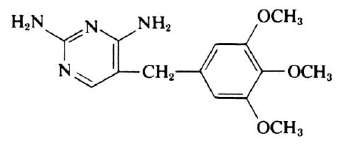
- 99—polymyxin
bacterial cell membrane disrupting agent
Cyclic polypeptides (by Bacillus polymyxa, soil bacteria)
polymyxin sulfate B (B1 and B2) Polymyxin E (E1, E2) --> colistin
Bactericidal cationic detergent (5 + charges)
-MOA: React with – charged phospholipids-->disrupt cell mb --> creates holes --> cell leakage
-active against most Gram – (not against Gram + and anaerobics)
-Pseudomonnas aeruginosa (only): elevated levels of Mg2+ and Ca2+ --> decrease activity
-absorption: GI (not well), topically, IV and IM, (found in ophthalmic, otic)
-for: bacterial diarrhea
-poor distribution (don't enter CSF)
-excretion:renal via GF
-SE: topically (few), orally (high dose): nausea and vomiting ,IV: nephro and neurotoxicity (accumulates in renal tubules)
Large dose: damage to mammalian cell membranes --> inhibit NMJ --> respiratory paralysis
-DDI: Aminoglycosides + polymyxins--> increase risk of respiratory/renal dysfunction
NMJ blockers + polymyxins--> increase effect of NMJ
-Use of polymyxins--> overgrowth of non-susceptible--> superinfection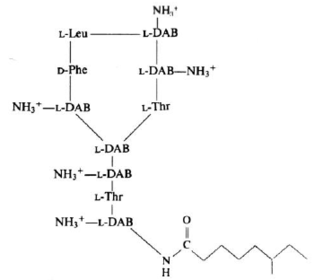
- 100—daptomycin
bacterial cell membrane disrupting agent
Novel cyclic lipopeptide antibiotic
from Streptomyces sp.
Consists of 13 a.a.
bactericidal (dose dependant)
-MOA: on Gram + (via acyl tail--> membrane depolarization),
disrupts bacterial plasma mb function without penetrating into cytoplasm
-MIC (minimal inhibitory concentration): for susceptible strains is 4X< vancomycin
-post-antibiotic effect (PAE)
-Synergism with gentamicin against staph. and enterococci
IV
ppb: 90%
t1/2= 6.5-32h
-excretion: mainly renal (80%)--> 2/3 intact
-SE: Constipation, myopathy (dose dependent), GI discomfort, nausea, diarrhea, skin rash, headache, insomnia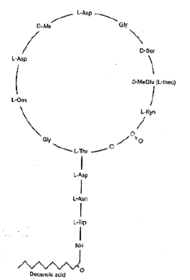
- 101—6-aminopenicillanic acid (6-APA)
beta-lactam
fermentation derived
not active: very minimal activity
after acylation --> active compound (penicillin)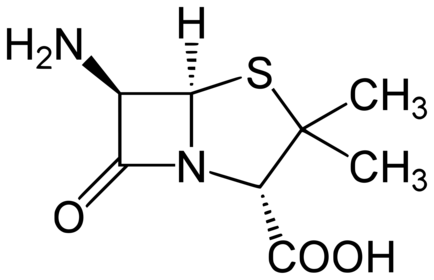
- 102—penam
beta lactam antibiotic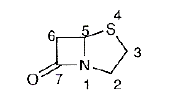
- 103—penem
beta lactam antibiotic
2,3-dihydrothiazole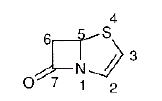
- 104—carbapenem
beta lactam antibiotic
2,3-dihydro-1H-pyrrole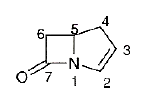
- 105—cefem
beta lactam antibiotic
3,6-dihydro-2H-1,3-thiazine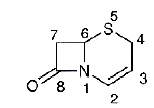
- 106—monobactam
beta lactam antibiotic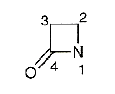
- 107—carbacephems
beta lactam antibiotic
1,2,3,4-tetrahydropyridine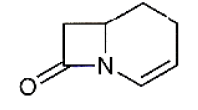
- 108—oxacephems
beta lactam antibiotic
3,6-dihydro-2H-1,3-oxazine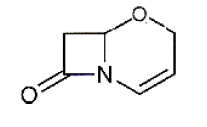
- 109—Pen G
benzyl penicillin
beta lactam antibiotic
fermentation derived
must be kept dry
Na and K salts are crystalline, hygroscopic and water soluble
orally and parenterally
stable for a long time unless in solution
improved acid stability (by addition of e- withdrawing grp on side chain)
-excretion: renally by tubular secretion
-MOA : cell wall inhibitor - inhibit PBPs, the cross linking of peptidoglycan matrix/ activate autolytic enzymes : degrade the already formed cell wall
-SE: hypersensitivity / GI disturbances / neurotoxicity (seizures)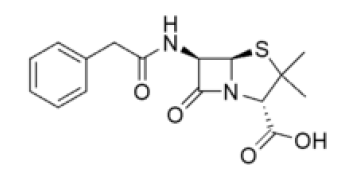
- 110—Pen V
phenoxy methyl penicillin
beta lactam antibiotic
must be kept dry
Na and K salts are crystalline, hygroscopic and water soluble
orally and parenterally
stable for a long time unless in solution
improved acid stability (by addition of e- withdrawing grp on side chain)
-excretion: renally by tubular secretion
-MOA : cell wall inhibitor - inhibit PBPs, the cross linking of peptidoglycan matrix/ activate autolytic enzymes : degrade the already formed cell wall
-SE: hypersensitivity / GI disturbances / neurotoxicity (seizures)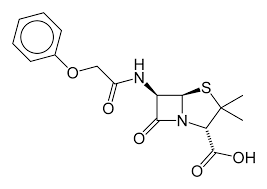
- 111—methicillin
beta lactam antibiotic
semi-synthetic
penicillinase resistant (bulky group on diortho)
parenteral
contains e-donating groups --> not acid resistant
-excretion: renally by tubular secretion
-MOA : cell wall inhibitor - inhibit PBPs, the cross linking of peptidoglycan matrix/ activate autolytic enzymes : degrade the already formed cell wall
-SE: Nephritis / hypersensitivity / GI disturbances / neurotoxicity (seizures)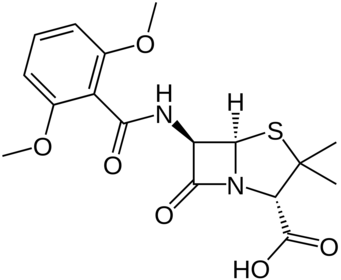
- 112—nafcillin
beta lactam antibiotic
semi-synthetic
penicillinase resistant (bulky group on diortho)
parenteral
contains e-donating groups --> not acid resistant
-excretion: renally by tubular secretion
-MOA : cell wall inhibitor - inhibit PBPs, the cross linking of peptidoglycan matrix/ activate autolytic enzymes : degrade the already formed cell wall
-SE: hypersensitivity / GI disturbances / neurotoxicity (seizures)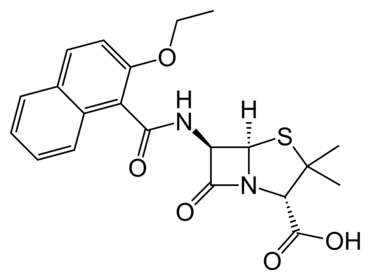
- 113—oxacillin
beta lactam antibiotic
semi-synthetic
penicillinase resistant
improved acid stability
oral
-excretion: renally by tubular secretion
-MOA : cell wall inhibitor - inhibit PBPs, the cross linking of peptidoglycan matrix/ activate autolytic enzymes : degrade the already formed cell wall
-SE: hepatitis / hypersensitivity / GI disturbances / neurotoxicity (seizures)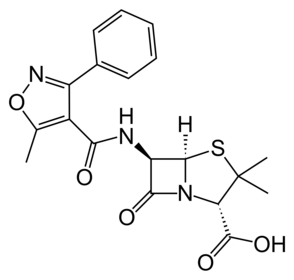
- 114—cloxacillin
beta lactam antibiotic
semi-synthetic
penicillinase resistant
improved acid stability
oral
-excretion: renally by tubular secretion
-MOA : cell wall inhibitor - inhibit PBPs, the cross linking of peptidoglycan matrix/ activate autolytic enzymes : degrade the already formed cell wall
-SE: hypersensitivity / GI disturbances / neurotoxicity (seizures)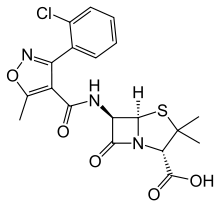
- 115—dicloxacillin
beta lactam antibiotic
semi-synthetic
penicillinase resistant
improved acid stability
oral
-excretion: renally by tubular secretion
-MOA : cell wall inhibitor - inhibit PBPs, the cross linking of peptidoglycan matrix/ activate autolytic enzymes : degrade the already formed cell wall
-SE: hypersensitivity / GI disturbances / neurotoxicity (seizures)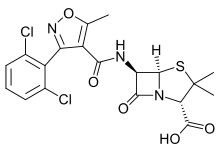
- 116—carbenizillin
beta lactam antibiotic
semi-synthetic
carboxypenicillin
penicillinase sensitive
extended spectrum : antipseudomonas
parenteral
-excretion: renally by tubular secretion
-MOA : cell wall inhibitor - inhibit PBPs, the cross linking of peptidoglycan matrix/ activate autolytic enzymes : degrade the already formed cell wall
-SE: hypersensitivity / GI disturbances / neurotoxicity (seizures)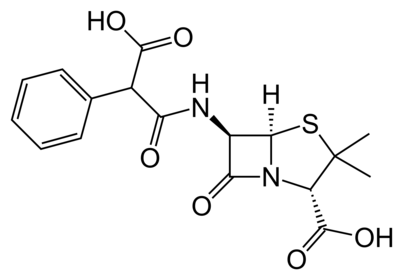
- 117—carbenicillin phenyl
beta lactam antibiotic
semi-synthetic
carboxypenicillin
penicillinase sensitive
extended spectrum : antipseudomonas
parenteral
-excretion: renally by tubular secretion
-MOA : cell wall inhibitor - inhibit PBPs, the cross linking of peptidoglycan matrix/ activate autolytic enzymes : degrade the already formed cell wall
-SE: hypersensitivity / GI disturbances / neurotoxicity (seizures)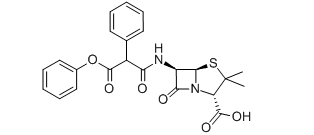
- 118—carbenicillin indanyl
beta lactam antibiotic
semi-synthetic
carboxypenicillin
penicillinase sensitive
extended spectrum : antipseudomonas
parenteral
-excretion: renally by tubular secretion
-MOA : cell wall inhibitor - inhibit PBPs, the cross linking of peptidoglycan matrix/ activate autolytic enzymes : degrade the already formed cell wall
-SE: hypersensitivity / GI disturbances / neurotoxicity (seizures)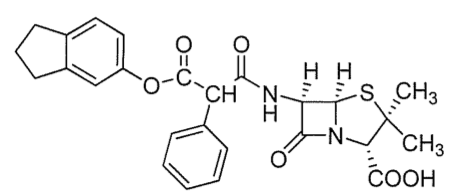
- 119—ticarcillin
beta lactam antibiotic
semi-synthetic
carboxypenicillin
penicillinase sensitive
extended spectrum : antipseudomonas
parenteral
-excretion: renally by tubular secretion
-MOA : cell wall inhibitor - inhibit PBPs, the cross linking of peptidoglycan matrix/ activate autolytic enzymes : degrade the already formed cell wall
-SE: hypersensitivity / GI disturbances / neurotoxicity (seizures)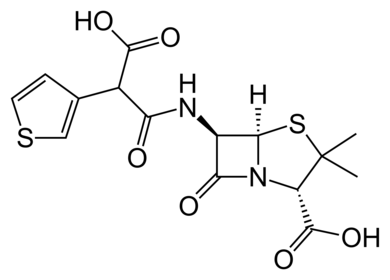
- 120—azlocillin
beta lactam antibiotic
semi-synthetic
ureidopenicillin
penicillinase sensitive
extended spectrum : antipseudomonas
parenteral
-excretion: renally by tubular secretion
-MOA : cell wall inhibitor - inhibit PBPs, the cross linking of peptidoglycan matrix/ activate autolytic enzymes : degrade the already formed cell wall
-SE: hypersensitivity / GI disturbances / neurotoxicity (seizures)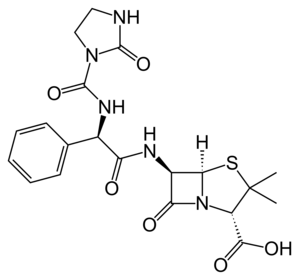
- 121—mezlocillin
beta lactam antibiotic
semi-synthetic
ureidopenicillin
penicillinase sensitive
extended spectrum : antipseudomonas
parenteral
-excretion: renally by tubular secretion
-MOA : cell wall inhibitor - inhibit PBPs, the cross linking of peptidoglycan matrix/ activate autolytic enzymes : degrade the already formed cell wall
-SE: hypersensitivity / GI disturbances / neurotoxicity (seizures)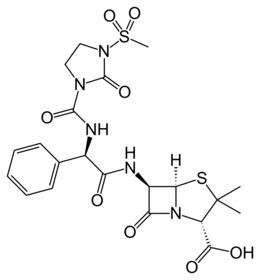
- 122—piperacillin
beta lactam antibiotic
semi-synthetic
ureidopenicillin
penicillinase sensitive
extended spectrum : antipseudomonas
parenteral
-excretion: renally by tubular secretion
-MOA : cell wall inhibitor - inhibit PBPs, the cross linking of peptidoglycan matrix/ activate autolytic enzymes : degrade the already formed cell wall
-SE: hypersensitivity / GI disturbances / neurotoxicity (seizures)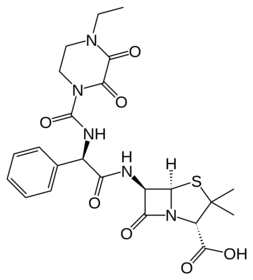
- 123—Ampicillin
beta lactam antibiotic
alpha-aminobenzylpenicillin
semi-synthetic
penicillinase sensitive
broad spectrum
oral
improved acid stability
excreted renally by tubular secretion
MOA : cell wall inhibitor - inhibit PBPs, the cross linking of peptidoglycan matrix/ activate autolytic enzymes : degrade the already formed cell wall
SE: hypersensitivity / GI disturbances / neurotoxicity (seizures)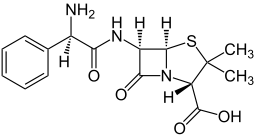
- 124—amoxicillin
beta lactam antibiotic
alpha amino-p-hydroxybenzylpenicillin
semi-synthetic
penicillinase sensitive
broad spectrum
oral
improved acid stability
-excretion: renally by tubular secretion
-MOA : cell wall inhibitor - inhibit PBPs, the cross linking of peptidoglycan matrix/ activate autolytic enzymes : degrade the already formed cell wall
-SE: hypersensitivity / GI disturbances / neurotoxicity (seizures)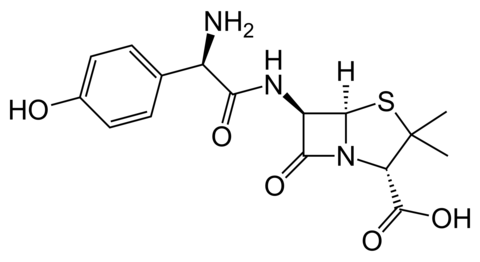
- 125—Bacampicillin
beta lactam antibiotic
penicillin prodrug
hydrolyzed by non specific esterase --> unstable products that form active free carboxylic acid
SE: hypersensitivity / GI disturbances / neurotoxicity (seizures)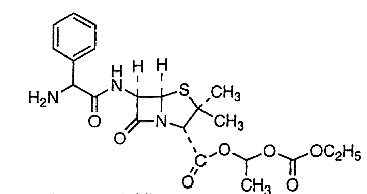
- 126—Pivampicillin
beta lactam antibiotic
penicillin prodrug
hydrolyzed by non specific esterase --> unstable products that form active free carboxylic acid
SE: hypersensitivity / GI disturbances / neurotoxicity (seizures)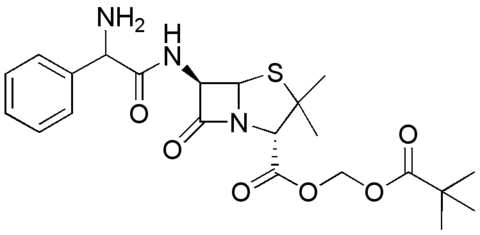
- 127—Talampicillin
beta lactam antibiotic
penicillin prodrug
hydrolyzed by non specific esterase --> unstable products that form active free carboxylic acid
SE: hypersensitivity / GI disturbances / neurotoxicity (seizures)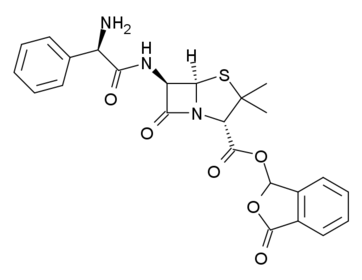
- 128—Pen G procaine
beta lactam antibiotic
amine salt of Pen G
low water solubility
given IM : local depot: slow dissolution and release --> prolong blood levels
-excretion: renally by tubular secretion
-SE: hypersensitivity / GI disturbances / neurotoxicity (seizures)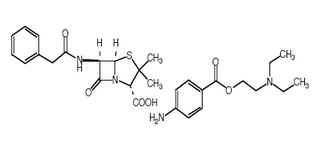
- 129—Pen G benzathine
beta lactam antibiotic
diamine salt of Pen G
very water insoluble
given IM : local depot: slow dissolution and release --> prolong blood levels for more than a week
-excretion: renally by tubular secretion
-SE: hypersensitivity / GI disturbances / neurotoxicity (seizures)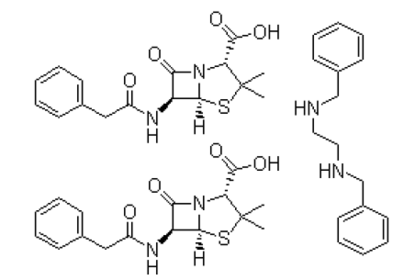
- 130—Clavulanic acid
beta lactamase inhibitors
weak affinity to PBPs
high affinity to beta lactamase
irreversible beta lactamase inhibitor (adjunct therapy)
produced from streptomyces clavuligeris
1-oxopenam
lack 6-amino group
has 2-hydroxyethylidene moiety
formulated with amoxicillin
SE: hypersensitivity / GI disturbances / neurotoxicity (seizures)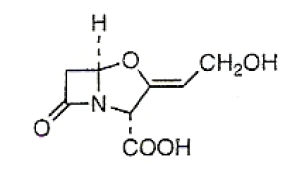
- 131—Sulbactam
beta lactamase inhibitor
weak affinity to PBPs
high affinity to beta lactamase
irreversible beta lactamase inhibitor (adjunct therapy)
semi-synthetic
1,1-dioxopenicillanic acid
formulated with ampicillin
SE: hypersensitivity / GI disturbances / neurotoxicity (seizures)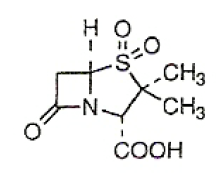
- 132—Tazobactam
beta lactamase inhibitor
weak affinity to PBPs
high affinity to beta lactamase
irreversible beta lactamase inhibitor (adjunct therapy)
semi-synthetic
1,1-dioxopenicillanic acid
formulated with pipericillin
SE: hypersensitivity / GI disturbances / neurotoxicity (seizures)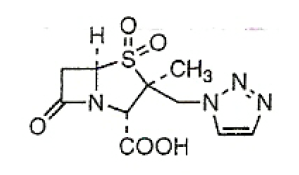
- 133—Cephalosporin C
beta lactam antibiotic
Isolated from C.acremonium
Not potent enough to be clinically as an antibiotic
Precursor to develop useful derivatives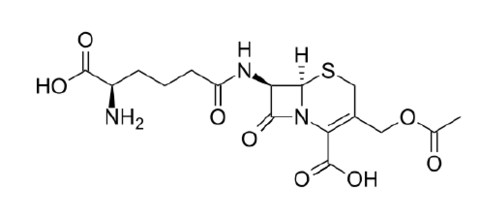
- 134—7-ACA
beta lactam antibiotic
7-aminocephalosporanic acid
formed by the removal of the side chain from cephalosporin C
analogous to 6-APA
used to prepare semi-synthetic analogs
Its 7-phenylglycine derivatives are orally active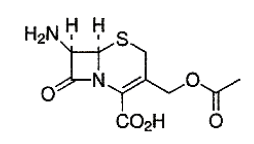
- 135—7-ADCA
beta lactam antibiotic
7-Amino-3-deacetoxy-cephalosporanic acid
metabolite of pen V
reduced acetoxy methyl of 7-ACA
Its analogs are orally active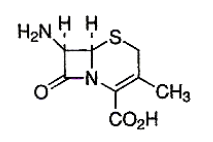
- 136—Cephapirin
beta lactam antibiotic
first generation cephalosporin
parenteral agent
sodium salt
MOA : inhibit cell wall synthesis/similar to penicillins : inhibit PBPs & activate autolytic enzymes (inhibit the last stage: stage 3)
Renal excretion via tubular secretion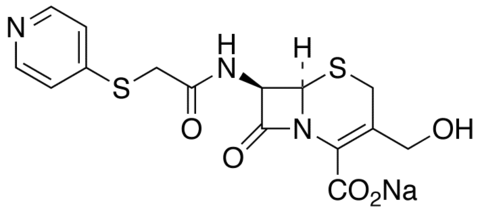
- 137—Cefazolin
beta lactam antibiotic
first generation cephalosporin
parenteral agent
sodium salt
5 membered ring (thiadiazole) --> increase potency
MOA : inhibit cell wall synthesis/similar to penicillins : inhibit PBPs & activate autolytic enzymes (inhibit the last stage: stage 3)
Renal excretion via tubular secretion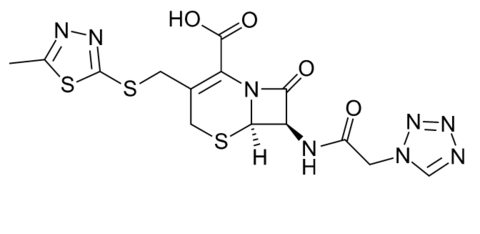
- 138—Cephalexin
beta lactam antibiotic
first generation cephalosporin
oral agent because it contains an alpha amino benzyl substituent
HCl salt
MOA : inhibit cell wall synthesis/similar to penicillins : inhibit PBPs & activate autolytic enzymes (inhibit the last stage: stage 3)
Renal excretion via tubular secretion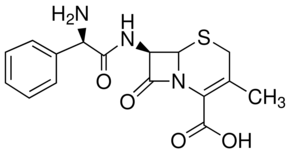
- 139—Cefadroxil
beta lactam antibiotic
first generation cephalosporin
oral agent because it contains a p-hydroxybenzyl substituent
MOA : inhibit cell wall synthesis/similar to penicillins : inhibit PBPs & activate autolytic enzymes (inhibit the last stage: stage 3)
Renal excretion via tubular secretion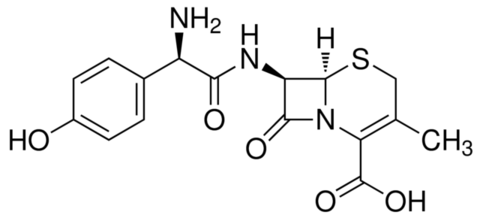
- 140—Cephradine
beta lactam antibiotic
first generation cephalosporin
oral and parenteral agent
it contains an alpha amino benzyl substituent
MOA : inhibit cell wall synthesis/similar to penicillins : inhibit PBPs & activate autolytic enzymes (inhibit the last stage: stage 3)
Renal excretion via tubular secretion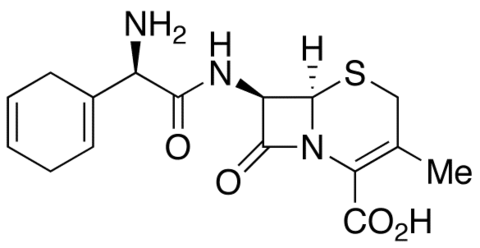
- 141—Cefamandole nafate
beta lactam antibiotic
second generation cephalosporin
parenteral agent
contains NMTT --> bleeding problems and disulfiram side effects
MOA : inhibit cell wall synthesis/similar to penicillins : inhibit PBPs & activate autolytic enzymes (inhibit the last stage: stage 3)
Renal excretion via tubular secretion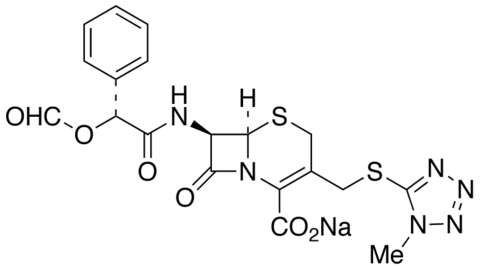
- 142—Cefonicid
beta lactam antibiotic
second generation cephalosporin
parenteral agent
MOA : inhibit cell wall synthesis/similar to penicillins : inhibit PBPs & activate autolytic enzymes (inhibit the last stage: stage 3)
Renal excretion via tubular secretion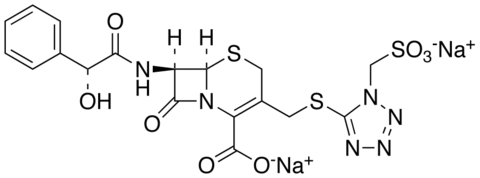
- 143—Cefuroxime
beta lactam antibiotic
second generation cephalosporin
parenteral agent
MOA : inhibit cell wall synthesis/similar to penicillins : inhibit PBPs & activate autolytic enzymes (inhibit the last stage: stage 3)
Renal excretion via tubular secretion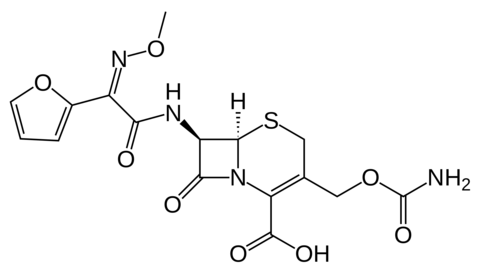
- 144—Cefoxitin
beta lactam antibiotic
second generation cephalosporin
parenteral agent
Cephamycin : produced by Streptomyces species
posses 7 alpha methoxy substituent => more resistance to beta lactamases
MOA : inhibit cell wall synthesis/similar to penicillins : inhibit PBPs & activate autolytic enzymes (inhibit the last stage: stage 3)
Renal excretion via tubular secretion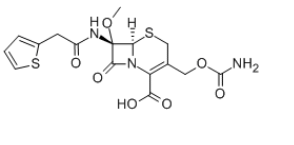
- 145—Cefotetan
beta lactam antibiotic
second generation cephalosporin
parenteral agent
contains NMTT --> bleeding problems and disulfiram side effects
Cephamycin : produced by Streptomyces species
posses 7 alpha methoxy substituent => more resistance to beta lactamases
MOA : inhibit cell wall synthesis/similar to penicillins : inhibit PBPs & activate autolytic enzymes (inhibit the last stage: stage 3)
Renal excretion via tubular secretion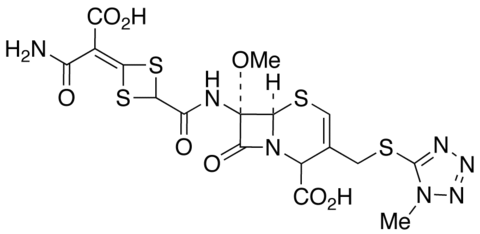
- 146—Cefmetazole
beta lactam antibiotic
second generation cephalosporin
parenteral agent
contains NMTT --> bleeding problems and disulfiram side effects
Cephamycin : produced by Streptomyces species
posses 7 alpha methoxy substituent => more resistance to beta lactamases
MOA : inhibit cell wall synthesis/similar to penicillins : inhibit PBPs & activate autolytic enzymes (inhibit the last stage: stage 3)
Renal excretion via tubular secretion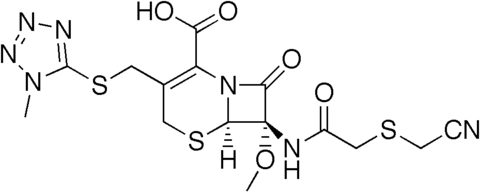
- 147—Cefaclor
beta lactam antibiotic
second generation cephalosporin
oral agent because it contains an alpha amino benzyl substituent
MOA : inhibit cell wall synthesis/similar to penicillins : inhibit PBPs & activate autolytic enzymes (inhibit the last stage: stage 3)
Renal excretion via tubular secretion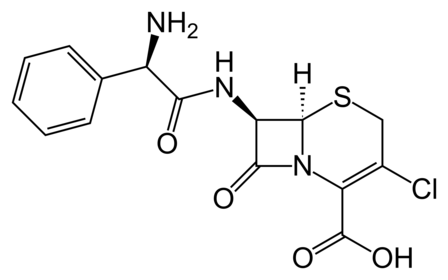
- 148—Loracarbef
beta lactam antibiotic
second generation cephalosporin
oral agent because it contains an alpha amino benzyl substituent
carba analogue of cefaclor : sulfur atom replaced by carbon --> less potent
MOA : inhibit cell wall synthesis/similar to penicillins : inhibit PBPs & activate autolytic enzymes (inhibit the last stage: stage 3)
Renal excretion via tubular secretion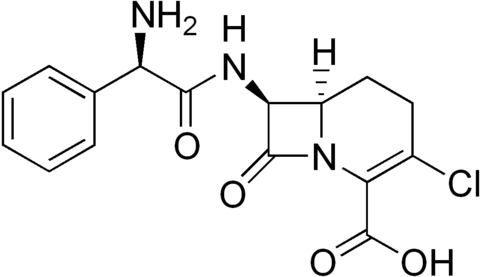
- 149—Cefprozil
beta lactam antibiotic
second generation cephalosporin
oral agent because it contains a p-hydroxybenzyl substituent
MOA : inhibit cell wall synthesis/similar to penicillins : inhibit PBPs & activate autolytic enzymes (inhibit the last stage: stage 3)
Renal excretion via tubular secretion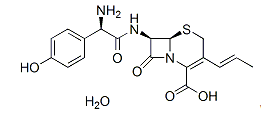
- 150—Cefotaxime
beta lactam antibiotic
third generation cephalosporin
parenteral agent
contains an alkoxyimino substituent => resistant to beta lactamases
MOA : inhibit cell wall synthesis/similar to penicillins : inhibit PBPs & activate autolytic enzymes (inhibit the last stage: stage 3)
Renal excretion via tubular secretion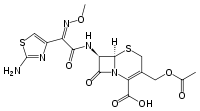
- 151—Ceftizoxime
beta lactam antibiotic
third generation cephalosporin
parenteral agent
contains an alkoxyimino substituent => resistant to beta lactamases
MOA : inhibit cell wall synthesis/similar to penicillins : inhibit PBPs & activate autolytic enzymes (inhibit the last stage: stage 3)
Renal excretion via tubular secretion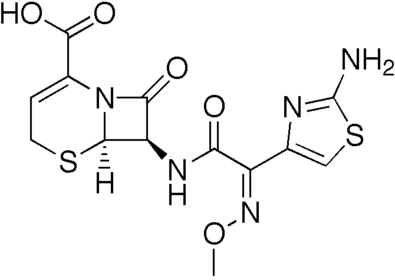
- 152—Ceftriaxone
beta lactam antibiotic
third generation cephalosporin
parenteral agent
contains an alkoxyimino substituent => resistant to beta lactamases
MOA : inhibit cell wall synthesis/similar to penicillins : inhibit PBPs & activate autolytic enzymes (inhibit the last stage: stage 3)
Biliary excretion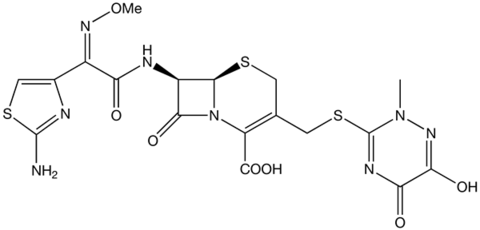
- 153—Ceftazidime
beta lactam antibiotic
third generation cephalosporin
parenteral agent
contains an alkoxyimino substituent => resistant to beta lactamases
MOA : inhibit cell wall synthesis/similar to penicillins : inhibit PBPs & activate autolytic enzymes (inhibit the last stage: stage 3)
Renal excretion via tubular secretion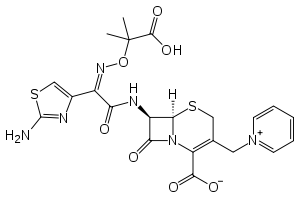
- 154—Cefoperazone
beta lactam antibiotic
third generation cephalosporin
parenteral agent
MOA : inhibit cell wall synthesis/similar to penicillins : inhibit PBPs & activate autolytic enzymes (inhibit the last stage: stage 3)
Biliary excretion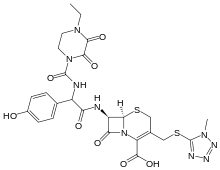
- 155—Cefixime
beta lactam antibiotic
third generation cephalosporin
oral agent
contains an alkoxyimino substituent => resistant to beta lactamases
MOA : inhibit cell wall synthesis/similar to penicillins : inhibit PBPs & activate autolytic enzymes (inhibit the last stage: stage 3)
Renal excretion via tubular secretion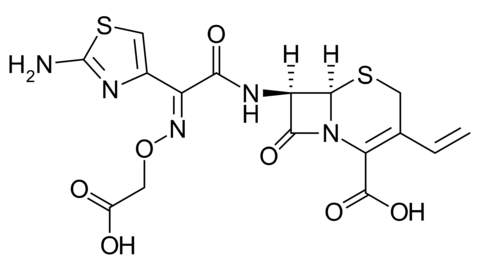
- 156—Ceftibuten
beta lactam antibiotic
third generation cephalosporin
oral agent
MOA : inhibit cell wall synthesis/similar to penicillins : inhibit PBPs & activate autolytic enzymes (inhibit the last stage: stage 3)
Renal excretion via tubular secretion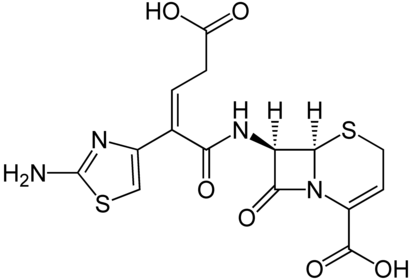
- 157—Cefpodoxime proxetil
beta lactam antibiotic
third generation cephalosporin
oral agent
contains an alkoxyimino substituent => resistant to beta lactamases
ester prodrug
MOA : inhibit cell wall synthesis/similar to penicillins : inhibit PBPs & activate autolytic enzymes (inhibit the last stage: stage 3)
Renal excretion via tubular secretion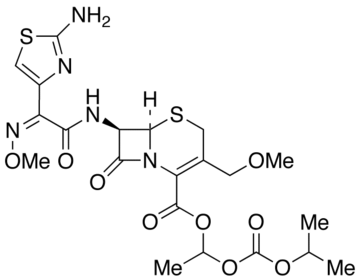
- 158—Cefdinir
beta lactam antibiotic
third generation cephalosporin
oral agent
contains an alkoxyimino substituent => resistant to beta lactamases
MOA : inhibit cell wall synthesis/similar to penicillins : inhibit PBPs & activate autolytic enzymes (inhibit the last stage: stage 3)
Renal excretion via tubular secretion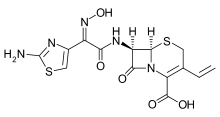
- 159—Cefditoren pivoxil
beta lactam antibiotic
third generation cephalosporin
oral agent
contains an alkoxyimino substituent => resistant to beta lactamases
ester prodrug
MOA : inhibit cell wall synthesis/similar to penicillins : inhibit PBPs & activate autolytic enzymes (inhibit the last stage: stage 3)
Renal excretion via tubular secretion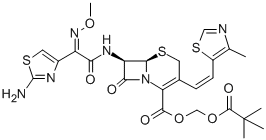
- 160—Cefepime
beta lactam antibiotic
fourth generation cephalosporin
parenteral agent
exist as zwitterion
contains an alkoxyimino substituent => resistant to beta lactamases
More gram -ve (against P. aeruginosa) and greater beta lactamase resistance
MOA : inhibit cell wall synthesis/similar to penicillins : inhibit PBPs & activate autolytic enzymes (inhibit the last stage: stage 3)
Renal excretion via tubular secretion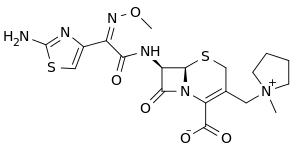
- 161—Cefelidine
beta lactam antibiotic
fourth generation cephalosporin
parenteral agent
exist as zwitterion
contains an alkoxyimino substituent => resistant to beta lactamases
More gram -ve (against P. aeruginosa) and greater beta lactamase resistance
MOA : inhibit cell wall synthesis/similar to penicillins : inhibit PBPs & activate autolytic enzymes (inhibit the last stage: stage 3)
Renal excretion via tubular secretion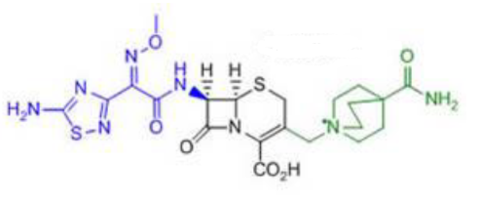
- 162—Cefpirome
beta lactam antibiotic
fourth generation cephalosporin
parenteral agent
exist as zwitterion
contains an alkoxyimino substituent => resistant to beta lactamases
More gram -ve (against P. aeruginosa) and greater beta lactamase resistance
MOA : inhibit cell wall synthesis/similar to penicillins : inhibit PBPs & activate autolytic enzymes (inhibit the last stage: stage 3)
Renal excretion via tubular secretion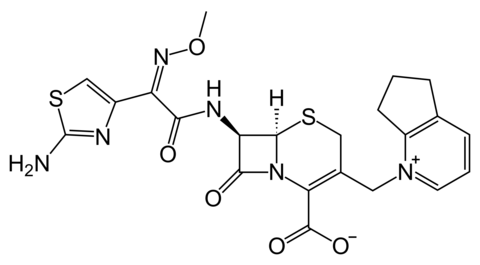
- 163—Cefozopran
beta lactam antibiotic
fourth generation cephalosporin
parenteral agent
exist as zwitterion
contains an alkoxyimino substituent => resistant to beta lactamases
More gram -ve (against P. aeruginosa) and greater beta lactamase resistance
MOA : inhibit cell wall synthesis/similar to penicillins : inhibit PBPs & activate autolytic enzymes (inhibit the last stage: stage 3)
Renal excretion via tubular secretion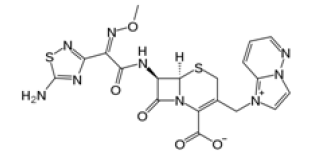
- 164—Cefluprenam
beta lactam antibiotic
fourth generation cephalosporin
parenteral agent
exist as zwitterion
contains an alkoxyimino substituent => resistant to beta lactamases
More gram -ve (against P. aeruginosa) and greater beta lactamase resistance
MOA : inhibit cell wall synthesis/similar to penicillins : inhibit PBPs & activate autolytic enzymes (inhibit the last stage: stage 3)
Renal excretion via tubular secretion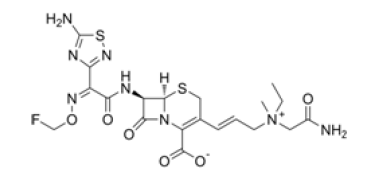
- 165—Ceftobiprole
beta lactam antibiotic
fifth generation cephalosporin
parenteral agent
More gram -ve (against P. aeruginosa) and greater beta lactamase resistance
activity against MRSA
MOA : inhibit cell wall synthesis/similar to penicillins : inhibit PBPs & activate autolytic enzymes (inhibit the last stage: stage 3)
Renal excretion via tubular secretion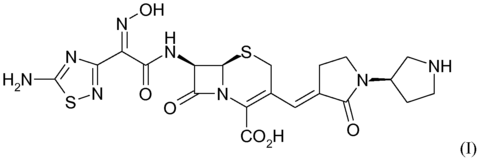
- 166—Ceftaroline fosamil
beta lactam antibiotic
fifth generation cephalosporin
parenteral agent
More gram -ve (against P. aeruginosa) and greater beta lactamase resistance
activity against MRSA
MOA : inhibit cell wall synthesis/similar to penicillins : inhibit PBPs & activate autolytic enzymes (inhibit the last stage: stage 3)
Renal excretion via tubular secretion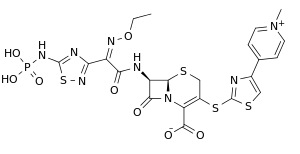
- 167—Thienamycin
beta lactam antibiotic
carbapeneme
Natural : streptomyces cattleya
broad spectrum
hydroxyethyl at C-6 --> resistant to beta lactamase
chemically unstable :
-undergoes beta lactam ring opening => inactive
-form a dimer => inactive
MOA : inhibit cell wall synthesis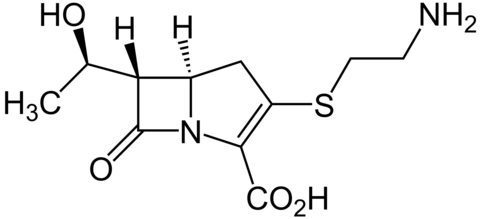
- 168—Imipenem
beta lactam antibiotic
carbapenem
addition of N-formiminoyl moiety to Thienamycin --> less Nu
semi-synthetic
more chemically stable
not orally active
hydrolyzed by dehydropeptidase DHP enzyme in renal tubule => inactive and nephrotoxic metabolites
formulated with cilastatin (inhibitor of DHP)
MOA : inhibit cell wall synthesis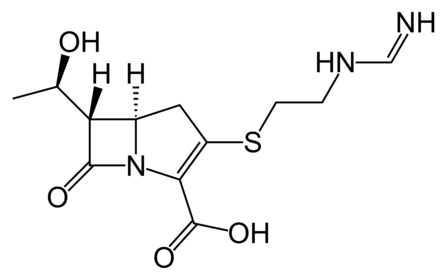
- 169—Meropenem
beta lactam antibiotic
carbapeneme
synthetic
same activity as Imipenem
not hydrolyzed by DHP => no need for formulation with cilastatin
MOA : inhibit cell wall synthesis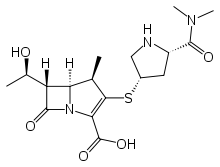
- 170—Ertapenem
beta lactam antibiotic
carbapenem
synthetic
same activity as Imipenem
not hydrolyzed by DHP => no need for formulation with cilastatin
MOA : inhibit cell wall synthesis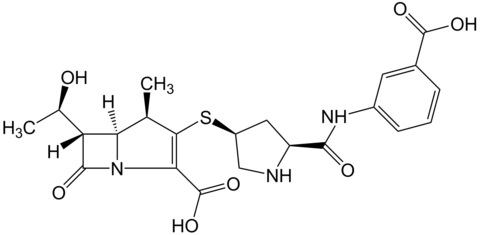
- 171—Biapenem
beta lactam antibiotic
carbapenem
synthetic
same activity as Imipenem
not hydrolyzed by DHP => no need for formulation with cilastatin
MOA : inhibit cell wall synthesis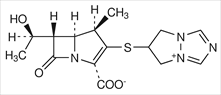
- 172—Aztreonam
beta lactam antibiotic
monobactam
synthetic
chemically stable for 48h
strong e-withdrawing sulfamic acid => less stable
alpha methyl at C2 --> beta lactamase resistant
given by injection
active against gram -ve bacteria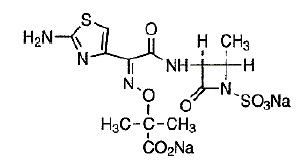
- 173—Tigemonam
tigemonam
beta lactam antibiotic
monobactam
synthetic
highly resistant to beta lactamase
similar spectrum to aztreonam
orally active, excellent bioavailability
MOA : inhibit cell wall synthesis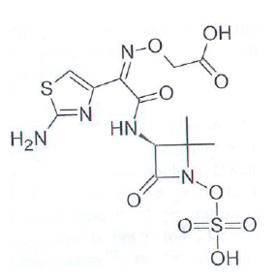
- 174—Vancomycin
non beta lactam antibiotic
glycoprotein, cyclic peptide
from Nocardia orientalis
given parenterally
MOA: inhibit cell wall synthesis through inhibition of transglycosylation step --> inhibition of elongation of peptidoglycan matrix
active against MRSA
SE : hypersensitivity / nephro and ototoxicity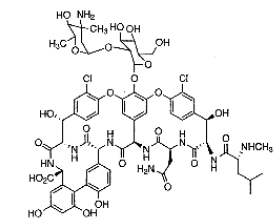
- 175—Teicoplanin
non beta lactam antibiotic
glycoprotein, cyclic peptide
from Actinoplanes teicomyceticus
given parenterally
MOA: inhibit cell wall synthesis through inhibition of transglycosylation step --> inhibition of elongation of peptidoglycan matrix
active against MRSA
SE : hypersensitivity / nephrotoxicity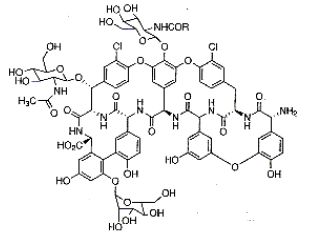
- 176—Bacitracin
non beta lactam antibiotic
cyclic peptide produced from Bacillus subtilis
inhibits dephosphorylation of the phospholipid carrier responsible for trnsporting the disaccharide across plasma membrane (late stage 1)
SE: hypersensitivity / nephro and neurotoxicity
ONLY topical route and IM with caution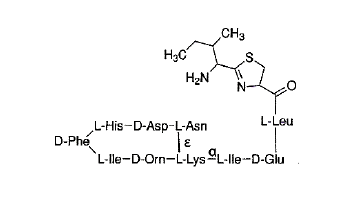
- 177—Cycloserine
non beta lactam antibiotic
analog of D-ala produced by streptomyces sp.
MOA: competitive inhibitor of D-ala-D-ala synthetase and D-ala racemase
orally active
SE : - CNS effects : tremor/seizure/confusion/hallucination/psychosis
- occasional hepatic damage and peripheral neuropathy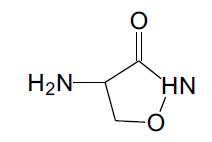
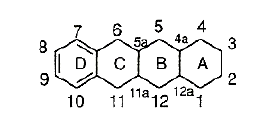
- 178—naphtacene
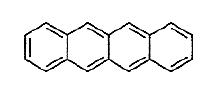
- 179—tetracycline backbone
- 180—Tetracycline
Tetracycline antibiotics
Bacterial protein synthesis inhibitors
octahydronaphtacene
Natural (from streptomyces spc) or from chlortetracycline (by hydrogenolysis)
Crystalline amphoteric compounds (form acid/base salts)
Low water solubility (HCl salts-->water soluble)
Orally active
Undergoes chelation with di/trivalent cations (contraindication with dairy food and antacids)
-In acidic condition: epimerization:epitetracyclin (4-beta): inactive, -H2O:anhydrotetracycline (deeper color) (double bond on C5a): inactive, formation of epianhydrotetracycline:hepatotoxic
-In basic condition: lactone formation:isotetracycline: inactive
Bacteriostatic (higher affinity to bacteria)
-MOA: active against gram+ and gram-, aerobic and anaerobic-->broad spectrum of activity
Enter by passive/active diffusion:bind to 30S subunit:inhibit protein synthesis
-t1/2=6-8h-->short
widely distributed (low to CSF)
cross placenta
excretion: renal
SE: GI discomfort, discoloration of teeth, hepatotoxic at high dose, vertigo, superinfection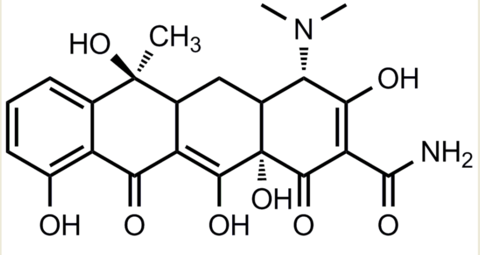
- 181—Demeclocycline
Tetracycline antibiotics
Bacterial protein synthesis inhibitors
octahydronaphtacene
Natural (from streptomyces spc)
Crystalline amphoteric compounds (form acid/base salts)
Low water solubility (HCl salts:water soluble)
Orally active
Undergoes chelation with di/trivalent cations (contraindication with dairy food and antacids)
-In acidic condition: epimerization:epitetracyclin (4-beta): inactive, -H2O:anhydrotetracycline (deeper color) (double bond on C5a): inactive, formation of epianhydrotetracycline:hepatotoxic
-In basic condition: lactone formation:isotetracycline: inactive
Bacteriostatic (higher affinity to bacteria)
-MOA: active against gram+ and gram-, aerobic and anaerobic:broad spectrum of activity
Enter by passive/active diffusion:bind to 30S subunit-->inhibit protein synthesis
-t1/2=12h--> intermediate
widely distributed (low to CSF)
cross placenta
excretion: renal
SE: GI discomfort, discoloration of teeth, hepatotoxic at high dose, vertigo, superinfection, photosensitivity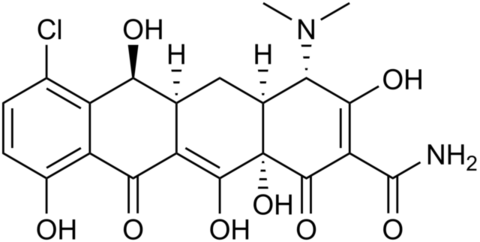
- 182—Minocycline
Tetracycline antibiotics
Bacterial protein synthesis inhibitors
octahydronaphtacene
Semi-synthetic
Crystalline amphoteric compounds (form acid/base salts)
Low water solubility (HCl salts:water soluble)
Orally active
Undergoes chelation with di/trivalent cations (contraindication with dairy food and antacids)
Stable in acidic and basic condition
More lipophilic
Bacteriostatic (higher affinity to bacteria)
MOA: active against gram+ and gram-, aerobic and anaerobic:broad spectrum of activity
Enter by passive/active diffusion:bind to 30S subunit:inhibit protein synthesis
t1/2=16h-->long
completely absorbed
widely distributed (to CSF:for meningitis)
cross placenta
excretion: biliary
SE: GI discomfort, discoloration of teeth, hepatotoxic at high dose, vertigo, superinfection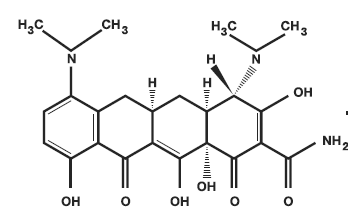
- 183—Sancycline
Tetracycline antibiotics
Bacterial protein synthesis inhibitors
octahydronaphtacene
Semi-synthetic
Slightly more active (than tetracycline)
Crystalline amphoteric compounds (form acid/base salts)
Low water solubility (HCl salts:water soluble)
Orally active
Undergoes chelation with di/trivalent cations (contraindication with dairy food and antacids)
Bacteriostatic (higher affinity to bacteria)
MOA: active against gram+ and gram-, aerobic and anaerobic:broad spectrum of activity
Enter by passive/active diffusion:bind to 30S subunit:inhibit protein synthesis
widely distributed (low to CSF)
cross placenta
excretion: renal
SE: GI discomfort, discoloration of teeth, hepatotoxic at high dose, vertigo, superinfection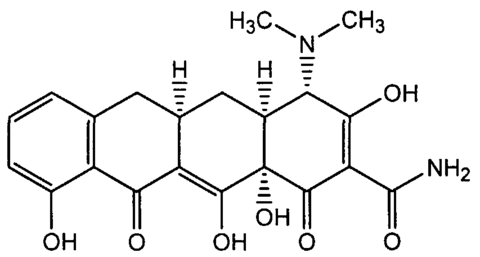
- 184—Chlortetracycline
Tetracycline antibiotics
Bacterial protein synthesis inhibitors
octahydronaphtacene
Natural (from streptomyces spc)
Crystalline amphoteric compounds (form acid/base salts)
Low water solubility (HCl salts:water soluble)
Orally active
Undergoes chelation with di/trivalent cations (contraindication with dairy food and antacids)
-In acidic condition: epimerization:epitetracyclin (4-beta): inactive, -H2O:anhydrotetracycline (deeper color) (double bond on C5a): inactive, formation of epianhydrotetracycline:hepatotoxic
-In basic condition: lactone formation:isotetracycline: inactive
Bacteriostatic (higher affinity to bacteria)
-MOA: active against gram+ and gram-, aerobic and anaerobic:broad spectrum of activity
Enter by passive/active diffusion:bind to 30S subunit:inhibit protein synthesis
t1/2=6-8h -->short
least absorbed
widely distributed (low to CSF)
cross placenta
excretion: renal
SE: GI discomfort, discoloration of teeth, hepatotoxic at high dose, vertigo, superinfection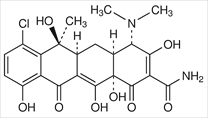
- 185—Oxytetracycline
Tetracycline antibiotics
Bacterial protein synthesis inhibitors
octahydronaphtacene
Natural (from streptomyces spc)
Crystalline amphoteric compounds (form acid/base salts)
Low water solubility (HCl salts:water soluble)
Orally active
Undergoes chelation with di/trivalent cations (contraindication with dairy food and antacids)
-In acidic condition: epimerization:epitetracyclin (4-beta): inactive, -H2O:anhydrotetracycline (deeper color) (double bond on C5a): inactive, formation of epianhydrotetracycline:hepatotoxic
-In basic condition: lactone formation:isotetracycline: inactive
Bacteriostatic (higher affinity to bacteria)
-MOA: active against gram+ and gram-, aerobic and anaerobic:broad spectrum of activity
Enter by passive/active diffusion:bind to 30S subunit:inhibit protein synthesis
t1/2=6-8h--> short
widely distributed (low to CSF)
cross placenta
excretion: renal
SE: GI discomfort, discoloration of teeth, hepatotoxic at high dose, vertigo, superinfection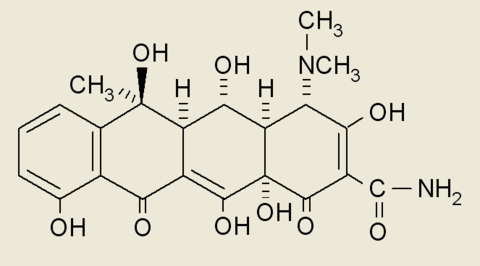
- 186—Methacycline
Tetracycline antibiotics
Bacterial protein synthesis inhibitors
octahydronaphtacene
Semi-synthetic
Crystalline amphoteric compounds (form acid/base salts)
Low water solubility (HCl salts:water soluble)
Orally active
Undergoes chelation with di/trivalent cations (contraindication with dairy food and antacids)
Exception: not stable in acidic and basic condition (undergoes hydration)
Bacteriostatic (higher affinity to bacteria)
-MOA: active against gram+ and gram-, aerobic and anaerobic:broad spectrum of activity
Enter by passive/active diffusion:bind to 30S subunit:inhibit protein synthesis
t1/2=12h--> intermediate
widely distributed (low to CSF)
cross placenta
excretion: renal
SE: GI discomfort, discoloration of teeth, hepatotoxic at high dose, vertigo, superinfection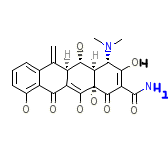
- 187—Doxycycline
Tetracycline antibiotics
Bacterial protein synthesis inhibitors
octahydronaphtacene
Semi-synthetic
Crystalline amphoteric compounds (form acid/base salts)
Low water solubility (HCl salts:water soluble)
Orally active
Undergoes chelation with di/trivalent cations (contraindication with dairy food and antacids)
Stable in acidic and basic condition
More lipophilic
Bacteriostatic (higher affinity to bacteria)
-MOA: active against gram+ and gram-, aerobic and anaerobic:broad spectrum of activity
Enter by passive/active diffusion:bind to 30S subunit:inhibit protein synthesis
t1/2=16h-->long
completely absorbed
widely distributed (low to CSF)
cross placenta
excretion: biliary
SE: GI discomfort, discoloration of teeth, hepatotoxic at high dose, vertigo, superinfection, photosensitivity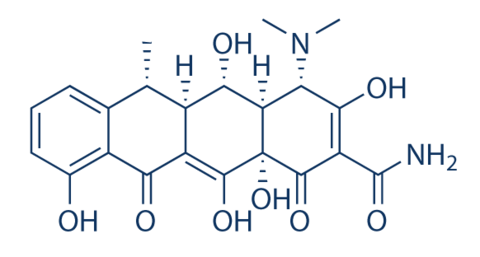
- 188—tigecycline
Tetracycline antibiotics (new)
Bacterial protein synthesis inhibitors
9-dimethylglycylamino substituent (DMG)
Semi-synthetic
Crystalline amphoteric compounds (form acid/base salts)
Low water solubility (HCl salts:water soluble)
Poor oral/ given IV
Undergoes chelation with di/trivalent cations (contraindication with dairy food and antacids)
Stable in acidic and basic condition
More lipophilic
Bacteriostatic (higher affinity to bacteria)
-MOA: active against gram+ and gram-, aerobic and anaerobic:broad spectrum of activity
Enter by passive/active diffusion:bind to 30S subunit (5X more):inhibit protein synthesis
t1/2=36h--> long
widely distributed (low to CSF)
cross placenta/ excreted in milk
excretion: biliary
SE: GI discomfort (nausea, vomiting), discoloration of teeth and bone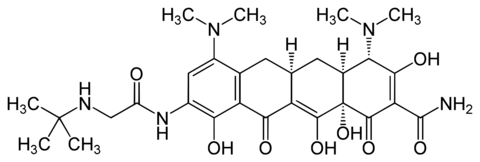
- 189—streptamine
diaminoinositol moiety of aminoglycoside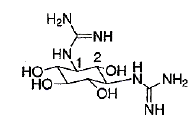
- 190—2-deoxystreptamine
diaminoinositol moiety of aminoglycoside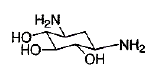
- 191—spectinamine
diaminoinositol moiety of aminoglycoside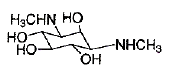
- 192—streptidine
diaminoinositol moiety of aminoglycoside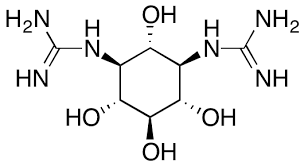
- 193—Neomycin B
Aminoglycoside (amino sugar connected to aminocyclitol)
From streptomyces
Have a pentose lacking amino group
Topically, parentarely
Bactericidal (exception)
MOA: active against gram- : bind irreversibly to 30S subunit: inhibit bacterial protein synthesis (mistranslation of RNA templates: insertion of wrong amino acid: holes)
Most toxic
Active eventhough low plasma level (post antibiotic effect)
Poor GI absorption
Poor distribution
Poor ppb
Low CSF levels (if no meningitis)
Accumulation: in renal cortex and inner ear (ototoxicity)
Cross placenta
Excretion: renal (unchanged)
SE: nephrotoxicity/ototoxicity (the higher the nb of amino group: the more toxic), NMJ blockers, teratogenic effect, rare allergic reaction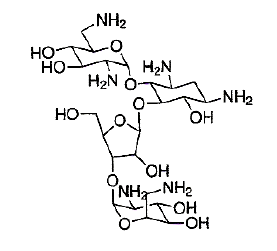
- 194—gentamycin C
Aminoglycoside (amino sugar connected to aminocyclitol)
From micromonospora
basic, polar, acid (salts)
Bactericidal (exception)
MOA: active against gram- : bind irreversibly to 30S subunit: inhibit bacterial protein synthesis (mistranslation of RNA templates: insertion of wrong amino acid: holes)
Active eventhough low plasma level (post antibiotic effect)
Poor GI absorption
Poor distribution
Poor ppb
Low CSF levels (if no meningitis)
Accumulation: in renal cortex and inner ear (ototoxicity)
Cross placenta
Excretion: renal (unchanged)
SE: nephrotoxicity/ototoxicity (the higher the nb of amino group: the more toxic), NMJ blockers, teratogenic effect, rare allergic reaction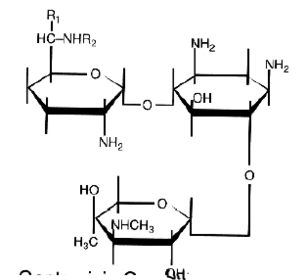
- 195—tobramycin
Aminoglycoside (amino sugar connected to aminocyclitol)
From streptomyces
basic, polar, acid (salts)
Bactericidal (exception)
MOA: active against gram- : bind irreversibly to 30S subunit: inhibit bacterial protein synthesis (mistranslation of RNA templates: insertion of wrong amino acid: holes)
Active eventhough low plasma level (post antibiotic effect)
Poor GI absorption
Poor distribution
Poor ppb
Low CSF levels (if no meningitis)
Accumulation: in renal cortex and inner ear (ototoxicity)
Cross placenta
Excretion: renal (unchanged)
SE: nephrotoxicity/ototoxicity (the higher the nb of amino group: the more toxic), NMJ blockers, teratogenic effect, rare allergic reaction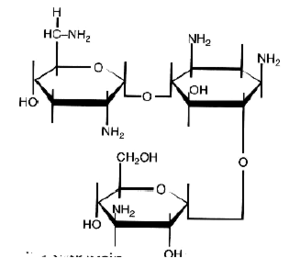
- 196—neltimicin
Aminoglycoside (amino sugar connected to aminocyclitol)
From micromonospora
basic, polar, acid (salts)
Bactericidal (exception)
MOA: active against gram- : bind irreversibly to 30S subunit: inhibit bacterial protein synthesis (mistranslation of RNA templates: insertion of wrong amino acid: holes)
Active eventhough low plasma level (post antibiotic effect)
Poor GI absorption
Poor distribution
Poor ppb
Low CSF levels (if no meningitis)
Accumulation: in renal cortex and inner ear (ototoxicity)
Cross placenta
Excretion: renal (unchanged)
SE: nephrotoxicity/ototoxicity (the higher the nb of amino group: the more toxic), NMJ blockers, teratogenic effect, rare allergic reaction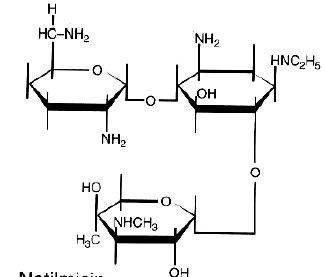
- 197—amikacin
Aminoglycoside (amino sugar connected to aminocyclitol)
From micromonospora
basic, polar, acid (salts)
Bactericidal (exception)
MOA: active against gram- : bind irreversibly to 30S subunit: inhibit bacterial protein synthesis (mistranslation of RNA templates: insertion of wrong amino acid: holes)
Active eventhough low plasma level (post antibiotic effect)
Poor GI absorption
Poor distribution
Poor ppb
Low CSF levels (if no meningitis)
Accumulation: in renal cortex and inner ear (ototoxicity)
Cross placenta
Excretion: renal (unchanged)
SE: nephrotoxicity/ototoxicity (the higher the nb of amino group: the more toxic), NMJ blockers, teratogenic effect, rare allergic reaction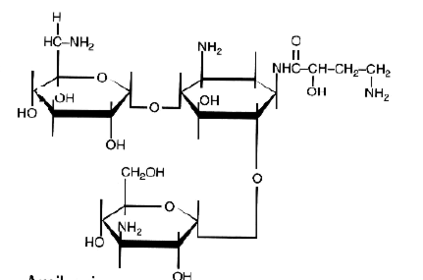
- 198—kanamycin A
old Aminoglycoside (amino sugar connected to aminocyclitol)
From streptomyces
basic, polar, acid (salts)
Bactericidal (exception)
MOA: active against gram- : bind irreversibly to 30S subunit: inhibit bacterial protein synthesis (mistranslation of RNA templates: insertion of wrong amino acid: holes)
Active eventhough low plasma level (post antibiotic effect)
Poor GI absorption
Poor distribution
Poor ppb
Low CSF levels (if no meningitis)
Accumulation: in renal cortex and inner ear (ototoxicity)
Cross placenta
Excretion: renal (unchanged)
SE: nephrotoxicity/ototoxicity (the higher the nb of amino group: the more toxic), NMJ blockers, teratogenic effect, rare allergic reaction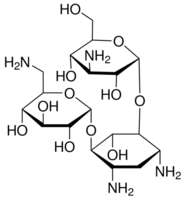
- 199—Macrolides
Bacterial protein synthesis inhibitor
large-membered lactone rings
14 or 15-membered rings attached to deoxy sugars
from propionic acid units
substituted amino group on sugar → weakly basic (pKa = 8)
not very water soluble
salt formation with glucoheptanoic and lactobionic acids increase water soluble
stearate and laurylsulfate salts decrease water solubility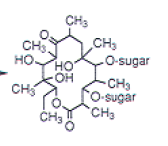
- 200—Erythromycin
macrolide
natural (from Streptomyces erythreus)
bacteriostatic
active against gram+, aerobic
well distributed (except to brain, CSF)
cross placenta
found in breast milk
penetrates the prostatic fluid
MOA: bind to 50S (reversibly): inhibit protein synthesis
More effective at alkaline pH
Free base form: inactivated by gastric acid, form cyclic ketal (given as enteric coated)
Stearate: slightly susceptible to gastric acid inactivation
ethylsuccinate preparation: absorbed first and hydrolyzed in blood to liberate free erythromycin
estolate preparation (laurylsulfate propionate): more acid resistant
lactobionate: suitable for IV administration
t1/2= 1.2-2h
enterohepatic circulation
metabolism: partially
excretion: biliary (95% in active form)
SE: safe, GI disturbances (nausea, vomiting, anorexia, diarrhea, abdominal cramps), cholestatic hepatitis (with estolate ester), rare allergic reaction, ototoxicity (reversible at high dose)
DDI: CYP3A4 inhibitor
CI: with liver dysfunction patients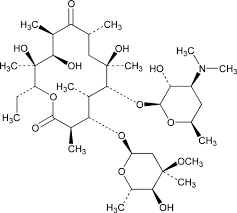
Information
- Description
- Flashcards on med chem 2 final exam, created by lola_smily on 04/05/2015.
- Created by
- lola_smily · May 2015
- Updated
- May 1, 2019
- Views
- 1,965
- Rating