
35235182
Description

Flashcards by Brandon Marc Raik, updated more than 1 year ago

|
Created by Brandon Marc Raik
about 4 years ago
|
|
| Question | Answer |
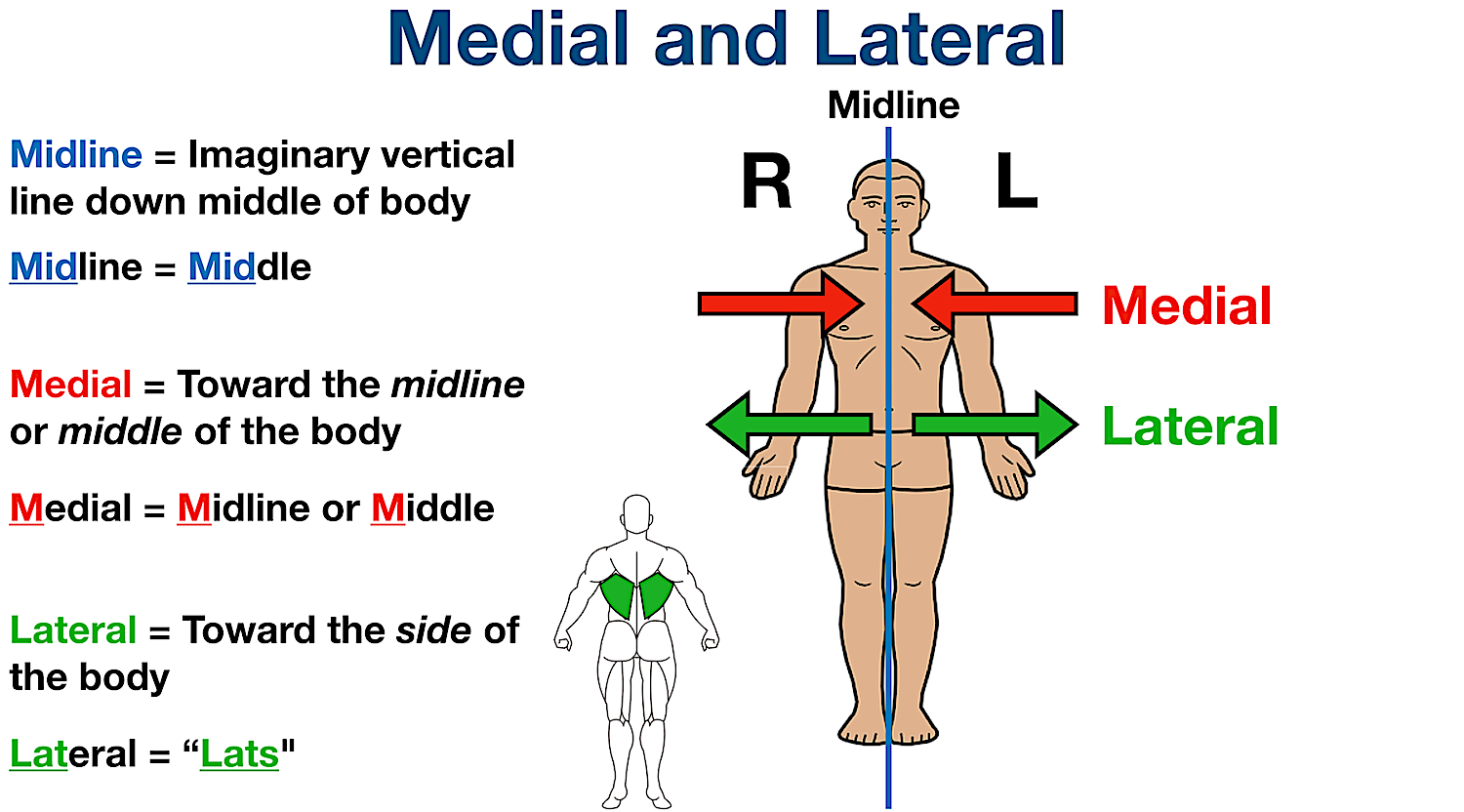
| Medial and lateral movement | Medial= Towards the midline Lateral= Away from the midline |
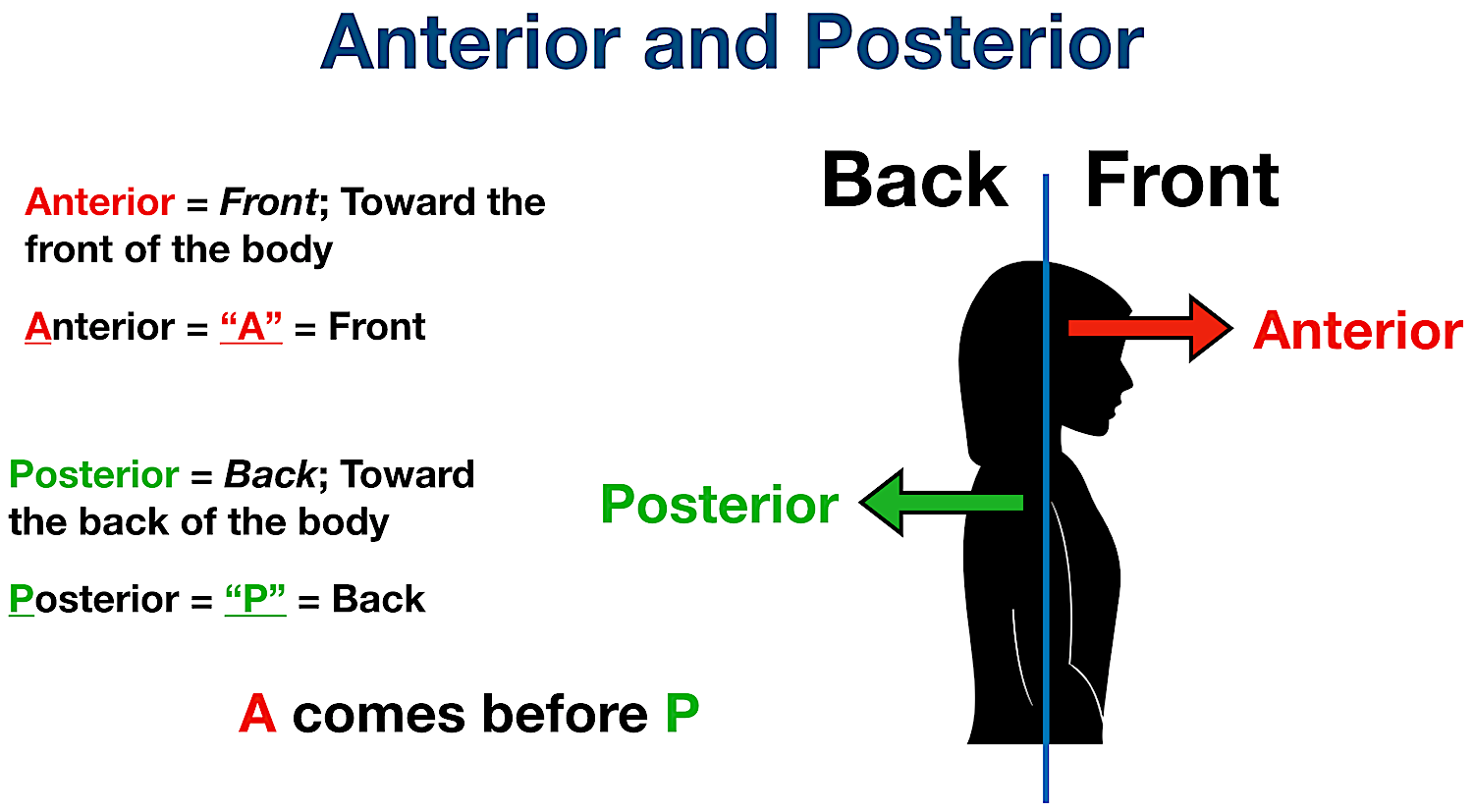
| Anterior and Posterior | Anterior= Front of body Posterior= Back of Body |
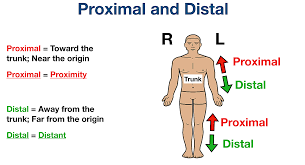
| Distal and proximal | Distal= Away from the trunk Proximal= Towards the trunk |
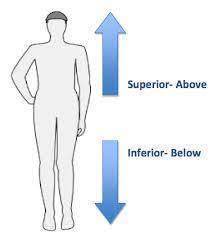
| Superior vs Inferior | Superior= location of body part above another ie Head Superior to neck Inferior= Location of body part below another ie neck is inferior to head |
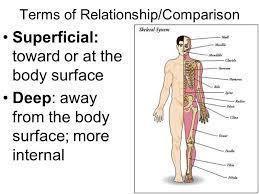
| Superficial vs Deep | Superficial= Structure more external ie Epidermis is superficial to dermis Deep= structure is more internal ie dermis is deep to epidermis |
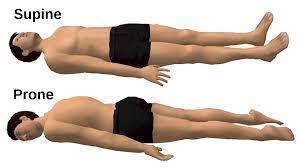
| Supine vs Prone | Supine= Laying on back Prone= Laying on stomach |
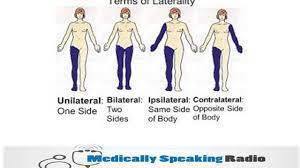
| Bilateral vs contralateral vs isilateral |
Bilateral- Refers to both sides
Contralateral- refers to opposite sides
ipsilateral- same side
Image:
Bcl (binary/octet-stream)
|
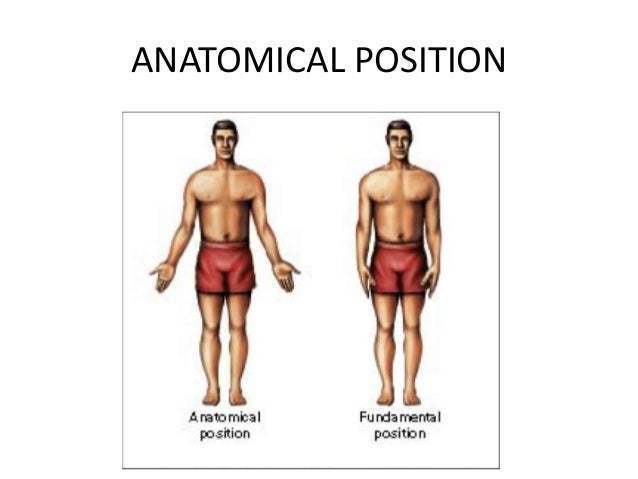
| Anatomical and fundamental position | |
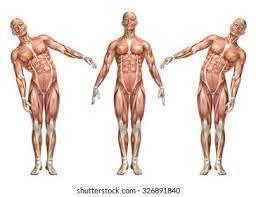
| Lateral bending | lateral bending- Trunk moving sideways |
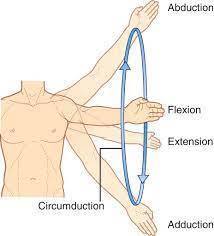
| circumlocution | circumlocution- circular movement that involves: Flexion, extension, abduction adduction |
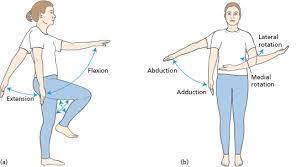
| Medial and Lateral Rotation | Medial Rotation- Anterior surface rolls inward towards midline Lateral Rotation- Anterior surface rolls away from midline |
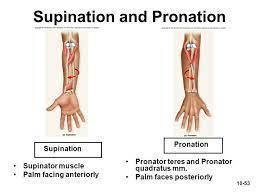
| pronation vs Supination | supination- Palm facing up, it is the rotation of forearm Pronation- Palm facing down |
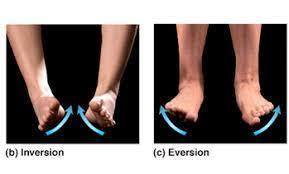
| inversion and eversion | inversion- moving sole of the foot closer to ankle (easiest way to twist ankle) eversion- outward movement |
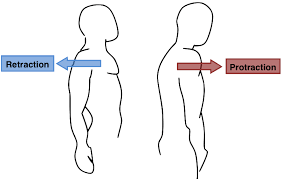
| protraction and retraction | Protraction- rounded shoulders retraction- shoulders back |
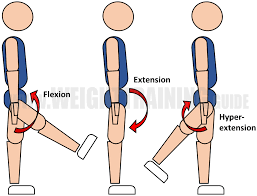
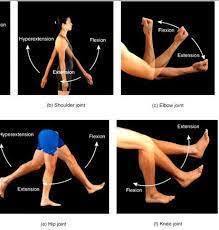
| Flexion/ extension/ hyperextension |
Flexion- bending movement brining two segments together causing decrease in angle
Extension- straitening movement of bone moving away from each other, causing an incease in joint angle anatomical position)
Hyperextension- extension beyond anatomical position
Image:
Images (binary/octet-stream)
|
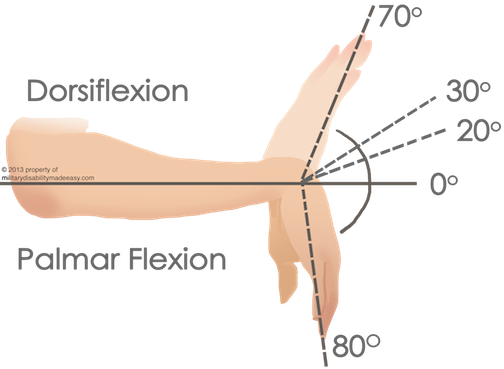
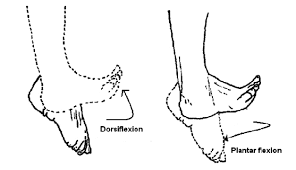
| palmar flexion and plantar flexion | palmar flexion- flexion at the wrist plantar flexion- flexion at ankle |
| dorsiflexion and dorsumflexion | Extension at the wrist and ankle joint |
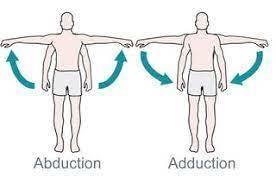
| Abduction and adduction | Abduction- movement away from the midline adduction- movement towards midline |
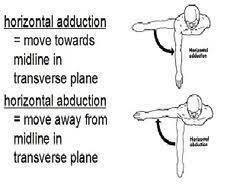
| horizontal abduction and horizontal adduction | both horizontal abduction and adduction cant occur form normal anatomical position thus flexion or abduction of the shoulder must occur first. So from this position Shoulders backward would be horizontal adduction and if it was forward horizontal adduction |
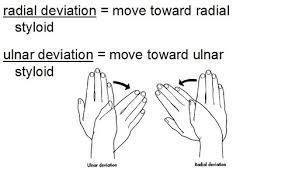
| radial and ulnar deviation | radial- hand moves laterally towards thumb- look at anatomical position Ulnar- Hand moves medially form anatomical position towards little finger side of wrist |
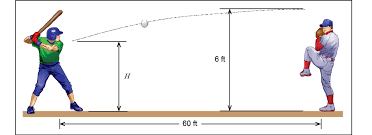
| Linear motion Rectilinear and curvilinear |
Rectilinear- Movement occurring in straight line
Curvililnear- movement that is curved but not circular
Image:
Curve (binary/octet-stream)
|
| Angular Motion | Angular Motion- When angle between bones of a joint change |
| Origin and insertion | origin- proximal ( normally towards the midline or a stable surface) Insertion- Distal ( point of attachment in a muscle where movement happens) |
Want to create your own Flashcards for free with GoConqr? Learn more.