
Flashcards
Genetics Exam 2
Cards in this deck (129)
- 1What does Mendel assume?1. Each trait is completely controlled by a single gene.
2. One allele is completely dominant over the other, recessive, allele.
3. Only two possible alleles of each gene exist.
(RARELY the case) - 2How do you get alleles?Mutation
- 3What is a mutation?the changing of the structure of a gene, resulting in a variant form that may be transmitted to subsequent generations.
-enzyme function, efficiency, entire loss - 4Wild type notation:wt or +
- 5Mutant notation:letter
- 6No clear dominance notation:R^1, R^2, C^W, C^R
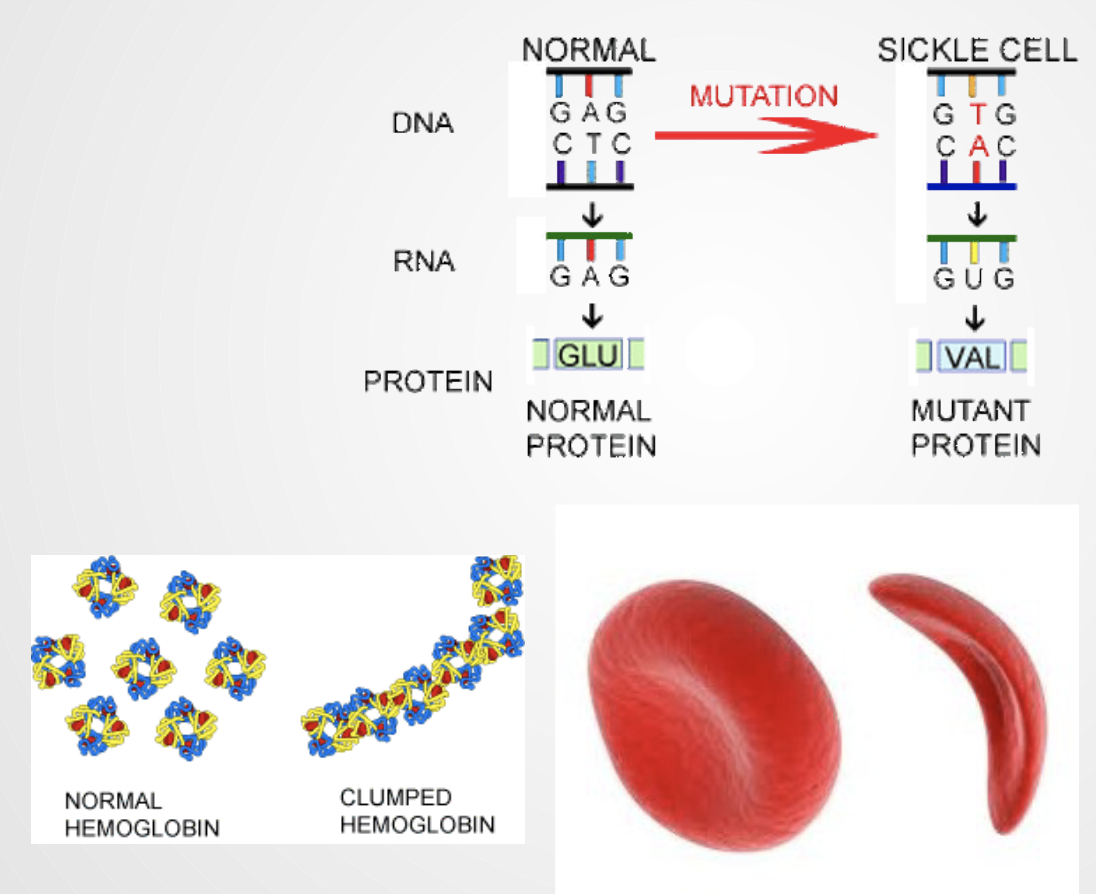
- 7Example of Mutation & AllelesSickle cell anemia
- 8What are the 3 ways we don't follow Mendel's assumptions?1. Polygenic Traits
2. Incomplete Dominance
3. Co-dominance - 9What are polygenic traits?those that the phenotype is determined by more than one gene
- 10What is the most common phenotype in polygenic traits?wild type
- 11What is incomplete dominance?Where heterozygote exhibits intermediate phenotype
-phenotypic ratio vs. genotypic ratio - 12What are examples of incomplete dominance in humans?Human hair texture & Tay-Sachs Disease
- 13What is incomplete dominance in human hair?-gene with two incomplete dominant alleles, H1 and H2
-A person w/ 2 copies of the H1 allele has curly hair
-A person w/ 2 copies of the H2 gene allele has straight hair
-Heterozygotes (w/ H1 & H2) has wavy hair - 14Incomplete dominance in Tay-Sachs disease-Homozygous dominant = fatal
-Heterozygous = enzyme function 1/2 wt level
-Homozygous recessive = normal enzyme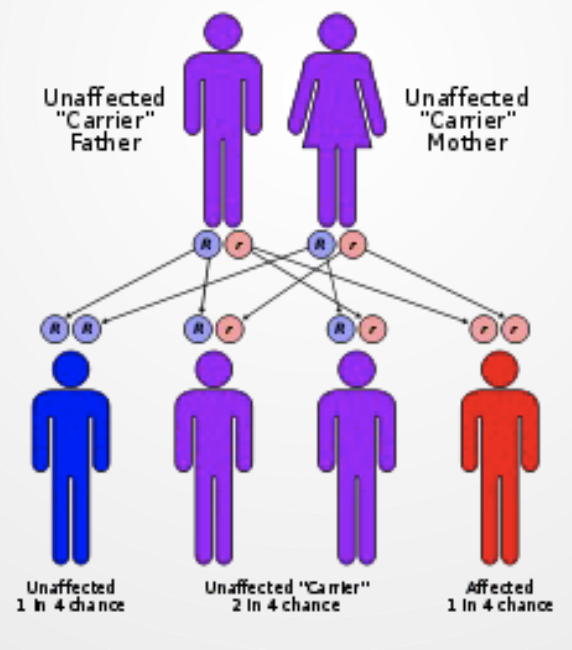
- 15What is co-dominance?where heterozygotes express both alleles equally
- 16What does co-dominance result in?> 2 alleles in a population
- 17What is an example of co-dominance in humans?blood types by sugars
I^A allele = Type A
I^B allele = Type B
O allele = Type O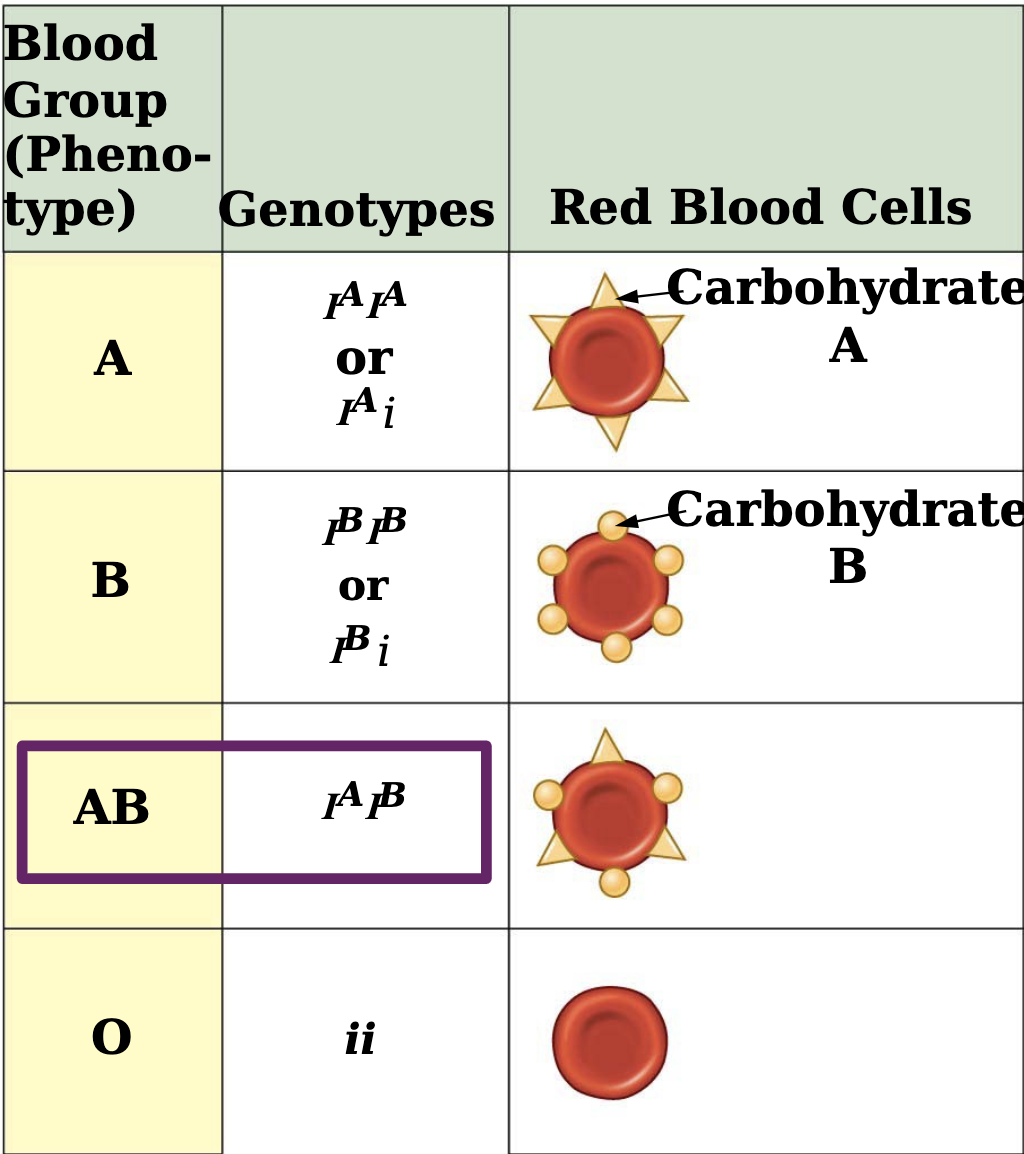
- 18Blood type chart
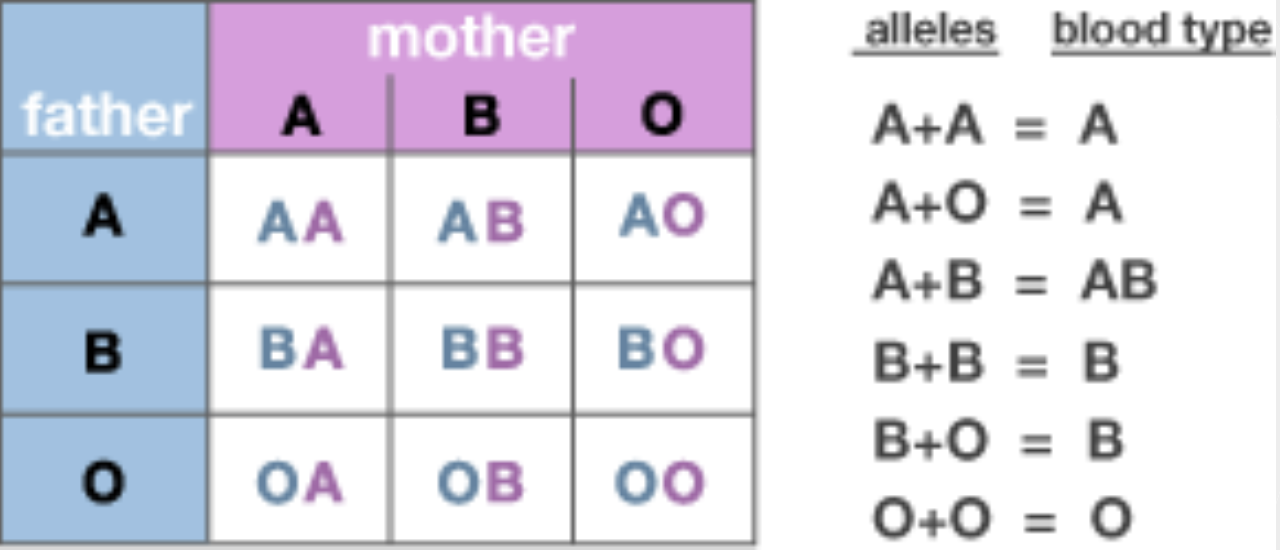
- 19Dominance in flowers:-Dominant - red
-Recessive - white
-Incomplete dominance - light pink
-Co-dominance - see both colors on flower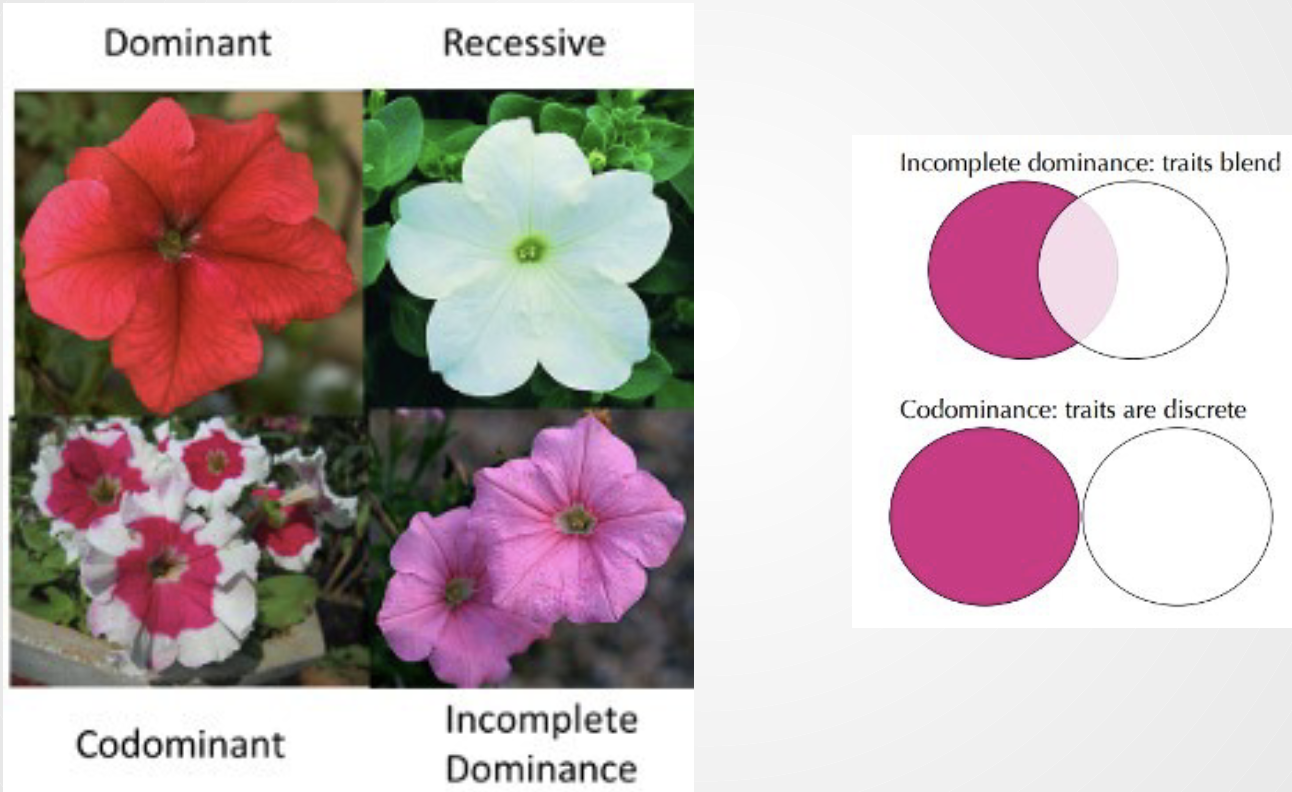
- 20Complete dominance vs. Incomplete dominance & Co-dominance ratiosComplete dominance:
-Phenotypic Rato: 3:1
-Genotypic Ratio: 1:2:1
Incomplete & Co-dominance:
-Phenotypic Ratio: 1:2:1
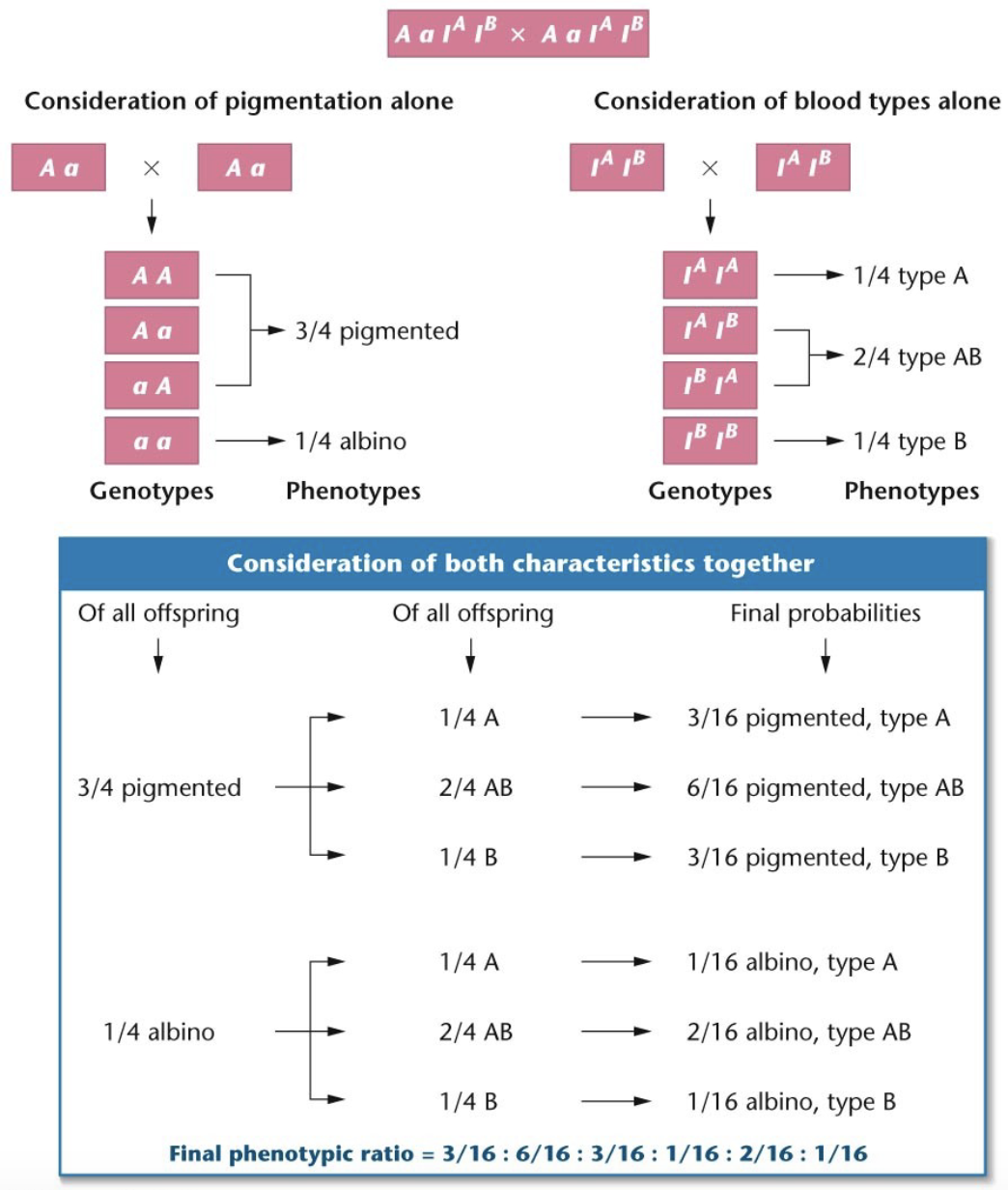
-Genotypic Rato: ----- - 21What happens when one of two gene pairs has non-mendelian inheritance?
- 22Genes & Survival: Essential vs. Non essentialEssential :
-mutation in lethal
- ~1/3 genes in this category
-mutation leads to lethal allele
-typically recessive
Nonessential:
-Mutation survivable - 23What are conditional lethal alleles?Alleles that only kill the organism under certain conditions
ex. Temperature-Sensitive (TS) mutants
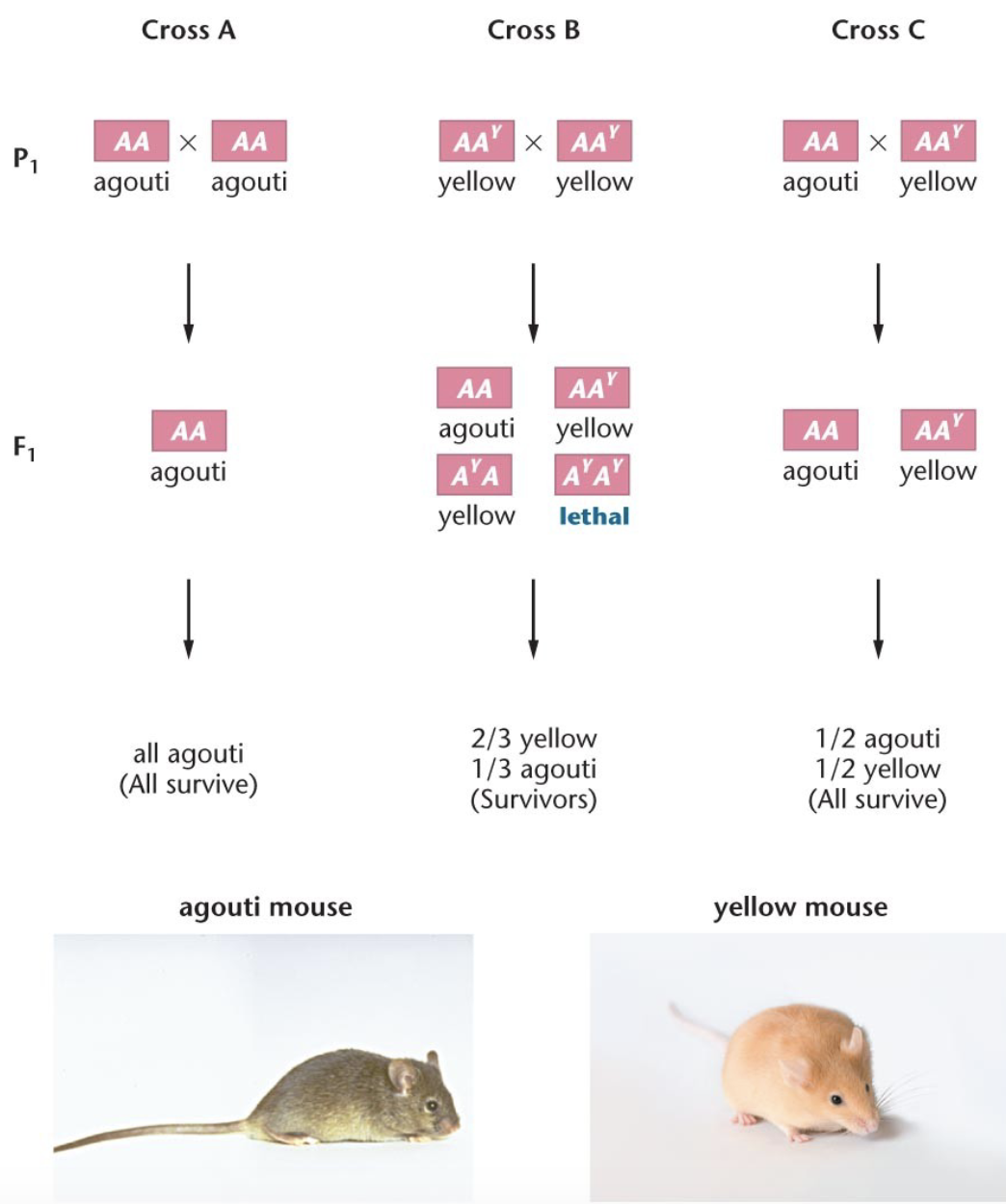
(developing larva may die @ 30°C & survive @ 22°C) - 24Do lethal alleles follow Mendel?NO!!! ex. agouti mouse
- 25What is epistasis?When one gene masks the phenotypic effect of another
(Frequently found in metabolic pathways) - 26Epistasis example:Petal color of flower:
-If an individual is homozygous for either recessive allele, it will not make any functional enzyme C or enzyme P. Therefore, the flowers will remain white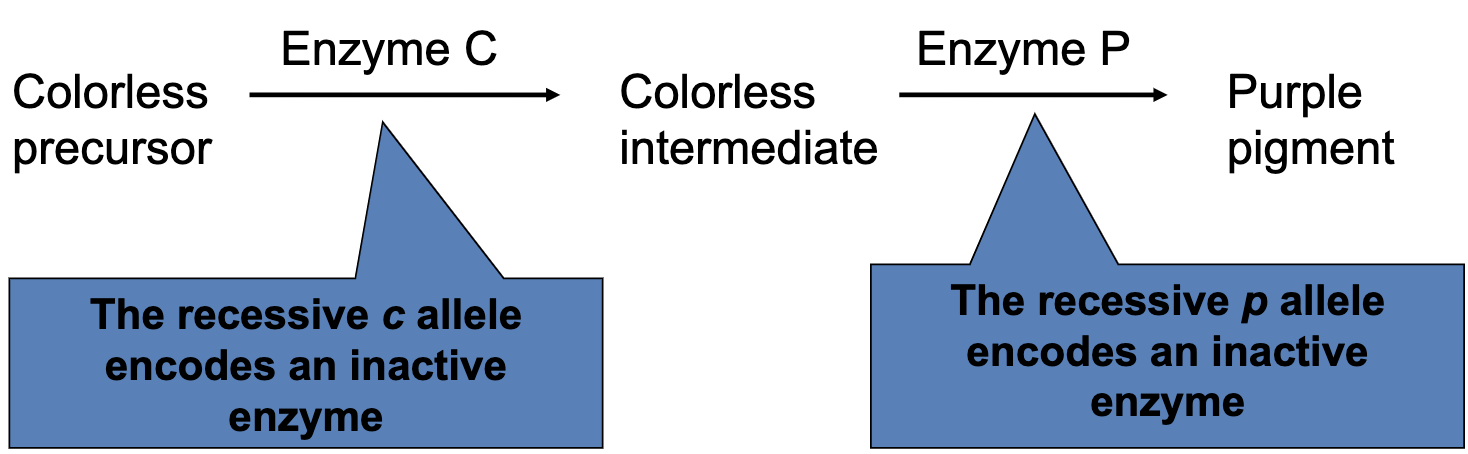
- 27What is Pleiotropy?One gene with multiple phenotypes
ex. albinism, PKU, & Marfan syndrome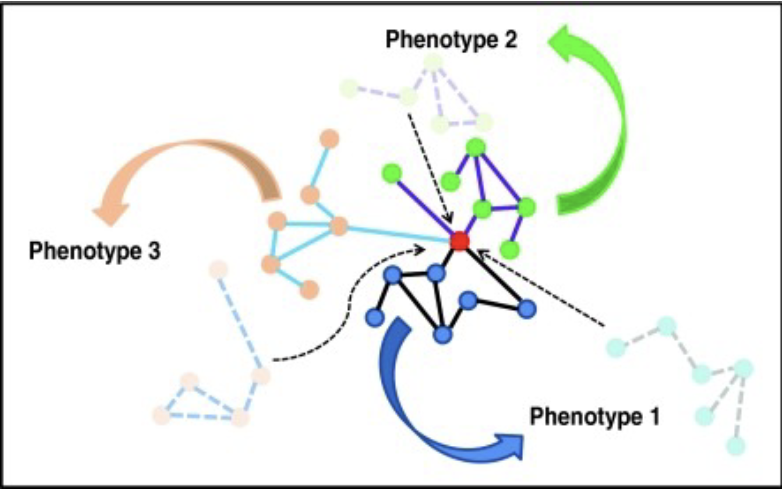
- 28What is hermaphroditism?Both sexes in the same organism
- 29What is monoecious?Both male and female reproductive structures in the same organism
- 30What is dioecious?Either male or female reproductive structures in one organism
- 31XX-XY System:XX - female
XY - male
XO - female
XXY - male
XXXY - female
Mammals - 32X chromosome vs. Y chromosomeX chromosome: very large, MANY genes
Y chromosome: relatively tiny, few genes, sex determining genes - 33What is hemizygous?Only 1x = only 1 allele of many genes
-Skews inheritance
ex. Males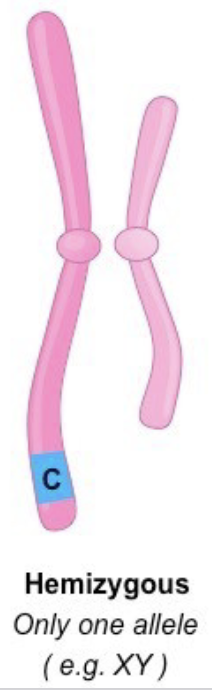
- 34X Linked Traits in Humansonly females are carriers of recessive alleles, males are hemizygous
ex. red/green colorblindness, hemophilia - 35Y linked characteristics-Only present in males
-All male offspring exhibit the trait
-Y chromosome lost DNA over time
-Important for sex determination in SRY - 36What are sex influenced traits?Seemingly different inheritance patterns influenced by gender
ex. male pattern baldness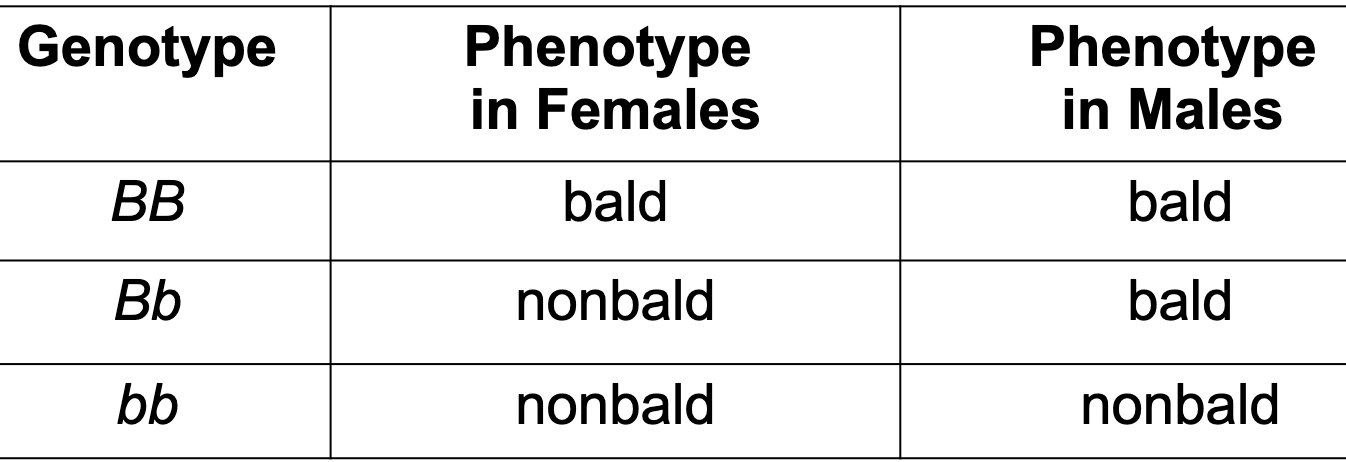
- 37What is penetrance?The percentage of individuals that show at least some degree of expression of the mutant genotype in a population
-Partial penetrance - 38What is expressivity?The range of expression of the mutant phenotype
-Can be the result of genetic background differences and/or environmental effects - 39What are some environmental effects on phenotype?Penetrance, expressivity, genetic suppression, position effect, temperature effects, & heat-shock genes
- 40What happens to genes on the same chromosome?Meiotic Consequences:
-Independent assortment (No Linkage)
-Linkage w/o crossover (Complete linkage)
-Linkage w/ crossover (Recombinants)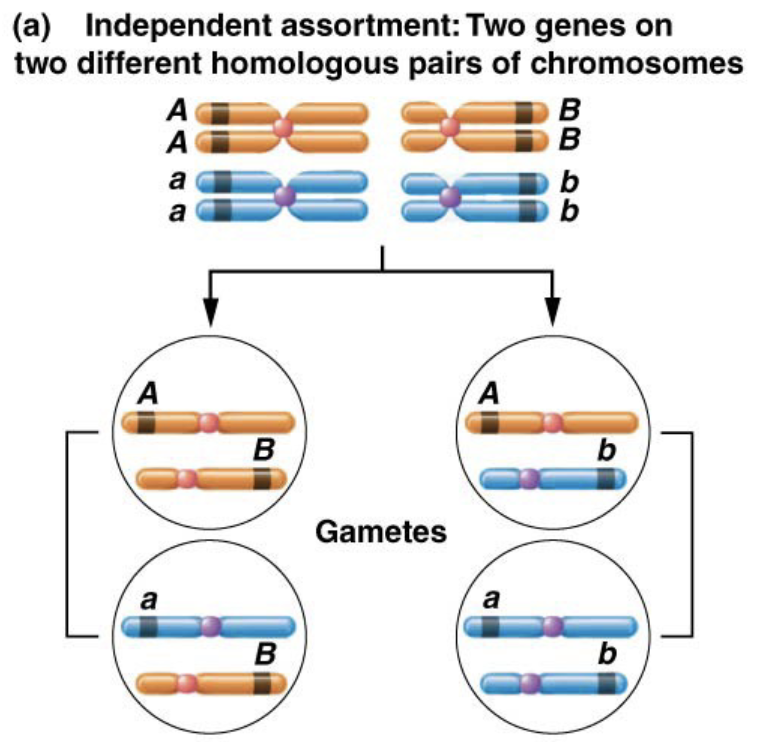
- 41What is complete linkage?-No crossover
-Parental gametes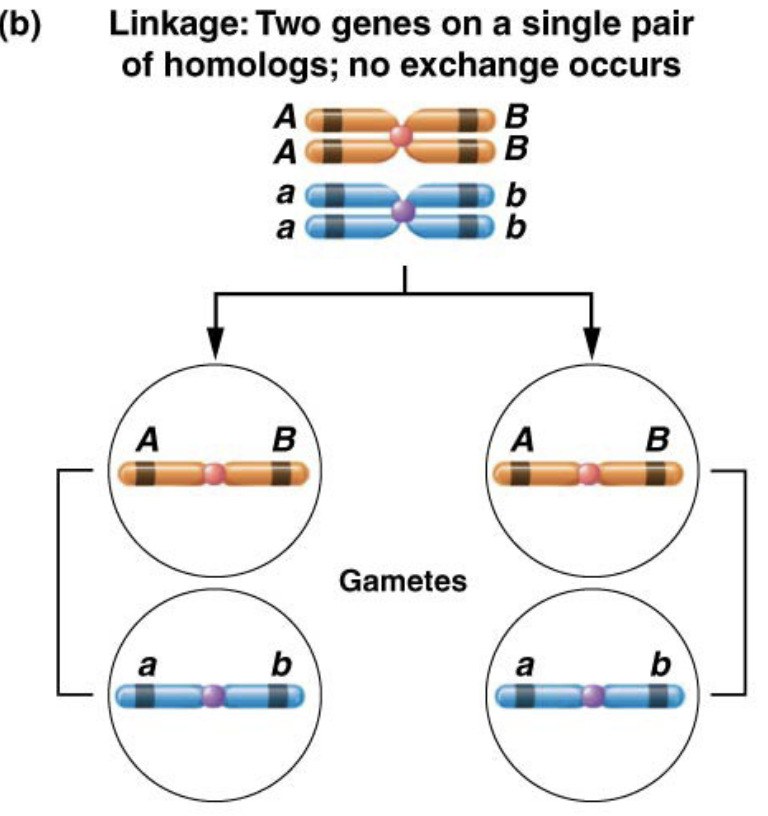
- 42What is crossing over?-Between NON-sister chromatids
-Produces recombinants
-Charismata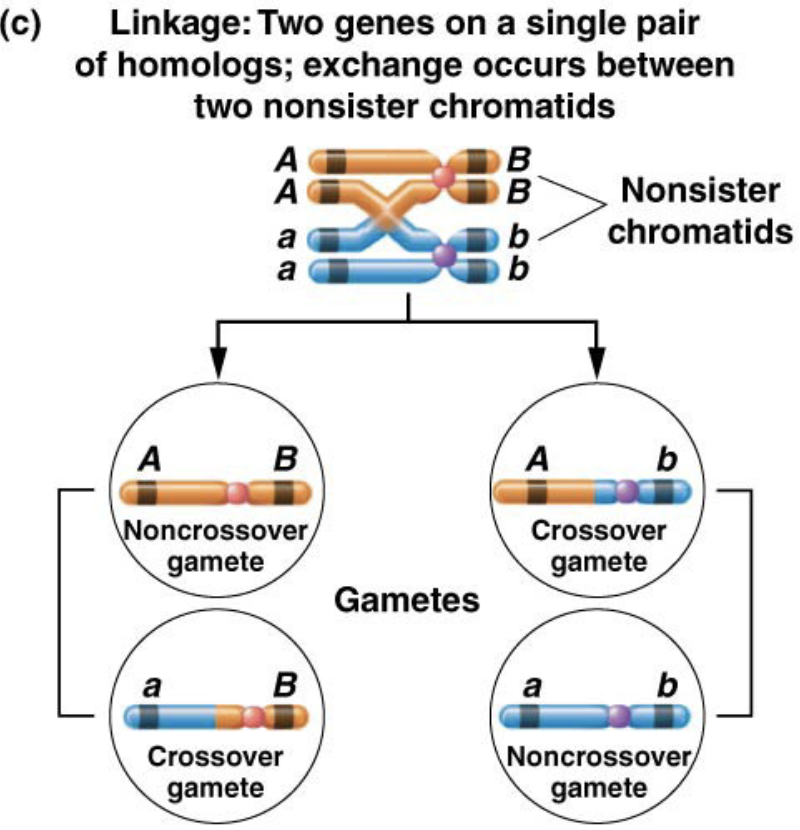
- 43What happens when linked genes segregate together?Crossing over produces recombination between them
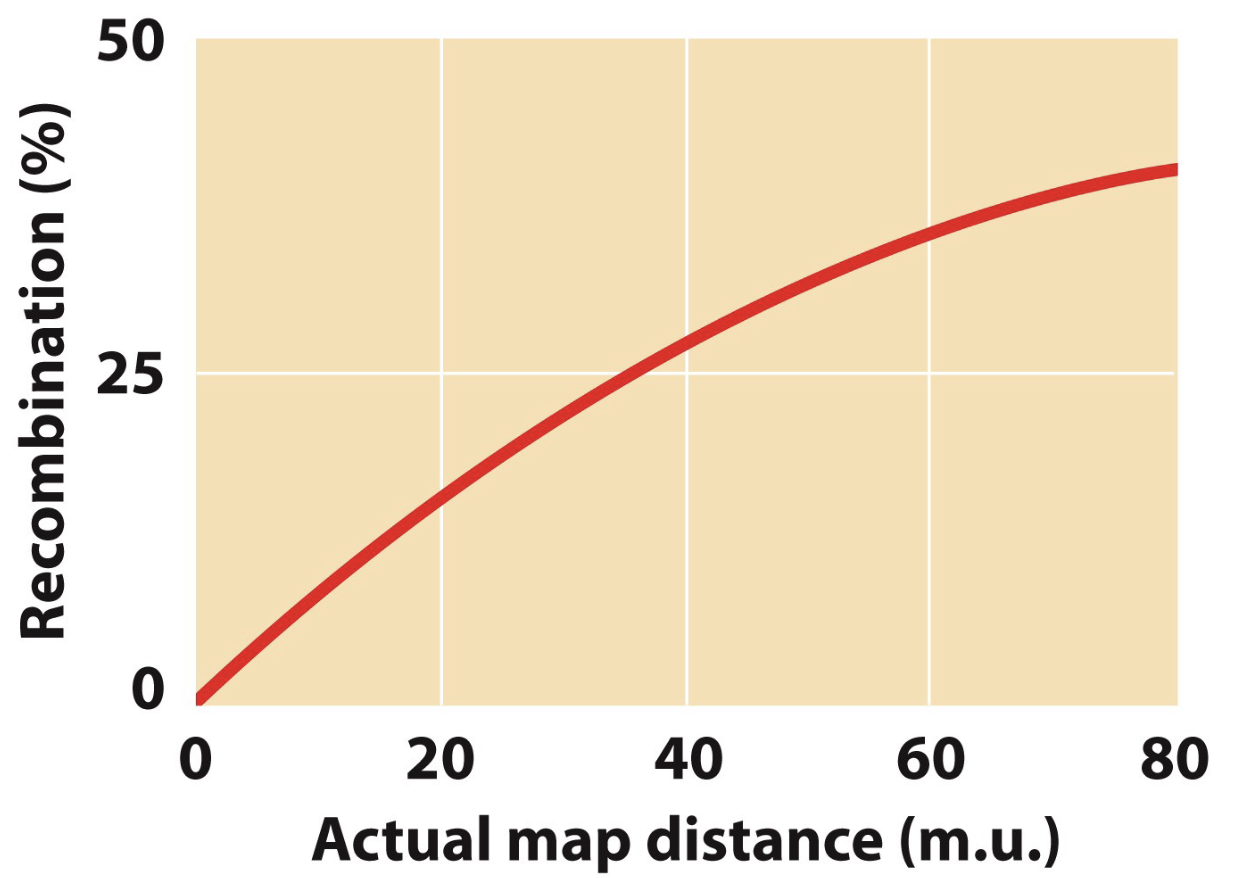
- 44How do you calculate recombination frequency?(# of recombinant progeny / total # of progeny) x 100%
- 45CouplingWild type alleles are found on one chromosome; mutant alleles are found on the other chromosome
- 46What can be used to map three linked genes?A THREE-POINT TESTCROSS
- 47What is linkage ratio?complete linkage when very close together (0 recombinants)
-F2 ratios differ - 48What is Linkage group?Genes on the same chromosome
- 49What did Sturevant do/discover?-Complied data from crosses
-Recombination frequencies between linked genes are additive - 50What is frequency of exchange?the estimate of relative distance between two genes
- 51What are map units (mu)?1% recombination between two genes on chromosome
-Also called centimorgans (cM)
-Relative distances, NOT exact ones - 52What are single crossovers?Recombination observed 50% of gametes
-2 parental gametes & 2 recombinant gametes
-Genes are 50 mu apart - 53What are 2 things that go along with a double crossover?1. MUST be heterozygous for 2 alleles to work
2. Middle gene is ALWAYS the one that changes - 54What happens every time you have a crossover?It diminishes the frequency of additional crossovers
- 55What are 3 criteria of 3 point mapping?1. Parent must be heterozygous for ALL 3 genes
2. Phenotypic class must reflect genotype of gametes of parents
3. Sufficient # of offspring must be produced - 56What is the most frequent cross over and what is the least frequent cross over?Most frequent = non-crossover (NCO)
Least frequent = double crossover (DCO) - 57On a chart, which crossover has the highest number and which has the lowest?Highest = Non-crossover (Parental)
Lowest = double cross over - 58What happens to the method of mapping when distance increases?it loses reliability
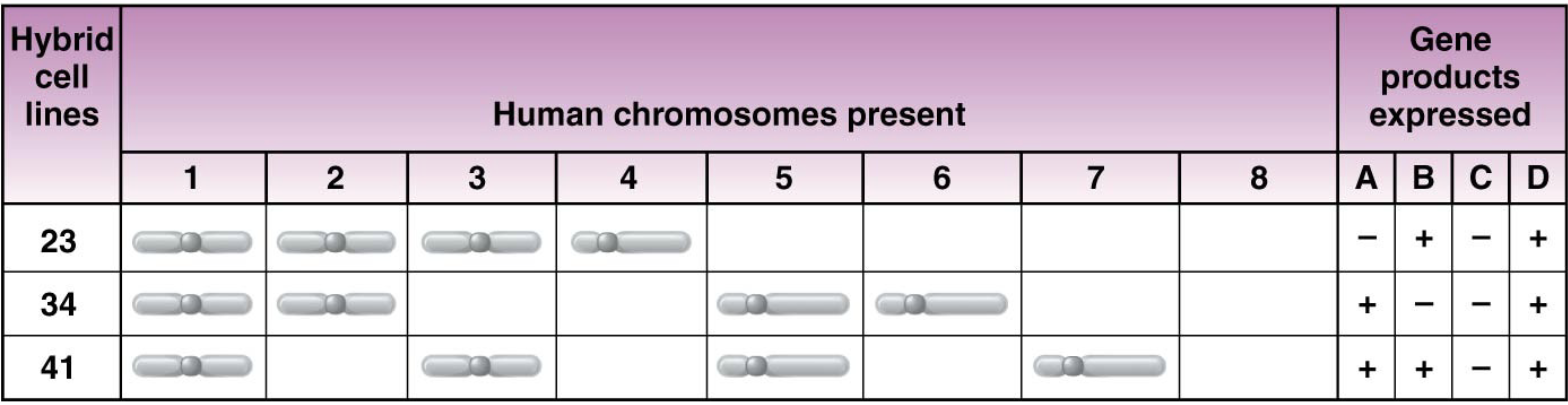
- 59What is Synteny Testing? (old school)The presence/absence of chromosome correlates to presence/absence of genes
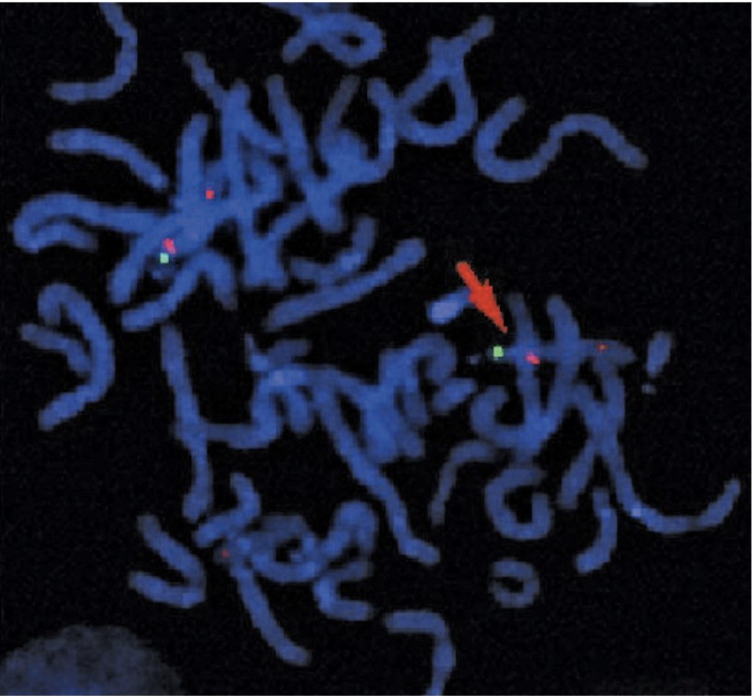
- 60What is Fluorescence In Situ Hybridization (FISH) ?Uses a single stranded complementary DNA probe for the gene
- 61What is bioinformatics and RFLP?DNA Markers
-Landmarkers
-RFLPs & Microsattelites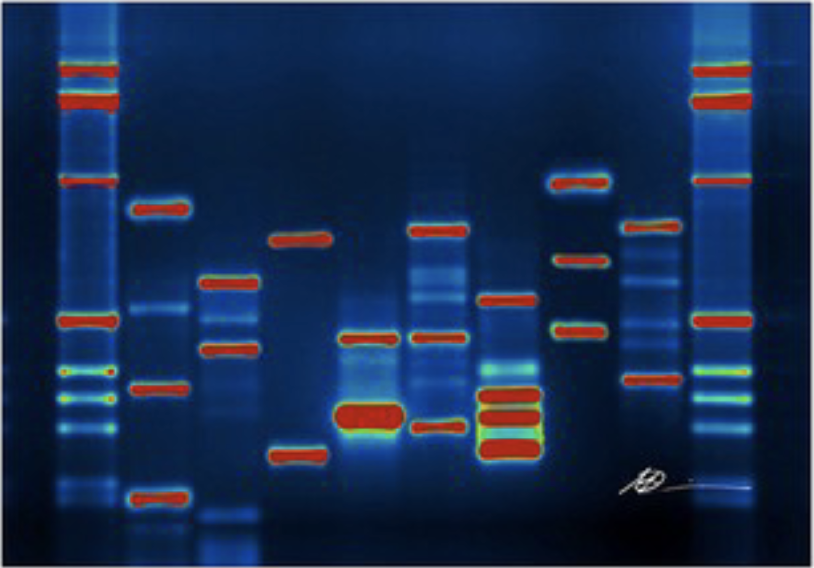
- 62What are RFLP's & Microsattellites?Specific regions sensitive to restriction enzymes
- 63What do Microsattelites look like?
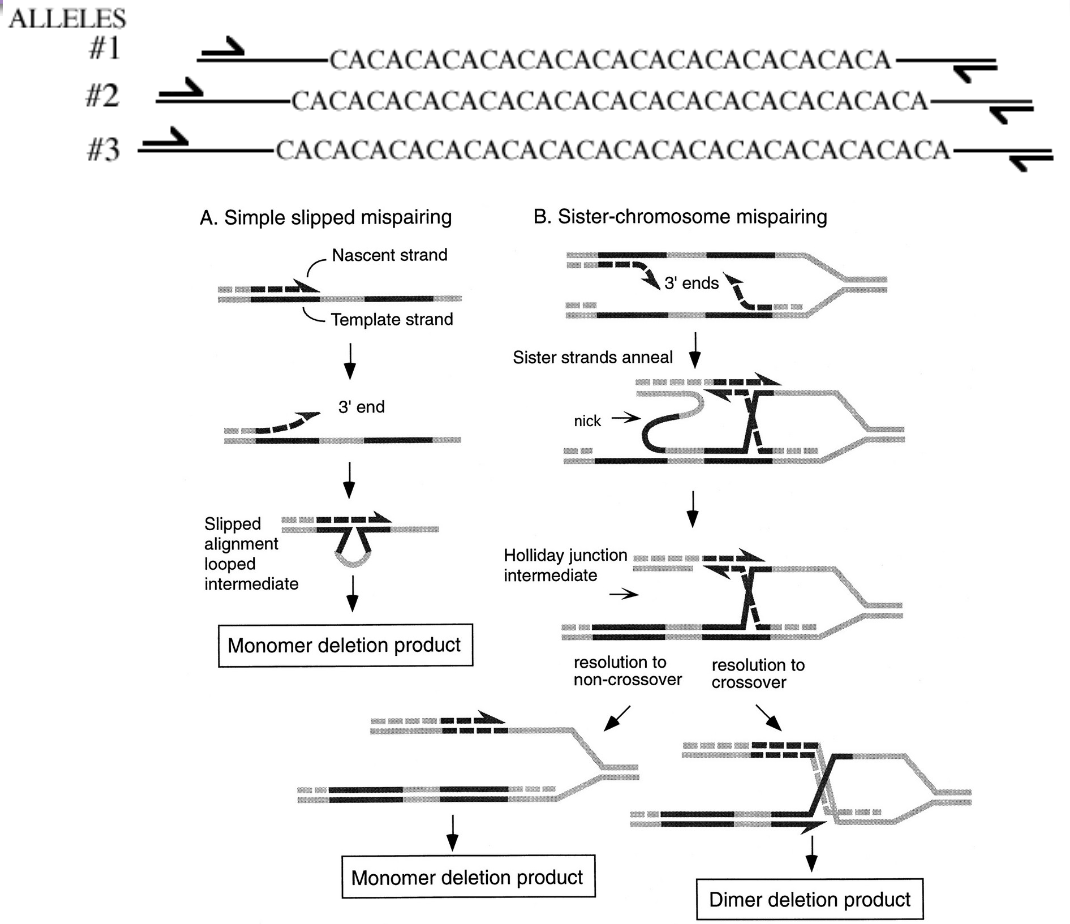
- 64Inheritance of RFLP markers
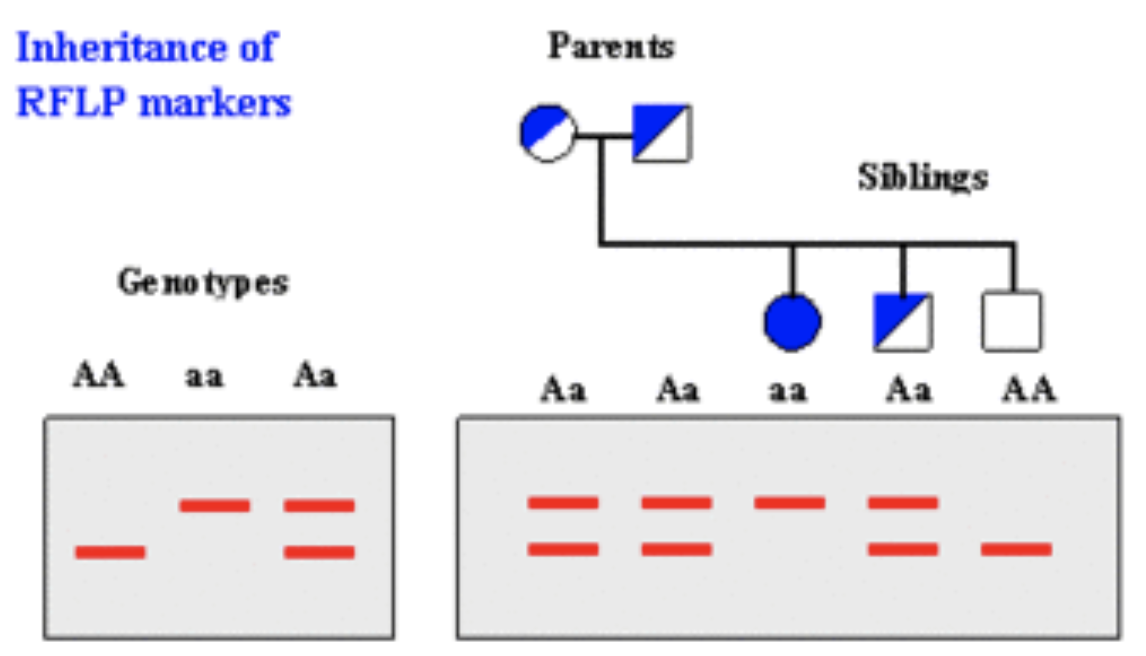
- 65What are the 3 ways we can map humans?Synteny testing, FISH, & Bioinformatics & RFLP
- 66Why are bacteria and viruses (prokaryotes) important?1. Bacterial function in oceans
2. Agriculture
3. Natural flora
4. Disease
5. Commercial products - 67What are the advantages of using bacteria & viruses (prokaryotes) for genetic studies?1. Reproduction is rapid.
2. Many progeny are produced.
3. The haploid genome allows all mutations to be expressed directly.
4. Asexual reproduction simplifies the isolation of genetically pure strains.
5. Growth in the laboratory is easy and requires little space.
6. Genomes are small.
7. Techniques are available for isolating and manipulating their genes.
8. They have medical importance.
9. They can be genetically engineered to produce substances of
commercial value. - 68What are some major features of Prokaryotic cells?1. NO nuclear membrane
2. Most are less than 5μm long
3. Usually have stiff cell wall
4. Typically 3 shapes (Rod shaped Bacilli, Sprial shaped spirilla, & spherical shaped cocci) - 69When growing bacteria in lab when would you use 1. a liquid 2. on a semi-solid (agar)1. when you want a large progeny
2. when you want visible colonies - 70What happens in each phase of S growth?Lag Phase:
Log Phase: Cells are most happy & metabolicly happy
Stationary Phase: equal # of new & dying cells (NOT a good phase for cells) - 71What is selection?Growth of an organism under conditions in which only phenotype of interest can grow
- 72What are auxotrophs?-Unable to synthesize certain macromolecules
-Laking the ability to complete certain pathways - 73What type of chromosome do prokaryotes have?ONE singular chromosome
- 74What is a plasmid?Small, circular, and self replicating
- 75What are the classifications of plasmids?1. Fertility
2. Resistance
3. Col (antibiotic genes)
4. Degradative
5. Virulence - 76What are the 3 types of horizontal gene transfer?1. Transformation
2. Transduction
3. Conjugation - 77What is conjugation?-DNA transfer between cells
-Only one that requires direct contact
-Sex Pilus
-Typically plasmids
-Leads to greater genetic diversity, evolution, & survival
-Takes place when genetic material passes directly from one bacterium to another - 78What is the process of conjugation?1. Begins with contact
2. Bridge shortens
3. DNA transfers
4. DNA recombines in recipient - 79What does the F Factor contain?Contains a number of genes that regulate transfer into a bacterial cell, replication, and insertion into the bacterial chromosome
- 80What is HFr?High Frequency recombination
-Integrated f-factor
-Can donate DNA but not f-factor - 81What does interrupted mating produce?mapping data
- 82What did Davis's U-Tube experiment demonstrate?That bacterial genetic exchange requires direct contact
- 83What is RecA Recombination?finds sequences that are very similar and RecA facilitates
- 84What is bacterial transformation?bacteria takes up foreign DNA
- 85What is the process of bacterial transformation?1. Double stranded DNA binds to the plasma membrane
2. Enzymes cut the DNA
3. Other enzymes break down one DNA strand
4. A protein binds the DNA
5. DNA replaces a portion of the bacterium's DNA - 86What can transformation be used to do?Map bacterial genes
- 87What is transduction?the process by which a virus transfers genetic material from one bacterium to another
- 88What are bacteriophages?-Prokaryote viruses
-Kill cells through lysis
-Dead cells generate
clearing in the lawn,
“plaques"
-1 plaque = 1 infectious particle - 89What is Lysogeny?Type of transduction where phage integrates into bacterium
-vertical transmission - 90What is the LYSOGENIC cycle?1. Phage binds to the bacterium
2. The phage DNA enters the host cell
3. The phage DNA integrates into the bacterial chromosome & becomes a non-infective prophage
4. Chromosome with integrated prophage replicates. This can continue through many divisions - 91What is the LYTIC cycle?1. The phage binds to the bacterium
2. The phage DNA enters the host cell
3. The host DNA is digested
4. New phage DNA forms, using nucleotides from former host DNA
5. Host cell transcribes and translates the phage DNA producing phage proteins
6. Assembly of new phages is complete. A phage encoded enzyme causes the cell to lyse.
7. New phages are released to start the cycle again. - 92What is the process of specialized transduction?Comes from the lysogenic cycle
1. Induction of the lytic cycle
2. Prophage is incorrectly excised from bacterial chromosome
3. Phage DNA incorporating some bacterial genes
4. Phage replicates
5. Bacterial cell is lysed & phages are released
6. Phage infects new host cell
7. Phage incorporated into chromosome
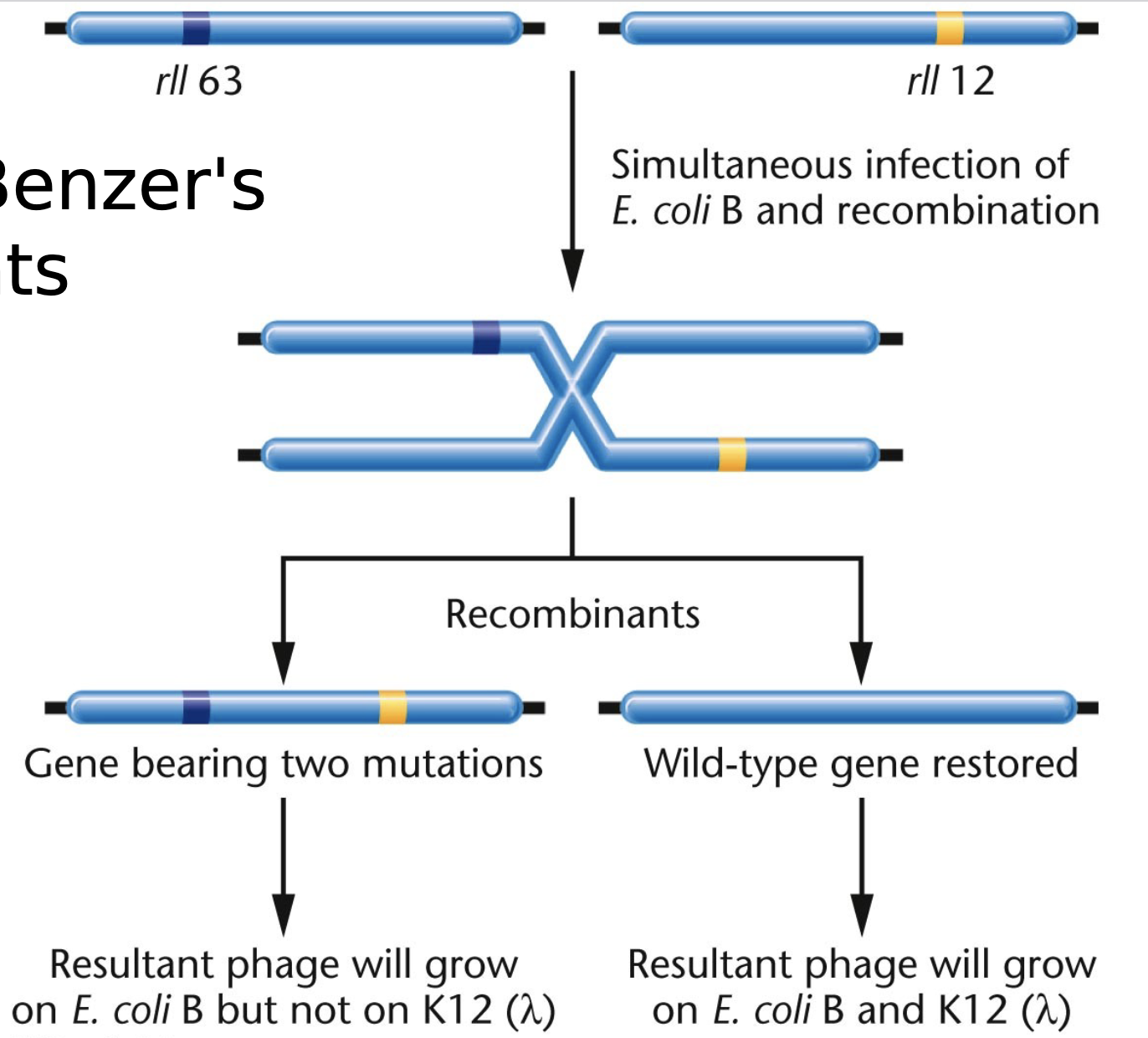
8. Host cell chromosome acquires both phage DNA & genes from previous host - 93What can phage mutants be used for?Mapping Intergenic Recombination
- 94What is intergenic recombination mapping?Recombination frequency goes up = distance increases
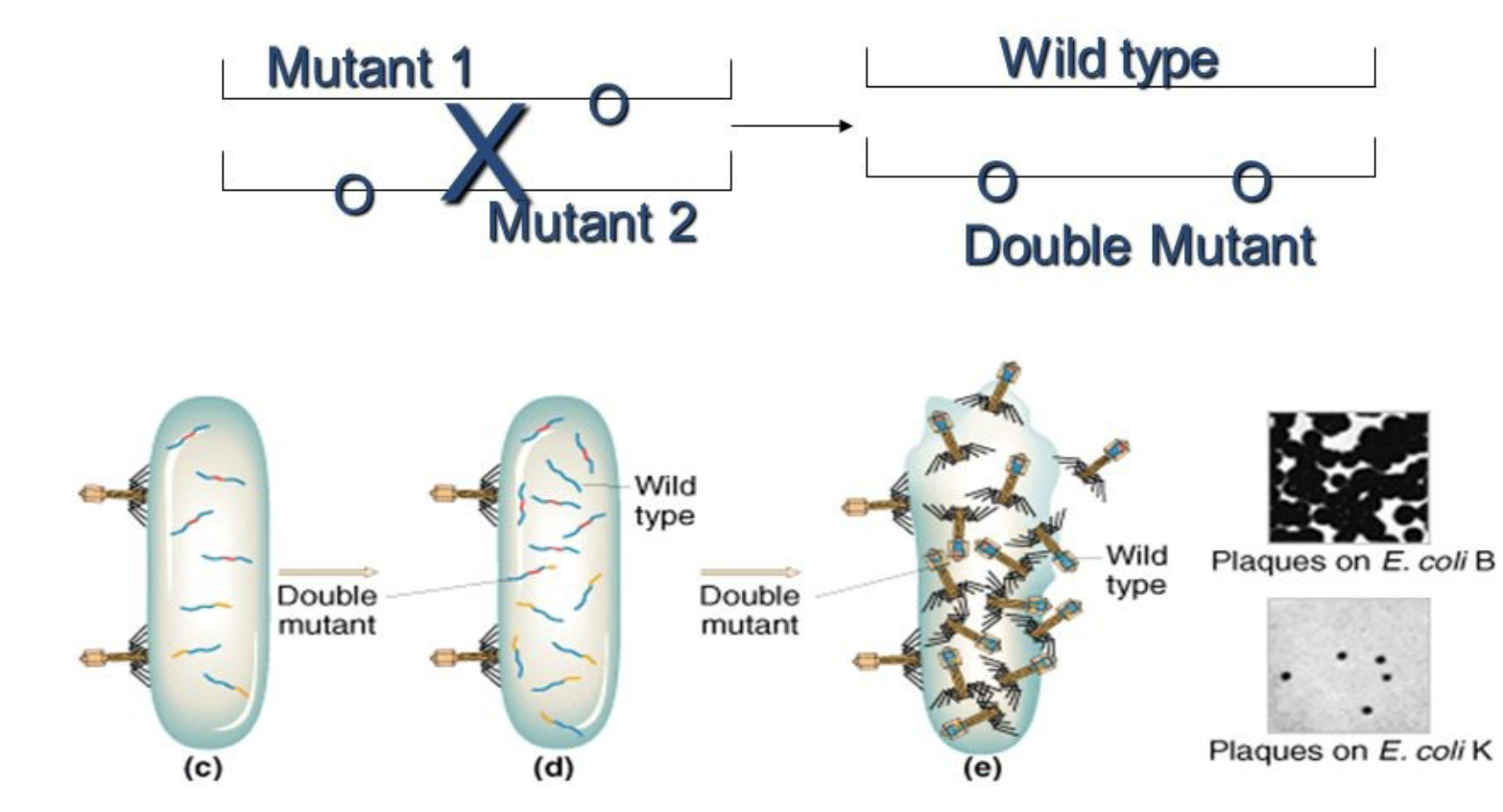
- 95Seymour Benzer's Experiments:Recombination Frequency = A / B
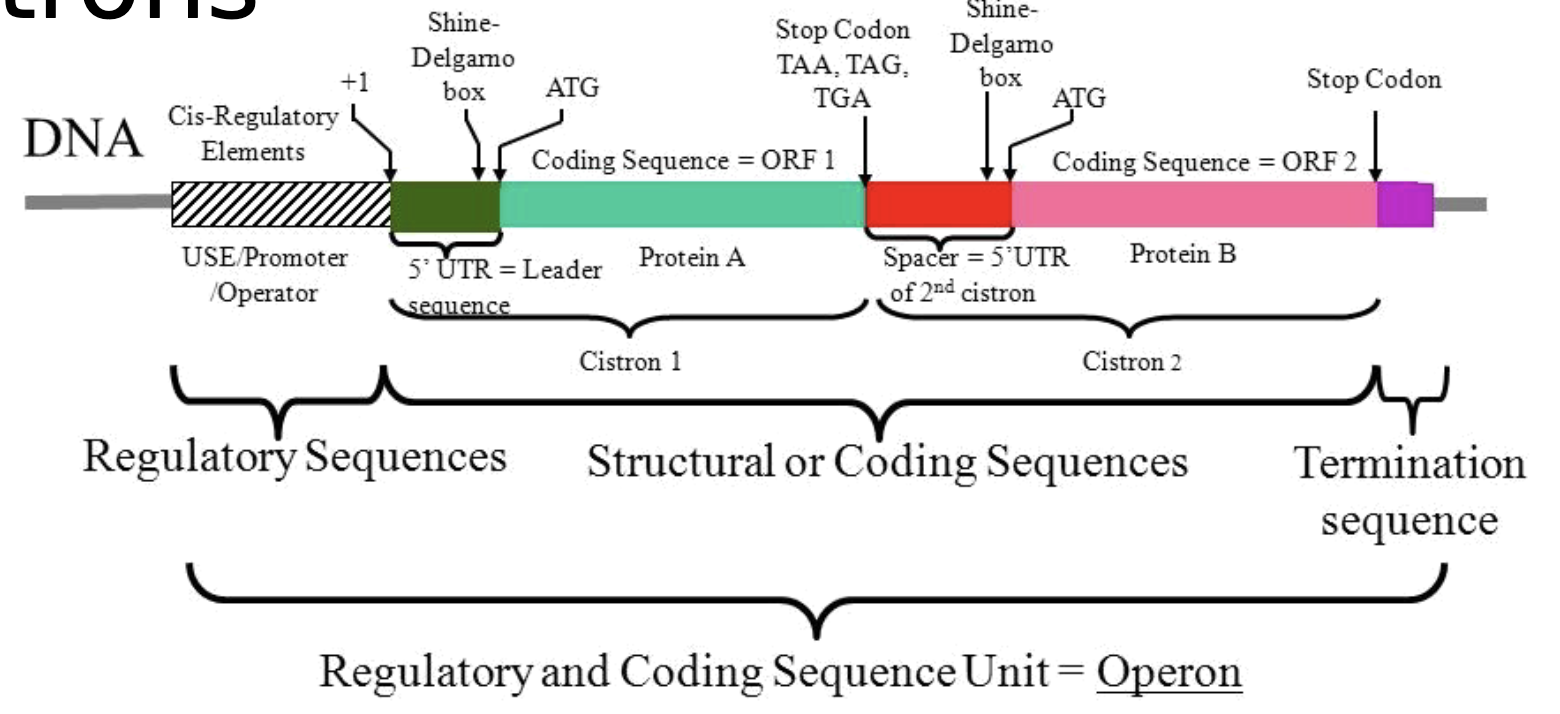
- 96Complementation in Phage: Cistrons?Cistrons - gene that encodes proteins
- 97What is complementation in phage?Two mutations in DIFFERENT cistrons
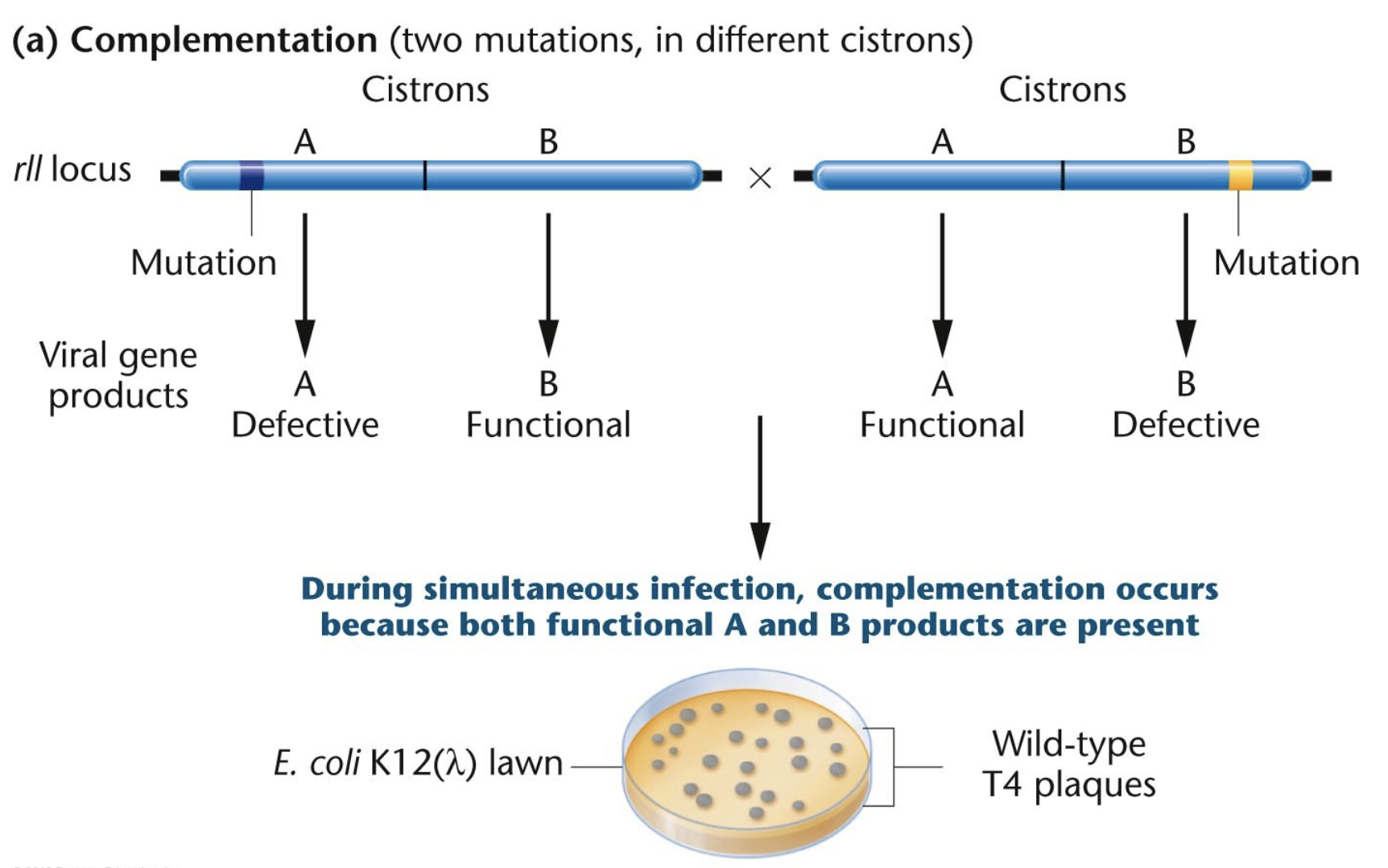
- 98What is no complementation in phage?Two mutations in SAME cistrons
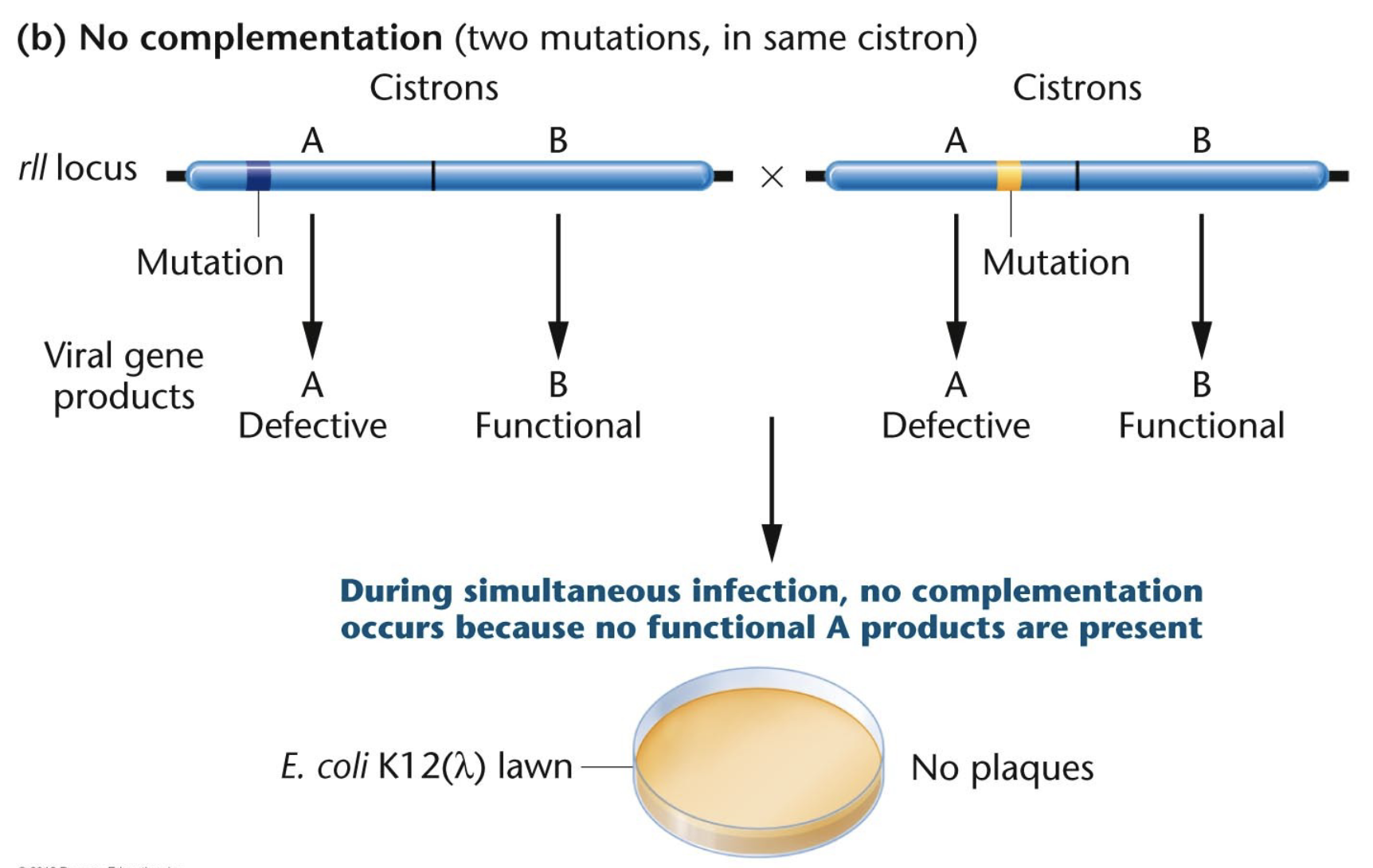
- 99What is deletion testing?Utilizes point mutations
ex. CAT
CGT
A & G do not match - 100What are chromosomal variations?Chromosomal variation can arise from
nondisjunction, in which chromosomes
or chromatids fail to disjoin and move to
opposite poles during meiosis I or II - 101First division Nondisjunction vs. normal disjunction
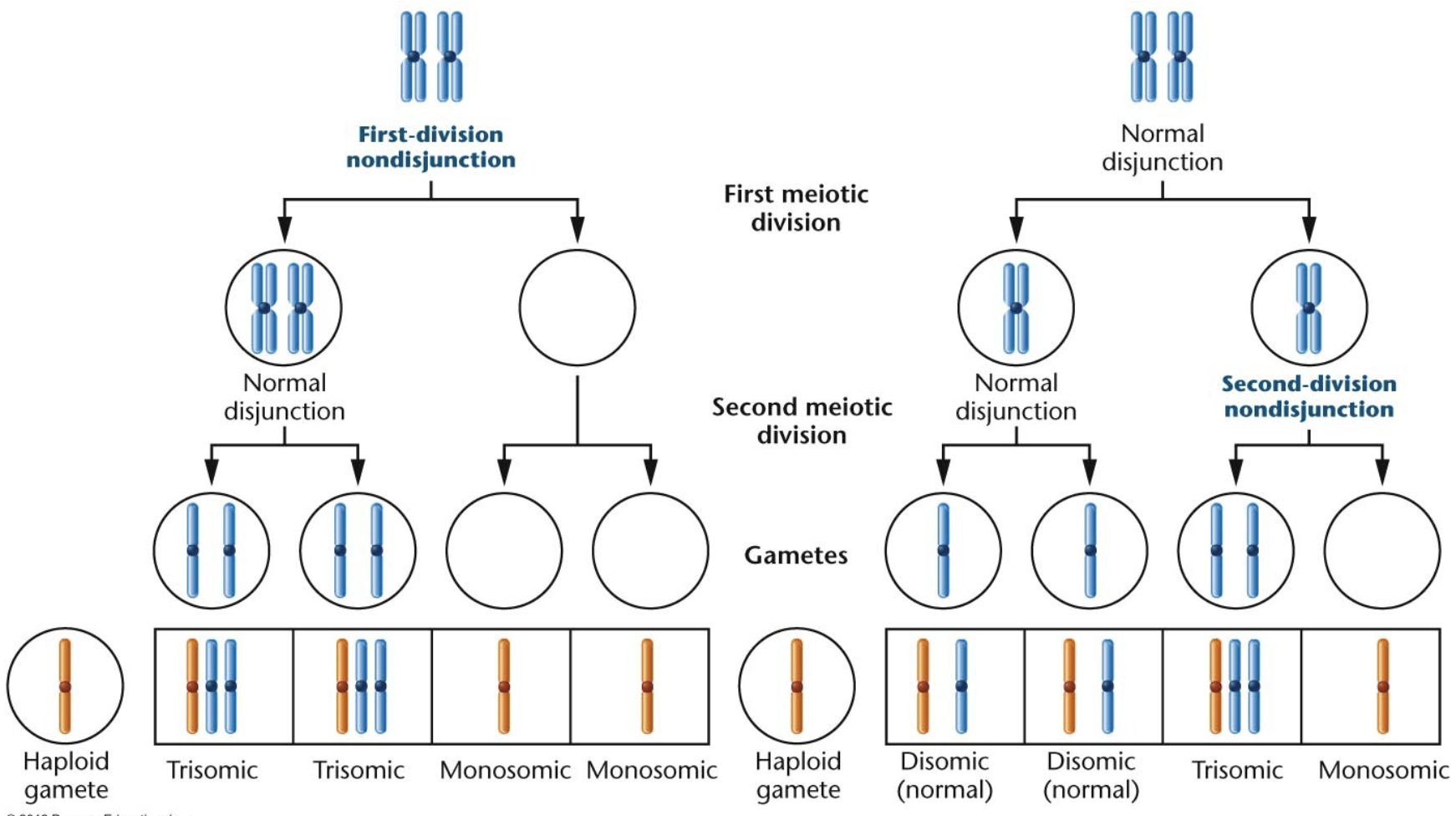
- 102What is trisomy 21?Down syndrome. An extra chromosome 21
Down syndrome is more common in women than men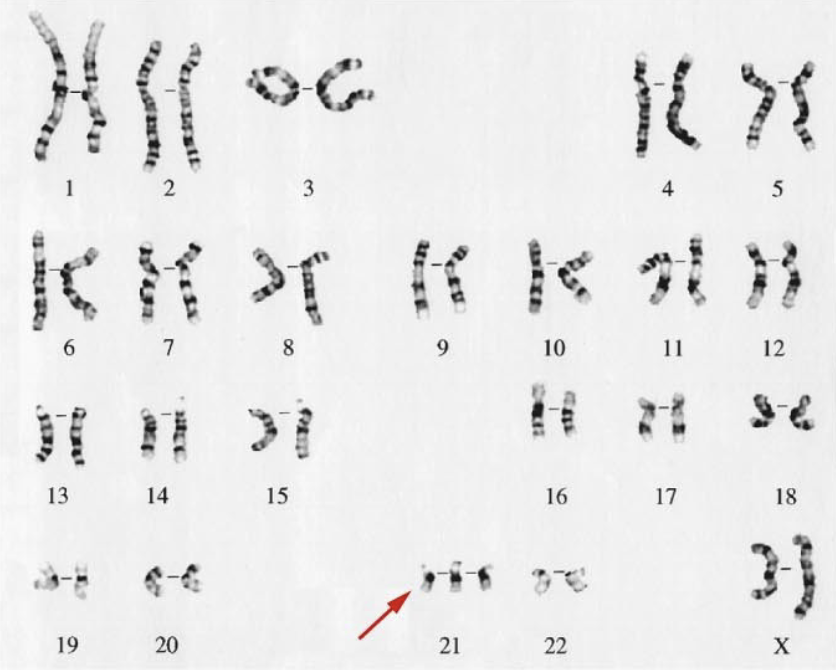
- 103What is patau syndrome?Trisomy 13
There are 3 chromosome 13's - 104What is interspecies matings?Only possible in organisms w/ partial haploid lifestyle
Mule is infertile - 105What are the chromosomal rearrangments?1. deletions
2. duplications
3. inversions
4. nonreciprocal translocations
5. reciprocal translocations - 106What are deletions?Involving double stranded breaks
Where there is a break in the chromosome & genetic material gets deleted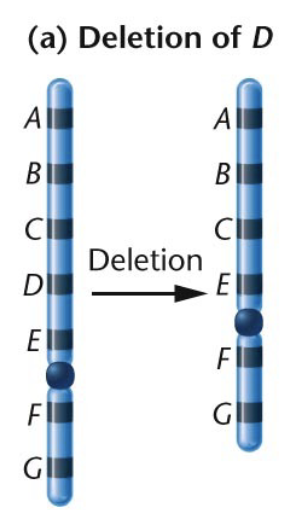
- 107What is the formation of a deletion loop?
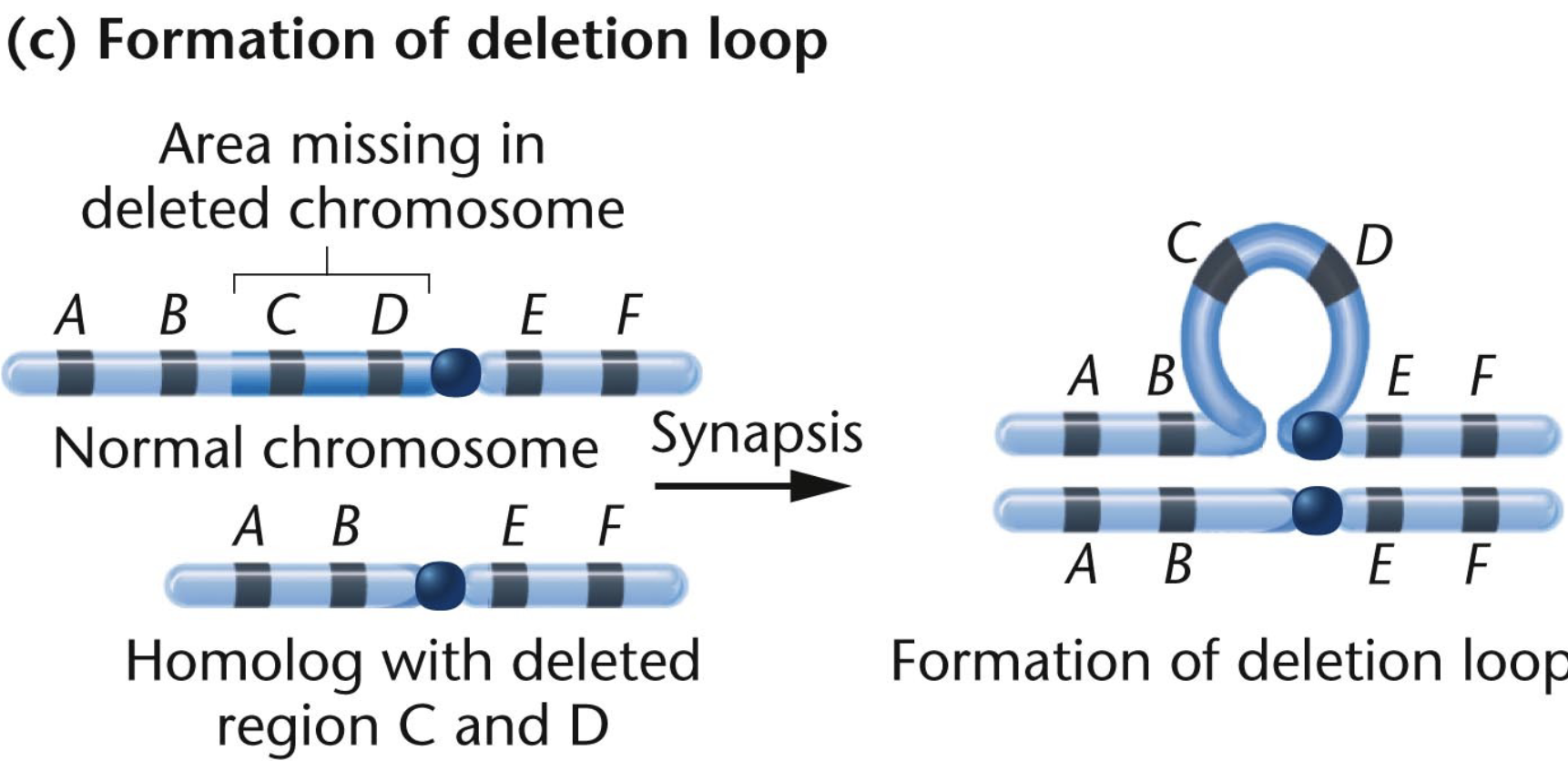
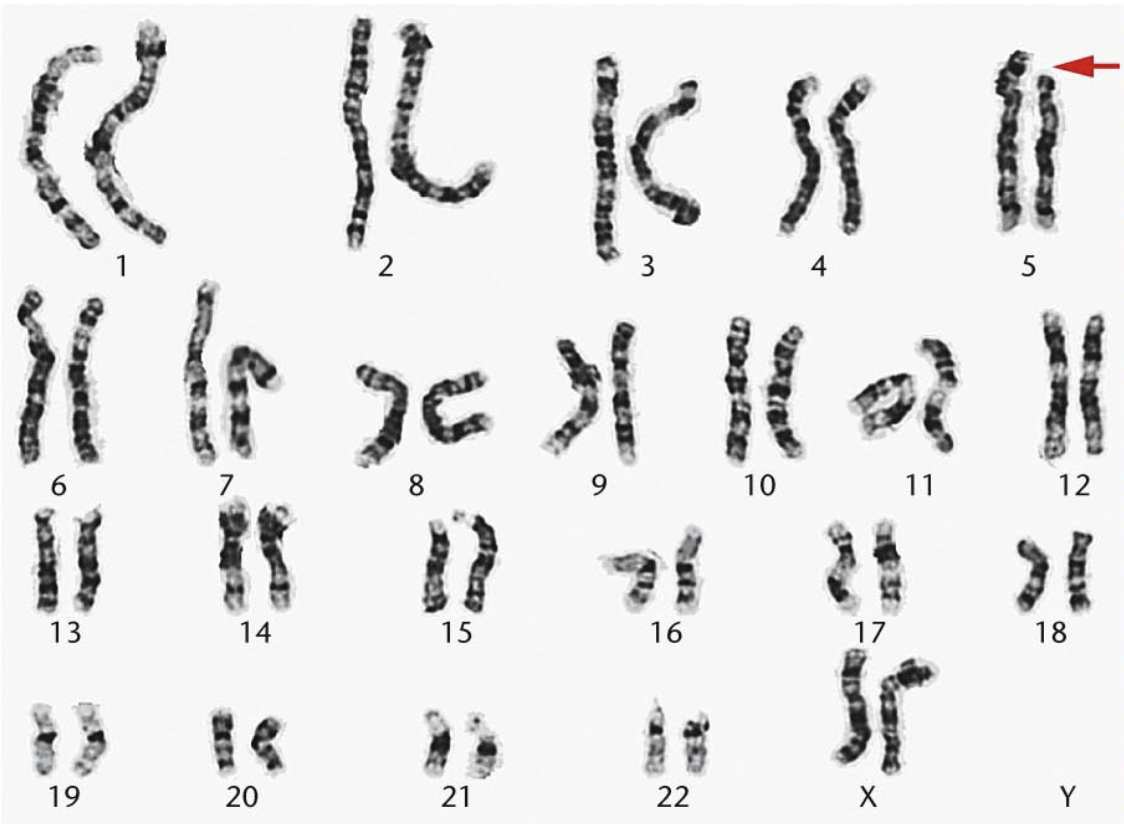
- 108What is Cri Du Chat syndrome?deletion of chromosome 5
- 109What are chromosomal duplications?Region of chromosome gets repeated
-Result of unequal crossing
-Replication error prior to meiosis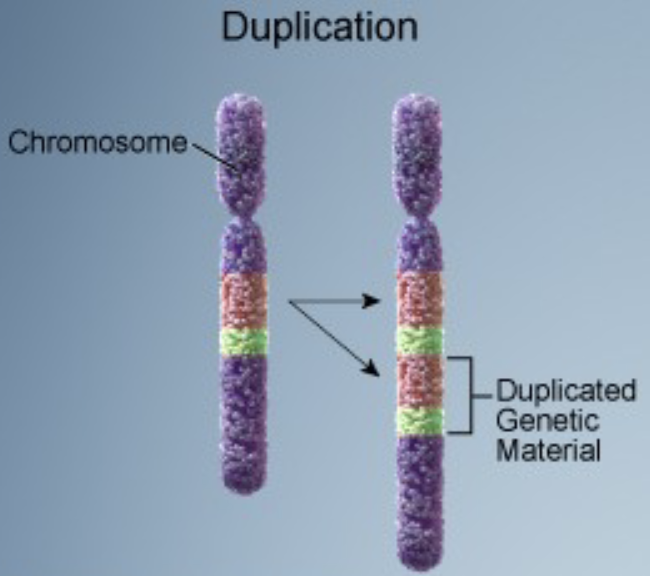
- 110What are the 3 types of Repeats/duplications?1. Inverted repeats
2. Direct repeats
3. Slippery repeats - 111What is an example of direct repeat?Fragile X Syndrome
- 112What is Fragile X Syndrome?The most common form of
inherited mental retardation
• Affects 1 in 4000 males and 1
in 8000 females
• Considered a dominant trait
• FMR-1:trinucleotide sequence
CGG
• Normal individual: 6–54
repeats; "carriers": 55–230
• Fragile X syndrome: more
than 230 repeats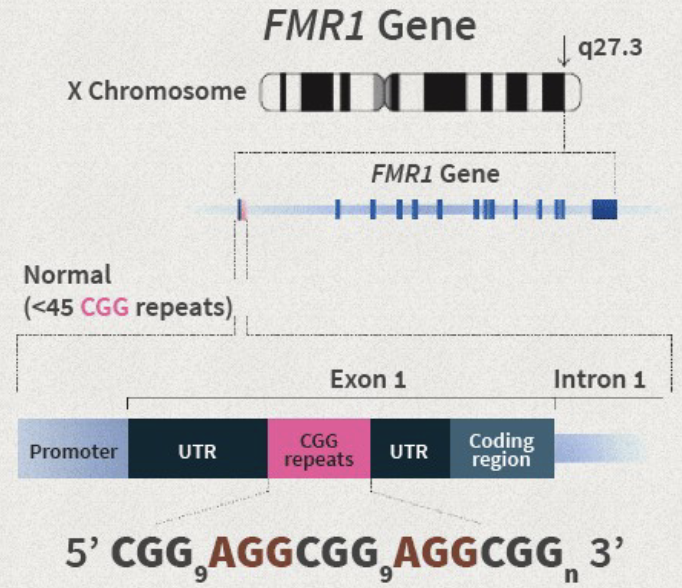
- 113What are some benefits of duplications?-Gene redundancy (rRNA)
• Gene amplification (another mechanism to increase the rRNA)
• Leads to genetic
variation & evolution - 114What are inversions?Where a segment of a chromosome is reversed end-to-end.
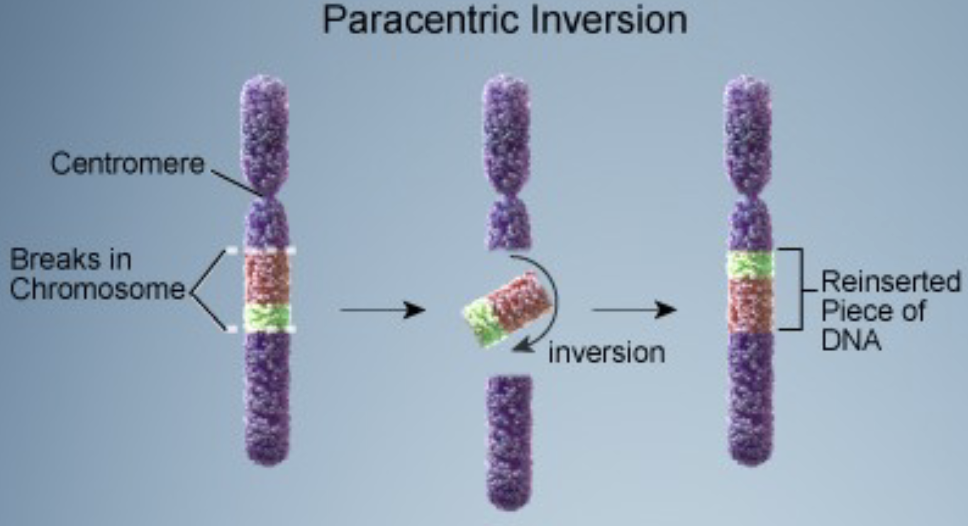
2 types: Paracentric & Pericentric - 115What is paracentric inversions?Inversion that does NOT include the centromere
- 116What is Pericentric inversions?Inversion that INCLUDES the centromere
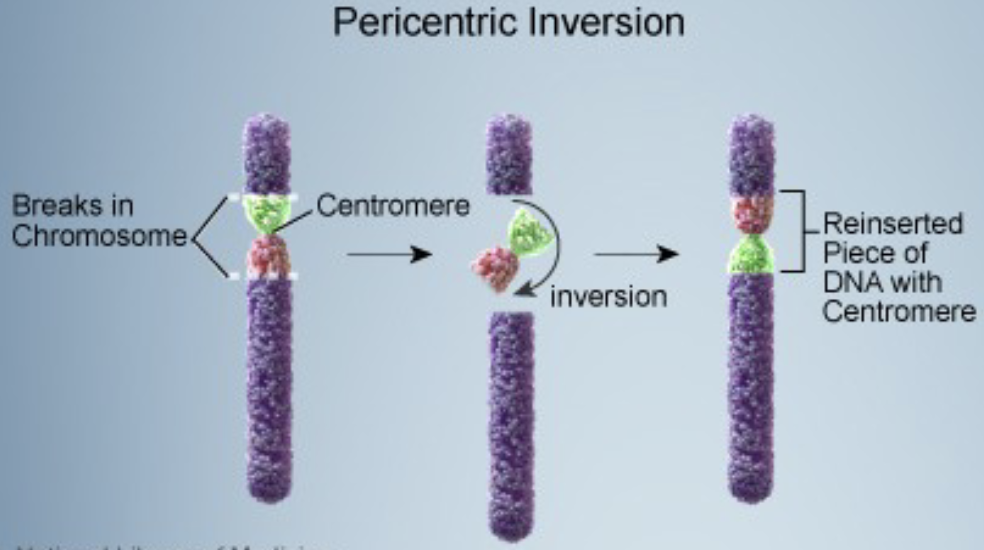
- 117What is an example of inversions?Hemophilia A which is a free bleeding disorder
- 118What are translocations?Movement of a chromosome segment to a new location in the genome
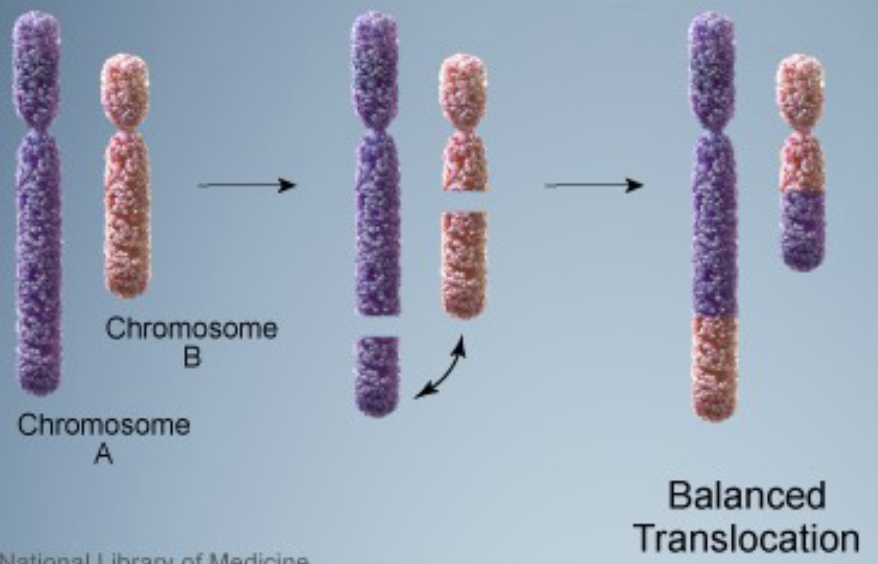
- 119What is another word for Extranuclear inheritance?Extrachromosomal inheritance
- 120What is organelle heredity?Transmission of genes on mitochondrial and chloroplast
genomes
-Uniparental vs Biparental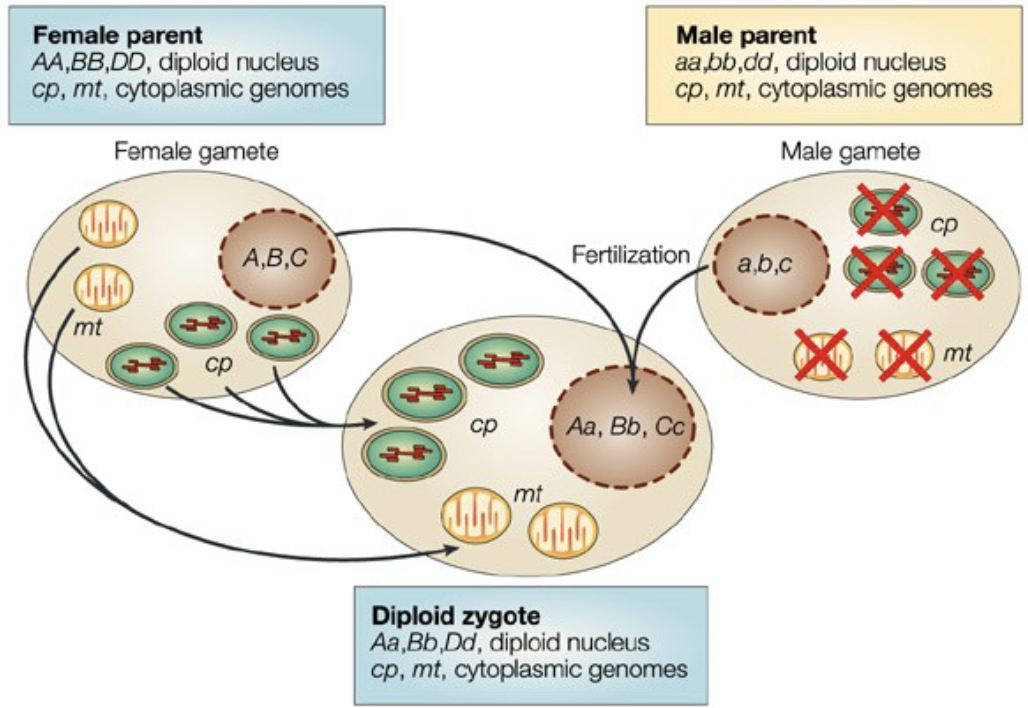
- 121What maternal effect?-Nuclear gene products are stored in the egg and then transmitted through the cytoplasm to the offspring.
-The gene products distributed to the cells of the developing embryo and influence its phenotype - 122What is the explanation for maternal inheritance?- Chiba and colleagues suggested that mitochondria and chloroplasts had their own genomes
- based on observation of Feulgen-stained materi - 123What is homoplasmy & heteroplasmy in cells?-Homoplasmic cells have organelles with the same genotype.
-Heteroplasmic cells contain a mixture of alleles.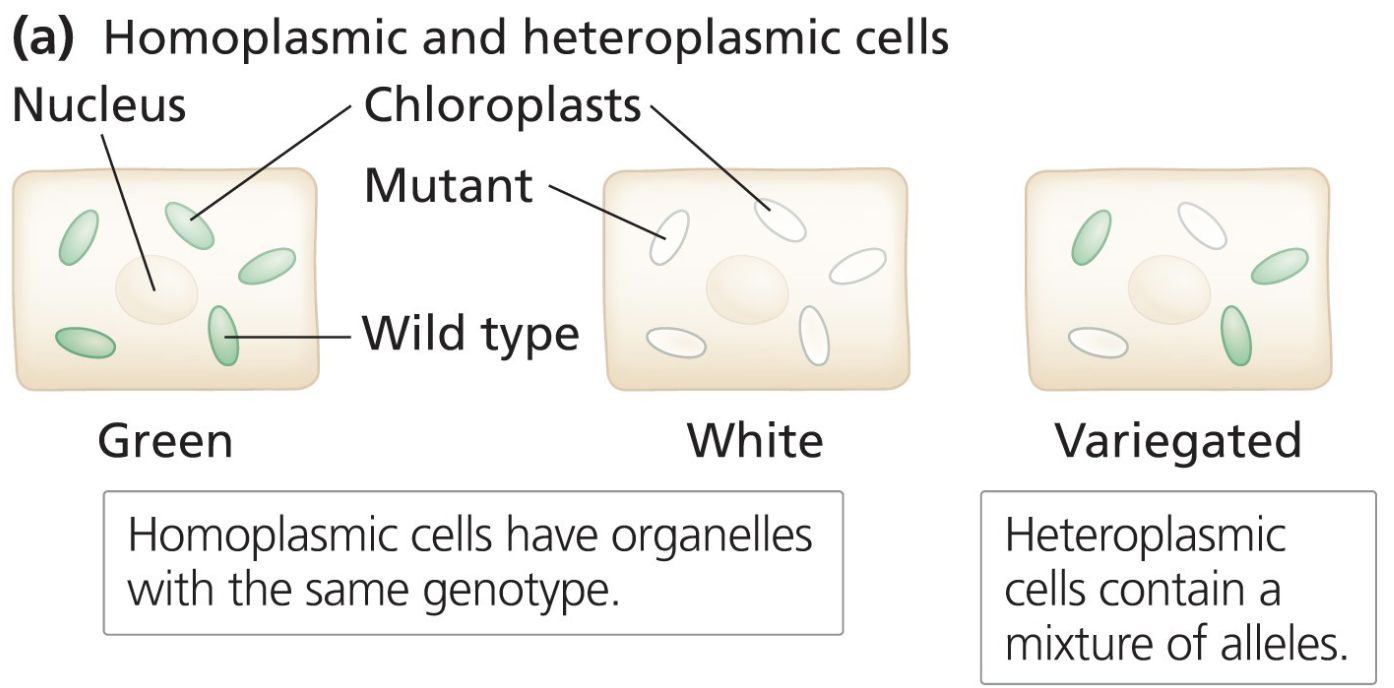
- 124What is the Endosymbiont Theory?-Mitochondria and chloroplasts arose
independently about 2 billion years ago from free-living bacteria
-These progenitors possessed the abilities now attributed to these organelles aerobic respiration and photosynthesis, respectively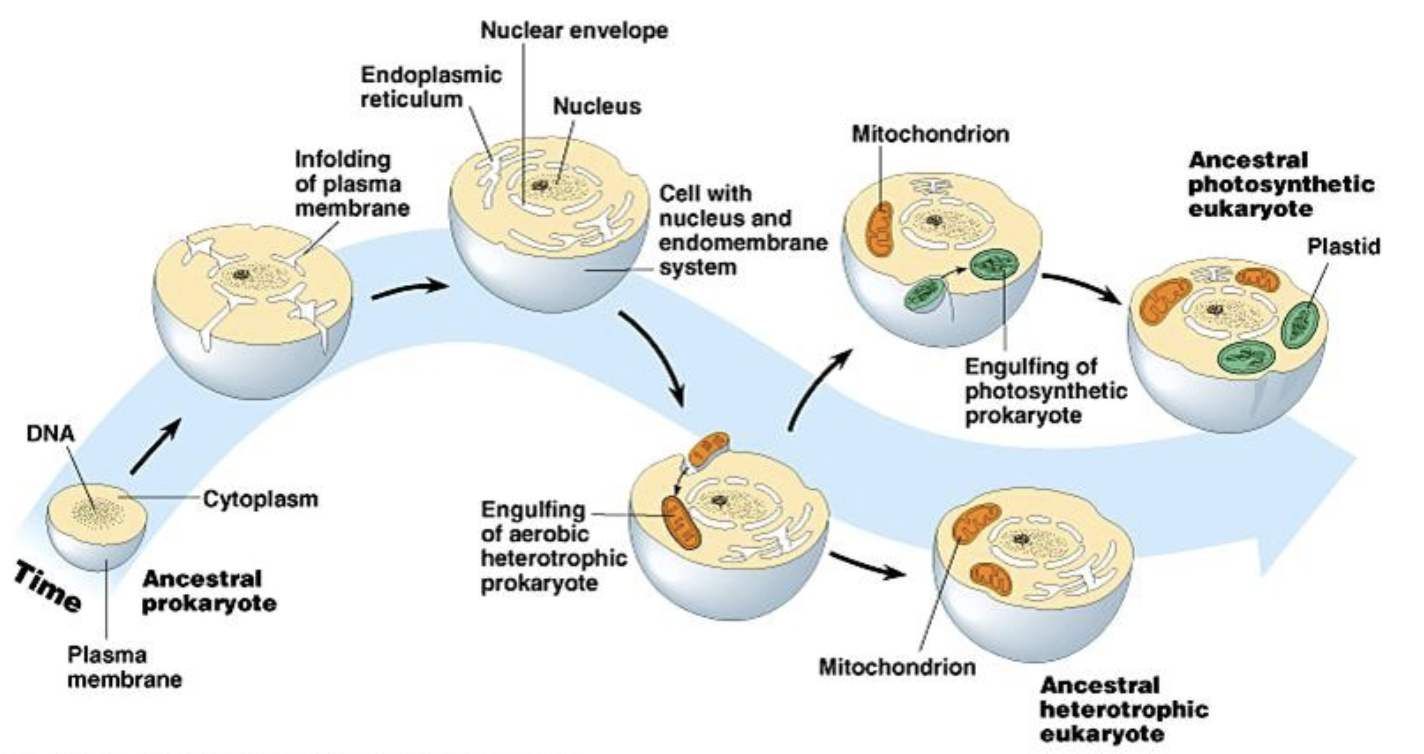
- 125What are Mitochondria & Chloroplast Genomes?-Markedly smaller than progenitors
-Mitochondrial mutations linked with respiration phenotypes
-Chloroplast mutations may inactivate photosynthesis - 126What are the 3 types of yeast inheritance?1. Segregational
2. Neutral
3. Suppressive - 127What is segregational yeast inheritance?Mutations segregate as expected for nuclear genes
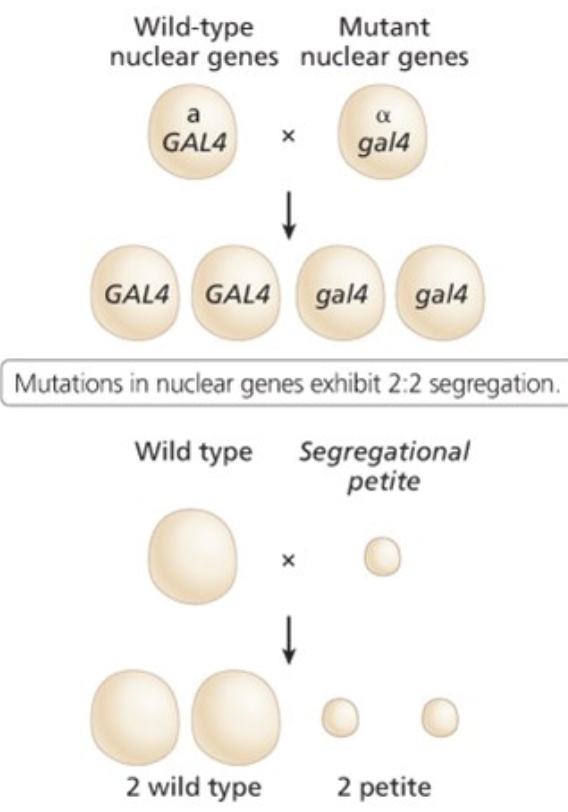
- 128What is neutral yeast inheritance?-Phenotype lost after crossing with wild type
-Contain no mtDNA so inherit mitochondria from parent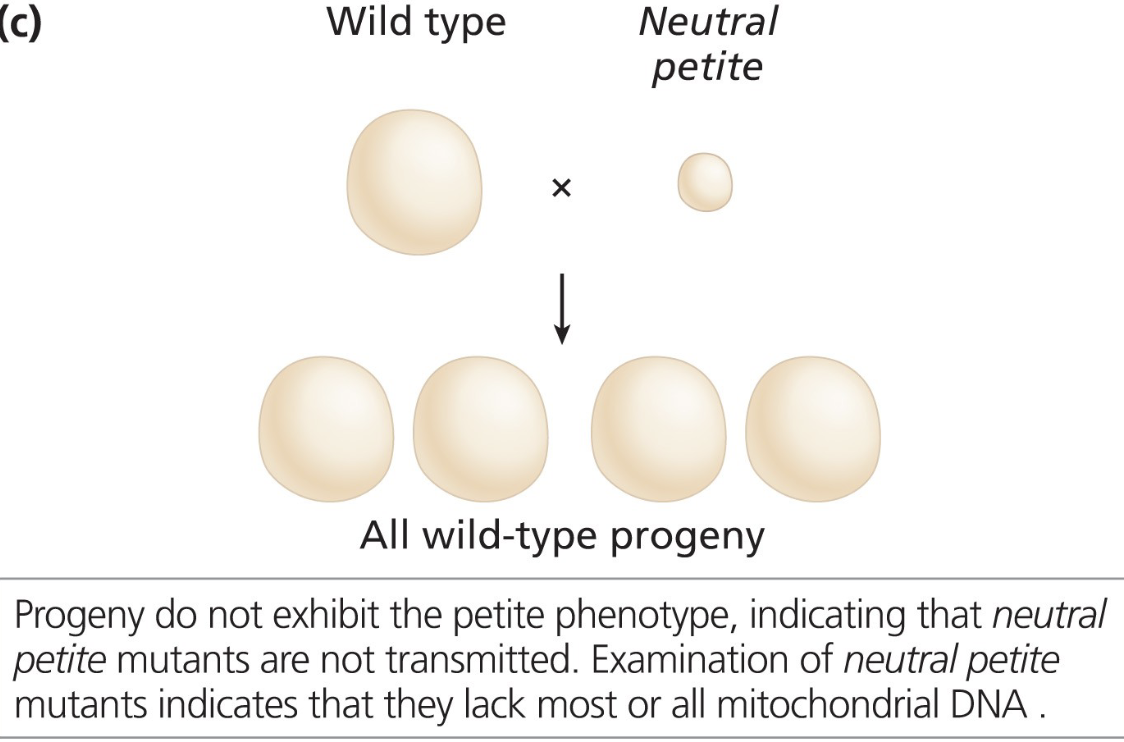
- 129What is suppressive yeast inheritance?Intermediate phenotype when mated with wild type
Start with small mtDNA deletions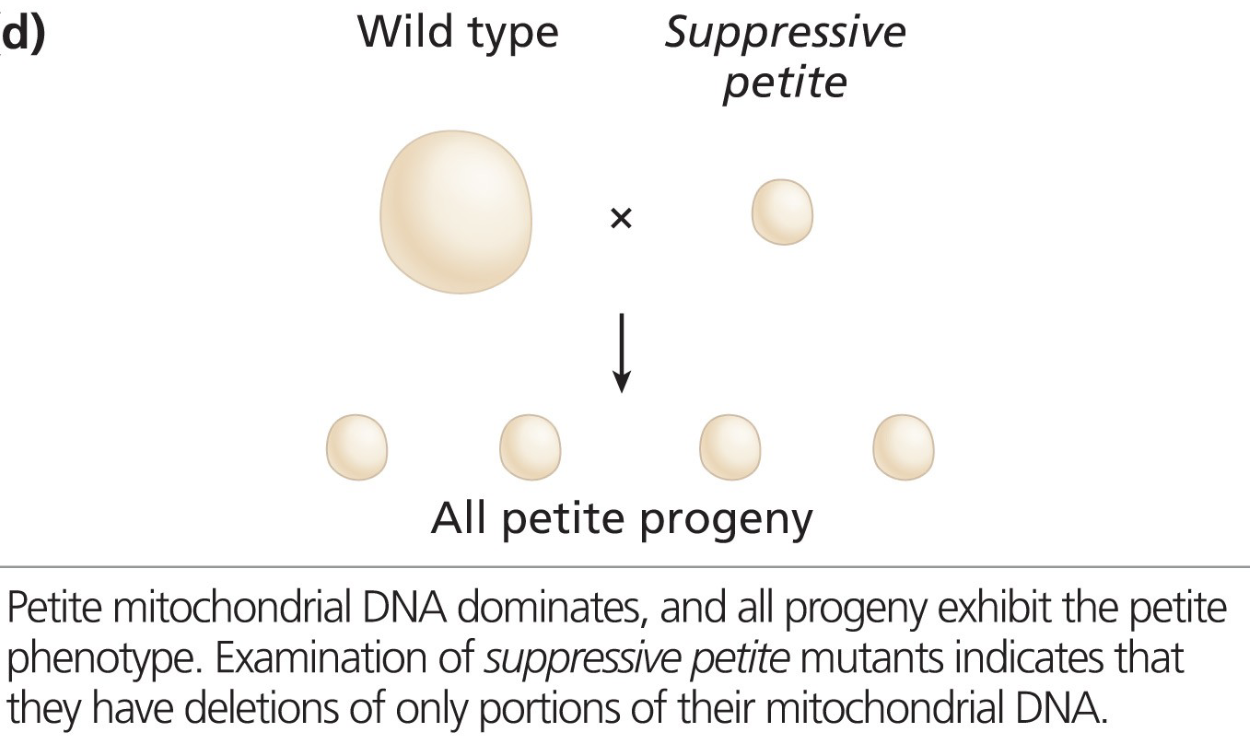
Information
- Description
- Flashcards on Genetics Exam 2, created by Jordan Rogers on 09/02/2022.
- Created by
- Jordan Rogers
- Views
- 30
- Rating