
38452406


| Question | Answer |
| what separates the 2 hemispheres of the brain | the longitudinal fissure |
| are the brain, spinal cord and spinal nerves continous? | functionally yes but we just like labelling things as a society which some may say is morally wrong... what if the lobes don't want to be lobes... what if the gyri want to be sulci? bet they didn't think about that did they |
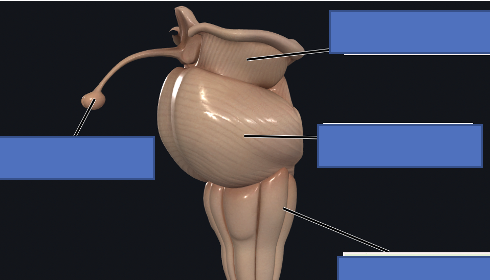
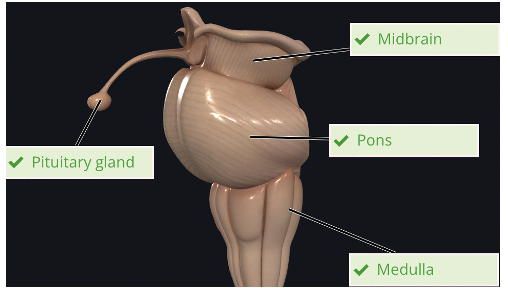
| what makes up the brainstem | midbrain pons medulla oblongata |
| how are the cranial bones named | by the part of the brain they sit next to |
| give the lobes of the brain from the frton to back | - frontal lobe - periatal lobe - temporal lobe - occipital lobe |
| what separates the frontal and parietal lobes? | the central sulcus |
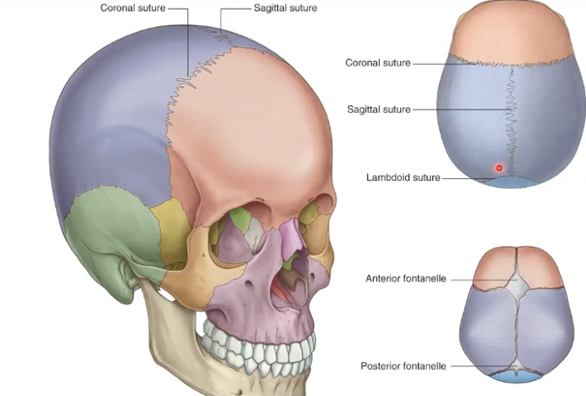
| what sticks the different cranial bones together | sutures |
| name the different sutures | |
| are we born with sutures? explain | - no, there are membranes between the bones instead so that the baby's head can squeeze out the vag - also allows for rapid brain growth in neonates |
| what are the meningis | membrane layers which surround the brain and provide protection |
| what part of the brain is the meningis assoctaed with? | the cortex |
| are the meningis only found in the brain? | no it covers the whole CNS |
| what are the 3 layers of the meninges | dura mater arachnoid mater Pia mater |
| where can CSF be found in the meningies | in the subarachnoid space between arachnoid and pia |
| how does the meninges provide protection? | - creates additional layer of defence against pathogens - gives bouyance of brain in skull |
| what are gyri and sulci? | the hills and groves of the brain |
| what is the pre central gyrus responsible for and what is the post central gyrus responsible for? | pre-central = motor cortex post central = somatoensory cortex |
| what is the main function of the frontal lobe | motor planning |
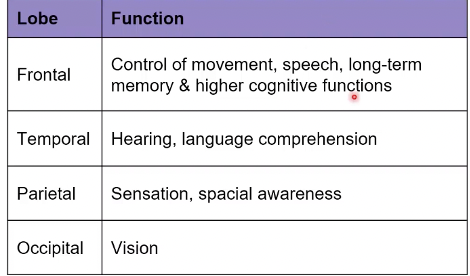
| give the major function of each lobe of the brain | |
| what is white and grey matter | - white matter is cell axons bc myelenated = white - grey matter is the cell bodies |
| what is the corpus collosum | a white matter tract which connects the left and right hemispheres |
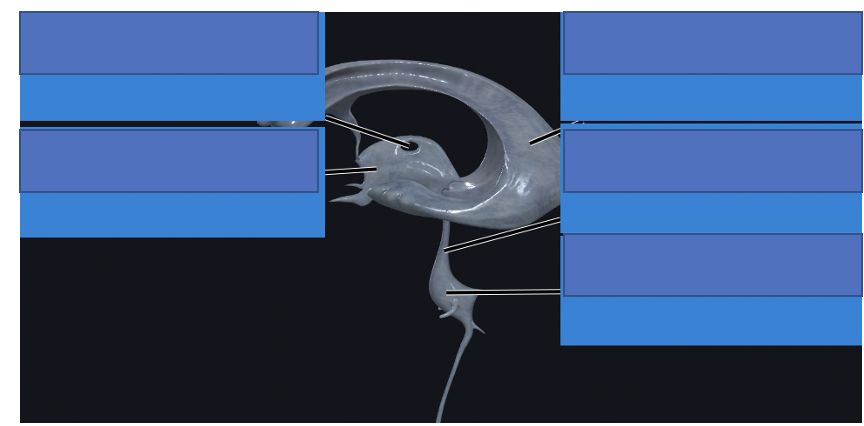
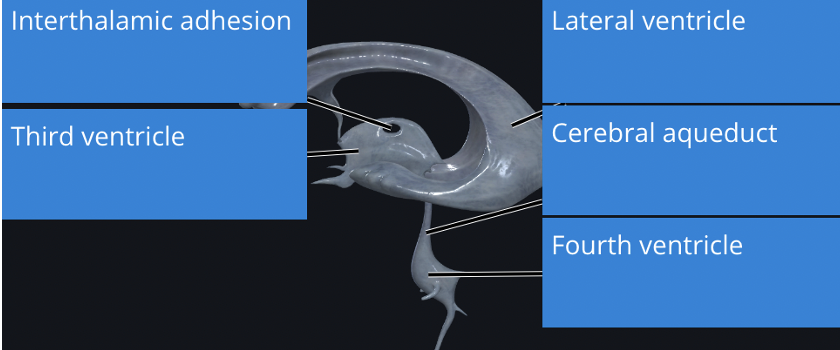
| what are brain ventricles | gaps in the brain which house CSF |
| what cells line the ventricles | glia |
| what cells produce CSF | glial cells |
| what is the major function of the midbrain | - voluntary movement - also involved in carcadium rhythum and thermoregulation |
| what structure does the majority of cranial nerves come from | the brainstem |
| what is the major function of the medulla | regulating breathing and HR through ANS activity |
| what is the major role of the cerbellum | to coordinate precise movement |
| how can the cerebellum regulate movements? | gains lots of sensory information about ongoing movements and makes small corrections where needed |
| what protects the spinal cord | - the vertibrea - the meninges |
| where are the peripheral ganglia found? | just adjacent to the spinal cord next to entrances to the spinal cord |
| give the different horns of the spinal cord | dorsal, ventral and lateral horns |
| in terms of spinal cord organisation wehre does sensory info enter and motor leave? | sensory enters through the dorsal horn and exits through the ventral horn |
| what are sensory tracts? | collumns of axons sending info to the somatosensory cortex from the periphery |
| where does a primary sensory neurone have its cell body normally? | in the dorsal route ganglion (sensory are bipolar neurones so this makes sense) |
| how many motor neurones normally connect the motor cortex to the effector organ | normally 2 neurones |
| do the motor pathways decussate? | yes |
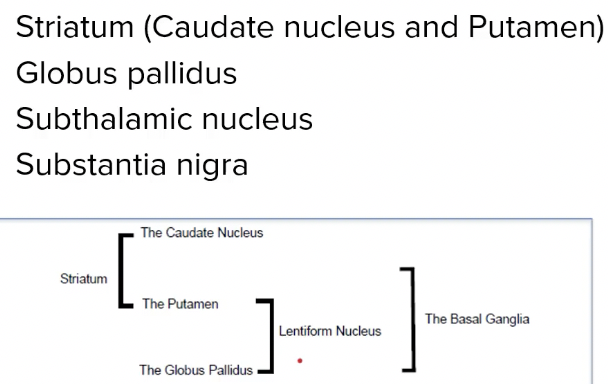
| what are the basal ganglia? | collection of subcortical nuceli involved in motor control |
| name the different subcortical nuclei which make up the basal ganglia | |
| what is the thalamus generally? | a massive relay centre which takes inputs from one area and takes it to another in the brain |
| what are the major roles of the hypothalamus | homeostasis and control of metabolic activity |
| what are the major functions of the limbic system | emotion, behaviour and memory |
| what is the major function of the hippocampus | memory |
| what major structure is involved in anxiety | the amygdala |
| where is the hippocampus found and what does it look like? | found in the temporal lobe and looks like a sea horse |
| what % of the CO goes to the brain | 17% (lots) |
| how does the brain auto-regulate blood flow? | regulates blood flow independant from the ANS by altering pressure |
| what vessels supply the Brian with blood | the internal carotid arteries |
| label the brain ventricles | if you managed then congrats mate bc i have no idea |
| label the brainstem | |
| what is the name of the hole that the brainstem leaves through | the foramen magnum |
| what are cranial fossa | depressions in the skull where the brain sits |
| what are the 3 main fossa | the anterior, middle and exterior fossa |
| what is the cerebrum | the brain apart from the cerebellum or brainstem (so includes the thalamus, hypothalamus, pit etc ) |
| where is the pre-central gyrus | the gyrus just forward of the central sulcus |
| what is the cerebral aqueduct | the connection which carries the CSF between the 1,2,3 and 4 ventricles |
| what do the internal and external carotid arteries supply? | internal supplies the Brain external supplies the face |
Want to create your own Flashcards for free with GoConqr? Learn more.