
4393189
Description

Flashcards by bestrickland, updated more than 1 year ago

|
Created by bestrickland
over 10 years ago
|
|
| Question | Answer |
| Enlightenment | a European intellectual movement of the late 17th and 18th centuries emphasizing reason and science could improve society |
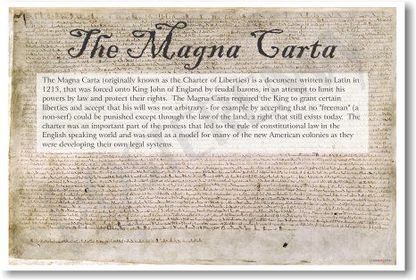
| great charter signed in 1215 by King John; limited the power of the monarch and recognized rights of the nobles | |
| Glorious Revolution | 1688 the peaceful transfer of power in history with England |
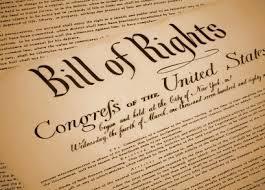
| English Bill of Rights | in English history guaranteed free elections, the right to a fair trial, and make cruel and unusual punishment illegal |
| Parliament | the highest British legislature |
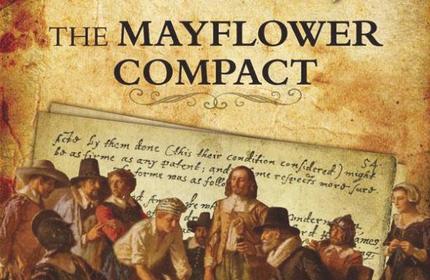
| Mayflower Compact | document signed by passengers of Mayflower; created a direct democracy in the New World |
| House of Burgesses | bicameral legislature in Jamestown, Virginia; also was the first representative idea of a social contract |
| Bicameral | having two branches or chambers |
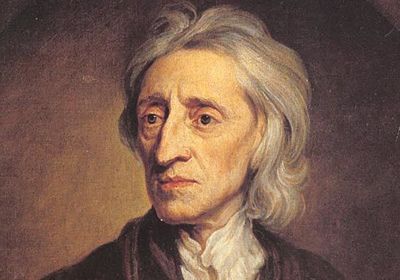
| John Locke | English philosopher whose natural rights philosophy was a BIG influence on Thomas Jefferson |
| Natural Rights | Rights that you are born with: life, liberty, and the pursuit of happiness |
| Social Contract | agreement between the people and the government |
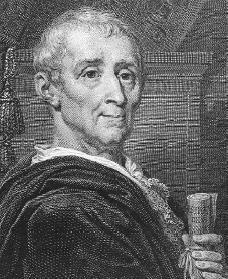
| Baron de Montesquieu | philosopher that came up with "separation of powers" |
| Salutary neglect | England didn't strictly enforce its laws in the colonies |
| French Indian War | 7 years war; between England and France because of war debt England began to tax the colonies |
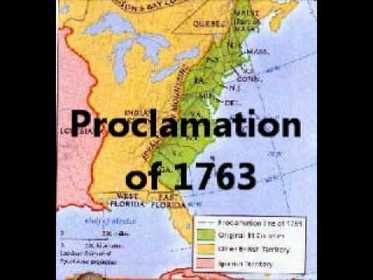
| England said colonists not settle new lands beyond the Appalachian mountains | |
| Mercantilism | the theory that a country should sell more goods to other countries than it buys |
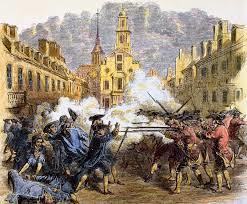
| Boston Massacre | a street fight that occurred on March 5, 1770, between a "patriot" mob, throwing snowballs, stones, and sticks, and a squad of British soldiers |
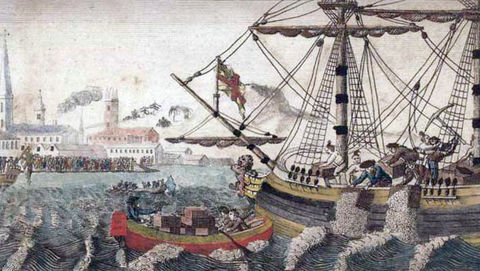
| Boston Tea Party | colonists snuck aboard British ships and dumped 90,000 pounds of tea into the Boston Harbor |
| Separation of Powers | an act of vesting the legislative, executive, and judicial powers of government in separate bodies |
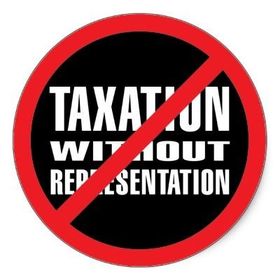
| "No taxation without representation" | slogan that summed up the colonists anger over taxes and the fact the the colonies were NOT allowed to send representatives to Parliament |
| Fundamental Orders of Connecticut | 1st written constitution in the New World |
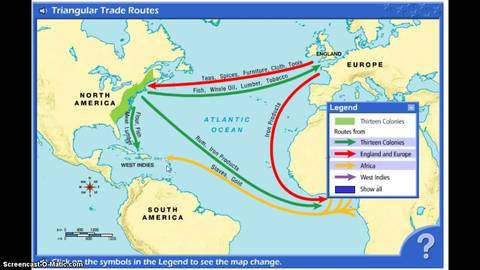
| Triangular Trade | trade between Europe, Africa, and the Americas |
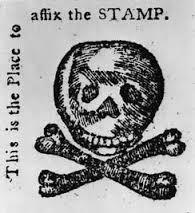
| Stamp Act | a tax on printed materials such as legal documents |
| Boycott | the refusal to purchase certain goods |
| Coercive Acts (Intolerable Acts) | these laws were punished by the Boston colonists for the Boston Tea Party |
| First Continental Congress | a meeting of delegates from twelve of the thirteen colonies that met on September 5 to October 26, 1774 |
| Olive Branch Petition | adopted by the Second Continental Congress on July 5, 1775 in a final attempt to avoid a full-on war between the 13 colonies |
| Second Continental Congress | meeting of a colonial delegates in May 1775; a committee of 5 men were appointed to write a document declaring American independence |
| Quartering Act | part of the Intolerable Acts; act that required colonists to house and feed British soldiers |
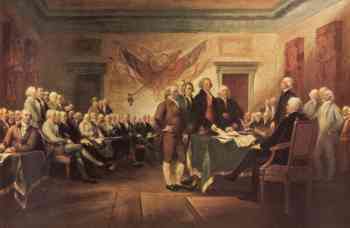
| Declaration of Independence | the document addressed to King George II of England that declared American Independence |
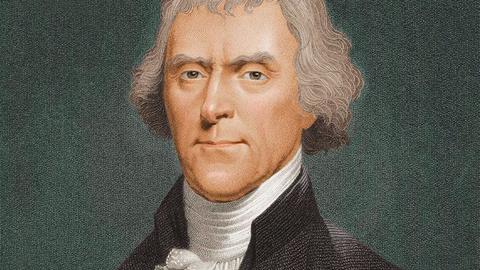
| Thomas Jefferson | author of the Declaration of Independence |
| Articles of Confederation | our first government; lasted for about 10 years; created a "league of friendship" between the 13 states |
| Daniel Shays Rebellion | a wake up call for Americans; Daniel led a rebellion of Massachusetts farmers against the federal government under the AOC |
| Philadelphia Convention (Constitutional Convention) | met May-Sept. 1787 delegates suppose to fix the AOC; end up writing a new constitution |
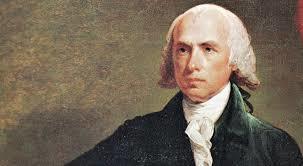
| James Madison | Father of the Constitution |
Want to create your own Flashcards for free with GoConqr? Learn more.