
6331745
Description

Flashcards by Kari Devane , updated more than 1 year ago

|
Created by Kari Devane
about 10 years ago
|
|
| Question | Answer |
| Parliament | the british legislator |
| Legislature | A group of people that makes laws |
| Precedent | a ruling that is used as the basis for a judicial decision in a later, similar case |
| common law | a system of law based on a precedent |
| compact | an agreement,or contract among a group of people |
| town meeting | a gathering of local citizens to discuss and vote on important issues |
| mercantilism | the theory that a country should sell more goods to other countries than it buys |
| boycott | the refusal to purchase certain goods |
| congress | a formal meeting at which representatives discuss matters of common concern |
| independence | self-reliance and freedom from outside control |
| Confederation | a group of individuals or states that band together for a common purpose |
| Magna Carta | Greater Charter signed in 1215 by King John; limited the power of the monarch and recognized rights of the nobels. |
| Glorious Revolution | 1688 the peaceful transfer of power in history of England; Parliament removed king James II from throne and invited his daughter Mary and her husband William to rule instead. |
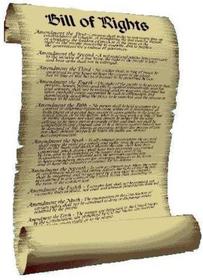
| English Bill of Rights | in English history guaranteed free elections, the right to a fair trial, and made cruel and unusual punishment illegal |
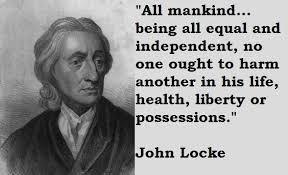
| Natural Rights | rights you are born with-life, liberty and property. |
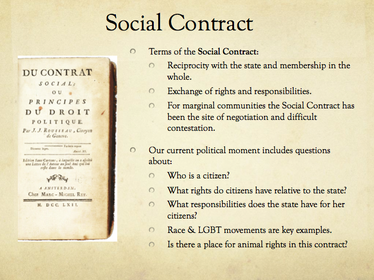
| agreement between the people (the governed) and the government; People agree to give up part of their freedom to govt. in exchange for protection of natural rights. | |
| Baron de Montesquieu | Philosopher who came up with "separation of powers" |
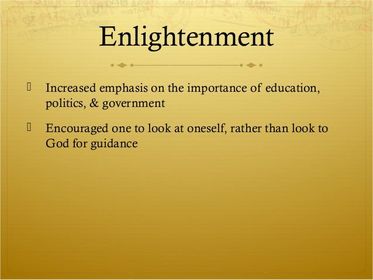
| Enlightenment | during the 1700's & 1800's movement that spread the idea that reason and science could improve society |
| Mayflower Compact | document signed by passengers of mayflower; created a direct democracy in the New World |
| house of burgesses | bicameral legislature in Jamestown, Virginia; also was the first representative democracy in the New World |
| Proprietary colony | colony owned by a person who controlled the land and govt. |
| Royal Colony | colony owned by and ruled directly by the king |
| Indentured servant | A person who agreed to work for a period of 7 years to pay off the cost of their passage to the colonies |
| triangular trade | trade between Europe, Africa and the American's; slaves from Africa were transported to the americans and traded for sugar and molasses |
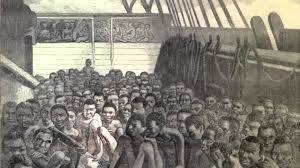
| middle passage | the journey across the Atlantic Ocean made my slave ships |
| Salutary Neglect | sometimes called healthy or useful neglect meant England did not strictly enforce its laws in the colonies |
| French Indian War | also called the seven year war between England and France; because of war debt England began to tax the colonies |
| "no taxation without representation" | slogan that summed up the colonists anger over taxes and the fact the colonies |

Want to create your own Flashcards for free with GoConqr? Learn more.