
7982371
Description

Flashcards by Shemmiah Lewis, updated more than 1 year ago

|
Created by Shemmiah Lewis
almost 9 years ago
|
|
| Question | Answer |
| Social Stratification | Refers to the ranking of people in a society based on certain criteria, i.e. ascription and achievement. |
| Pigmentocracy | Skin colour can be viewed sociologically as well as biologically. It will determine one's social rank and position, and when it determines one's status in a hierarchy it is labeled pigmentocracy. |
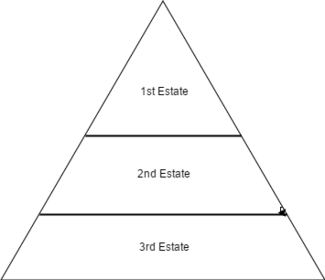
| The Estate System/Feudal System | |
| Where was the estate system founded? | In Europe. |
| What did the first estate consist of? | The monarchy and the aristocracy. |
| Second Estate? | Bishops, clergymen, abbots, etc. |
| Third system? | Serfs, plebeians, peasants. |
| What was the system based on? | Based on ascription, related to birthright and social honour. |
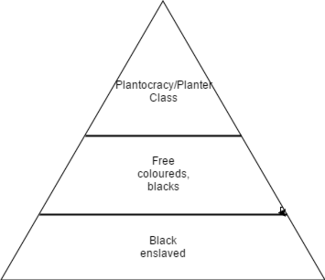
| The Slave System | |
| What was the slave system based on? | The slave system was a stratified system based on ascription and colour and pigment (a pigmentocracy). |
| What were the characteristics of slavery? | Slavery was based on an economic criteria such as wealth through the ownership of land and forced labour. There was a hierarchy that clearly separated the different groups. Members of the system did not have equal rights. Slaves were regarded as property of their master. Marriages and intermixing was not allowed among the slaves unless the master sanctioned it. Race and skin colour determined a person’s social position. * The slave system is commonly called the plantation system since the society was based on the plantation economy, which consisted of the key elements of family, education, religion and the justice system. |
Want to create your own Flashcards for free with GoConqr? Learn more.