Flowchart
germany 1919-23
Flowchart content
1918 Germany
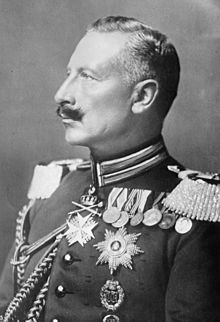
Kaiser Wilhelm II was in power Kaiser Wilhelm II was in power
In 1918 the kaiser was in charge however news had been brought to him that his abdication had been announced. His reign was at an end. His companions advised him to go to Holland where it was neutral from war but he was uncertain about what to do.
The next day Willhelm met the ambassador and complained. He said he was a broken man and that his prospects were hopeless.
However Europe celebrated the armistice on 14 November 1918.
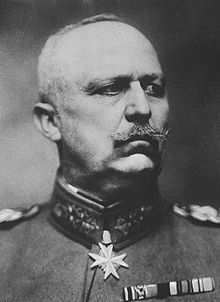
By the end of September it was clear to General Ludendorff that Germany was going to be defeated. Although allies had not entered German territory, German army was retreating against the western front.
Ludendorff concluded that the only way to avoid humiliation would be to ask the allies for an armistice.
president Wilson's fourteen point programme
president Wilson was an idealist. His fourteen points were a group of statements of principles to negotiate peace terms to end WW1. They were devised to deal with the aftermath of war.
some things like the return of Alsace-Lorraine to France was punitive and specific towards Germany.
However there were also some more general principles like the establishment of a League of Nations to monitor future disputes.
This meant that each country had to rule themselves without disarmament (withdraw all their weapons).
This was unrealistic because no country was going to surrender their weapons. Wilson though that if no country had weapons, they won't go to war but it was too unrealistic to actually happen.
The October reforms
In October the Kaiser began a series of reforms that ended his autocratic rule.
Firstly he appointed Prince Maximilian of Baden as his chancellor.
He was to be responsible for the reichstag. He established a new government based on the majority parties like the Social Democratic Party.
A lot of the changes of the October Reforms did not happen because of the pressure from the Democratic parties, nor the pressure from the people. They amounted to the revolution from above.
The armed forces were put under the control of the government. they had a lot of power.
November revolution of 1918
unrest in Germany spread to the main German naval base at Kiel.
The Peace note
Prince Maz asked President Wilson (USA) for an armistice. He took 3 weeks to reply because he though he was asking for an armistice to prepare for an new offensive.
The terms were too much for Wilson to accept. He tried to gather a last military effort but failed. He resigned and fled to Sweden.
When Wilson finally replied he said that Germany must evacuate all occupied territory, call an end to submarine welfare and fully democratise its political system.
3rd November 1918 soldiers mutinied against officers and took control of the base.
By the 6th of November workers and soldiers councils were springing up all over Germany.
1919 Germany The peace settlement was signed.
4 leaders met to discuss the terms of the treaty. ( Woodrow Wilson, British prime minister David Lloyd George, French prime minister Clemenceau and italian prime minister Vittorio Orlando) .
the treaty was signed in the Hall of Mirrors.
the terms were really bad and far worse than Germany expected. But maybe they should have already prepared for them because some things like the return of Alsace-Lorraine were in the fourteen points.
LAMB ; the harsh terms of the treaty of versailles:
Land - territorial losses - the treaty removed over 70,000km squared (13%) of land away from them. Alsace Lorraine was returned to France and Eupen & Malmedy was given to Belgium.
Army - limited to 100,00 men
Money - had to pay 6.6 billion reparations
Blame - had to accept full responsibility for starting the war.
1919-24 economic and social problems in Germany
1924 hyperinflation