
Mind map
theories of second language aquisition.

Map content
theories of second language aquisition.
accomodation theory
- has been developed by the British language psychologist Howard Giles and others since the early 1970s.
- hey aim at providing an explanation why speakers accommodate – i.e. change the manner in which they speak - in face-to-face interaction.
- The two key concepts of SAT are convergence and divergence.
- convergence constitutes a linguistic, i.e. accommodative, process in which a speaker modifies his/her own speech to resemble more closely the addressee's speech
- divergence refers to a process in which a speaker linguistically moves in the opposite direction in order to make his/her speech sound more unlike that of the person (s)he is talking to.
- The two key concepts of SAT are convergence and divergence.
- hey aim at providing an explanation why speakers accommodate – i.e. change the manner in which they speak - in face-to-face interaction.
- has been developed by the British language psychologist Howard Giles and others since the early 1970s.
introduccion: in this work we are going to talk about theories of second language aquisition because is important to the teaching, and we can see how people learn a L2 and how the place an the context have and important role to people can learn and understan a second language.
Identity hypotesis
- firts and second language learning is basically one and the same process governed bythe same laws
- The identity hypothesis asserts that the aquisition or availability of one language has little or no influence on the aquisition of another language.
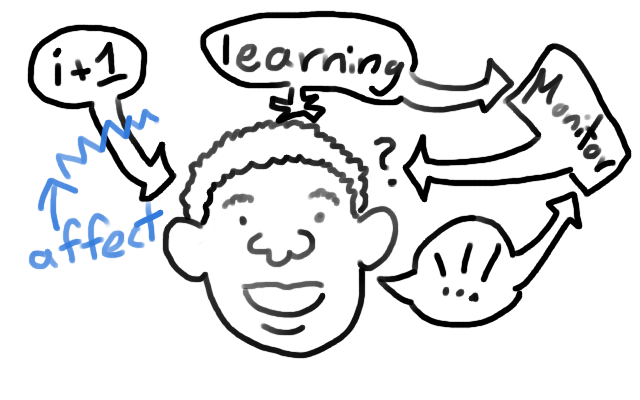
krashen´s monitor theory
- is addressed chiefly to the relation between spontaneous and guided learning and can be summarized as follows
- there are two ways for adults learners to gain proficiency and second language: subcocious aquisition and councious learning.
- learning in this sense is always effected through a monitor, or an effort on the part of the learner to control his language output.
- the monitor can become effective in a communication situation only if: a) there is enogh time to operate it, b) the speaker is concerned with the correctness of his speech production.
- is addressed chiefly to the relation between spontaneous and guided learning and can be summarized as follows
Contrastive hypothesis
- the contrastive hypothesis claimed that all errors made in learning the L2 could be attributed to interference by the L2
- the CH, conversely, claims that the aquisition of a second language is largely determined by the structure of an earlier aquired language
the aculturation model
- is the social and psychological integration of the learner with the target language group.
- Schumann’s acculturation hypothesis, therefore, focuses on two main variables that account for differences in the way language learners approach and acquire language, social factors and psychological factors.
- is the social and psychological integration of the learner with the target language group.
Images and files in the map



Information
- Description
- borrador
- Created by
- Itzel J. Rosse · Sep 2017
- Updated
- Sep 27, 2017
- Views
- 1
- Rating