
Mapa mental
First Hop Redundancy Protocol (FHRP)
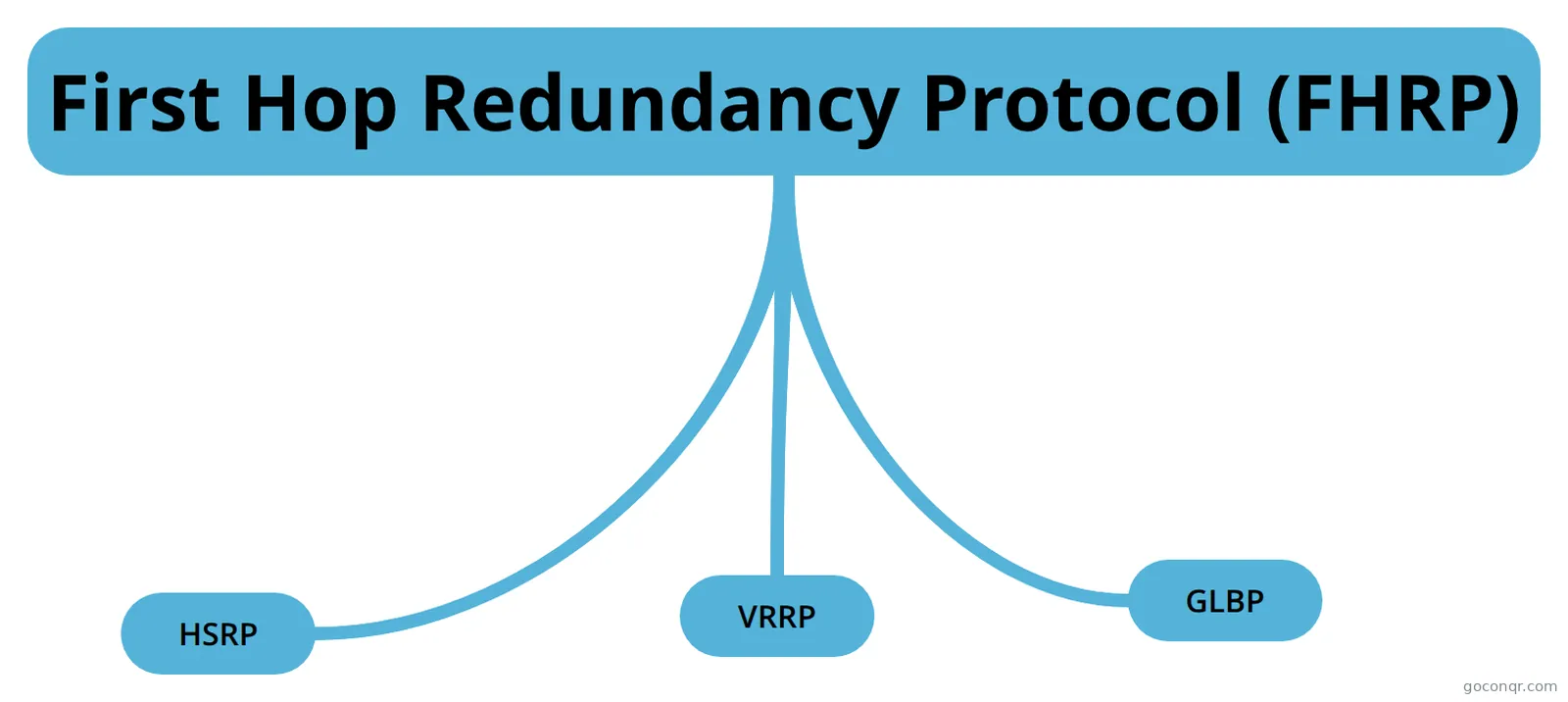
Mind map: First Hop Redundancy Protocol (FHRP)
Contenido del mapa
First Hop Redundancy Protocol (FHRP)
- To allow the hosts to remain unchanged, the routers have to do some more work, as defined by one of the FHRP protocols. Generically, each FHRP makes the following happen: 1-All hosts act like they always have, with one default router setting that never has to change. 2-The default routers share a virtual IP address in the subnet, defined by the FHRP. 3-Hosts use the FHRP virtual IP address as their default router address. 4-The routers exchange FHRP protocol messages, so that both agree as to which router does what work at any point in time. 5-When a router fails, or has some other problem, the routers use the FHRP to choose which router takes over responsibilities from the failed router.
HSRP
- HSRP (Hot Standby Router Protocol) Origin: Cisco Redundancy Approach: active/standby Load balancing: Per subnet
- The show standby brief command identifies the following: -Interface: The local router's interaface on which he HSRP group is configured -Grp: The HSRP group number -Pri: The local router's HSRP priority -State: The local router's current HSRP state -Active: The interface IP address of the currently active HSRP router (or "local" if the local router is HSRP standby) -Virtual IP: The virtual IP address defined by this router for this group.
- HSRP defines some rules to determine which router acts as the active HSRP router and which act as standby. Those rules also define details about when a standby router should take over as active. The following list summarizes the rules; following the list, this section takes a closer look at those rules and the related configuration settings. First, the HSRP rules. When a router (call it the local router) has an HSRP-enabled interface, and that interface comes up, the router sends HSRP messages to negotiate whether it should be active or standby. When it sends those messages, if it.... 1-... discovers no other HSRP routers in the subnet, the local router becomes the active router. 2-...discovers an existing HSRP router, and both are currently negotiationg to decide which should become the HSRP active router, the routers negotiate, with the router with the highest HSRP priority becoming the HSRP active router. 3-... discovers an existing HSRP router in the subnet, and that router is already acting as the active router: A. If configured with no preemption (the default; no standby preemt), the local router becomes a standby router, even if it has a better (higher) priority. B. If configured with preemtion (standby preemt), the local router checks its priority versus the active router; if the local router priority is better (higher), the local router takes over (preemts) the existing active router to become the new active HSRP router.
- HSRP routers in the same group need to use the same HSRP version
- HSRPv1 Versus HSRPv2 Feature/Version1/Version2 IPv6 support/No/Yes Smallest unit for Hello timer/Second/Millisecond Range of group numbers/0..255/0..4095 MAC address used (xx or xxx is the hex group number)/0000.0C07.ACxx/0000.0C9F.Fxxx IPv4 multicast address used/224.0.0.2/224.0.0.102 Does protocol use a unique identifier for each router?/No/Yes
- The following list details some important items to check to make sure the configuration should work: -Routers must be configured with the same HSRP version (standby version {1 | 2}) -Routers must be configured with the same HSRP group number (standby number....). -Routers must configure the same virtual IP address (standby number ip address). -Virtual IP address must be (a) in the same subnet as the interface IP address and (b) not used by any other device in the subnet (including the other HSRP routers) (standby number ip address). -In the attached Layer 2 network, the interfaces on the routers or Layer 3 switches must be in the same VLAN. -No ACLs should filter HSRP messages between the two routers. (HSRP uses UDP, port 1985; version 1 sends to multicast address 224.0.0.2, while version 2 sends to 224.0.0.102.)
- HSRP Misconfiguration Scenarios and Expected Results: Scenario/Routers Both Become Active?/Duplicate Address Detected?/VIP Changes Depending on Active Router? HSRP version mismatch/Yes/Yes/N/A HSRP group number mismatch/Yes/Yes/N/A ACL blocsk HSRP packets/Yes/No/N/A Routers configure different VIPs/No/N/A/Yes
VRRP
- VRRP (Virtual Router Redundancy Protocol) Origin: RFC 5798 Redundancy Approach: active/standby Load balancing: Per subnet
GLBP
- GLBP (Gateway Load Balancing Protocol) Origin: Cisco Redundancy Approach: active/active Load Balancing: Per host
Información
- Descripción
- Ingeniería Mapa Mental sobre First Hop Redundancy Protocol (FHRP), creado por Alejandro Castillo el 22/10/2018.
- Creado por
- Alejandro Castillo
- Visitas
- 1
- Valoración