
Mind map
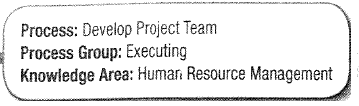
SAB5#100_Dev_Project_Team
Map content
SAB5#100_Dev_Project_Team
Human Resource Management plan
Resource calendars
Project staff assignments
Interpersonal skills
- Interpersonal skills, sometimes known as “soft skills,” are behavioral competencies that include proficiencies such as communication skills, emotional intelligence, conflict resolution, negotiation, influence, team building, and group facilitation.
Training
- Training includes all activities designed to enhance the competencies of the project team members
Team-building
- The objective of team-building activities is to help individual team members work together effectively.
- Tuckman ladder: 1-Forming. This phase is where the team meets and learns about the project and their formal roles and responsibilities. 2-Storming. During this phase, the team begins to address the project work, technical decisions, and the project management approach. 3-Norming. In the norming phase, team members begin to work together and adjust their work habits and behaviors to support the team. The team learns to trust each other. 4-Performing. They are interdependent and work through issues smoothly and effectively. 5-Adjourning. In the adjourning phase, the team completes the work and moves on from the project. This typically occurs when staff is released from the project as deliverables are completed or as part of
Ground rules
- establish clear expectations regarding acceptable behavior by project team members
Colocation
- also referred to as “tight matrix,” involves placing many or all of the most active project team members in the same physical location to enhance their ability to perform as a team. Colocation strategies can include a team meeting room (sometimes called “war room”)
Recognition and rewards
- It is important to recognize that a particular reward given to any individual will be effective only if it satisfies a need which is valued by that individual
Personnel assessment tools
- These tools help project managers assess the team preferences, aspirations, how they process and organize information, how they tend to make decisions, and how they prefer to interact with people. Various tools are available such as attitudinal surveys, specific assessments, structured interviews, ability tests, and focus groups. These tools can provide improved understanding, trust, commitment, and communications among team members and facilitate more productive teams throughout the project.
Team performance assessments
- The performance of a successful team is measured in terms of technical success according to agreed-upon project objectives (including quality levels), performance on project schedule (finished on time), and performance on budget (finished within financial constraints). High-performance teams are characterized by these task-oriented and results-oriented outcomes. The evaluation of a team’s effectiveness may include indicators such as: • Improvements in skills that allow individuals to perform assignments more effectively, • Improvements in competencies that help the team perform better as a team, • Reduced staff turnover rate • Increased team cohesiveness where team members share information and experiences openly and help each other to improve the overall project performance.
Enterprise environmental factors updates
- Update: Personnel administration, employee training records, and skill assessments
Images and files in the map
Information
- Description
- Mind Map on SAB5#100_Dev_Project_Team, created by Diana P. Martinez on 03/05/2015.
- Created by
- Diana P. Martinez
- Views
- 5
- Rating