
Mind map
Universal Desing for Learning (UDL)
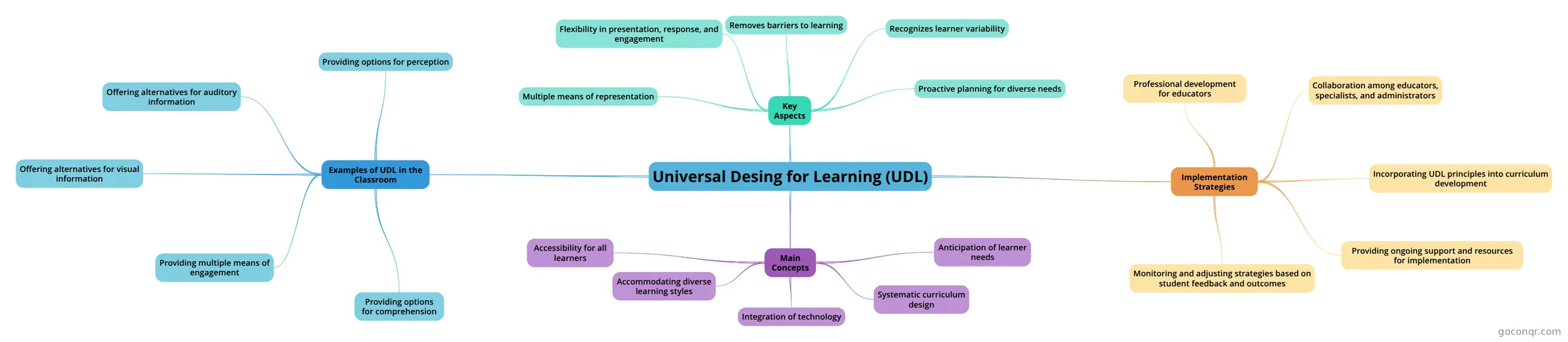
Mind map: Universal Design for Learning (UDL)
Map content
Universal Desing for Learning (UDL)
Key Aspects
- Multiple means of representation
- Flexibility in presentation, response, and engagement
- Removes barriers to learning
- Recognizes learner variability
- Proactive planning for diverse needs
Main Concepts
- Accessibility for all learners
- Accommodating diverse learning styles
- Integration of technology
- Systematic curriculum design
- Anticipation of learner needs
Examples of UDL in the Classroom
- Providing options for perception
- Offering alternatives for auditory information
- Offering alternatives for visual information
- Providing multiple means of engagement
- Providing options for comprehension
Implementation Strategies
- Professional development for educators
- Collaboration among educators, specialists, and administrators
- Incorporating UDL principles into curriculum development
- Providing ongoing support and resources for implementation
- Monitoring and adjusting strategies based on student feedback and outcomes