
Mind map
Primary and Secondary sources
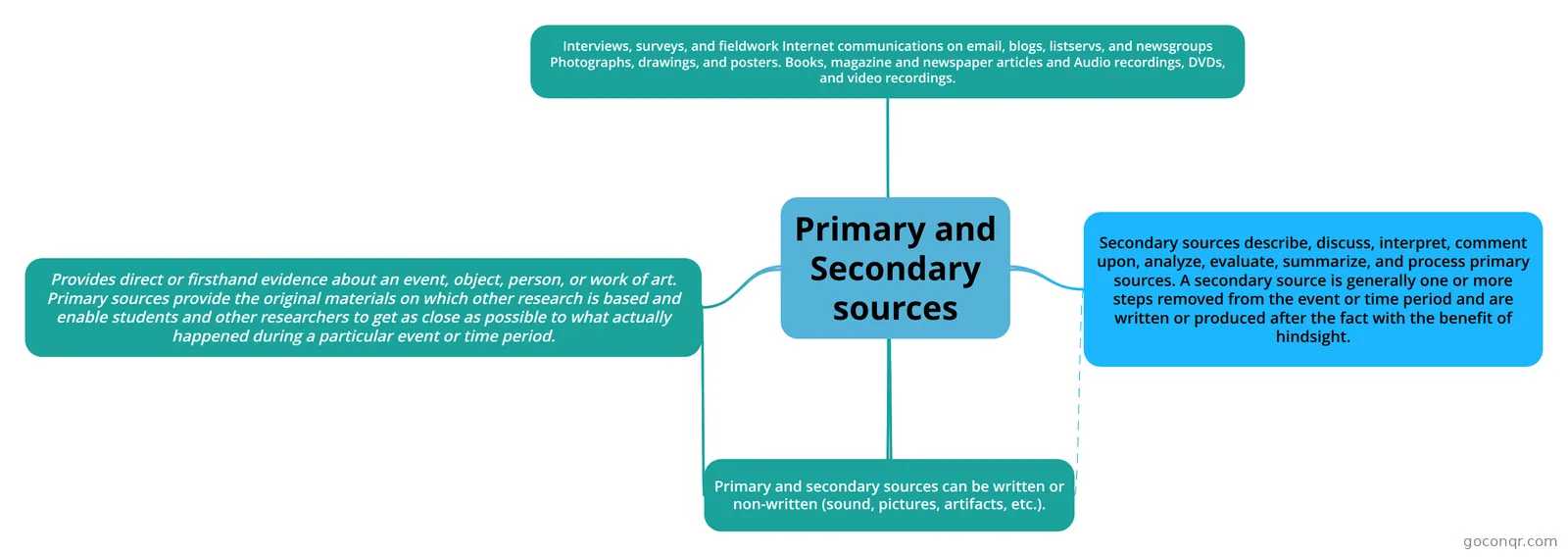
Mind map: Primary and secondary sources
Map content
Primary and Secondary sources
Provides direct or firsthand evidence about an event, object, person, or work of art. Primary sources provide the original materials on which other research is based and enable students and other researchers to get as close as possible to what actually happened during a particular event or time period.
- Primary and secondary sources can be written or non-written (sound, pictures, artifacts, etc.).
- Interviews, surveys, and fieldwork Internet communications on email, blogs, listservs, and newsgroups Photographs, drawings, and posters. Books, magazine and newspaper articles and Audio recordings, DVDs, and video recordings.
- Primary and secondary sources can be written or non-written (sound, pictures, artifacts, etc.).
Secondary sources describe, discuss, interpret, comment upon, analyze, evaluate, summarize, and process primary sources. A secondary source is generally one or more steps removed from the event or time period and are written or produced after the fact with the benefit of hindsight.