
Mind map
Ch 47: Bowel Elimination (P&P)
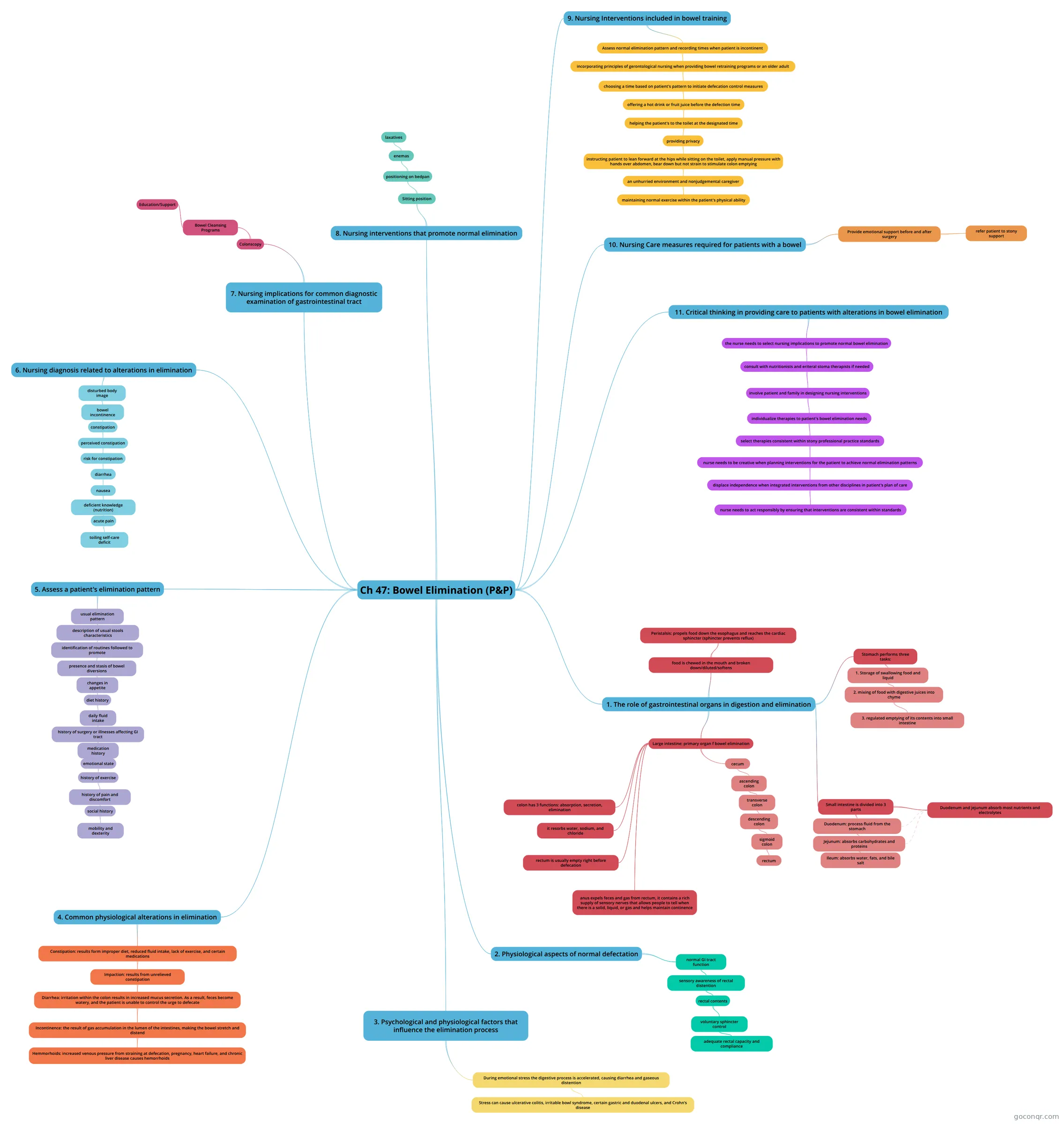
Mind map: Bowel elimination
Map content
Ch 47: Bowel Elimination (P&P)
1. The role of gastrointestinal organs in digestion and elimination
- food is chewed in the mouth and broken down/diluted/softens
- Peristalsis: propels food down the esophagus and reaches the cardiac sphincter (sphincter prevents reflux)
- Stomach performs three tasks:
- 1. Storage of swallowing food and liquid
- 2. mixing of food with digestive juices into chyme
- 3. regulated emptying of its contents into small intestine
- 2. mixing of food with digestive juices into chyme
- 1. Storage of swallowing food and liquid
- Small intestine is divided into 3 parts
- Duodenum: process fluid from the stomach
- Jejunum: absorbs carbohydrates and proteins
- Ileum: absorbs water, fats, and bile salt
- Jejunum: absorbs carbohydrates and proteins
- Duodenum and jejunum absorb most nutrients and electrolytes
- Duodenum: process fluid from the stomach
- Large intestine: primary organ f bowel elimination
- cecum
- ascending colon
- transverse colon
- descending colon
- sigmoid colon
- rectum
- sigmoid colon
- descending colon
- transverse colon
- ascending colon
- colon has 3 functions: absorption, secretion, elimination
- it resorbs water, sodium, and chloride
- rectum is usually empty right before defecation
- anus expels feces and gas from rectum, it contains a rich supply of sensory nerves that allows people to tell when there is a solid, liquid, or gas and helps maintain continence
- cecum
- food is chewed in the mouth and broken down/diluted/softens
2. Physiological aspects of normal defectation
- normal GI tract function
- sensory awareness of rectal distention
- rectal contents
- voluntary sphincter control
- adequate rectal capacity and compliance
- voluntary sphincter control
- rectal contents
- sensory awareness of rectal distention
- normal GI tract function
3. Psychological and physiological factors that influence the elimination process
- During emotional stress the digestive process is accelerated, causing diarrhea and gaseous distention
- Stress can cause ulcerative colitis, irritable bowl syndrome, certain gastric and duodenal ulcers, and Crohn's disease
- During emotional stress the digestive process is accelerated, causing diarrhea and gaseous distention
4. Common physiological alterations in elimination
- Constipation: results form improper diet, reduced fluid intake, lack of exercise, and certain medications
- Impaction: results from unrelieved constipation
- Diarrhea: irritation within the colon results in increased mucus secretion. As a result, feces become watery, and the patient is unable to control the urge to defecate
- Incontinence: the result of gas accumulation in the lumen of the intestines, making the bowel stretch and distend
- Hemmorhoids: increased venous pressure from straining at defecation, pregnancy, heart failure, and chronic liver disease causes hemorrhoids
- Incontinence: the result of gas accumulation in the lumen of the intestines, making the bowel stretch and distend
- Diarrhea: irritation within the colon results in increased mucus secretion. As a result, feces become watery, and the patient is unable to control the urge to defecate
- Impaction: results from unrelieved constipation
- Constipation: results form improper diet, reduced fluid intake, lack of exercise, and certain medications
5. Assess a patient's elimination pattern
- usual elimination pattern
- description of usual stools characteristics
- identification of routines followed to promote
- presence and stasis of bowel diversions
- changes in appetite
- diet history
- daily fluid intake
- history of surgery or illnesses affecting GI tract
- medication history
- emotional state
- history of exercise
- history of pain and discomfort
- social history
- mobility and dexterity
- social history
- history of pain and discomfort
- history of exercise
- emotional state
- medication history
- history of surgery or illnesses affecting GI tract
- daily fluid intake
- diet history
- changes in appetite
- presence and stasis of bowel diversions
- identification of routines followed to promote
- description of usual stools characteristics
- usual elimination pattern
6. Nursing diagnosis related to alterations in elimination
- disturbed body image
- bowel incontinence
- constipation
- perceived constipation
- risk for constipation
- diarrhea
- nausea
- deficient knowledge (nutrition)
- acute pain
- toiling self-care deficit
- acute pain
- deficient knowledge (nutrition)
- nausea
- diarrhea
- risk for constipation
- perceived constipation
- constipation
- bowel incontinence
- disturbed body image
7. Nursing implications for common diagnostic examination of gastrointestinal tract
- Colonscopy
- Bowel Cleansing Programs
- Education/Support
- Bowel Cleansing Programs
- Colonscopy
8. Nursing interventions that promote normal elimination
- Sitting position
- positioning on bedpan
- enemas
- laxatives
- enemas
- positioning on bedpan
- Sitting position
9. Nursing Interventions included in bowel training
- Assess normal elimination pattern and recording times when patient is incontinent
- incorporating principles of gerontological nursing when providing bowel retraining programs or an older adult
- choosing a time based on patient's pattern to initiate defecation control measures
- offering a hot drink or fruit juice before the defection time
- helping the patient's to the toilet at the designated time
- providing privacy
- instructing patient to lean forward at the hips while sitting on the toilet, apply manual pressure with hands over abdomen, bear down but not strain to stimulate colon emptying
- an unhurried environment and nonjudgemental caregiver
- maintaining normal exercise within the patient's physical ability
- an unhurried environment and nonjudgemental caregiver
- instructing patient to lean forward at the hips while sitting on the toilet, apply manual pressure with hands over abdomen, bear down but not strain to stimulate colon emptying
- providing privacy
- helping the patient's to the toilet at the designated time
- offering a hot drink or fruit juice before the defection time
- choosing a time based on patient's pattern to initiate defecation control measures
- incorporating principles of gerontological nursing when providing bowel retraining programs or an older adult
- Assess normal elimination pattern and recording times when patient is incontinent
10. Nursing Care measures required for patients with a bowel
- Provide emotional support before and after surgery
- refer patient to stony support
- Provide emotional support before and after surgery
11. Critical thinking in providing care to patients with alterations in bowel elimination
- the nurse needs to select nursing implications to promote normal bowel elimination
- consult with nutritionists and eriteral stoma therapists if needed
- involve patient and family in designing nursing interventions
- individualize therapies to patient's bowel elimination needs
- select therapies consistent within stony professional practice standards
- nurse needs to be creative when planning interventions for the patient to achieve normal elimination patterns
- displace independence when integrated interventions from other disciplines in patient's plan of care
- nurse needs to act responsibly by ensuring that interventions are consistent within standards
- displace independence when integrated interventions from other disciplines in patient's plan of care
- nurse needs to be creative when planning interventions for the patient to achieve normal elimination patterns
- select therapies consistent within stony professional practice standards
- individualize therapies to patient's bowel elimination needs
- involve patient and family in designing nursing interventions
- consult with nutritionists and eriteral stoma therapists if needed
- the nurse needs to select nursing implications to promote normal bowel elimination
Information
- Description
- Mind Map on Ch 47: Bowel Elimination (P&P), created by Kyla Baldovino on 18/10/2017.
- Created by
- Kyla Baldovino
- Views
- 4
- Rating