
Mind map
Ch 46: Urinary Elimination (P&P)
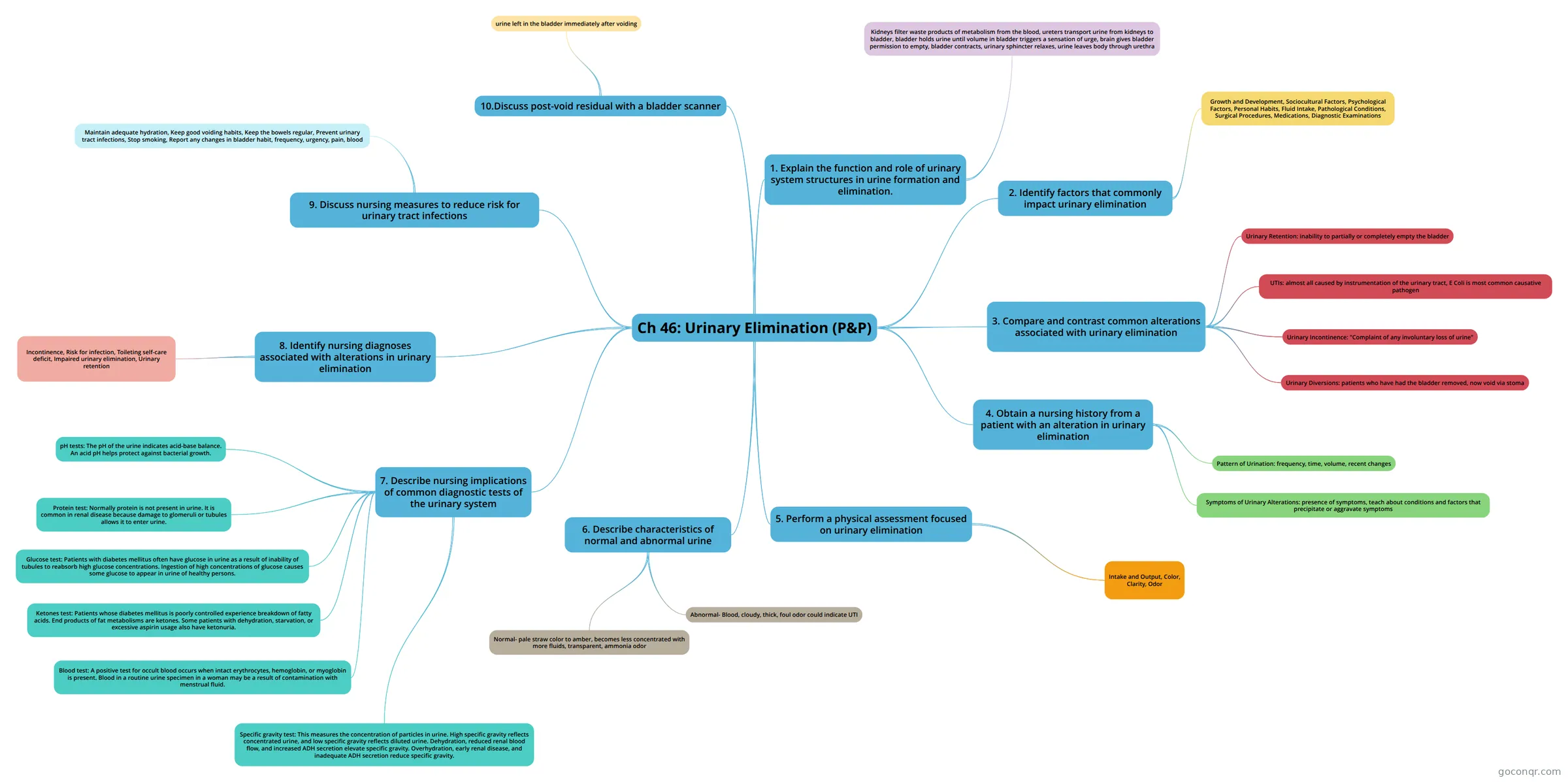
Mind map: Ch 46 urinary elimination
Map content
Ch 46: Urinary Elimination (P&P)
1. Explain the function and role of urinary system structures in urine formation and elimination.
- Kidneys filter waste products of metabolism from the blood, ureters transport urine from kidneys to bladder, bladder holds urine until volume in bladder triggers a sensation of urge, brain gives bladder permission to empty, bladder contracts, urinary sphincter relaxes, urine leaves body through urethra
2. Identify factors that commonly impact urinary elimination
- Growth and Development, Sociocultural Factors, Psychological Factors, Personal Habits, Fluid Intake, Pathological Conditions, Surgical Procedures, Medications, Diagnostic Examinations
3. Compare and contrast common alterations associated with urinary elimination
- Urinary Retention: inability to partially or completely empty the bladder
- UTIs: almost all caused by instrumentation of the urinary tract, E Coli is most common causative pathogen
- Urinary Incontinence: "Complaint of any involuntary loss of urine"
- Urinary Diversions: patients who have had the bladder removed, now void via stoma
4. Obtain a nursing history from a patient with an alteration in urinary elimination
- Pattern of Urination: frequency, time, volume, recent changes
- Symptoms of Urinary Alterations: presence of symptoms, teach about conditions and factors that precipitate or aggravate symptoms
5. Perform a physical assessment focused on urinary elimination
- Intake and Output, Color, Clarity, Odor
6. Describe characteristics of normal and abnormal urine
- Normal- pale straw color to amber, becomes less concentrated with more fluids, transparent, ammonia odor
- Abnormal- Blood, cloudy, thick, foul odor could indicate UTI
7. Describe nursing implications of common diagnostic tests of the urinary system
- pH tests: The pH of the urine indicates acid-base balance. An acid pH helps protect against bacterial growth.
- Protein test: Normally protein is not present in urine. It is common in renal disease because damage to glomeruli or tubules allows it to enter urine.
- Glucose test: Patients with diabetes mellitus often have glucose in urine as a result of inability of tubules to reabsorb high glucose concentrations. Ingestion of high concentrations of glucose causes some glucose to appear in urine of healthy persons.
- Ketones test: Patients whose diabetes mellitus is poorly controlled experience breakdown of fatty acids. End products of fat metabolisms are ketones. Some patients with dehydration, starvation, or excessive aspirin usage also have ketonuria.
- Blood test: A positive test for occult blood occurs when intact erythrocytes, hemoglobin, or myoglobin is present. Blood in a routine urine specimen in a woman may be a result of contamination with menstrual fluid.
- Specific gravity test: This measures the concentration of particles in urine. High specific gravity reflects concentrated urine, and low specific gravity reflects diluted urine. Dehydration, reduced renal blood flow, and increased ADH secretion elevate specific gravity. Overhydration, early renal disease, and inadequate ADH secretion reduce specific gravity.
8. Identify nursing diagnoses associated with alterations in urinary elimination
- Incontinence, Risk for infection, Toileting self-care deficit, Impaired urinary elimination, Urinary retention
9. Discuss nursing measures to reduce risk for urinary tract infections
- Maintain adequate hydration, Keep good voiding habits, Keep the bowels regular, Prevent urinary tract infections, Stop smoking, Report any changes in bladder habit, frequency, urgency, pain, blood
10.Discuss post-void residual with a bladder scanner
- urine left in the bladder immediately after voiding
Information
- Description
- Mind Map on Ch 46: Urinary Elimination (P&P), created by Kyla Baldovino on 25/10/2017.
- Created by
- Kyla Baldovino
- Views
- 5
- Rating