
Mind map
Equine hyperlipaemia
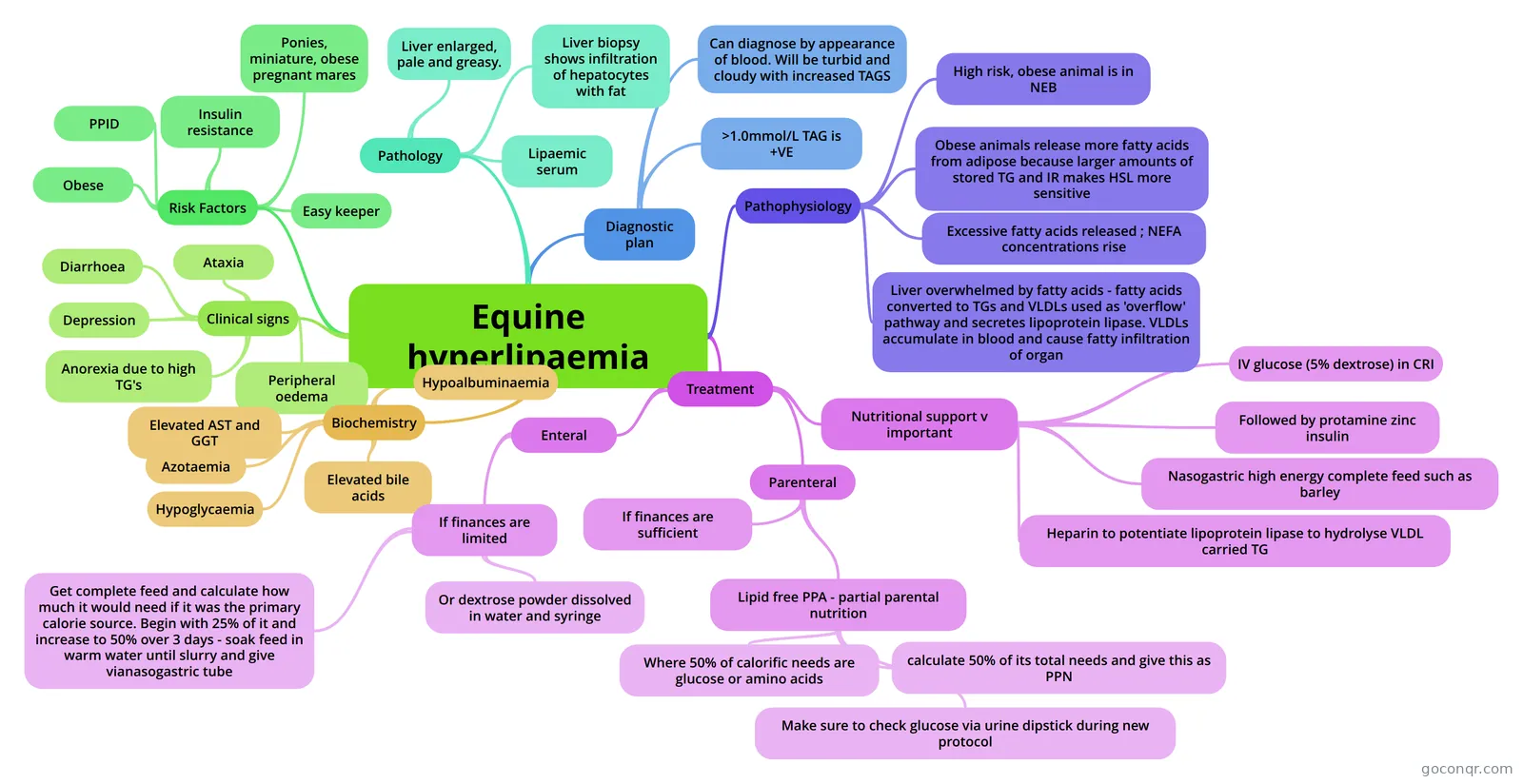
Mind map: Equine hyperlipaemia
Map content
Equine hyperlipaemia
Clinical signs
- Depression
- Anorexia due to high TG's
- Ataxia
- Diarrhoea
- Peripheral oedema
Risk Factors
- Obese
- PPID
- Insulin resistance
- Ponies, miniature, obese pregnant mares
- Easy keeper
Biochemistry
- Elevated AST and GGT
- Azotaemia
- Elevated bile acids
- Hypoglycaemia
- Hypoalbuminaemia
Pathology
- Liver enlarged, pale and greasy.
- Lipaemic serum
- Liver biopsy shows infiltration of hepatocytes with fat
Diagnostic plan
- Can diagnose by appearance of blood. Will be turbid and cloudy with increased TAGS
- >1.0mmol/L TAG is +VE
Pathophysiology
- High risk, obese animal is in NEB
- Obese animals release more fatty acids from adipose because larger amounts of stored TG and IR makes HSL more sensitive
- Excessive fatty acids released ; NEFA concentrations rise
- Liver overwhelmed by fatty acids - fatty acids converted to TGs and VLDLs used as 'overflow' pathway and secretes lipoprotein lipase. VLDLs accumulate in blood and cause fatty infiltration of organ
Treatment
- Nutritional support v important
- IV glucose (5% dextrose) in CRI
- Followed by protamine zinc insulin
- Nasogastric high energy complete feed such as barley
- Heparin to potentiate lipoprotein lipase to hydrolyse VLDL carried TG
- Enteral
- If finances are limited
- Get complete feed and calculate how much it would need if it was the primary calorie source. Begin with 25% of it and increase to 50% over 3 days - soak feed in warm water until slurry and give vianasogastric tube
- Or dextrose powder dissolved in water and syringe
- If finances are limited
- Parenteral
- If finances are sufficient
- Lipid free PPA - partial parental nutrition
- Where 50% of calorific needs are glucose or amino acids
- calculate 50% of its total needs and give this as PPN
- Make sure to check glucose via urine dipstick during new protocol
- Nutritional support v important
Information
- Description
- Mind Map on Equine hyperlipaemia, created by Chloe Zaydner on 06/08/2014.
- Created by
- Chloe Zaydner
- Views
- 16
- Rating