Mind map
nervous system
Map content
nervous system
- Complex network of the cells that carry informations.
central nervous system (CNS)
- Coordinate and influences the activities. Processes and integrates the incoming informations.
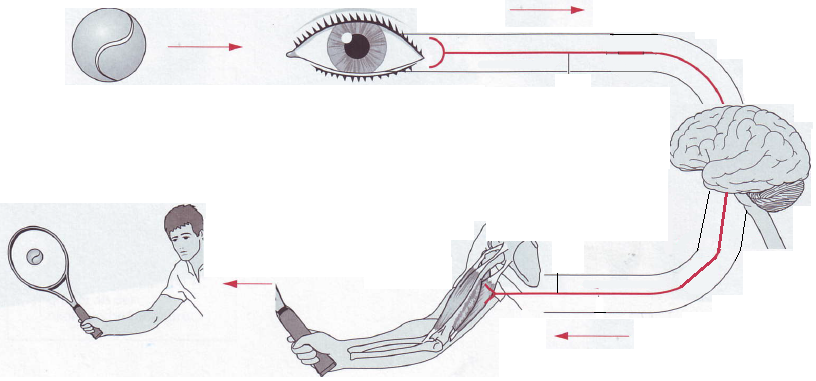
- stimulus
- Something that initiate the reaction.
- sensor
- Simulated by environmental information (stimuli)
- sensory neursons
- Transmit impulses to the spinal cord and the brain.
- motor neursons
- Further impulses then pass back.
- reaction
- Our body reacts to the received stimulus.
peripheral nervous system (PNS)
- Connect the CNS with the body. Consists of nerve cells outside the brain.
- voluntary nervous system (VNS)
- It controls the body.
- automatic nervous system (ANS)
- Influences regulate organs.
- sympathetic nervous system
- "fight or run" -situation. The body can react quickly.
- parasympathetic nervous system
- "rest and digest" -situation. The body can rest.
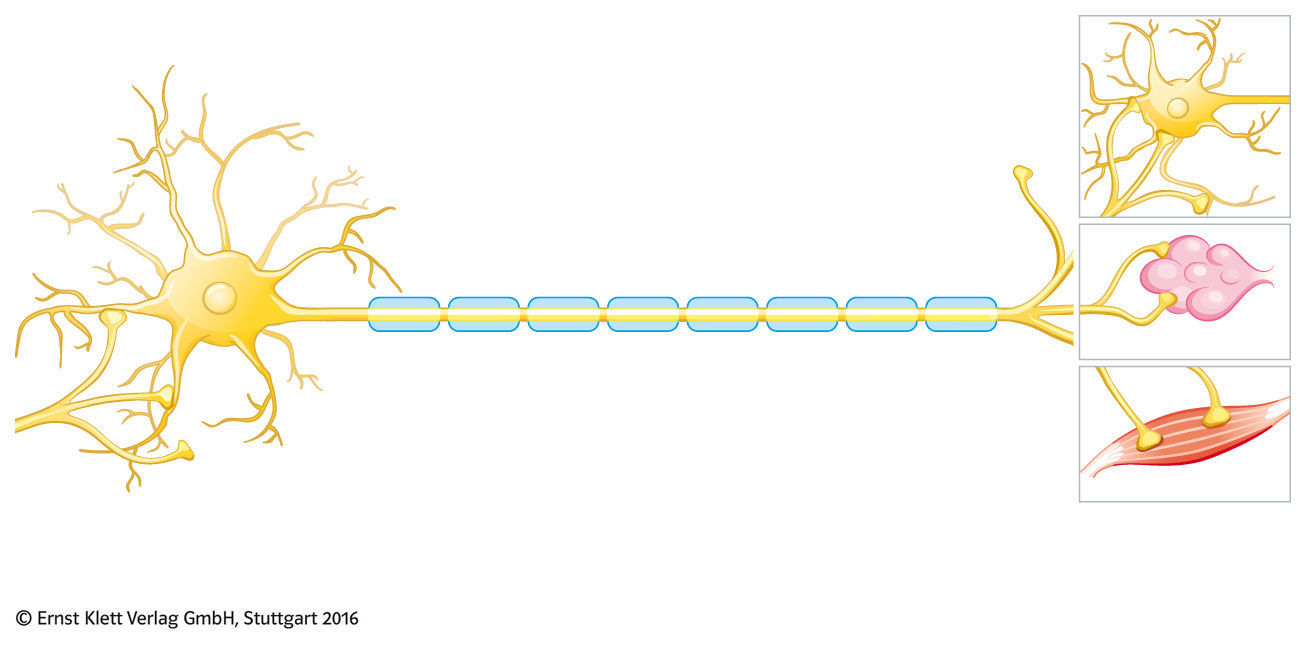
neurons
- cell body (soma)
- Includes the nucleus and other organelles. atahe electrical impuls travels through it.
- extensions
- dendrites
- Are highly branched. Receive signals from other neurons.
- axon
- They Transmits signals. Mnay of them are enclosed by an isulation sheath.
- axon hillock
- The region where the signals that travel down the axon are generated.
- saltatory conduction
- Increases the conduction speed of action potential. ´jumps´along the axon. Vertebrates motor neurons has an insulating sheath.
- continuous conduction
- Action potential develops over and over again along the axon section by section. Axons without an insulating sheath have a low conduction speed and the thickness is important.
- synaptic terminal
- It´s an important part for communicating with other cells.
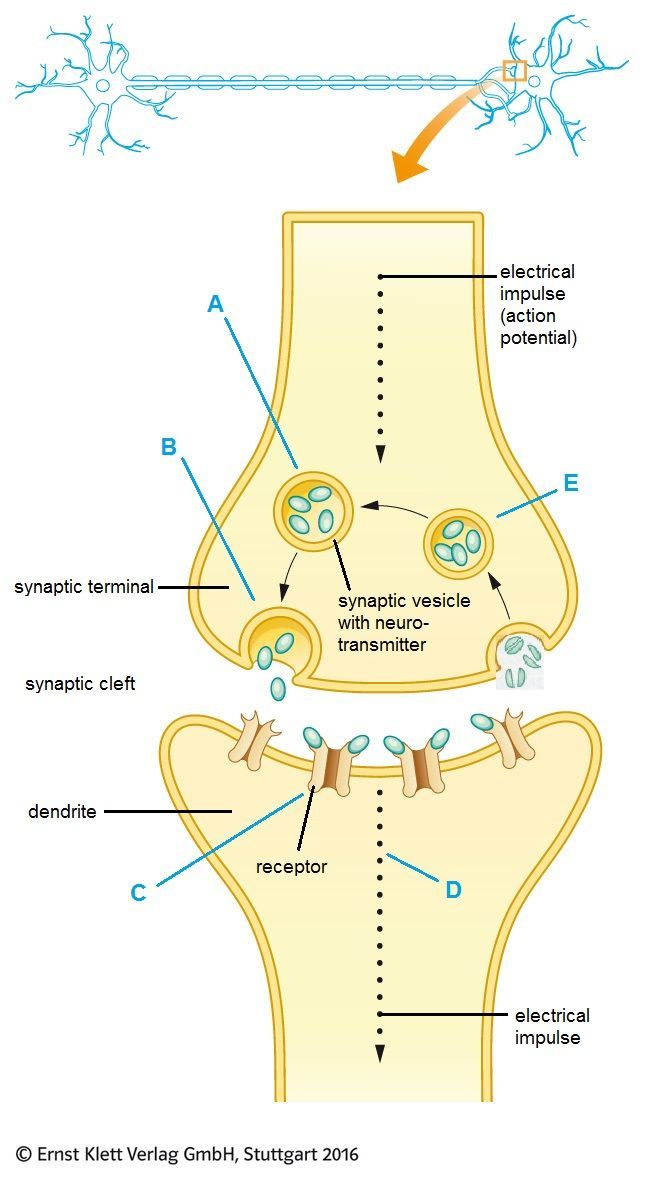
- synapses
- The region where the communicating between the synaptic terminal and other cells takes place.
- A.
- An electrical impulse (action potential) reaches the synaptic terminal and causes the synaptic vescicles to fuse with the cell membrane.
- B.
- The synaptic vesicles release neurotransmitter into the synaptic cleft.
- C.
- The neurotransmitter binds to the receptor on the target cell (other neurons).
- D.
- This causes an electrical impulse in the dendrite of the target cell
- E.
- The neurotransmitter is degreaded and recycled in the synaptic terminal.
- Neurotoxin
- Black widow spider bite
- It is in the synaptic cleft. they give you a permanent signal and you get a muscle cramp that leads to the Death.
- Toxin of the fly agaric
- The toxin works on the targed cells. The effects are hat the neurotransmites doesn´t work anymore and you can result in more sweating and increasing heart beat.
- Nicotine
- The toxin works on the receptors just like neurotransmites. So they can´t recycled and degraded and it inreases the blood pressure ans pulse.
- botox
- In the synaptic cleft. The effects are that the blocks release of neurotransmites and the muscle cannot be contracted.
- Black widow spider bite
- dendrites
- cell body (soma)