
1155128
Description

Mind Map by Kristi Brogden, updated more than 1 year ago

|
Created by Kristi Brogden
over 11 years ago
|
|
Cancer
- Cancer
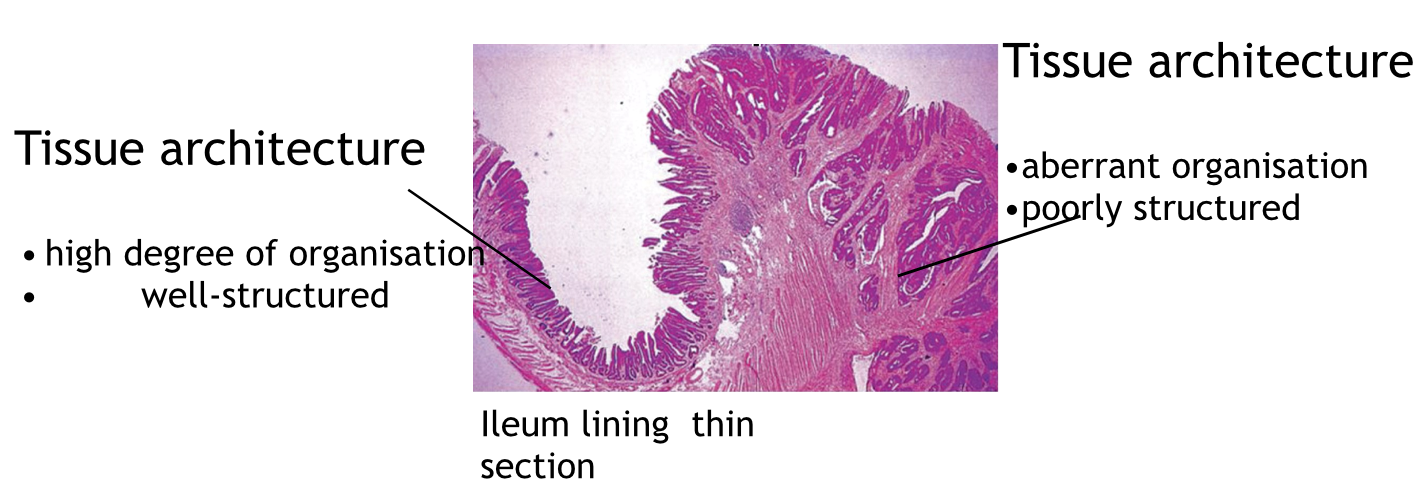
- Arises from normal tissue
- Tumours: created by cells that have lost the
ability to assemble and create tissues of
normal form and function
- Virchow’s Law: Omnis cellula e cellula
- Tumours: created by cells that have lost the
ability to assemble and create tissues of
normal form and function
- Disease of malfunctioning cells
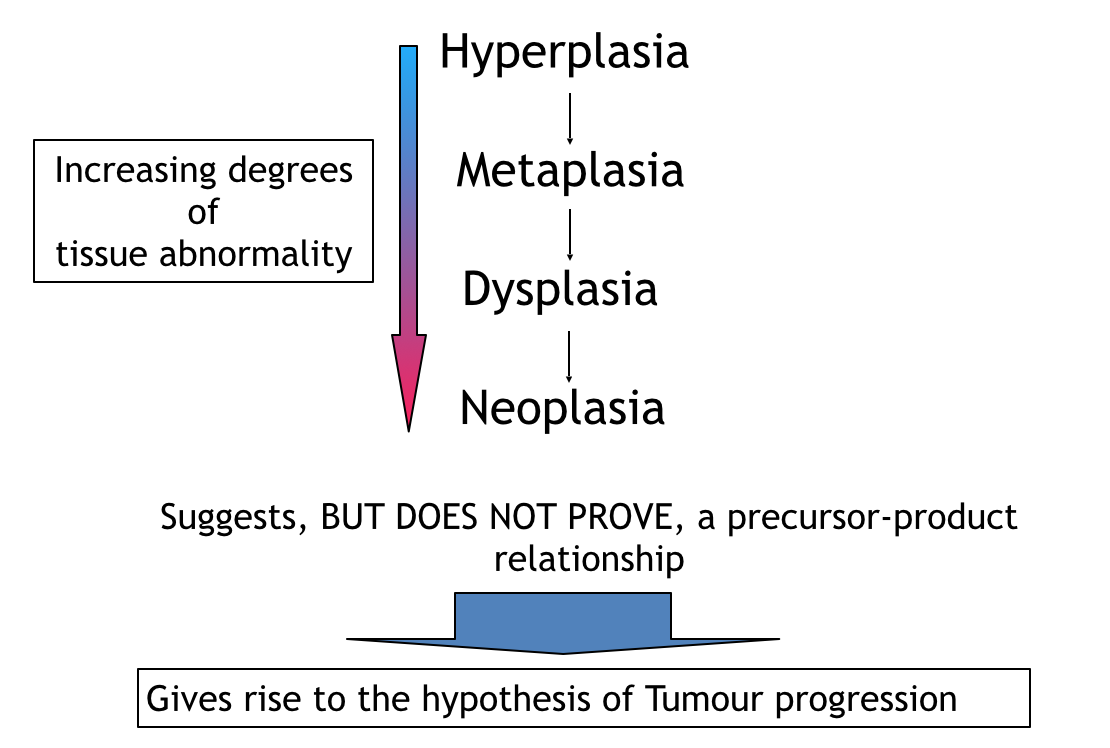
- 'The plasias'
- Hyperplasia
- Tissue growth containing excessive numbers of cells
- Tissue growth containing excessive numbers of cells
- Metaplasia
- Tissue growth
containing displaced
but otherwise normal
cells
- Tissue growth
containing displaced
but otherwise normal
cells
- Dysplasia
- Tissue growth
where cells appear
abnormal
- Tissue growth
where cells appear
abnormal
- Neoplasia
- Invasive,
abnormal tissue
growth
- Invasive,
abnormal tissue
growth
- Hypothesis of tumour progression
- Why is this important?
- Because it allows us to predict
common behaviours among diverse
tumours
- common principles of tissue organisation
- despite radically different function
- common principles of tissue organisation
- Can we use histopathology
to provide clues to trace
origins of tumours?
- Because it allows us to predict
common behaviours among diverse
tumours
- Why is this important?
- Hyperplasia
- Arises from normal tissue
- Genetics or environment?
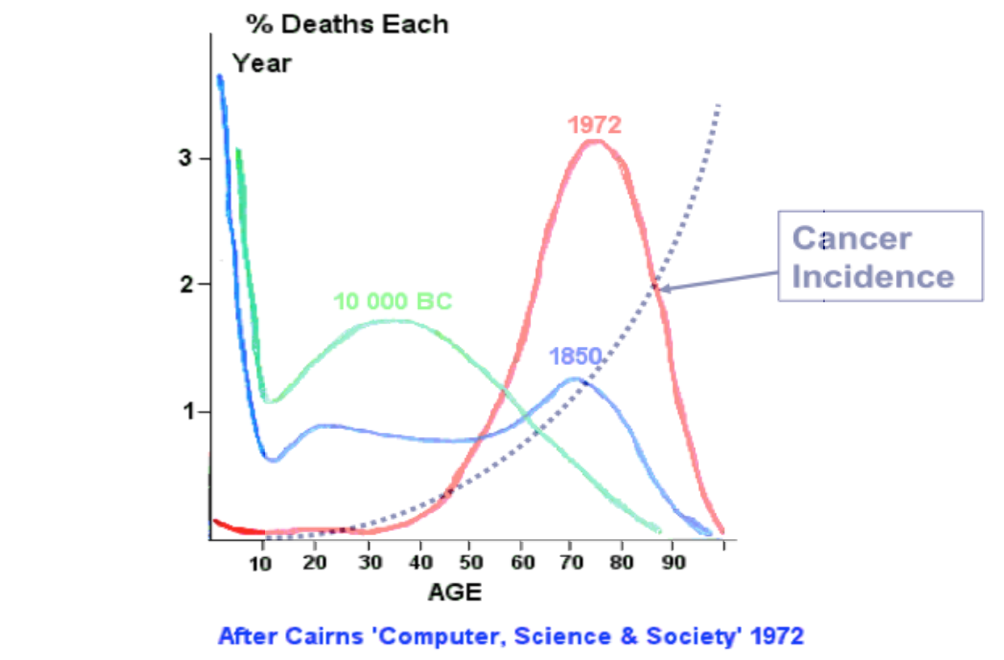
- Is cancer increasing?
- NO
- NO
- Major risk factors
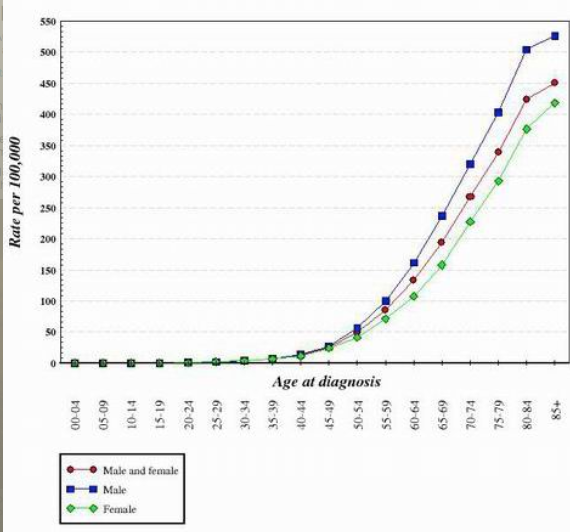
- Age
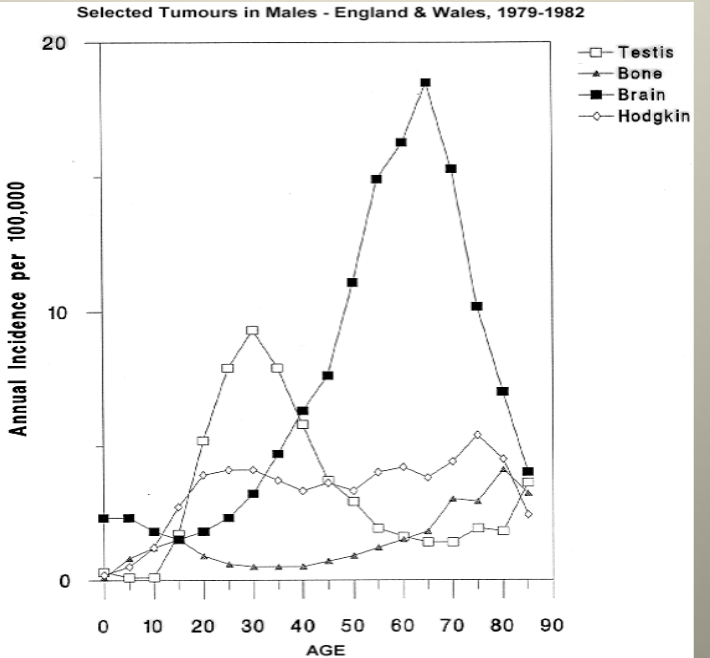
- The age/incidence profile
varies with different
cancers
- Risk doesn’t always increase with age
- Risk doesn’t always increase with age
- The age/incidence profile
varies with different
cancers
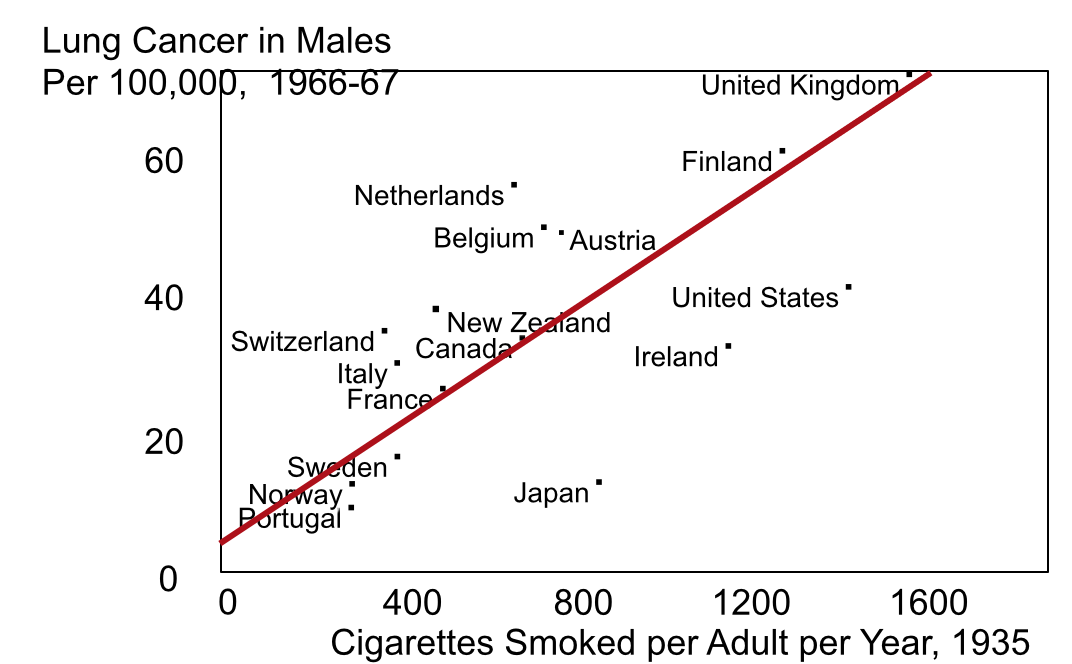
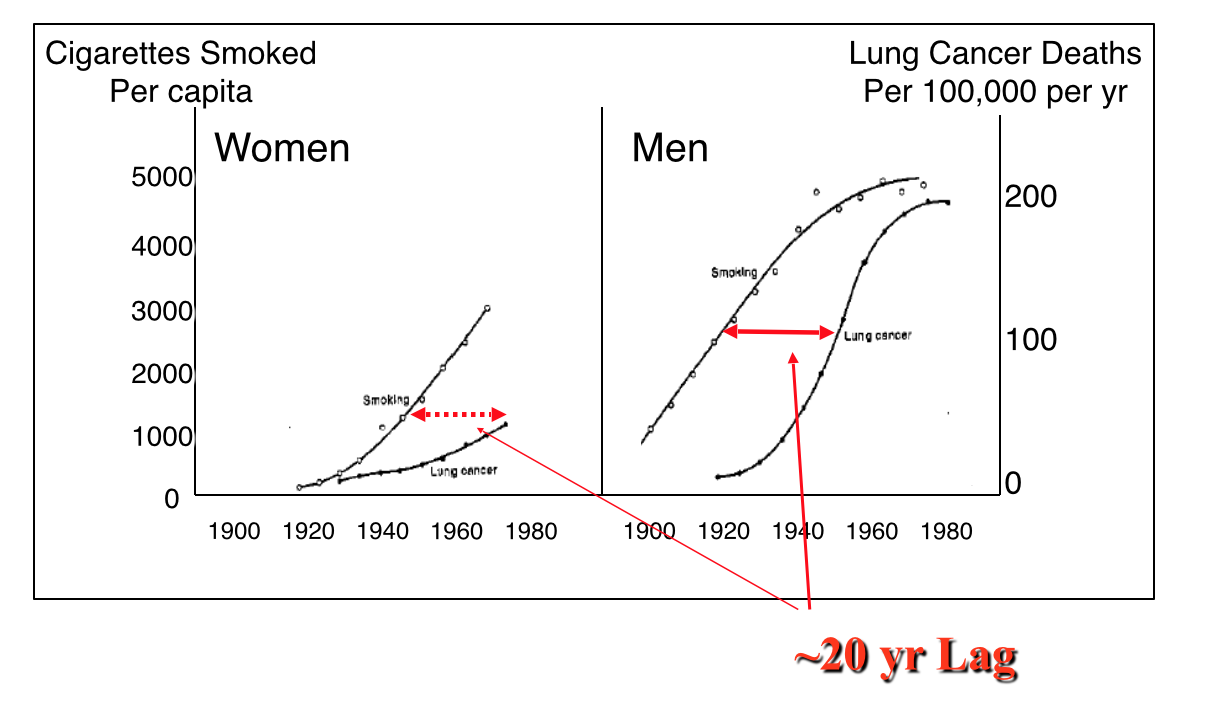
- environmental
- physical
- lifestyle
- Most common cancers are “caused”
by factors external to the body
- Cancer risk affected by assignable
environmental influences
- Cancer risk affected by assignable
environmental influences
- physical
- Genetics
- Nature is not innocent!
- Genetic basis for cancer
- Some families are susceptible to particular cancers:
- Such occurrences imply the
existence of GENES regulating
cancer incidence
- Such occurrences imply the
existence of GENES regulating
cancer incidence
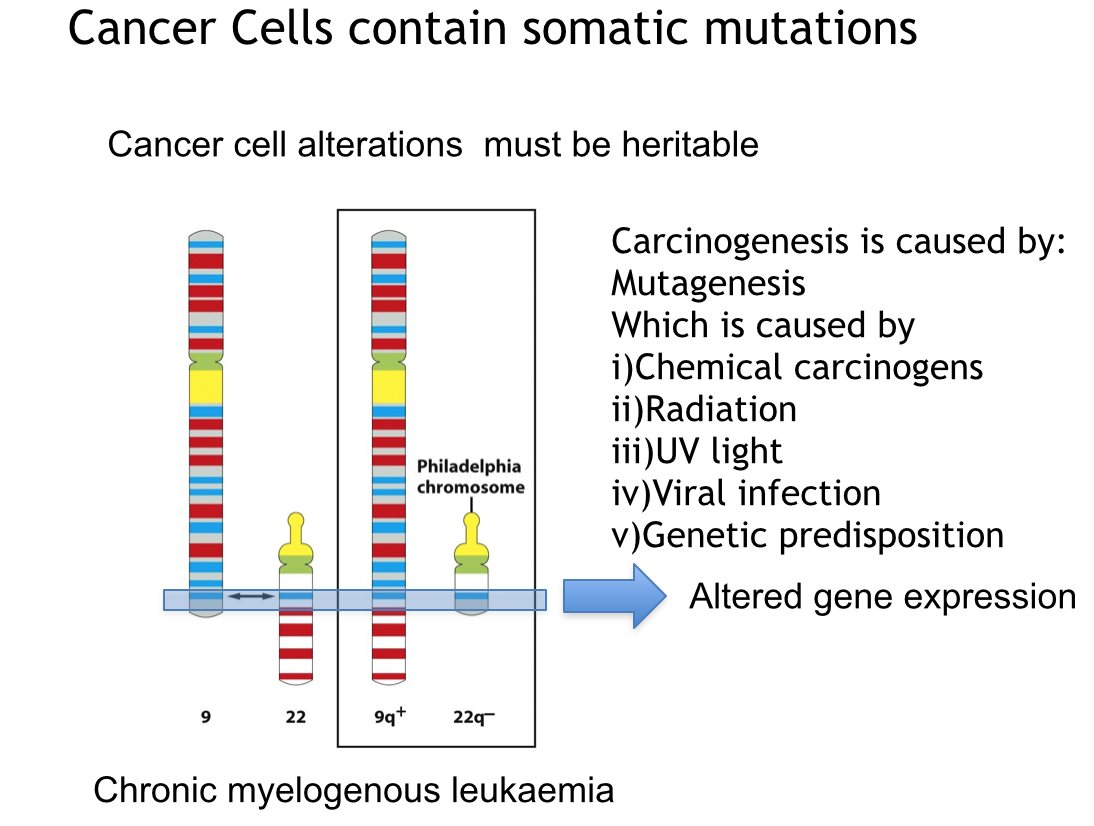
- Cancer Cells contain somatic mutations
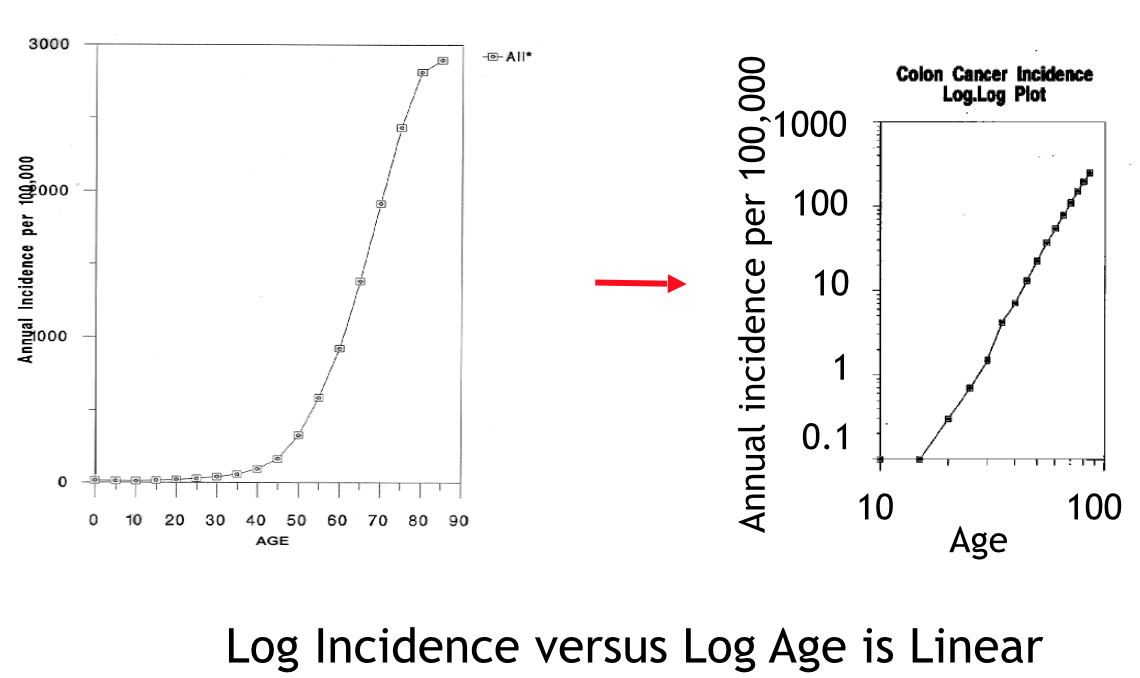
- A single mutation is not enough to cause cancer
- P(C1) - probability of a change associated with cancer
- The chance that the change will
have happened goes up with Age
- P(C1) α A, where A - age;
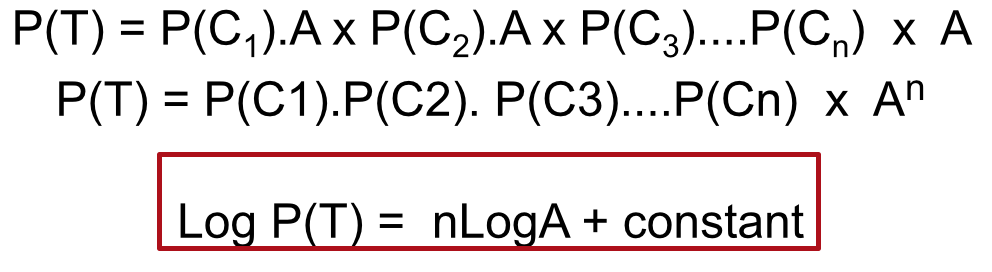
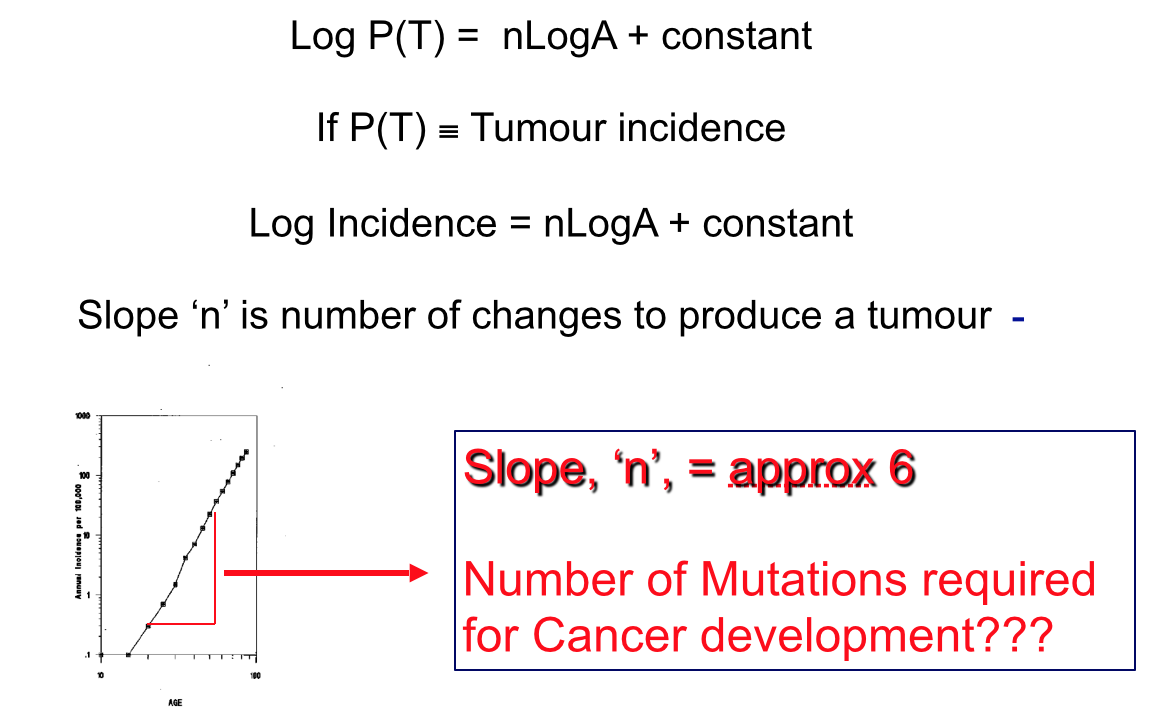
- If several changes needed (say ‘n’) before a tumour(T) develops
- Then the probability of all relevant changes is:
- Then the probability of all relevant changes is:
- If several changes needed (say ‘n’) before a tumour(T) develops
- P(C1) α A, where A - age;
- The chance that the change will
have happened goes up with Age
- P(C1) - probability of a change associated with cancer
- A single mutation is not enough to cause cancer
- Some families are susceptible to particular cancers:
- Genetic basis for cancer
- Nature is not innocent!
- Age
- Is cancer increasing?
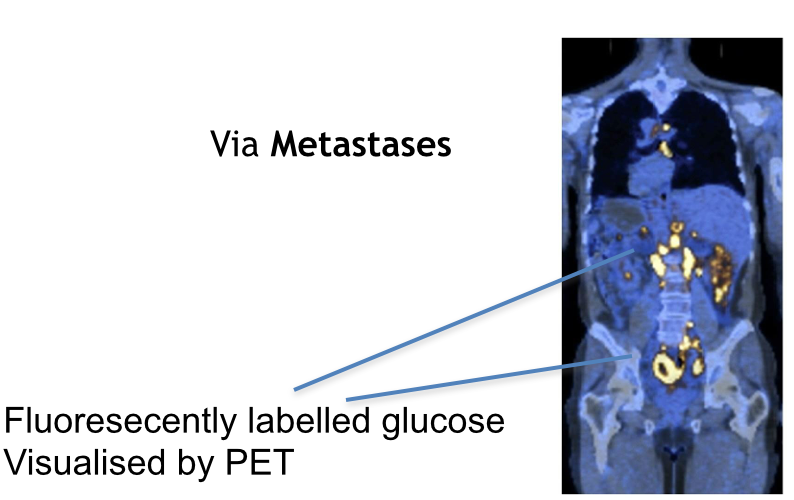
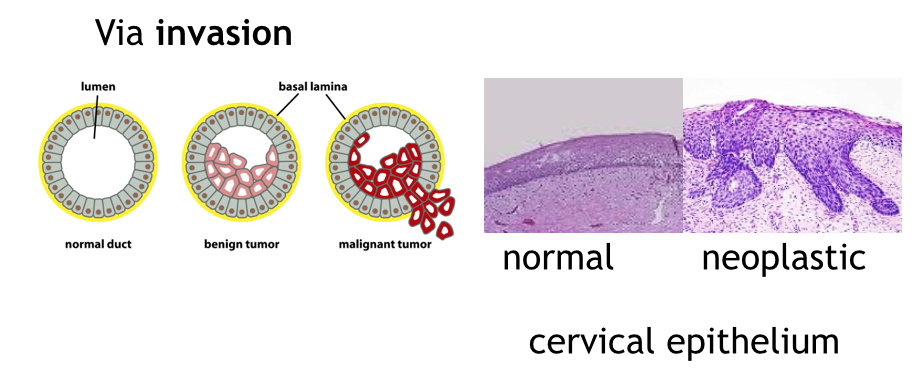
- Malignant cancer cells
colonise other tissues
- Via invasion
- Via metastases
- Via invasion
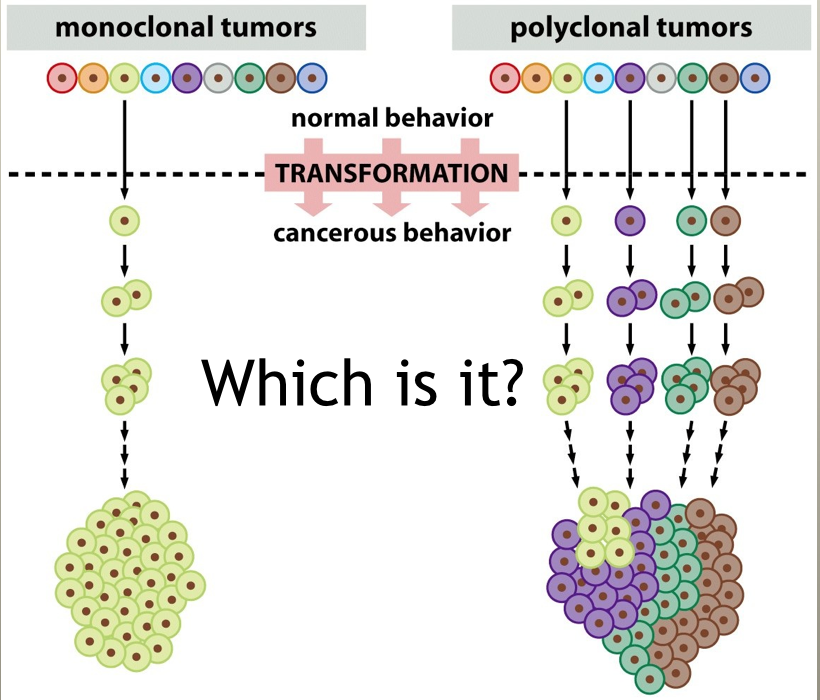
- Monoclonality vs polyclonality
- Specific antibodies: unique property of Β-cells
- Harvest antibody-producing cells from plasma
- Analyse protein content by electrophoresis
- Analyse protein content by electrophoresis
- Harvest antibody-producing cells from plasma
- Specific antibodies: unique property of Β-cells
Media attachments
Want to create your own Mind Maps for free with GoConqr? Learn more.