
Mind map
Ayman the Swimmer
Map content
Ayman the Swimmer
Anatomy
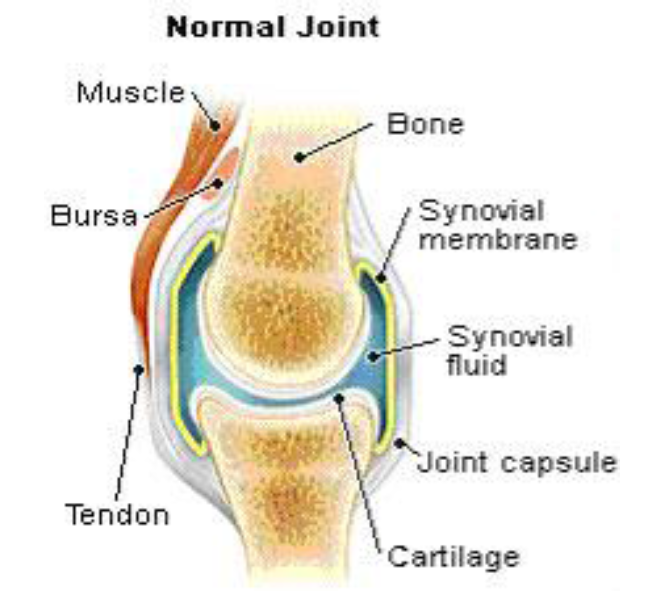
- Joints
- where two bones meet together
- Fibrous
- Connected by strong fibrous tissue
- No mobility
- Sutures of the skull
- ossifies with age
- They don't ossify with age
- Gomphosis
- Sydnemosis
- Sutures of the skull
- No mobility
- Connected by strong fibrous tissue
- Cartilaginous
- Connected by cartilage
- Secondary
- disc of dense white fibro cartilage
- Limited movement
- midline of the body
- Symphysis pubis
- Intervertebral discs
- b/w pieces of sternum
- midline of the body
- Limited movement
- disc of dense white fibro cartilage
- Primary
- Hyaline cartilage
- No movement
- ossifies with age
- epiphyseal cartilage
- b/w the first costal cartilage and sternum
- ossifies with age
- No movement
- Hyaline cartilage
- Secondary
- Connected by cartilage
- Synovial
- Freely mobile
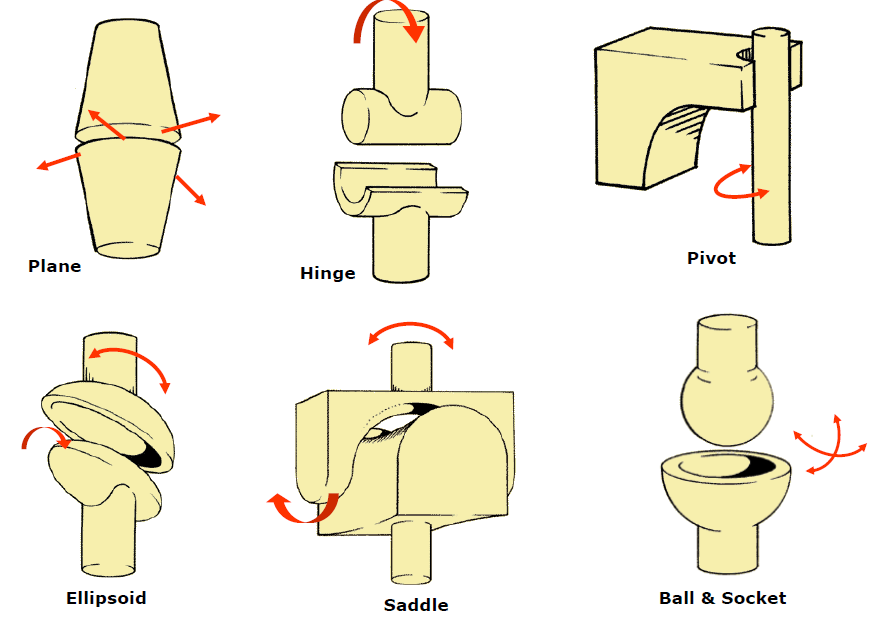
- Plane
- Acromioclavicular
- Gliding
- Acrmio-clavicular
- Intercarpal
- Hinge
- Elbow
- Ankle
- Pivot
- Atlanto-axial
- radio-ulnar
- Ellipsoid
- Wrist
- Saddle
- Carpometacarpal joint of the thumb
- Ball and socket
- Hip and shoulder
- Condyloid
- Knee joint
- Plane
- Freely mobile
- Joint pain
- Neurologic and pain syndromes
- Peripheral Neuropathy and somatization
- Congenital and Metabolic
- Gout, vitamins deficiencies
- Inflammatory and Reactive
- Kawasaki Syndrome
- Neoplastic
- Cancers and tumors
- Bone and cartilage
- Trauma
- Immunodefiencies
- HIV
- Infectious
- Viral, Fungal, and bacterial
- Rheumatologic
- psoriatic arthritis
- Neurologic and pain syndromes
- Fibrous
- where two bones meet together
- Muscles
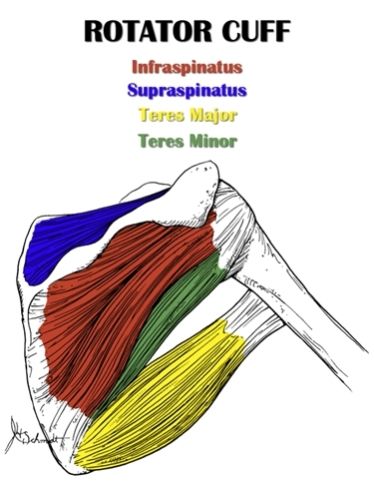
- Rotator Cuff
- Supraspinatus
- Origin:Supraspinous fossa of the scapula . Insertion:superior on the greater tuberosity of the humerus
- Initiation of abduction to 20
- Initiation of abduction to 20
- Origin:Supraspinous fossa of the scapula . Insertion:superior on the greater tuberosity of the humerus
- Infraspinatus
- Origin:infraspinatus fossa of the scapula. Insertion :inferior and posterior on greater tuberosity
- External Rotation
- weakening and tearing of the tendons forming the rotator cuff under stress Decreases the range of motion in the shoulder
- Rotator cuff degeneration & tear
- weakening and tearing of the tendons forming the rotator cuff under stress Decreases the range of motion in the shoulder
- External Rotation
- Origin:infraspinatus fossa of the scapula. Insertion :inferior and posterior on greater tuberosity
- Teres Minor
- Origin:lateral border of the scapula. Insertion:inferior to infraspinatus on the greater tuberosity
- External Rotation of the Humerus
- External Rotation of the Humerus
- Origin:lateral border of the scapula. Insertion:inferior to infraspinatus on the greater tuberosity
- Subscapularis
- Origin: subscapular fossa of the scapula. Insertion : lesser tuberosity of the humerus
- Internal Rotation of the humerus
- Internal Rotation of the humerus
- Origin: subscapular fossa of the scapula. Insertion : lesser tuberosity of the humerus
- Supraspinatus
- Shoulder muscles
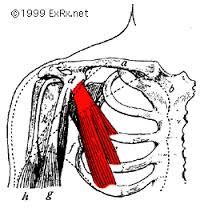
- Pectoralis Minor
- Origin: ribs 3-5
- Insertion :Coracoid process of the scapula
- Actions :Protraction(forward) and retraction(backward) of the scapula.
- Insertion :Coracoid process of the scapula
- Origin: ribs 3-5
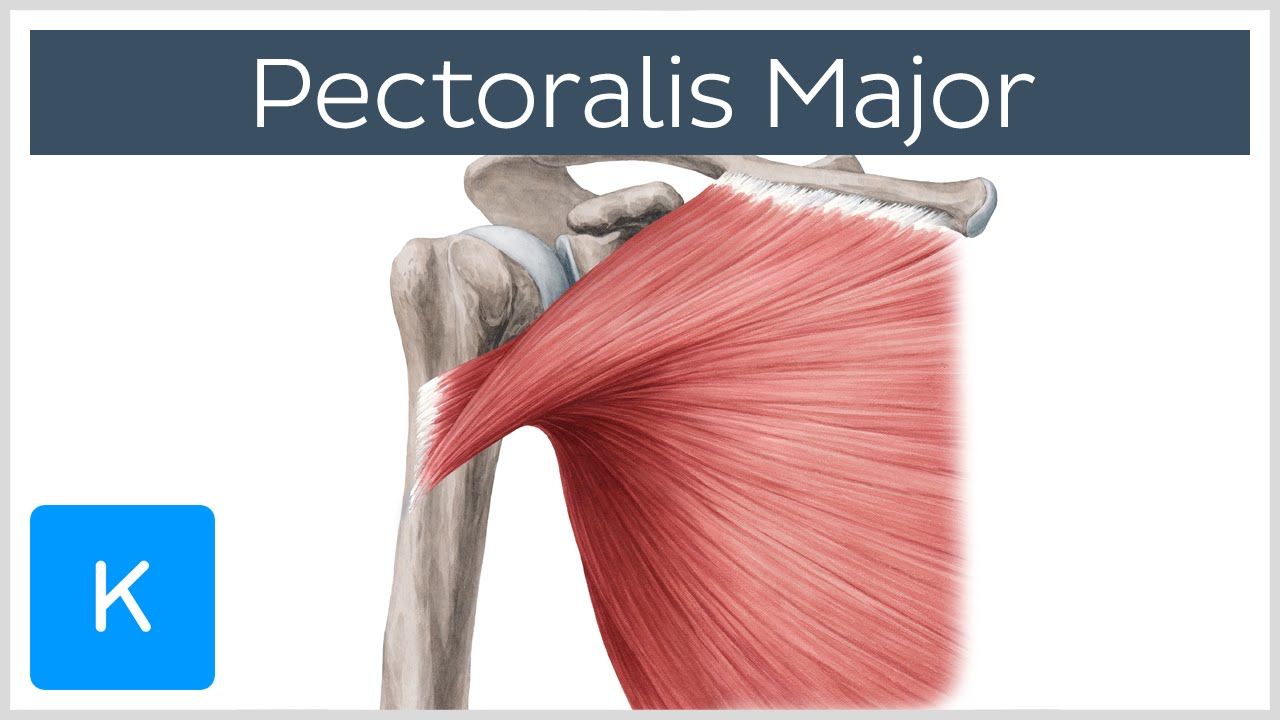
- Pectoralis Major
- Origin :medial 1/2 of the clavicle, manubrium & body of sternum, costal cartilages of ribs 2-6.
- Insertion :Lateral lip of bicipital groove (humerus)
- Actions :1-Adduction of the arm. 2-medial rotation of the arm 3-Flexion of the arm.
- Insertion :Lateral lip of bicipital groove (humerus)
- Origin :medial 1/2 of the clavicle, manubrium & body of sternum, costal cartilages of ribs 2-6.
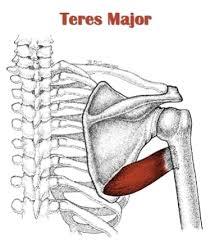
- Teres Major
- Origin :Dorsal surface of the inferior angle of the scapula.
- Insertion: The medial lip of the bicipital groove (intertubercular sulcus) of the humerus.
- Action :Medial rotation & Adduction of humerus.
- Insertion: The medial lip of the bicipital groove (intertubercular sulcus) of the humerus.
- Origin :Dorsal surface of the inferior angle of the scapula.
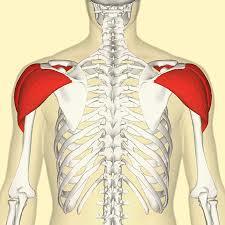
- Deltoid
- Origin :Anterior (clavicular) head: anterior surface of the lateral clavicle. b. Middle (acromial) head: acromion process and spine of the scapula. -
- Insertion : Deltoid tuberosity of the humerus.
- Action :Adduction from 20˚ to 90˚
- Insertion : Deltoid tuberosity of the humerus.
- Origin :Anterior (clavicular) head: anterior surface of the lateral clavicle. b. Middle (acromial) head: acromion process and spine of the scapula. -
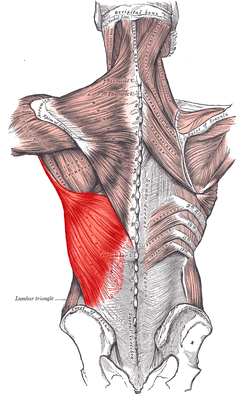
- Latissimus Dorsi
- Origin :vertebral spines from T7 to the sacrum, posterior 1/3 of iliac crest. • Posterior layer of thoracolumbar fascia lower 3 or 4 ribs. • sometimes from the inf. angle of scapula.
- Insertion :floor of the intertubercular groove
- Action :rotates the arm medially • adducts arm • Extends the arm
- Insertion :floor of the intertubercular groove
- Origin :vertebral spines from T7 to the sacrum, posterior 1/3 of iliac crest. • Posterior layer of thoracolumbar fascia lower 3 or 4 ribs. • sometimes from the inf. angle of scapula.
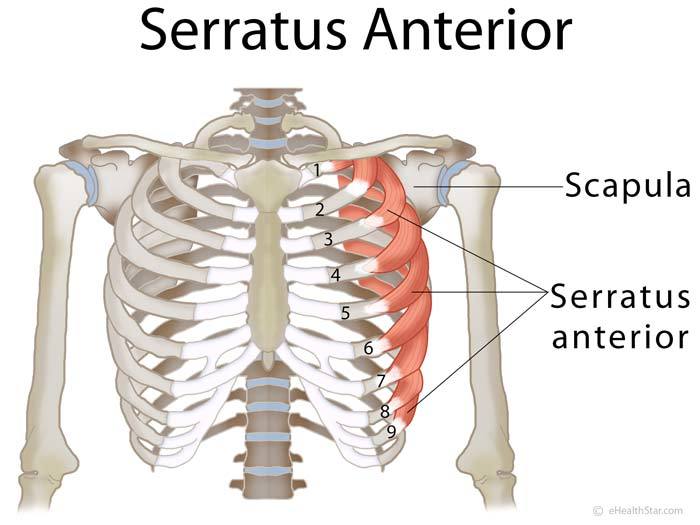
- Serratus Anterior
- Origin:surface of the 1st to 8th ribs at the side of the chest
- Insertion: along the entire anterior length of the medial border of the scapula.
- Action: Laterally rotates and protracts scapula
- Insertion: along the entire anterior length of the medial border of the scapula.
- Origin:surface of the 1st to 8th ribs at the side of the chest
- Pectoralis Minor
- Rotator Cuff
- Bones
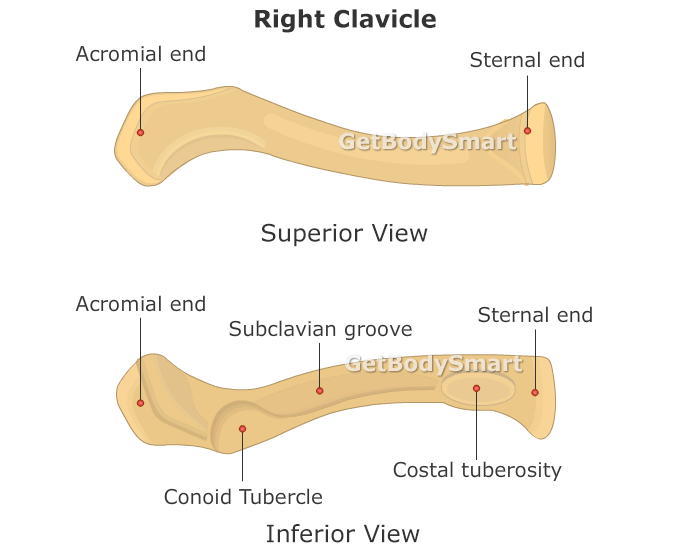
- Clavicle
- surfaces
- Inferior surface
- Rough due to the attachments of ligaments
- trapezoid line
- Conoid tubercle
- Rough due to the attachments of ligaments
- Superficial surface
- Smooth
- No ligaments attached
- Smooth
- Inferior surface
- Ends
- Acromial End
- Flat
- Articulates with
- Acromoin process of the scapula
- Acromioclavicular joint
- Acromoin process of the scapula
- Articulates with
- Flat
- Sternal End
- Rounded
- Articulates with
- sternum bone of the chest
- Sternoclavicular joint
- sternum bone of the chest
- Articulates with
- Rounded
- Acromial End
- Lateral 1/3 is convex backward +medial 2/3 is convex forward
- Moving from anterior to posterior
- A transition
- the clavicle is more prone to injuries at that site
- A transition
- surfaces
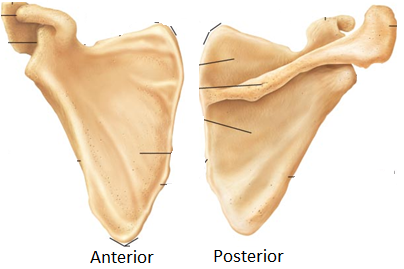
- Scapula
- 2 surfaces
- Anterior
- Posterior
- 3 borders
- Lateral
- Medial
- Superior
- 3 angles
- Superior
- inferior
- Lateral
- 4 fossae
- Glenoid fossae
- Where a humerus articulates
- Glenohumeral Joint
- Where a humerus articulates
- Supraspinous
- Divided by the spine
- Infraspinous
- Subscapular
- Glenoid fossae
- 2 processes
- Acromion
- Articulates with clavicle
- Acrmoioclavicular Joint
- Articulates with clavicle
- Coracoid
- Articulates with clavicle
- coracocvicular joint
- Articulates with clavicle
- Acromion
- Shoulder Blade
- 2 surfaces
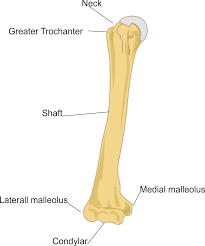
- Humerus
- Head of humerus
- Intertubuler groove
- between lesser and greater tubercles
- Surgical neck
- Anatomical Neck
- Shaft
- Clavicle
- Joints
Challenges Athletes face
- Motivation
- Media
- Coaches
- Training and Practice
- Career Vision
- Popularity
- Priorities
- Injuries
- In sports, they most commonly occur in MSK structures
- Results due to :
- Not taking the proper safety precautions.illegal play. Wrong training technique. insufficient warm up. Not using sutiable protective techniques. Overuse. preexisting disorder
- Types
- contact injury
- contusions (bruises) or lacerations(tears in skin)
- ligament sprains
- overstretching or tearing injury
- sprained ankle
- Muscle strains
- overstretching or tearing
- Dislocations
- moving a bone out of its normal position
- Sublaxation
- pops out of its place and pops back on its own
- fractures
- a compressed or twisted bone
- Nerve Injury
- compression , stretch, severance, or friction
- contact injury
- First actions (PRICE)
- Protection Rest. Ice( cryotherapy) Compression Elevation
- Results due to :
- In sports, they most commonly occur in MSK structures
Swimmer's shoulder
- Overuse of the shoulder muscles
- gradual onset due to repetitive activity and can be classified as microtrauma
- impaired posture
- Impaired glenohumeral joint mobility.
- Results in Rotator cuff tendinitis
- irritation of these tendons and inflammation of the bursa (a normally smooth layer) lining these tendons.
- Results in Rotator cuff tendinitis
- Impaired neuromuscular control,
- Impaired muscle performance
- alterations in active ROM of the shoulder
- gradual onset due to repetitive activity and can be classified as microtrauma
- Overuse of the shoulder muscles
Physical Examination
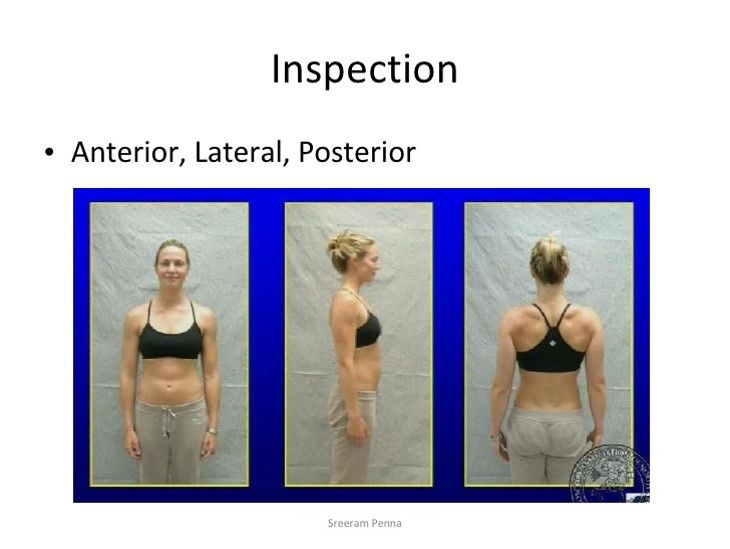
- Inspection
- Observing both shoulders together to look for any atrophy , asymmetry, swelling, and any venous distention
- Feel
- Palpating specific anatomical structures of the shoulder helps physicians to identify the affected areas
- the sternoclavicular joint
- the clavicle
- the acromioclavicular joint
- the coracoid process
- the borders of the scapula
- the greater and lesser tuberosities of the humerus.
- Palpating specific anatomical structures of the shoulder helps physicians to identify the affected areas
- Special Tests
- Impingement Test
- apprehension test
- Apley’s scratch test
- Range of motion
- forward Flexion = 0-160 Extension = 0-50 Abduction =0-170 Adduction = 0-50 Internal Rotation = 90 degrees External Rotation = 65 degrees And Circumduction
- Inspection
Images and files in the map
Information
- Description
- Mind Map on Ayman the Swimmer, created by MOHAMED Masoud on 26/01/2018.
- Created by
- MOHAMED Masoud · Jan 2018
- Updated
- Jan 26, 2018
- Views
- 5
- History
-
- Created by Fatma Shwaylia · Feb 10, 2017
- Copied by MOHAMED Masoud · Jan 26, 2018
- Rating