
Mind map
Acute Hepatitis B
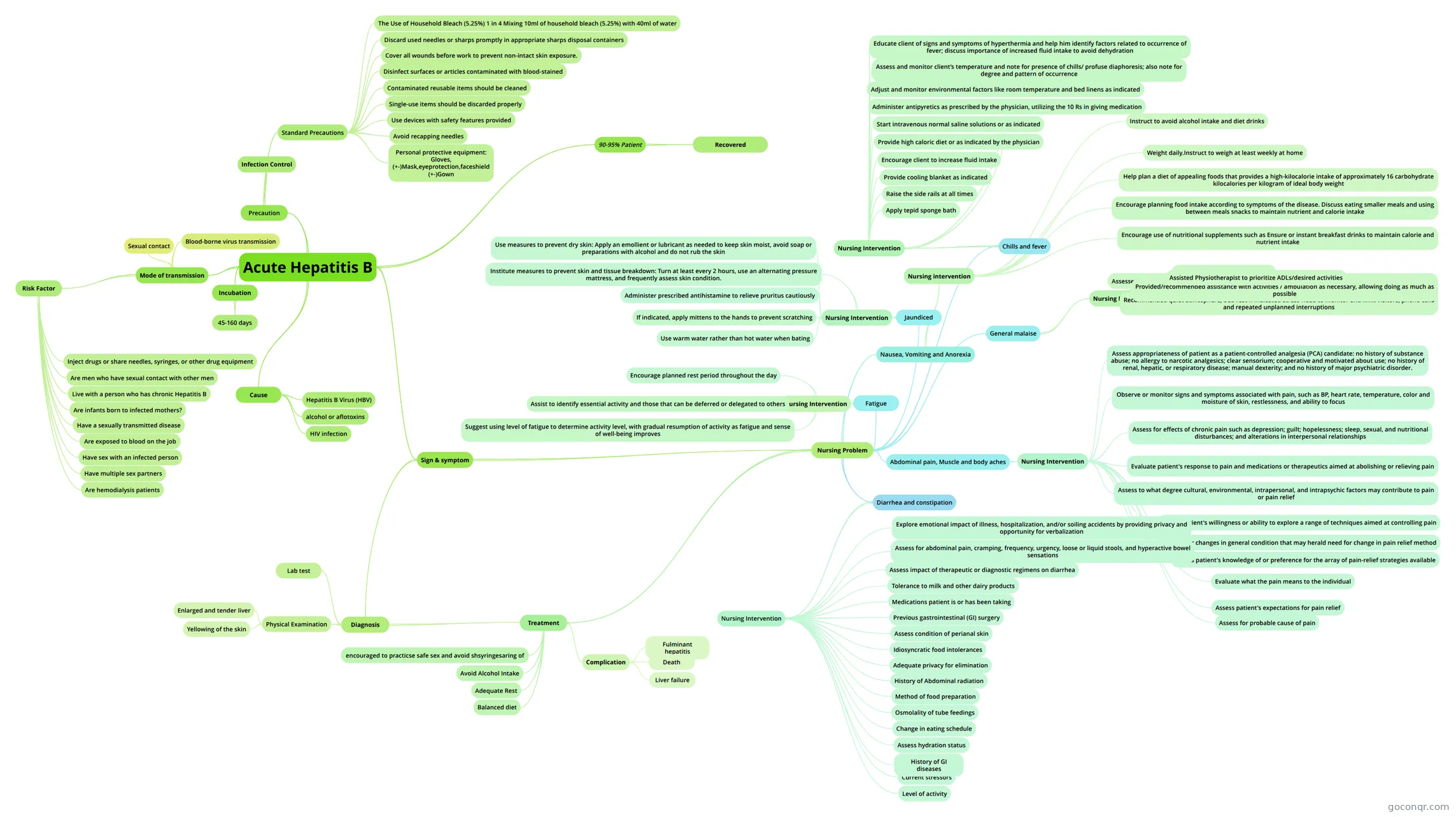
Mind map: Acute Hepatitis B
Map content
Acute Hepatitis B
Sign & symptom
- Diagnosis
- Physical Examination
- Enlarged and tender liver
- Yellowing of the skin
- Lab test
- Physical Examination
- Nursing Problem
- Fatigue
- Nursing Intervention
- Encourage planned rest period throughout the day
- Assist to identify essential activity and those that can be deferred or delegated to others
- Suggest using level of fatigue to determine activity level, with gradual resumption of activity as fatigue and sense of well-being improves
- Nursing Intervention
- Abdominal pain, Muscle and body aches
- Nursing Intervention
- Observe or monitor signs and symptoms associated with pain, such as BP, heart rate, temperature, color and moisture of skin, restlessness, and ability to focus
- Assess for probable cause of pain
- Assess patient's knowledge of or preference for the array of pain-relief strategies available
- Evaluate patient's response to pain and medications or therapeutics aimed at abolishing or relieving pain
- Assess to what degree cultural, environmental, intrapersonal, and intrapsychic factors may contribute to pain or pain relief
- Evaluate what the pain means to the individual
- Assess patient's expectations for pain relief
- Assess patient's willingness or ability to explore a range of techniques aimed at controlling pain
- Assess appropriateness of patient as a patient-controlled analgesia (PCA) candidate: no history of substance abuse; no allergy to narcotic analgesics; clear sensorium; cooperative and motivated about use; no history of renal, hepatic, or respiratory disease; manual dexterity; and no history of major psychiatric disorder.
- Monitor for changes in general condition that may herald need for change in pain relief method
- Assess for effects of chronic pain such as depression; guilt; hopelessness; sleep, sexual, and nutritional disturbances; and alterations in interpersonal relationships
- Nursing Intervention
- Chills and fever
- Nursing Intervention
- Assess and monitor client’s temperature and note for presence of chills/ profuse diaphoresis; also note for degree and pattern of occurrence
- Adjust and monitor environmental factors like room temperature and bed linens as indicated
- Apply tepid sponge bath
- Administer antipyretics as prescribed by the physician, utilizing the 10 Rs in giving medication
- Provide cooling blanket as indicated
- Encourage client to increase fluid intake
- Raise the side rails at all times
- Start intravenous normal saline solutions or as indicated
- Provide high caloric diet or as indicated by the physician
- Educate client of signs and symptoms of hyperthermia and help him identify factors related to occurrence of fever; discuss importance of increased fluid intake to avoid dehydration
- Nursing Intervention
- Nausea, Vomiting and Anorexia
- Nursing intervention
- Weight daily.Instruct to weigh at least weekly at home
- Help plan a diet of appealing foods that provides a high-kilocalorie intake of approximately 16 carbohydrate kilocalories per kilogram of ideal body weight
- Encourage planning food intake according to symptoms of the disease. Discuss eating smaller meals and using between meals snacks to maintain nutrient and calorie intake
- Instruct to avoid alcohol intake and diet drinks
- Encourage use of nutritional supplements such as Ensure or instant breakfast drinks to maintain calorie and nutrient intake
- Nursing intervention
- General malaise
- Nursing Intervention
- Assessed patient’s ability to perform tasks/noting reports of weakness, fatigue and difficulty accomplishing task
- Recommended quiet atmosphere; bed rest if indicated stress-need to monitor and limit visitors, phone calls and repeated unplanned interruptions
- Elevated head of bed as tolerated
- Provided/recommended assistance with activities / ambulation as necessary, allowing doing as much as possible
- Assisted Physiotherapist to prioritize ADLs/desired activities
- Nursing Intervention
- Jaundiced
- Nursing Intervention
- Use warm water rather than hot water when bating
- Use measures to prevent dry skin: Apply an emollient or lubricant as needed to keep skin moist, avoid soap or preparations with alcohol and do not rub the skin
- If indicated, apply mittens to the hands to prevent scratching
- Administer prescribed antihistamine to relieve pruritus cautiously
- Institute measures to prevent skin and tissue breakdown: Turn at least every 2 hours, use an alternating pressure mattress, and frequently assess skin condition.
- Nursing Intervention
- Diarrhea and constipation
- Nursing Intervention
- Assess for abdominal pain, cramping, frequency, urgency, loose or liquid stools, and hyperactive bowel sensations
- Tolerance to milk and other dairy products
- Medications patient is or has been taking
- Idiosyncratic food intolerances
- Method of food preparation
- Osmolality of tube feedings
- Change in eating schedule
- Level of activity
- Adequate privacy for elimination
- Current stressors
- Previous gastrointestinal (GI) surgery
- History of GI diseases
- History of Abdominal radiation
- Assess impact of therapeutic or diagnostic regimens on diarrhea
- Assess hydration status
- Assess condition of perianal skin
- Explore emotional impact of illness, hospitalization, and/or soiling accidents by providing privacy and opportunity for verbalization
- Nursing Intervention
- Treatment
- Adequate Rest
- Balanced diet
- Avoid Alcohol Intake
- encouraged to practicse safe sex and avoid shsyringesaring of
- Complication
- Fulminant hepatitis
- Liver failure
- Death
- Fatigue
- Diagnosis
90-95% Patient
- Recovered
Mode of transmission
- Risk Factor
- Have sex with an infected person
- Inject drugs or share needles, syringes, or other drug equipment
- Are men who have sexual contact with other men
- Live with a person who has chronic Hepatitis B
- Are infants born to infected mothers?
- Have a sexually transmitted disease
- Are exposed to blood on the job
- Have multiple sex partners
- Are hemodialysis patients
- Sexual contact
- Blood-borne virus transmission
- Risk Factor
Precaution
- Standard Precautions
- Personal protective equipment: Gloves, (+-)Mask,eyeprotection,faceshield (+-)Gown
- Single-use items should be discarded properly
- Contaminated reusable items should be cleaned
- The Use of Household Bleach (5.25%) 1 in 4 Mixing 10ml of household bleach (5.25%) with 40ml of water
- Disinfect surfaces or articles contaminated with blood-stained
- Cover all wounds before work to prevent non-intact skin exposure.
- Use devices with safety features provided
- Avoid recapping needles
- Discard used needles or sharps promptly in appropriate sharps disposal containers
- Infection Control
- Standard Precautions
Incubation
- 45-160 days
Cause
- Hepatitis B Virus (HBV)
- HIV infection
- alcohol or aflotoxins
Information
- Description
- Mind Map on Acute Hepatitis B, created by mandywong_1122 on 24/09/2014.
- Created by
- mandywong_1122
- Views
- 30
- Rating