
Mind map
COMP2611 - Uncertainty
Map content
COMP2611 - Uncertainty
Basic Probability
- Terminology
- Experiment
- Outcome
- Sample Space, S
- Event, A
- Random Variable, X
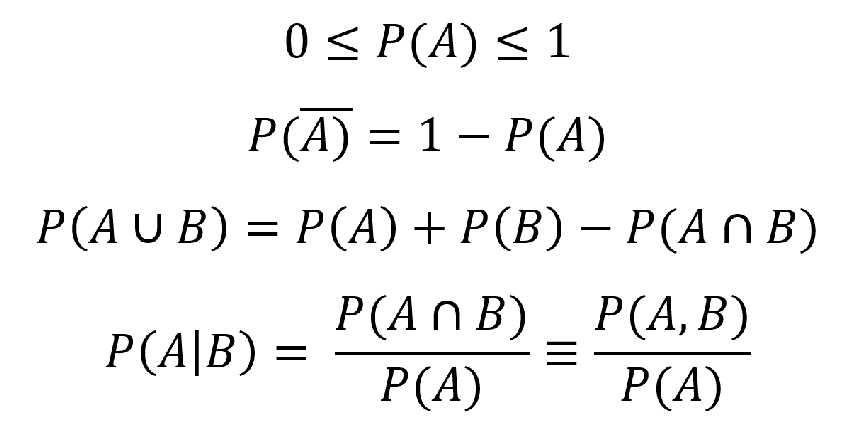
- Equations
- Independence
- Conditional Probability
- Not Causality
- Terminology
Bayesian Reasoning
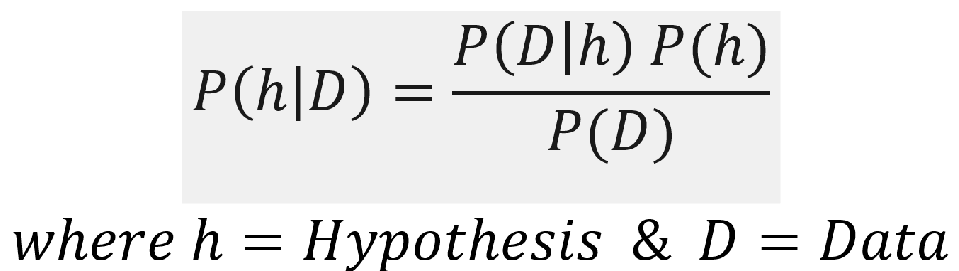
- Bayes Rule
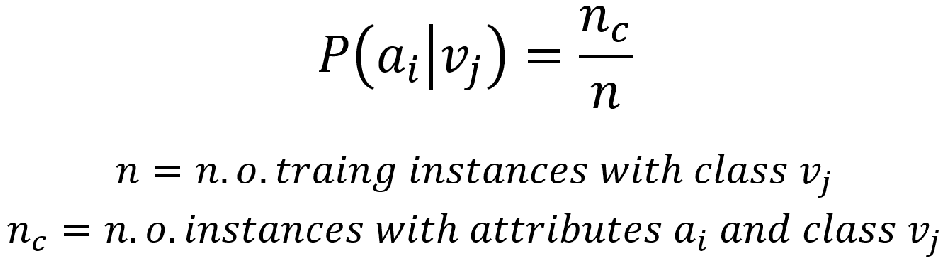
- Bayes For Classification
- To classify the unseen using Bayes Rule, we see which probability is bigger
- Example
- P (scary|pointed, vicious, furry) vs. P (friendly|pointed, vicious, furry)
- Example
- Naive Bayes
- Assume the attributes are independent
- Example
- P ( pointed, vicious, furry|scary ) = P ( pointed|scary ) * P ( vicious|scary ) * P ( furry|scary )
- Example
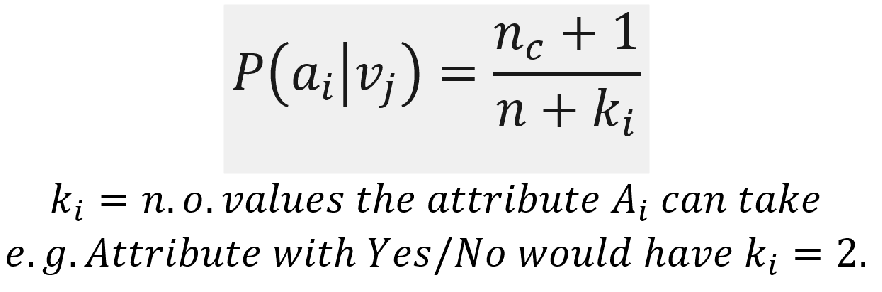
- Laplace Smoothing
- Avoids problems where probabilities of a certain classification aren't present in the sample ( = 0 )
- Discretisation
- Take a numeric random variable and divide into nominal bins
- To deal with numerical values
- Assume the attributes are independent
- Baseline classification
- Assume that the response doesn't depend on the explanatory variables.
- Assign most frequent class to any test instance
- To classify the unseen using Bayes Rule, we see which probability is bigger
- Bayesian Networks
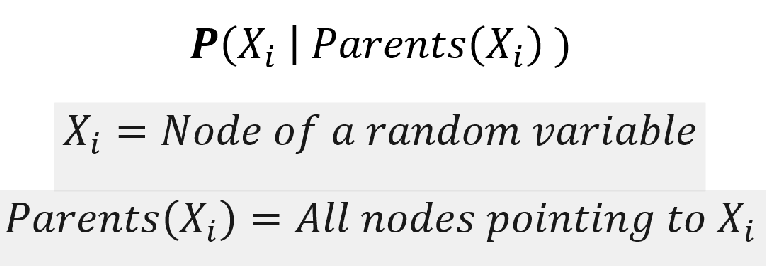
- Nodes correspond to random variables
- Each node has a conditional probability distribution
- Choose order for variables
Decision Trees
- Each path in tree represents a rule
- ID3 Algorithm
- Determine attribute which best classifies, use a root.
- Repeat for each branch
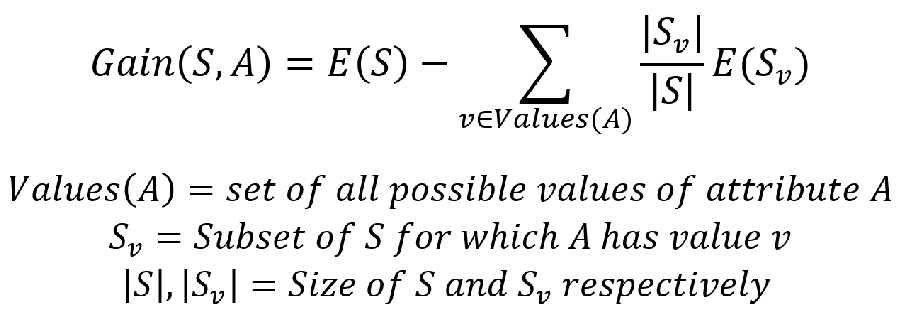
- Information gain
- Expected reduction in entropy caused by knowing the value of attribute A
- Used to determine best attribute
- Determine attribute which best classifies, use a root.
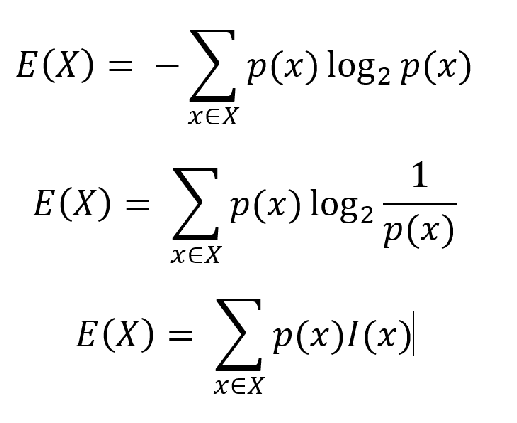
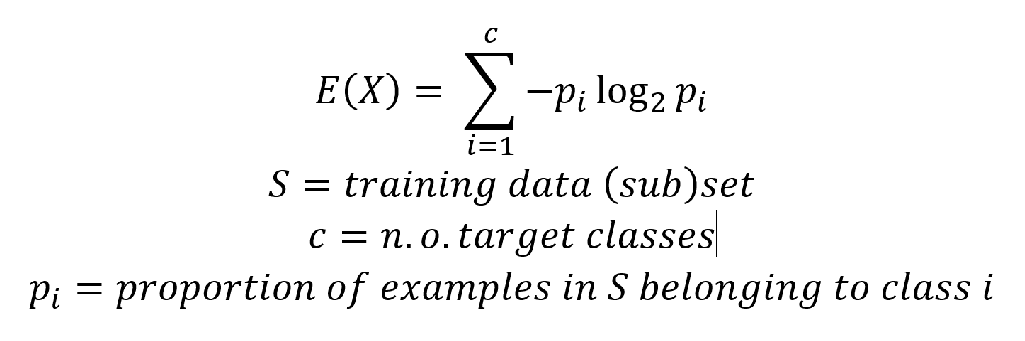
- Entropy
- Random Variable
- Response Variable
- Measures expected amount of information in a random variable
Images and files in the map


Information
- Description
- A mind map containing everything to do with uncertainty in respect to the Uni of Leeds COMP2611 Module.
- Created by
- Chris Bone
- Views
- 24
- Rating