
Mind map
Breast cancer
Map content
Breast cancer
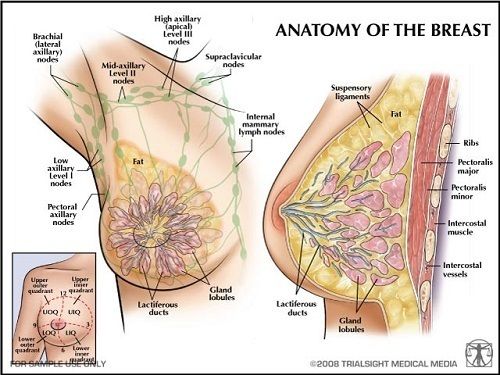
Anatomy of the breast
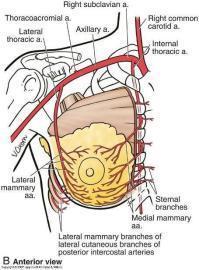
- Blood supply
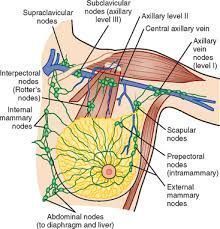
- Lymphatic drainage
Risk factors
- Early menarche
- Not breastfeeding
- Using hormone replacement therapy
- Obesity
Signs and symptoms
- Change in breast size or shape
- Nipple discharge
- Lump in the breast
- Redness, dimpling of the skin
Tumors of the breast
- Benign
- Fibroadenoma
- Small, well-defined, mobile mass, increased size and tenderness with high estrogen, women < 35 years old
- Intraductal papilloma
- Small fibroepithelial tumor within lactiferous ducts, typically beneath areola, most common cause of nipple discharge
- Phyllodes tumor
- Large mass of connective tissue and cysts with “leaf-like” lobulations, most common in 5th decade
- Fibroadenoma
- Malignant
- Non-invasive
- DCIS
- Fills ductal lumen (neoplastic cells in duct; engorged blood vessel). Arises from ductal atypia. Often seen early as microcalcifications on mammography
- Cribriform type
- Comedo type
- Central necrosis
- Fills ductal lumen (neoplastic cells in duct; engorged blood vessel). Arises from ductal atypia. Often seen early as microcalcifications on mammography
- LCIS
- Proliferation of cells in lobules, Discohesive growth, round cells clumped together
- Paget's disease
- Results from underlying DCIS or invasive breast cancer. Eczematous patches on nipple . Paget cells = intraepithelial adenocarcinoma cells.
- DCIS
- Invasive
- Invasive ductal carcinoma
- Firm, fibrous, “rock-hard” mass with sharp margins and small, glandular, duct-like cells. Tumor can deform suspensory ligaments. Classic morphology: “stellate” infiltration
- Invasive lobular carcinoma
- Orderly row of cells (“single file”), due to loss of E-cadherin expression. Often bilateral with multiple lesions in the same location.
- Medullary carcinoma
- Fleshy, cellular, lymphocytic infiltrate, good prognosis
- Inflammatory breast cancer
- Dermal lymphatic invasion by breast carcinoma. Peau d’orange (skin texture resembles orange peel due to edema leading to tightening of Cooper’s suspensory ligament)
- Invasive ductal carcinoma
- Non-invasive
- Benign
Physical examination
- Look for symmetry, irregular lumps, change in shape and size, tenderness, discharge
Investigations
- FNA biopsy
- very thin, hollow needle attached to a syringe used to aspirate tissue from suspicious area
- Contraindications
- coagulopathy or platelet disorder
- FNA biopsy
Treatment and management
- Surgery
- chemotherapy
- Radiation
Images and files in the map
Information
- Description
- Mind Map on Breast cancer, created by Fatima Alkhateeb on 24/02/2019.
- Created by
- Fatima Alkhateeb
- Views
- 73
- Rating