
Mind map
Adaptations of a Kangaroo
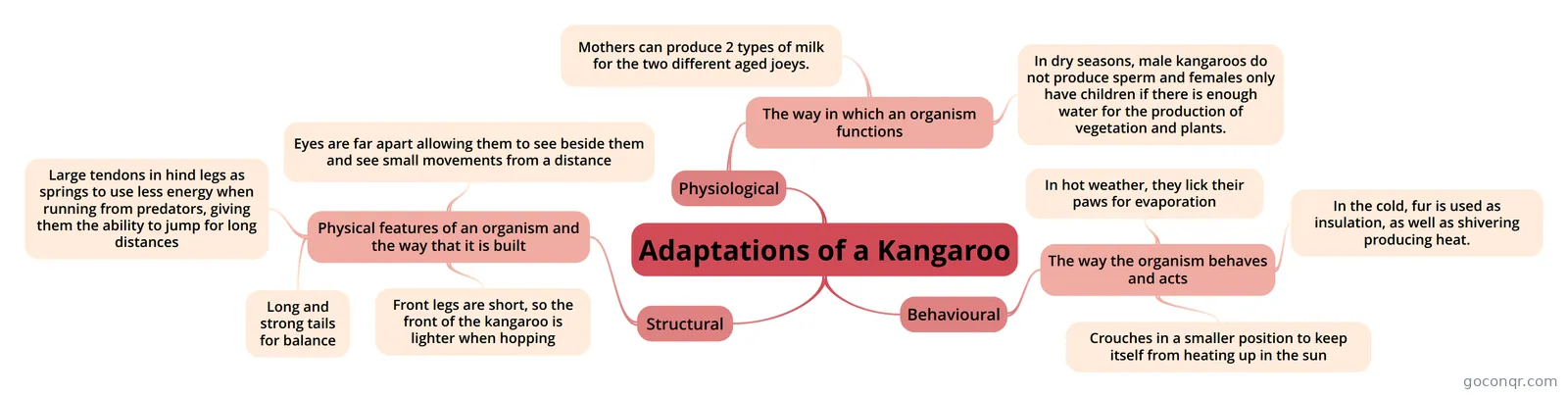
Mind map: adaptations of a kangaroo
Map content
Adaptations of a Kangaroo
Structural
- Physical features of an organism and the way that it is built
- Eyes are far apart allowing them to see beside them and see small movements from a distance
- Large tendons in hind legs as springs to use less energy when running from predators, giving them the ability to jump for long distances
- Front legs are short, so the front of the kangaroo is lighter when hopping
- Long and strong tails for balance
- Physical features of an organism and the way that it is built
Behavioural
- The way the organism behaves and acts
- Crouches in a smaller position to keep itself from heating up in the sun
- In hot weather, they lick their paws for evaporation
- In the cold, fur is used as insulation, as well as shivering producing heat.
- The way the organism behaves and acts
Physiological
- The way in which an organism functions
- Mothers can produce 2 types of milk for the two different aged joeys.
- In dry seasons, male kangaroos do not produce sperm and females only have children if there is enough water for the production of vegetation and plants.
- The way in which an organism functions