
Mind map
Intrapersonal/Interpersonal
Map content
Intrapersonal/Interpersonal
INTRAPERSONAL
- SELF CONCEPT
- self opinion
- How others see us
- qualities & abilities compare with others
- match up our personal self concept with a sense of an ideal self
- Influenced by Self Image & Self Esteem
- Developing
- Reflected Appraisal Theory
- Considers development of self-concept based on feedback from (significant) others
- Social Comparison Theory
- Self-concept shaped by chosen reference groups or individuals, to compare our performance against
- Reflected Appraisal Theory
- Self awareness
- Personal Branding
- Celebrity
- Business
- Politics
- HOW?
- 1. Review the brand: list the key words or phrases people use to describe you
- 2. Engage with social media
- 3. Keep in touch with former employers
- 4. Make use of recruitment consultants
- 5. Network.
- 6. Consider your self presentation strategies
- BIG 5 PERSONALITY TRAITS
- Extroverted Vs introverted
- Agreeable Vs antagonistic
- Neurotic vs stable
- Conscientiousness Vs undirected
- Open Vs not open
- LOCUS OF CONTROL
- Internal Locus
- See themselves as having some control over what happens to them
- Assertive, satisfied with their lot in life
- External Locus
- What happens to them is beyond their control
- Perceive themselves as powerless, dissatisfied with their lot in life
- Internal Locus
- COMMUNICATION STYLES
- Dominant
- Controlling
- Assertive
- Competitive
- Self assured
- Enthusiastic
- Businesslike
- Dramatic
- Manipulative
- Animated
- Dominant
- SELF CONCEPT
INTERPERSONAL
- Face-to-face & mediated
- multi-contextual
- Establishing & maintaining relationships
- Networking in & outside
- The ability to communicate in a personally effective & socially appropriate manner
- CLIMATE
- the “social tone” or the way people feel
- Trust - key factor
- Positive
- CONFIRMING/AFFIRMING
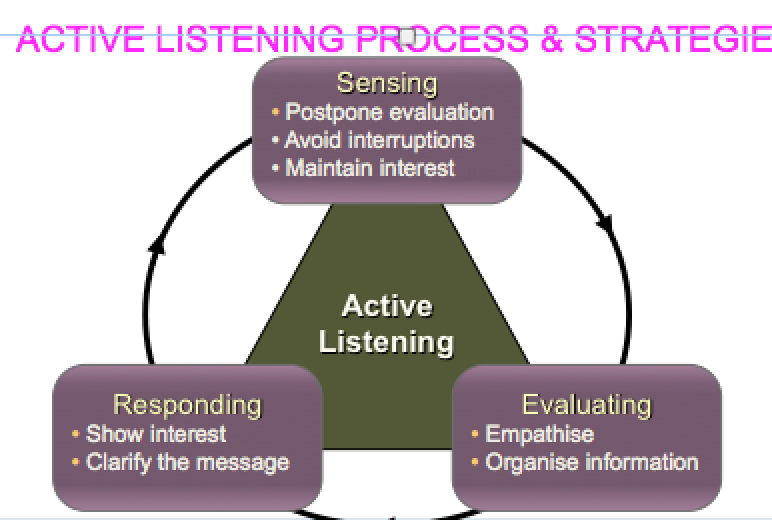
- Actively listening, paying attention, asking questions, empathy, self disclosure
- CONFIRMING/AFFIRMING
- Negative
- DISCONFIRMING
- Argumentativeness, bullying, uncaring, aggression
- DISCONFIRMING
- Schwartz’s Values Model
- Openness to change – motivation to pursue innovative ways
- Conservation – motivation to preserve the status quo
- Self-enhancement – motivated by self-interest
- Self-transcendence – motivation to promote welfare of others and nature
- ROKEACH’S VALUES MODEL
- Terminal
- Desirable end-states of existence; the goals that a person would like to achieve during his or her lifetime
- Instrumental
- Preferable modes of behavior or means of achieving one’s terminal values
- Terminal
- THEORIES
- INFERENCE
- People draw conclusions or make inferences about others on the basis of unconscious and sometimes past stereotyping experience
- Identification Rules – judgement of people is based on particular characteristics: age, nationality, race, gender
- Association Rules – associate above characteristics with other characteristics: intelligence = success
- IMMEDIACY
- Individuals are more attracted to those living close & share similar values & beliefs
- SOCIAL EXCHANGE
- Evaluating relationships by taking into account a ratio of their rewards to their costs
- status benefits, self esteem, happiness, satisfaction
- Relationships that cost more are likely to dissipate over time
- Evaluating relationships by taking into account a ratio of their rewards to their costs
- UNCERTAINTY REDUCTION
- Primary concern - reduce uncertainty
- An attempt to predict and explain the future of a relationship
- As the ability to predict relationship outcomes decreases, uncertainty increases
- COMMUNICATION ACCOMMODATION
- The ability to adjust, modify or regulate one’s behaviour in response to another
- multiple levels & styles of communication
- Usually done unconsciously
- Inappropriate or insufficient adjustment can result in communication breakdown
- ROLE THEORY
- Each with a set of expected behaviours and attitudes
- People have more than one role at any given time.
- IMPRESSION FORMATION
- We develop evaluations of others from limited, external information
- Partly based on the stereotypes the perceiver holds
- Often initially based on outwards appearance cues
- Initial impressions form base-line comparison for subsequent impressions
- INFERENCE
- ASSERTIVENESS
- 1. You win - I win
- Expressing in honest, direct, non-destructive way
- Standing up for your rights while respecting others
- Emotionally honest, direct & expressive
- 1. You win - I win
- NON ASSERTIVE
- 3.You win – I lose
- Avoid expressing needs, ideas, emotions
- Avoid ‘unpleasant’ situations
- Emotionally dishonest, inhibited & self denying
- 3.You win – I lose
- AGGRESSIVE
- 2. I win – you lose
- intent to hurt, dominate, humiliate
- Self-defeating & defensive
- 2. I win – you lose
- LISTENING STYLES
- People-oriented listening - focus on areas of common interests, taking into account the moods and emotions of others (women)
- Action-oriented listening - prefer to receive concise, organised and relevant information, presented in a logical and accurate way
- Content-linked listening - attracted to complex, detailed and challenging information, and tend to enjoy thinking deeply about things.
- Time-focused listening - conscious of time, preferring to place time limits on discussions with others, tending to interrupt if others are taking too long to get to the point
EMPATHY
- The capacity to participate in the feelings of others
- When appropriate, use your own self disclosures to communicate your understanding (beware platitudes)
- engaged in moral judgments
- Moral dilemmas involve potential victims
- Psychopaths can be both charming & completely without remorse
SELF DISCLOSURE
- More likely to occur in positive communication climates
- Extent of self disclosure depends , self image, trust & social context
- Sharing personal thoughts & feelings
- Organisational peers
- INFORMATIONAL PEERS
- Acquaintances who dont know one another very well
- COLLEGIAL PEERS
- Work mates who interact regularly & are more than acquaintances but may not share intimate details
- SPECIAL PEERS
- Good friends who would remain so even if they no longer worked together
- INFORMATIONAL PEERS
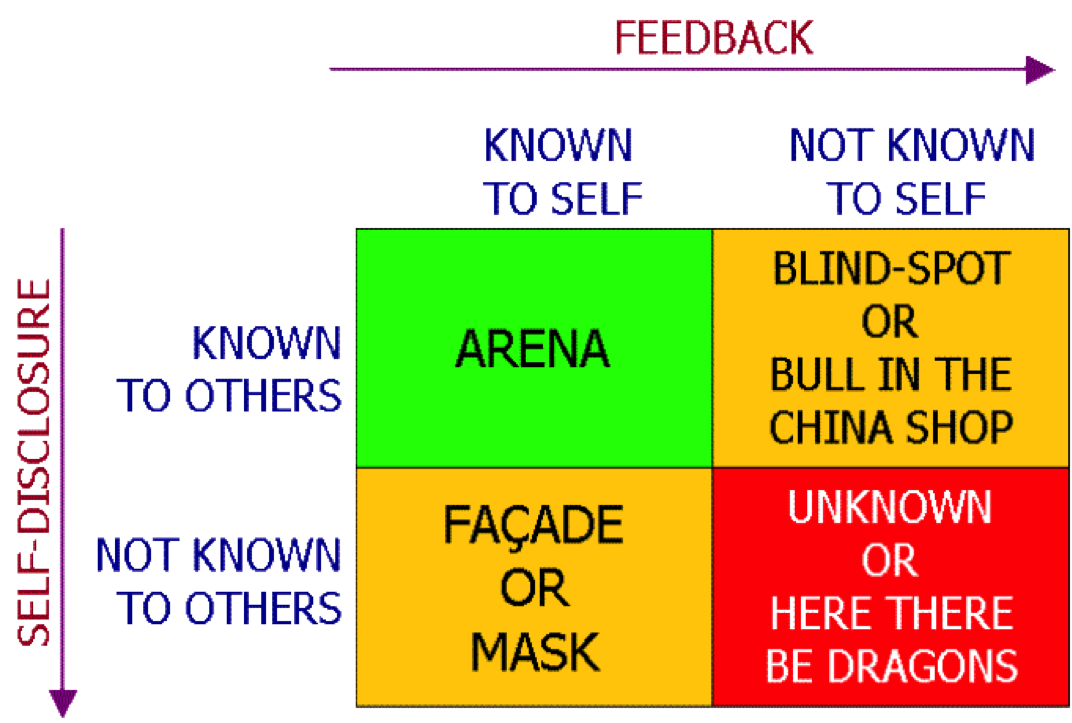
- JOHARI WINDOW
- OPEN/ARENA - known to u & others
- Blind self- known only to others
- HIDDEN/FACADE - known only to you
- UNKNOWN SELF - unknown to you & others
NETWORK THEORY
- social structures created by communication between individuals & groups
- CONNECTEDNESS – there are relatively stable pathways of communication among individuals & groups
FRAMING & REFRAMING
- FRAMING
- A point of view or perception in an interaction – the way we package a message
- Consider context
- REFRAMING
- A set of techniques used to create new perspectives on issues and eliminate counterproductive toxic language
- Create new and neutral perspectives on problems
- Shift attention away from positions and towards interests
- Shift attention away from individual and mutually exclusive goals and towards superordinate or shared goals
- FRAMING
Images and files in the map
Information
- Description
- Mind Map on Intrapersonal/Interpersonal, created by Marissa Mai on 29/01/2015.
- Created by
- Marissa Mai
- Views
- 1
- Rating