
Mind map
Malaria
Map content
Malaria
What is Malaria?
- mosquito borne infectious disease
- only females feed on blood
- larvae require still, stagnant water
- caused by the parasitic protozoan Plasmodium
- 300-500 million cases per year in world
- been around for 10,000yrs
- mosquito borne infectious disease
Life Cycle
- shizogony = division of nuclei into thousands
- no cytoplasm division
- cell membrane then develops
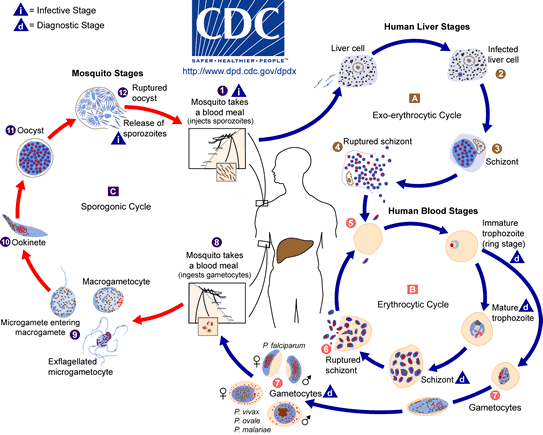
- (1) During a blood meal, a malaria-infected female Anopheles mosquito inoculates sporozoites into the human host
- (2) Sporozoites infect liver cells
- (3) Maturation into Shizonts
- shizogony
- (4) Shizonts ruptures to release merozoites
- Sporozoites > Shizonts > Merozoites > Trophozoites (Ring Stage) > Asexual Replication > Gametocytes > Zygote > Oocyst > Sporozoites
- (5) Merozoites infect RBC
- (6) Develop into (ring stage) Trophozoites
- asexual replication within erythrocytes causes maturation into shizonts again which rupture to release more merozoites
- (7) Some parasites differentiate into gametocytes
- (8) Another female mosquito comes along, takes blood meal while ingesting gametocytes
- sporogonic cycle within mosquito
- eventually producing sporozoites and infecting new host
- sporogonic cycle within mosquito
- shizogony = division of nuclei into thousands
Malarial Fever
- caused by haemozoin
- disposal product formed from digestion of blood
- known as malarial pigment
- attractive target for drug development
- difficult due to antigenic variation
- parasites digest haemoglobin to release free haem
- free haem is toxic so it is converted to insoluble crystalline form - haemozoin
- when RBC's rupture, haemozoin leaks and causes fever of host
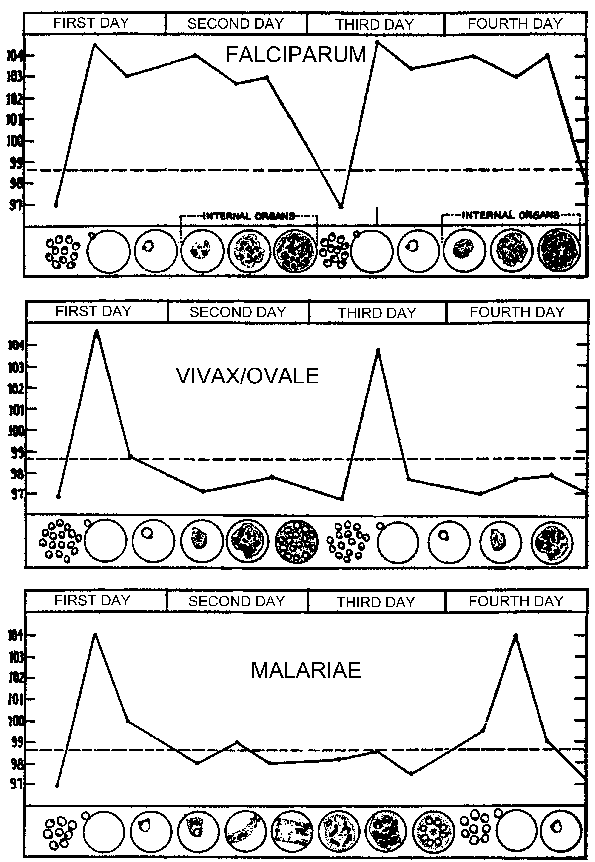
- fever pattern corresponds to erythrocyte rupture and merozoite invasion
- caused by haemozoin
Different Species
- Plasmodium Vivax
- same as ovale
- Plasmodium Ovale
- benign tertian - peaks every 48 hours
- Plasmodium Falciparum
- malignant tertian - peaks every 48 hours
- Plasmodium Malariae
- benign quartan malaira - peaks every 72 hours
- Plasmodium Vivax
Antigenic Variation and Sequestration
- expression of variant antigens on surface of infected RBCs
- immune evasion strategy
- no mutation required
- rate of change around 1-2% per division
- 40-50 variant genes per clone of parasite
- e.g. VAR genes
- responsible for encoding PfEMP-1 family of proteins
- inserted into surface of RBC
- also allow for sequestration in brain by adhering to endothelial cells of capillaries
- in P.falciparum
- responsible for encoding PfEMP-1 family of proteins
- sequestration = adherence of infected erythrocytes containing late developmental stages of the parasite (trophozoites) to the endothelium of capillaries and venules
- expression of variant antigens on surface of infected RBCs
Genetic Resistance
- mutations in haemoglobin genes (haemoglobinopathies)..
- Thalassaemia a & b
- 'sea blood'
- sickle cell anaemia
- Thalassaemia a & b
- Duffy -ve
- antigen located on RBC which can function as the receptor for plasm. parasite
- allows parasite entry to cell
- if duffy negative, parasite cannot infect RBC
- allows parasite entry to cell
- antigen located on RBC which can function as the receptor for plasm. parasite
- certain HLA alleles (MHC)
- encode proteins involved in antigen presentation
- Glucose-6-phosphate Dehydrogenase Deficiency
- G6PD is an enzyme involved with glucose production in RBC
- mutations in haemoglobin genes (haemoglobinopathies)..
Malaria + the Placenta
- infected RBC can sequester in placenta aswell as in brain
- causes still birth
- ultrasound scans show diameter of foetus head is signif. smaller with malaria infection
- if infection is well treated effect is seen to be resolved by birth
- infected RBC can sequester in placenta aswell as in brain
Treatments + Prevention
- Vector Control
- less mosquitos around to transmit
- 'flowerpot inspectors'
- bed nets
- prevent biting
- covered in insecticides
- possible vaccines
- prophylactic drugs
- insanity?
- anti-malarial drugs
- quinine (cinchona tree bark in peru)
- chloroquinine
- artemesin (chinese herb)
- kills ring stage
- predates quinine
- Possible P. falciparum vaccination?
- this species relies on single basign receptor on surface of RBC to invade cell and does so by attaching a RHS protein to the receptor
- protein ligand is not polymorphic, vaccine containing RHS protein antibody?
- this species relies on single basign receptor on surface of RBC to invade cell and does so by attaching a RHS protein to the receptor
- Vector Control
Images and files in the map
Information
- Description
- BSc Infection & Immunity - 2nd year Mind Map on Malaria, created by Lucy MacDonald on 26/04/2015.
- Created by
- Lucy MacDonald
- Views
- 28
- Rating