
323995
Description

Mind Map by jadepalmer98, updated more than 1 year ago

|
Created by jadepalmer98
about 12 years ago
|
|
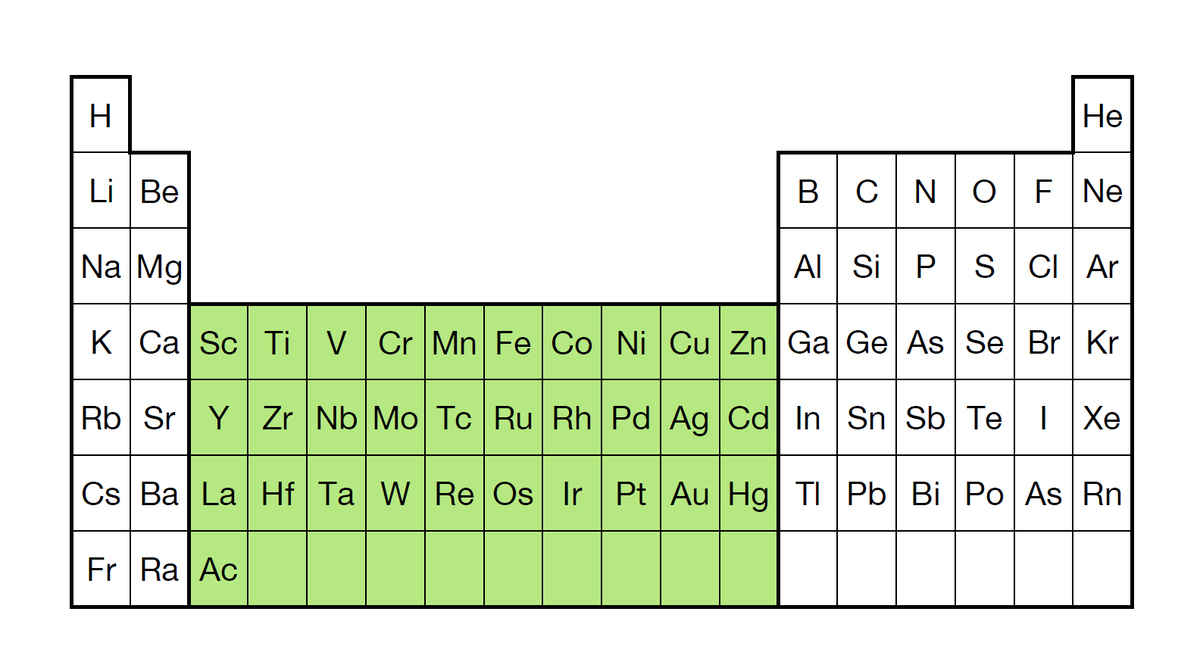
Transition elements
- Properties
- Good conductors of heat and
electricity
- Very dense, strong and shiny
- Much less reactive than
group 1 metals - don't
react with water or oxygen
- Denser, stronger and harder than group 1 metals
- Higher melting point (except for mercury)
- Higher melting point (except for mercury)
- Good conductors of heat and
electricity
- Often have more than one ion,
eg Fe2+, Fe3+
- Usually form different coloured compounds too
- Fe2+
- Fe3+
- Fe2+
- Usually form different coloured compounds too
- Compounds are very colourful
- Colourful due to the transition metal they contain, eg...
- Potassium chromate(VI)
- Potassium manganate(VII)
- Copper (II) sulphate
- Potassium chromate(VI)
- The colour of peoples hair and colours in
gemstones - blue sapphires and green emeralds -
and colours in pottery glazes are all due to
transition metals
- Weathered copper is green - statue of liberty
- Weathered copper is green - statue of liberty
- Colourful due to the transition metal they contain, eg...
- Transition metals and their
compounds all make good catalysts
- Iron is the catalyst used in the Haber
process for making ammonia
- Manganese(IV) oxide is a good catalyst for the
decomposition of hydrogen peroxide
- Nickel is useful for turning oils into fats for making
margarine
- Iron is the catalyst used in the Haber
process for making ammonia
- Their properties are due to the way
their electron shells fill
- In an atom, energy levels get closer together as they
get further from the nucleus until they overlap
- First happens between energy levels
3 & 4 - affects the way the electron
shells fill
- First happens between energy levels
3 & 4 - affects the way the electron
shells fill
- Potassium has 19 electrons - but the 19th goes into a
4th energy level, not the third - 2,8,8,1, same as calcium
- The next ten elements (transition metals) but their
electrons into the overlapping 3rd energy level until its
full
- In an atom, energy levels get closer together as they
get further from the nucleus until they overlap
Media attachments

Want to create your own Mind Maps for free with GoConqr? Learn more.