
Mind map
Gram Negative Bacteria
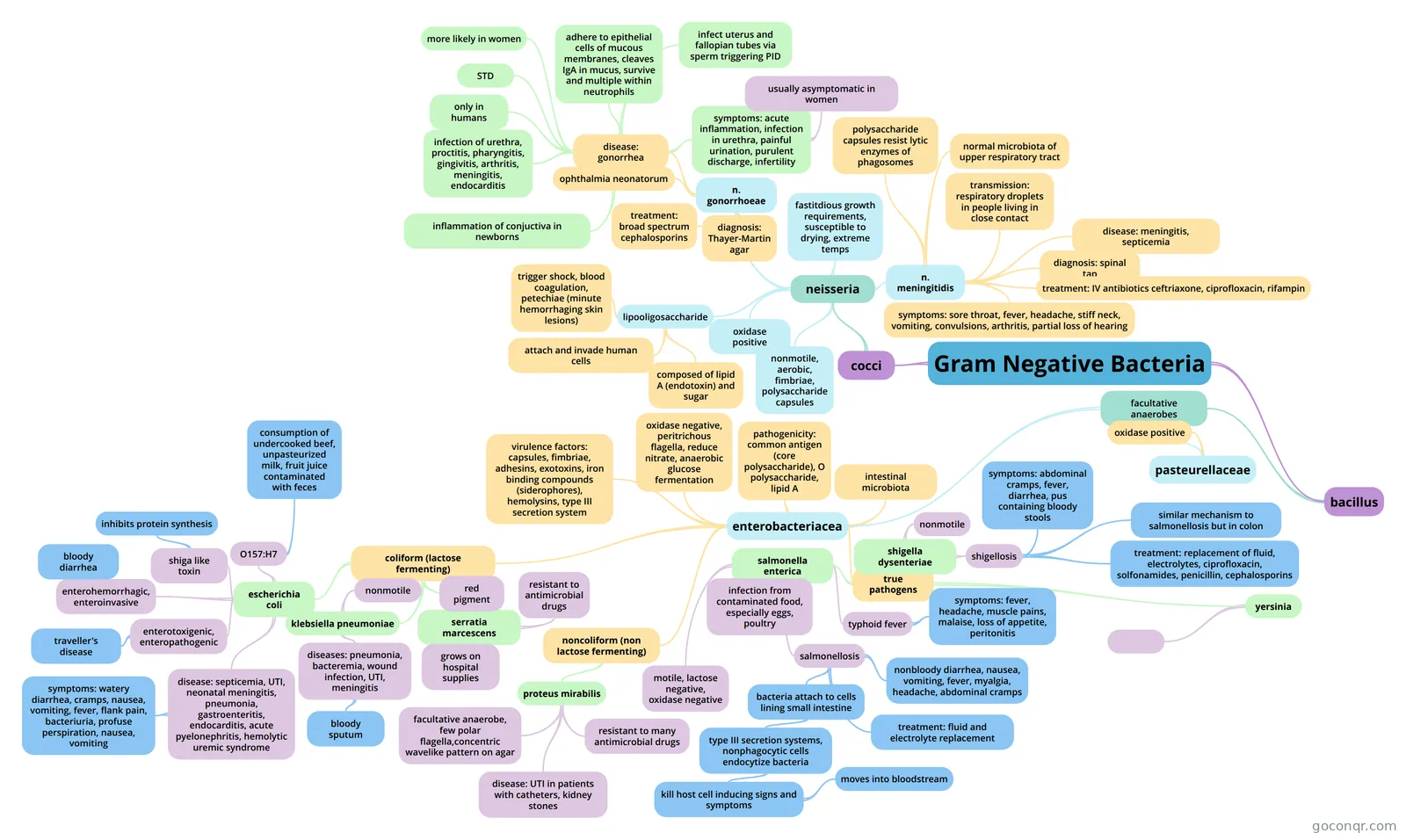
Mind map: Gram negative bacteria
Map content
Gram Negative Bacteria
cocci
- neisseria
- nonmotile, aerobic, fimbriae, polysaccharide capsules
- oxidase positive
- lipooligosaccharide
- composed of lipid A (endotoxin) and sugar
- attach and invade human cells
- trigger shock, blood coagulation, petechiae (minute hemorrhaging skin lesions)
- fastitdious growth requirements, susceptible to drying, extreme temps
- n. gonorrhoeae
- disease: gonorrhea
- only in humans
- STD
- more likely in women
- adhere to epithelial cells of mucous membranes, cleaves IgA in mucus, survive and multiple within neutrophils
- symptoms: acute inflammation, infection in urethra, painful urination, purulent discharge, infertility
- usually asymptomatic in women
- infect uterus and fallopian tubes via sperm triggering PID
- infection of urethra, proctitis, pharyngitis, gingivitis, arthritis, meningitis, endocarditis
- ophthalmia neonatorum
- inflammation of conjuctiva in newborns
- treatment: broad spectrum cephalosporins
- diagnosis: Thayer-Martin agar
- disease: gonorrhea
- n. meningitidis
- polysaccharide capsules resist lytic enzymes of phagosomes
- normal microbiota of upper respiratory tract
- transmission: respiratory droplets in people living in close contact
- symptoms: sore throat, fever, headache, stiff neck, vomiting, convulsions, arthritis, partial loss of hearing
- disease: meningitis, septicemia
- diagnosis: spinal tap
- treatment: IV antibiotics ceftriaxone, ciprofloxacin, rifampin
- neisseria
bacillus
- facultative anaerobes
- enterobacteriacea
- intestinal microbiota
- oxidase negative, peritrichous flagella, reduce nitrate, anaerobic glucose fermentation
- pathogenicity: common antigen (core polysaccharide), O polysaccharide, lipid A
- virulence factors: capsules, fimbriae, adhesins, exotoxins, iron binding compounds (siderophores), hemolysins, type III secretion system
- coliform (lactose fermenting)
- escherichia coli
- disease: septicemia, UTI, neonatal meningitis, pneumonia, gastroenteritis, endocarditis, acute pyelonephritis, hemolytic uremic syndrome
- symptoms: watery diarrhea, cramps, nausea, vomiting, fever, flank pain, bacteriuria, profuse perspiration, nausea, vomiting
- O157:H7
- consumption of undercooked beef, unpasteurized milk, fruit juice contaminated with feces
- shiga like toxin
- inhibits protein synthesis
- enterotoxigenic, enteropathogenic
- traveller's disease
- enterohemorrhagic, enteroinvasive
- bloody diarrhea
- disease: septicemia, UTI, neonatal meningitis, pneumonia, gastroenteritis, endocarditis, acute pyelonephritis, hemolytic uremic syndrome
- klebsiella pneumoniae
- nonmotile
- diseases: pneumonia, bacteremia, wound infection, UTI, meningitis
- bloody sputum
- serratia marcescens
- red pigment
- grows on hospital supplies
- resistant to antimicrobial drugs
- escherichia coli
- noncoliform (non lactose fermenting)
- proteus mirabilis
- facultative anaerobe, few polar flagella,concentric wavelike pattern on agar
- disease: UTI in patients with catheters, kidney stones
- resistant to many antimicrobial drugs
- proteus mirabilis
- true pathogens
- salmonella enterica
- motile, lactose negative, oxidase negative
- infection from contaminated food, especially eggs, poultry
- salmonellosis
- nonbloody diarrhea, nausea, vomiting, fever, myalgia, headache, abdominal cramps
- bacteria attach to cells lining small intestine
- type III secretion systems, nonphagocytic cells endocytize bacteria
- kill host cell inducing signs and symptoms
- moves into bloodstream
- kill host cell inducing signs and symptoms
- type III secretion systems, nonphagocytic cells endocytize bacteria
- treatment: fluid and electrolyte replacement
- typhoid fever
- symptoms: fever, headache, muscle pains, malaise, loss of appetite, peritonitis
- shigella dysenteriae
- nonmotile
- shigellosis
- symptoms: abdominal cramps, fever, diarrhea, pus containing bloody stools
- similar mechanism to salmonellosis but in colon
- treatment: replacement of fluid, electrolytes, ciprofloxacin, solfonamides, penicillin, cephalosporins
- yersinia
- salmonella enterica
- pasteurellaceae
- oxidase positive
- enterobacteriacea
- facultative anaerobes
Information
- Description
- Mind Map on Gram Negative Bacteria, created by retm216 on 15/11/2015.
- Created by
- retm216
- Views
- 7
- Rating
More on Bacterial Classification and Morphology