
Mind map
Gas Exchange- Insects
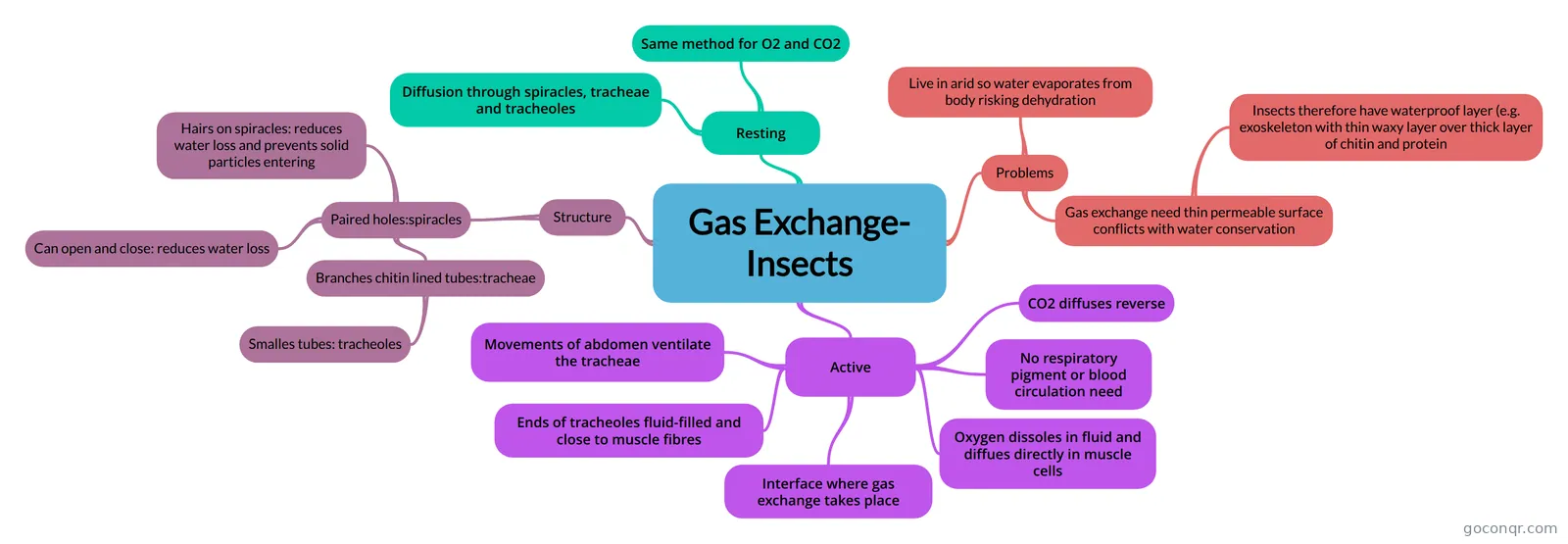
Mind map: Gas exchange in insects
Map content
Gas Exchange- Insects
Active
- Movements of abdomen ventilate the tracheae
- Ends of tracheoles fluid-filled and close to muscle fibres
- Interface where gas exchange takes place
- Oxygen dissoles in fluid and diffues directly in muscle cells
- No respiratory pigment or blood circulation need
- CO2 diffuses reverse
Resting
- Diffusion through spiracles, tracheae and tracheoles
- Same method for O2 and CO2
Problems
- Live in arid so water evaporates from body risking dehydration
- Gas exchange need thin permeable surface conflicts with water conservation
- Insects therefore have waterproof layer (e.g. exoskeleton with thin waxy layer over thick layer of chitin and protein
Structure
- Paired holes:spiracles
- Branches chitin lined tubes:tracheae
- Smalles tubes: tracheoles
- Can open and close: reduces water loss
- Hairs on spiracles: reduces water loss and prevents solid particles entering
- Branches chitin lined tubes:tracheae
- Paired holes:spiracles
Information
- Description
- A-Level Biology (Gas Exchange) Mind Map on Gas Exchange- Insects, created by Fauzia Ali on 24/02/2016.
- Created by
- Fauzia Ali
- Views
- 36
- Rating