
518378
Description

Mind Map by sian.allison, updated more than 1 year ago

|
Created by sian.allison
almost 12 years ago
|
|
Atoms
- Atomic Structure
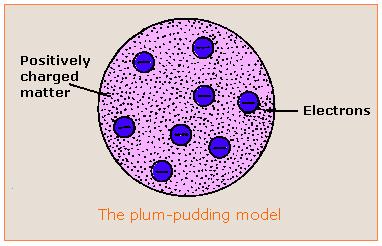
- Rutherford scattering and the demise of the plum pudding
- In 1909 Rutherford and Marsden tried firing a
beam of alpha particles at thin gold foil. They
expected that the positively charged alpha
particles would be slightly deflected by the
electrons in the plum pudding model.
- However most of the alpha particles just went
straight through but the odd one came straight
back at them. They realised this meant most of
the mass that most of the mass of the atom was
concentrated at the center in a tiny nucleus.
They also realised the nucleus must have a
large positive charge since it repelled the
positive alpha particles by large angles. It also
showed that most of an atom is just empty
space
- However most of the alpha particles just went
straight through but the odd one came straight
back at them. They realised this meant most of
the mass that most of the mass of the atom was
concentrated at the center in a tiny nucleus.
They also realised the nucleus must have a
large positive charge since it repelled the
positive alpha particles by large angles. It also
showed that most of an atom is just empty
space
- In 1909 Rutherford and Marsden tried firing a
beam of alpha particles at thin gold foil. They
expected that the positively charged alpha
particles would be slightly deflected by the
electrons in the plum pudding model.
- Rutherford and Marsden came up with the nuclear model of an atom
- The nucleus is tiny but makes up most of the mass of the
atom. It contains protons (which are positively charged) and
neutrons (which are neutral) which gives an overall positive
charge. The rest of the atom is just empty space. The
negative electrons move round the outside of the nucleus
really fast. They give the atom its overall size
- Proton mass: 1
- Neutron mass: 1
- Electron mass: 1/2000
- The nucleus is tiny but makes up most of the mass of the
atom. It contains protons (which are positively charged) and
neutrons (which are neutral) which gives an overall positive
charge. The rest of the atom is just empty space. The
negative electrons move round the outside of the nucleus
really fast. They give the atom its overall size
- Number of protons equals number of electrons
- Atoms have no overall charge
- The charge on an electron is the same size
as the charge on a proton but opposite
- This means the number of protons always
equals the number of electrons in a
neutral atom
- This means the number of protons always
equals the number of electrons in a
neutral atom
- If some electrons are added or removed the
atom becomes a charged particle called an
ion
- Atoms have no overall charge
- Rutherford scattering and the demise of the plum pudding
- Atoms and radiation
- Isotopes are different forms of the same element
- Isotopes are atoms with
the same number of
protons but a different
number of neutrons
- They have the same atomic numbers but different mass numbers
- They have the same atomic numbers but different mass numbers
- Atomic number is the number of protons + number of neutrons in an atom
- Most elements have different isotopes but
theres usually only one or two stable ones
- The other isotopes tend to be
radioactive which means they
decay into other elements and give
out radiation
- The other isotopes tend to be
radioactive which means they
decay into other elements and give
out radiation
- Isotopes are atoms with
the same number of
protons but a different
number of neutrons
- Radioactivity is a Totally random process
- Radioactive substances give
out radiation from the nuclei of
their atoms. This process is
entirely random. This means
that if you have 1000 unstable
nuclei you cant say when any
one of them is going to decay
and neither can you do
anything at all to make a decay
happen
- Radioactive substances spit out one or more of the three types of radiation
- alpha
- beta
- gamma
- alpha
- Radioactive substances give
out radiation from the nuclei of
their atoms. This process is
entirely random. This means
that if you have 1000 unstable
nuclei you cant say when any
one of them is going to decay
and neither can you do
anything at all to make a decay
happen
- Background radiation comes from many sources
- This is radiation that is present at all times
- It comes from:
- Radioactivity of naturally occurring
unstable isotopes which are all
around us in the air, food, rocks etc
- Radiation comes from space which is known
as cosmic rays. These are mostly from the
sun
- Radiation due to man-made
sources e.g. fallout from nuclear
weapons tests etc
- Radioactivity of naturally occurring
unstable isotopes which are all
around us in the air, food, rocks etc
- This is radiation that is present at all times
- Radiation dose depends on location and occupation
- Radiation dose depends on the type and
amount of radiation youve been exposed to.
The higher the radiation dose the more at risk
you are of developing cancer
- The amount of radiation youre exposed to can be affected by your location and occupation
- Certain underground rocks (e.g. granite) can cause higher levels
at the surface especially if they release radioactive radon gas
which tends to get trapped inside peoples houses
- At high altitudes (e.g. jet
planes) the background
radiation increases because of
more exposure to cosmic rays
- Underground (e.g. mines) it increases because of the rocks all around
- Nuclear industry workers and uranium miners are
typically exposed to 10 times the normal amount of
radiation. They wear protective clothing and face
masks to stop them touching or inhaling the
radioactive material and monitor their radiation
doses with special radiation badges and regular
check ups
- Radiographers work in hospitals using
ionising radiation and so have a higher risk
of radiation exposure. They wear lead
aprons and stand behind lead screens to
protect them from prolonged exposure
- Certain underground rocks (e.g. granite) can cause higher levels
at the surface especially if they release radioactive radon gas
which tends to get trapped inside peoples houses
- Radiation dose depends on the type and
amount of radiation youve been exposed to.
The higher the radiation dose the more at risk
you are of developing cancer
- Isotopes are different forms of the same element
Media attachments
Want to create your own Mind Maps for free with GoConqr? Learn more.