
5231682
Description

Mind Map by AAAAA AAAAA, updated more than 1 year ago

|
Created by AAAAA AAAAA
over 9 years ago
|
|
Aggregate Supply
- Aggregate supply is the total output produced in an
economy at a given price level over a given period of
time
- There are 2 types of
aggregate supply curves
that are important
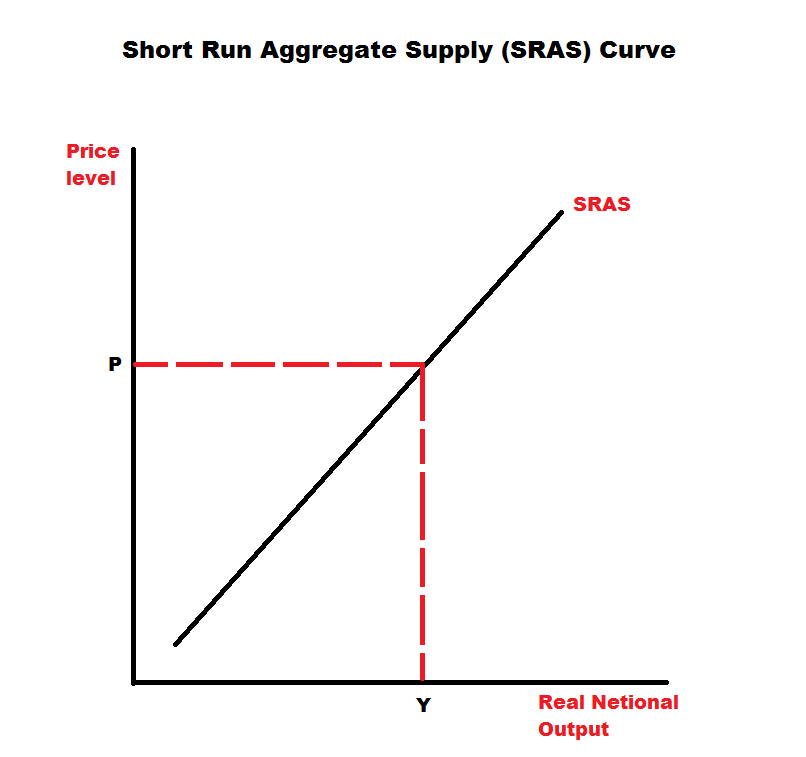
- Short Run Aggregate Supply Curve (SRAS)
- The SRAS curve sloped from left to right. They
show with an increase in the price level, there's an
increase in the amount of output firms are willing
to supply
- If the SRAS is price inelastice the
SRAS curve is more steep
upwards
- If the SRAS is price
elastic, the SRAS curve
would be less steep
- If the SRAS is price inelastice the
SRAS curve is more steep
upwards
- Changes in Costs of Production
causes the SRAS Curve to Shift
- reductions the costs of productions = SRAS
curve shift to the right e.g reduction in costs
of oil/ wage rates/taxes
- A sudden decrease in AS could be caused by
supply-side shocks, such as natural disaster or war
- A sudden decrease in AS could be caused by
supply-side shocks, such as natural disaster or war
- reductions the costs of productions = SRAS
curve shift to the right e.g reduction in costs
of oil/ wage rates/taxes
- The SRAS curve sloped from left to right. They
show with an increase in the price level, there's an
increase in the amount of output firms are willing
to supply
- Long Run Aggregate Supply Curve
- In the long run, it is assumed that an economy will move towards an
equilibrium where all resources are being used to full capacity (so the
economy is running at its full productive potential)
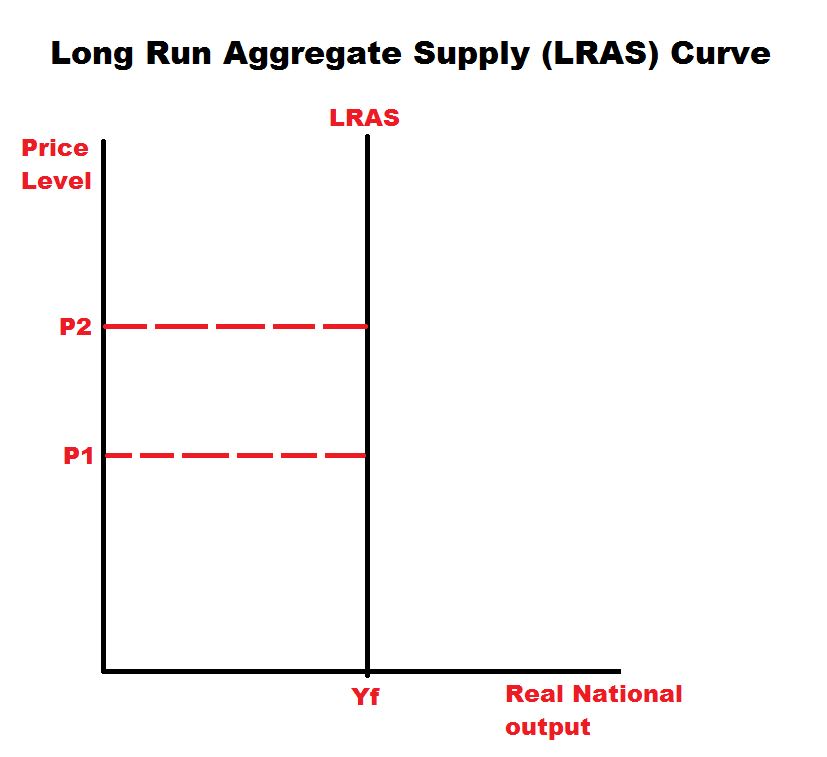
- The LRAS Curve is vertical. An increase in the price level e.g P1 to P2 won't
cause an increase in output because the economy is running at full
capacity, so it cant crease more output
- The LRAS Curve is vertical. An increase in the price level e.g P1 to P2 won't
cause an increase in output because the economy is running at full
capacity, so it cant crease more output
- Changes in factors of production cause the LRAS
curve to shift
- LRAS is determined by the factors of
production, this will affect the capacity of the
economy
- E.g investment in advancement of technology
and more efficient production will increase
maximum output
- Other examples include improvements in
education (more productive individuals),
demographic changes (skilled workers migrating
to a country), supply of new resources,
improvements in healthcare, changes to govt
regulations (reducing regulations), increased
competition, improving factor mobility
- Other examples include improvements in
education (more productive individuals),
demographic changes (skilled workers migrating
to a country), supply of new resources,
improvements in healthcare, changes to govt
regulations (reducing regulations), increased
competition, improving factor mobility
- E.g investment in advancement of technology
and more efficient production will increase
maximum output
- LRAS is determined by the factors of
production, this will affect the capacity of the
economy
- In the long run, it is assumed that an economy will move towards an
equilibrium where all resources are being used to full capacity (so the
economy is running at its full productive potential)
- Short Run Aggregate Supply Curve (SRAS)
- There are 2 types of
aggregate supply curves
that are important
- A rise in demand might cause an
"Accelerated" increase in investment
- The accelerator effect is when there's an
increase in national income (GDP) which results
in a proportionally larger rise in capital
investment spending
- Determine if investment is needed - if there's a
rise in demand, increase investment (Accelerator process)
- Likely to occur when economy is going through boom or recovery
as demand will be rapidly increasing and firms need to meet this
demand through investment
- The multiplier and accelerator work together e.g during
recovery AD will be growing, this leads to firms increasing
their level of investment - which leads to further increase
in AD.
- This is then multiplied making growth in national income
more rapid, which leads to even more "accelerated"
investment
- This is then multiplied making growth in national income
more rapid, which leads to even more "accelerated"
investment
- The multiplier and accelerator work together e.g during
recovery AD will be growing, this leads to firms increasing
their level of investment - which leads to further increase
in AD.
- Likely to occur when economy is going through boom or recovery
as demand will be rapidly increasing and firms need to meet this
demand through investment
- The accelerator effect is when there's an
increase in national income (GDP) which results
in a proportionally larger rise in capital
investment spending
Media attachments
Want to create your own Mind Maps for free with GoConqr? Learn more.