
Mind map
Romanticism: historical and philosophical context
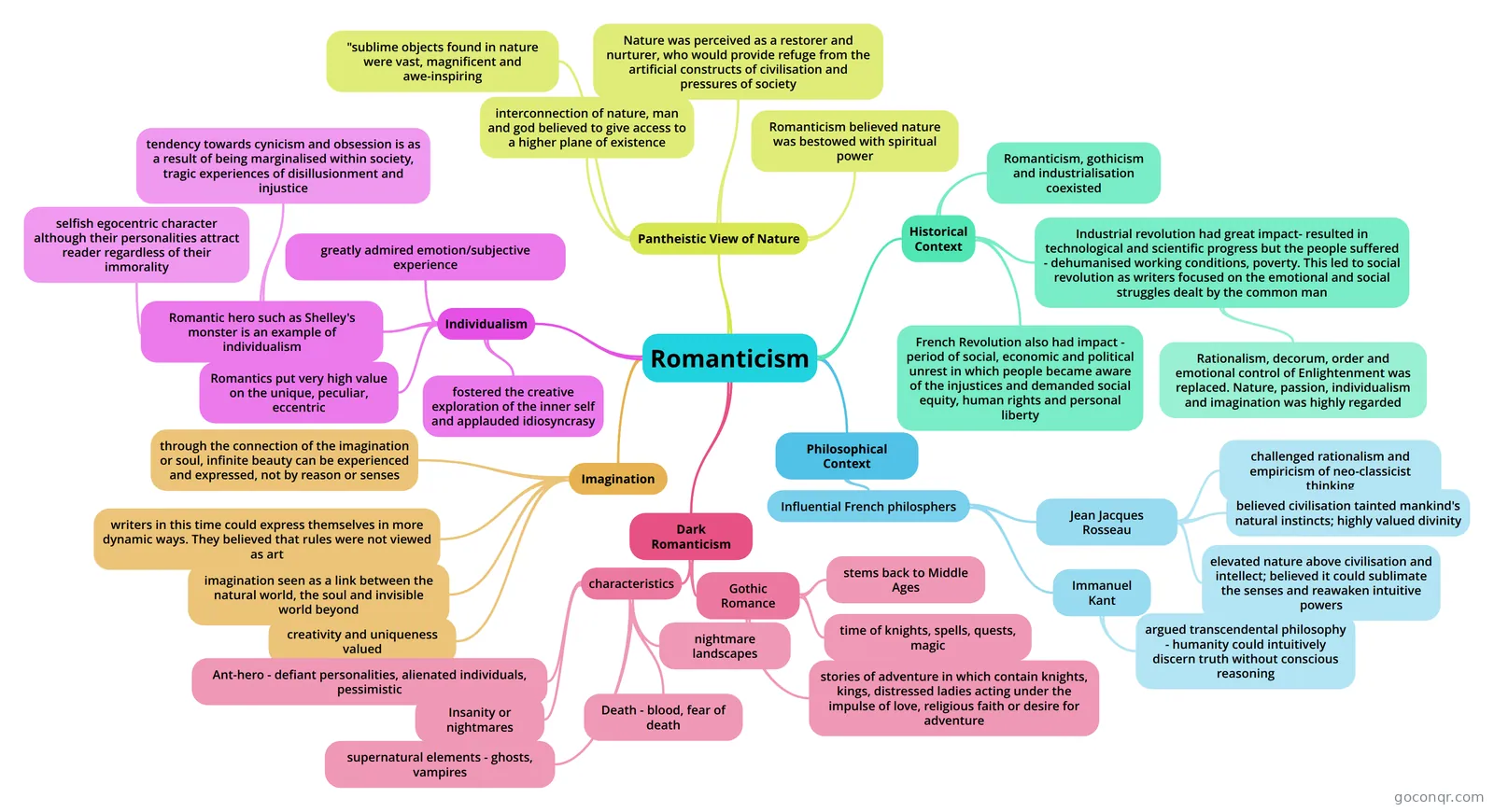
Mind map: Romanticism
Map content
Romanticism
Historical Context
- Romanticism, gothicism and industrialisation coexisted
- Industrial revolution had great impact- resulted in technological and scientific progress but the people suffered - dehumanised working conditions, poverty. This led to social revolution as writers focused on the emotional and social struggles dealt by the common man
- Rationalism, decorum, order and emotional control of Enlightenment was replaced. Nature, passion, individualism and imagination was highly regarded
- French Revolution also had impact - period of social, economic and political unrest in which people became aware of the injustices and demanded social equity, human rights and personal liberty
Philosophical Context
- Influential French philosphers
- Jean Jacques Rosseau
- challenged rationalism and empiricism of neo-classicist thinking
- believed civilisation tainted mankind's natural instincts; highly valued divinity
- elevated nature above civilisation and intellect; believed it could sublimate the senses and reawaken intuitive powers
- Immanuel Kant
- argued transcendental philosophy - humanity could intuitively discern truth without conscious reasoning
- Jean Jacques Rosseau
- Influential French philosphers
Pantheistic View of Nature
- Romanticism believed nature was bestowed with spiritual power
- Nature was perceived as a restorer and nurturer, who would provide refuge from the artificial constructs of civilisation and pressures of society
- interconnection of nature, man and god believed to give access to a higher plane of existence
- "sublime objects found in nature were vast, magnificent and awe-inspiring
Individualism
- greatly admired emotion/subjective experience
- Romantic hero such as Shelley's monster is an example of individualism
- tendency towards cynicism and obsession is as a result of being marginalised within society, tragic experiences of disillusionment and injustice
- selfish egocentric character although their personalities attract reader regardless of their immorality
- Romantics put very high value on the unique, peculiar, eccentric
- fostered the creative exploration of the inner self and applauded idiosyncrasy
Imagination
- through the connection of the imagination or soul, infinite beauty can be experienced and expressed, not by reason or senses
- writers in this time could express themselves in more dynamic ways. They believed that rules were not viewed as art
- imagination seen as a link between the natural world, the soul and invisible world beyond
- creativity and uniqueness valued
Dark Romanticism
- Gothic Romance
- stems back to Middle Ages
- time of knights, spells, quests, magic
- stories of adventure in which contain knights, kings, distressed ladies acting under the impulse of love, religious faith or desire for adventure
- characteristics
- Ant-hero - defiant personalities, alienated individuals, pessimistic
- Insanity or nightmares
- supernatural elements - ghosts, vampires
- nightmare landscapes
- Death - blood, fear of death
- Gothic Romance
Information
- Description
- Advanced English Mind Map on Untitled, created by hoorain12 on 06/02/2014.
- Created by
- hoorain12
- Views
- 9
- Tags
- Rating