
Mind map
Haemopoiesis
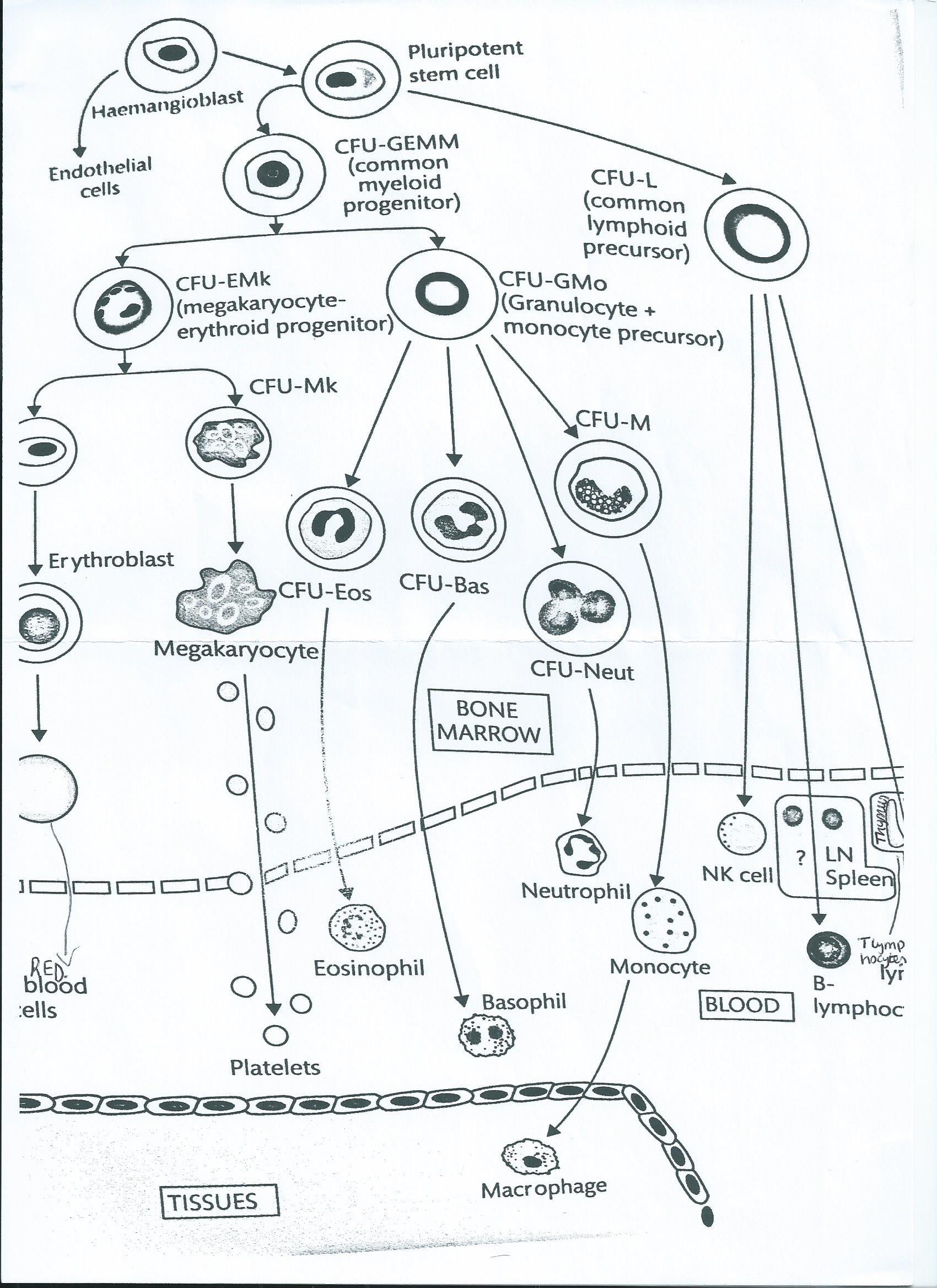
Map content
Haemopoiesis
Major components of blood= Plasma (55%), leukocytes & Platelets(<1%), Erythrocytes (45%)
- Microcytic means small
Origin of blood & development
- Blood comes from Self renewing Haematopoietic stem cells (HSC)
- HSC, Pluripotent= independent as replicate, proliferate and differentiate on its own
- Also multipotent and can self renew and differ
- HSC, Pluripotent= independent as replicate, proliferate and differentiate on its own
- Blood comes from Self renewing Haematopoietic stem cells (HSC)
Stem cells, Divide without limit, daughter cell have choice to remain stem cell or differentiate.
- Blasts= Immature and Cytes= Mature
Main site, sternum, femure and pelvis and minor site = ribs
- Taking place in bone marrow=intramedullary
- Sites vary in adult and embryo, Yolk sac, liver, spleen, bone marrow, infant bone marrow and adult vertebra rib sternum skull and pelvis
Embryonic= makes rbc and primitive Rbc to support move from embryo to foetus
- definitive erytropoiesis in aorta-gonad-mesonephros (AGM)
- Hb is gower 1, gower 2 and portland.
- Detect HSC in AGM
- As Foetus Liver makes RBC and Hb F replaces all others. after 6 months bone marrow is the site
- Move starts with granulocytes and megakaryocytes moving first followed by RBC
- definitive erytropoiesis in aorta-gonad-mesonephros (AGM)
Disease= fatty bone marrow can start to make haemopoiesisand also make long bones help with haemopoiesis
- Liver and spleen can also help by resuming the foetal haemopoietic stuff ( extramedullary haemopoisesis)
Regulation, extrinisic or intrinsic,. Extrinsic, cell to cell, ECM, cytokines. Intrinsic, genetic events, transcription factors and stage specific cell cycle regulation
- Extrinsic, Stromal cells of bone marrow incl, adipocytes, fibroblasts, osteoblasts, macrophages and endothelial cells.
- Cytokines regulate the haemopoietic growth factors (glycoprotein hormones) , regulate the proliferation and differ of progenitor cells. Stromal cells big source of growth apart from epo
- Extrinsic, Stromal cells of bone marrow incl, adipocytes, fibroblasts, osteoblasts, macrophages and endothelial cells.
Eythropoiesis, Make red cells, life span of 120 days
- Some reticulocytes in blood stream but most converted to RBC
- Erythropoietin (EPO)= growth factor, made in kidney in response to o2
- How it work, hypoxia(less o2 circulating), so kidney release EPO and that stims red bone marrow and that produces RBC and O2 levels increase
- JAK-STAT path, Epo binds receptors on stem cell and jak causes phosphorylation adn protein switches on or off and phosphorylation releases STAT, Stat binds DNA polymerase to star transcription
Granulopoiesis and monopoiesis, made from HSC (bone marrow), common myeloid progenitor cells form commited precursors cells like neutrophil, eosinophil basophil and moncytes
- Myeloblast, early sign that cell will be neutrophil or monocyte
- Neutrophilia (excess), due to bacterial infection, inflammation and steroids
- Neutropenia (low levels), Severe infection, medication or chemo
- Monocytes, enter tissue and turn into macrophages, phagocytic cells, help against viruse, parasites and infections
- activate lymphocytes, levels may go up in set leukaemias and also response to infections and inflammation
- Low levels= bone marrow injury or failure and some form of leukaemia
- activate lymphocytes, levels may go up in set leukaemias and also response to infections and inflammation
Thrombopoiesis, make platelets, Megakaryocytes made by endomitotic replication (no cell division but dna replicates and cytplasm expands)
- Polyploid cells up to 64n. Thrombopoietin (TPO) needed for platelet production
- Platelets released from mature megakaryocytes
- Low levels of platelets= Thrombocytopenia
- Platelets released from mature megakaryocytes
- Polyploid cells up to 64n. Thrombopoietin (TPO) needed for platelet production