
Mind map
Keeping food safe
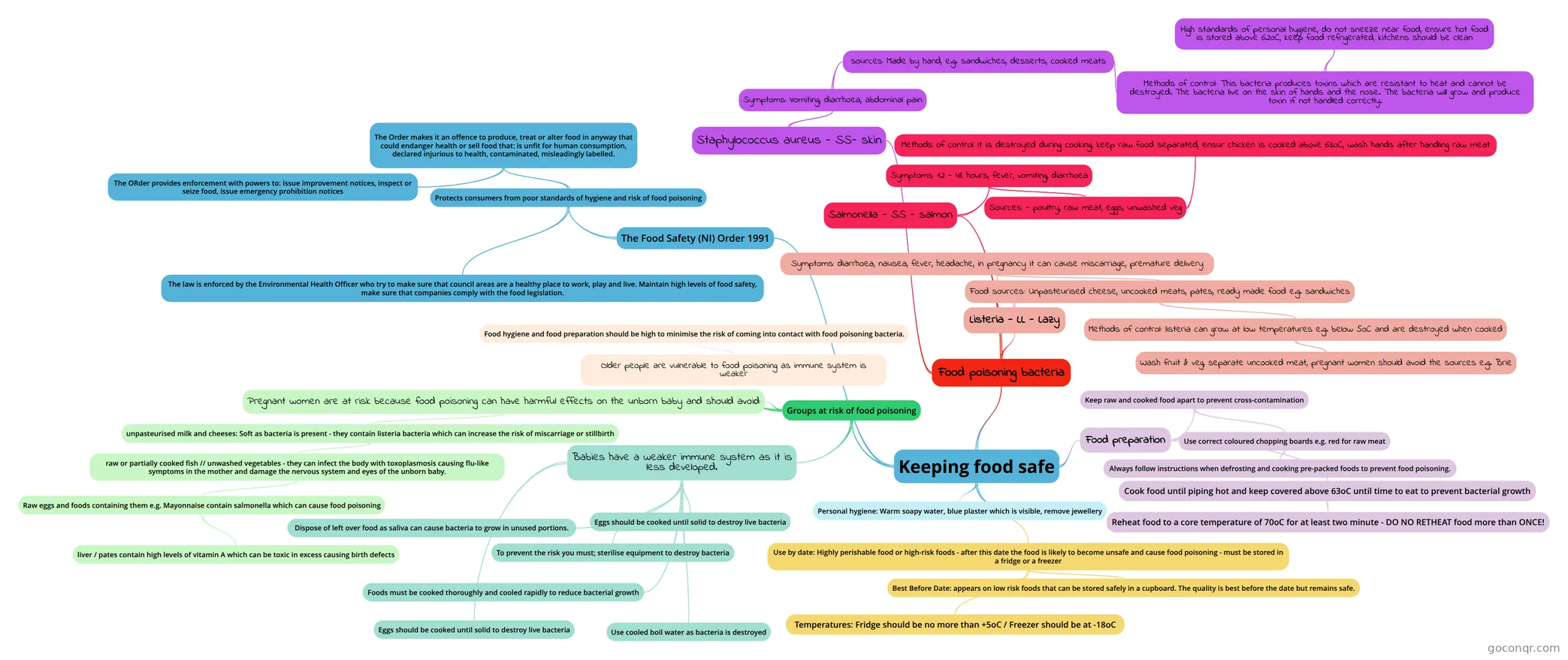
Mind map: Keeping food safe
Map content
Keeping food safe
Personal hygiene: Warm soapy water, blue plaster which is visible, remove jewellery
Use by date: Highly perishable food or high-risk foods - after this date the food is likely to become unsafe and cause food poisoning - must be stored in a fridge or a freezer
- Temperatures: Fridge should be no more than +5oC / Freezer should be at -18oC
- Best Before Date: appears on low risk foods that can be stored safely in a cupboard. The quality is best before the date but remains safe.
Food preparation
- Keep raw and cooked food apart to prevent cross-contamination
- Use correct coloured chopping boards e.g. red for raw meat
- Always follow instructions when defrosting and cooking pre-packed foods to prevent food poisoning.
- Use correct coloured chopping boards e.g. red for raw meat
- Cook food until piping hot and keep covered above 63oC until time to eat to prevent bacterial growth
- Reheat food to a core temperature of 70oC for at least two minute - DO NO RETHEAT food more than ONCE!
- Keep raw and cooked food apart to prevent cross-contamination
Groups at risk of food poisoning
- Babies have a weaker immune system as it is less developed.
- To prevent the risk you must; sterilise equipment to destroy bacteria
- Use cooled boil water as bacteria is destroyed
- Foods must be cooked thoroughly and cooled rapidly to reduce bacterial growth
- Eggs should be cooked until solid to destroy live bacteria
- Eggs should be cooked until solid to destroy live bacteria
- Dispose of left over food as saliva can cause bacteria to grow in unused portions.
- Older people are vulnerable to food poisoning as immune system is weaker
- Food hygiene and food preparation should be high to minimise the risk of coming into contact with food poisoning bacteria.
- Pregnant women are at risk because food poisoning can have harmful effects on the unborn baby and should avoid:
- unpasteurised milk and cheeses: Soft as bacteria is present - they contain listeria bacteria which can increase the risk of miscarriage or stillbirth
- raw or partially cooked fish // unwashed vegetables - they can infect the body with toxoplasmosis causing flu-like symptoms in the mother and damage the nervous system and eyes of the unborn baby.
- Raw eggs and foods containing them e.g. Mayonnaise contain salmonella which can cause food poisoning
- liver / pates contain high levels of vitamin A which can be toxic in excess causing birth defects
- Raw eggs and foods containing them e.g. Mayonnaise contain salmonella which can cause food poisoning
- raw or partially cooked fish // unwashed vegetables - they can infect the body with toxoplasmosis causing flu-like symptoms in the mother and damage the nervous system and eyes of the unborn baby.
- unpasteurised milk and cheeses: Soft as bacteria is present - they contain listeria bacteria which can increase the risk of miscarriage or stillbirth
- Babies have a weaker immune system as it is less developed.
Food poisoning bacteria
- Listeria - LL - Lazy
- Symptoms: diarrhoea, nausea, fever, headache, in pregnancy it can cause miscarriage, premature delivery
- Food sources:: Unpasteurised cheese, uncooked meats, pates, ready made food e.g. sandwiches
- Methods of control:: listeria can grow at low temperatures e.g. below 5oC and are destroyed when cooked
- Wash fruit & veg, separate uncooked meat, pregnant women should avoid the sources e.g. Brie
- Methods of control:: listeria can grow at low temperatures e.g. below 5oC and are destroyed when cooked
- Food sources:: Unpasteurised cheese, uncooked meats, pates, ready made food e.g. sandwiches
- Symptoms: diarrhoea, nausea, fever, headache, in pregnancy it can cause miscarriage, premature delivery
- Salmonella - SS - salmon
- Symptoms: 12 - 48 hours, fever, vomiting, diarrhoea
- Sources: - poultry, raw meat, eggs, unwashed veg
- Methods of control: It is destroyed during cooking, keep raw food separated, ensur chicken is cooked above 63oC, wash hands after handling raw meat
- Sources: - poultry, raw meat, eggs, unwashed veg
- Symptoms: 12 - 48 hours, fever, vomiting, diarrhoea
- Staphylococcus aureus - SS- skin
- Symptoms: Vomiting, diarrhoea, abdominal pain
- sources: Made by hand, e.g. sandwiches, desserts, cooked meats
- Methods of control:: This bacteria produces toxins which are resistant to heat and cannot be destroyed. The bacteria live on the skin of hands and the nose. The bacteria will grow and produce toxin if not handled correctly.
- High standards of personal hygiene, do not sneeze near food, ensure hot food is stored above 62oC, keep food refrigerated, kitchens should be clean
- Methods of control:: This bacteria produces toxins which are resistant to heat and cannot be destroyed. The bacteria live on the skin of hands and the nose. The bacteria will grow and produce toxin if not handled correctly.
- sources: Made by hand, e.g. sandwiches, desserts, cooked meats
- Symptoms: Vomiting, diarrhoea, abdominal pain
- Listeria - LL - Lazy
The Food Safety (NI) Order 1991
- Protects consumers from poor standards of hygiene and risk of food poisoning
- The law is enforced by the Environmental Health Officer who try to make sure that council areas are a healthy place to work, play and live. Maintain high levels of food safety, make sure that companies comply with the food legislation.
- The Order makes it an offence to produce, treat or alter food in anyway that could endanger health or sell food that: is unfit for human consumption, declared injurious to health, contaminated, misleadingly labelled.
- The ORder provides enforcement with powers to: issue improvement notices, inspect or seize food, issue emergency prohibition notices
- Protects consumers from poor standards of hygiene and risk of food poisoning
Information
- Description
- Keeping food safe: Home Economics
- Created by
- Mrs Hegarty
- Views
- 11
- Rating
More on Food Safety and Hygiene