
Mind map
Peter Singer: Morality, Affluence, and Famine
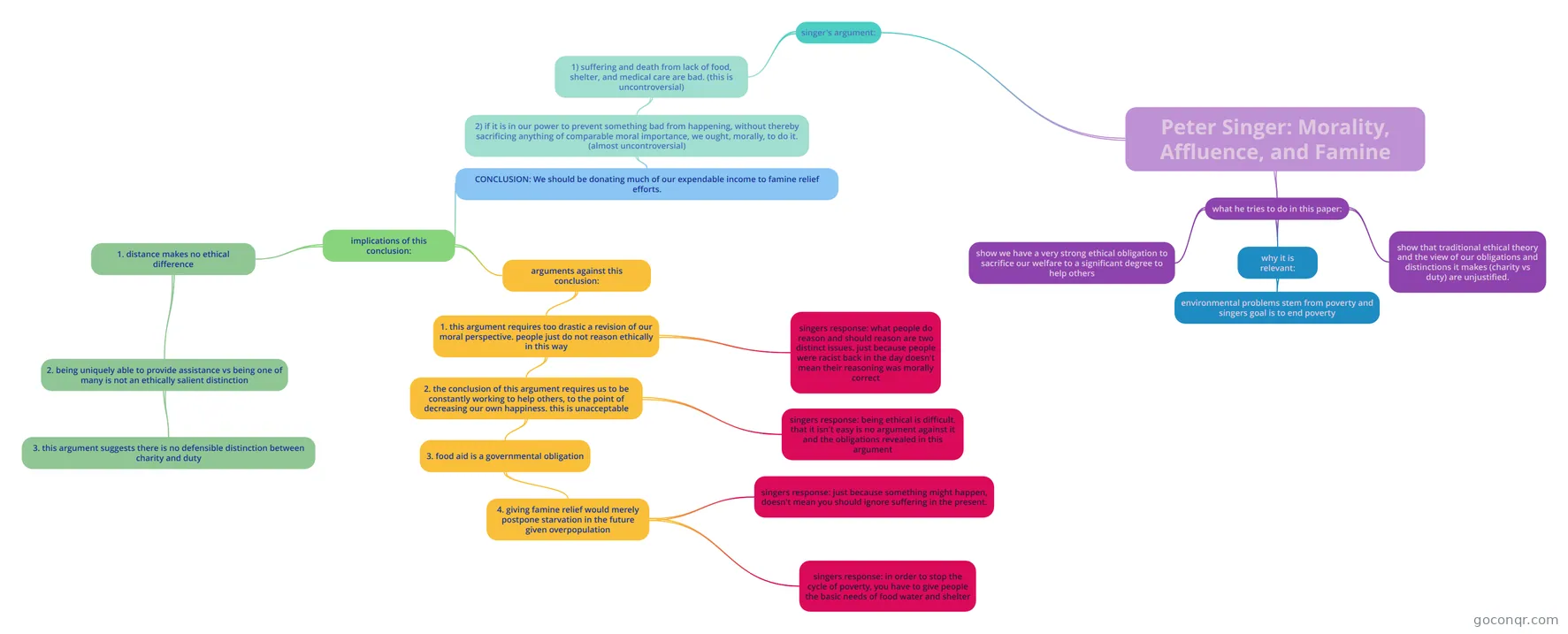
Mind map: Peter Singer: morality, affluence, and famine
Map content
Peter Singer: Morality, Affluence, and Famine
what he tries to do in this paper:
- show we have a very strong ethical obligation to sacrifice our welfare to a significant degree to help others
- show that traditional ethical theory and the view of our obligations and distinctions it makes (charity vs duty) are unjustified.
- why it is relevant:
- environmental problems stem from poverty and singers goal is to end poverty
singer's argument:
- 1) suffering and death from lack of food, shelter, and medical care are bad. (this is uncontroversial)
- 2) if it is in our power to prevent something bad from happening, without thereby sacrificing anything of comparable moral importance, we ought, morally, to do it. (almost uncontroversial)
- CONCLUSION: We should be donating much of our expendable income to famine relief efforts.
- implications of this conclusion:
- 1. distance makes no ethical difference
- 2. being uniquely able to provide assistance vs being one of many is not an ethically salient distinction
- 3. this argument suggests there is no defensible distinction between charity and duty
- 2. being uniquely able to provide assistance vs being one of many is not an ethically salient distinction
- arguments against this conclusion:
- 1. this argument requires too drastic a revision of our moral perspective. people just do not reason ethically in this way
- singers response: what people do reason and should reason are two distinct issues. just because people were racist back in the day doesn't mean their reasoning was morally correct
- 2. the conclusion of this argument requires us to be constantly working to help others, to the point of decreasing our own happiness. this is unacceptable
- singers response: being ethical is difficult. that it isn't easy is no argument against it and the obligations revealed in this argument
- 3. food aid is a governmental obligation
- 4. giving famine relief would merely postpone starvation in the future given overpopulation
- singers response: just because something might happen, doesn't mean you should ignore suffering in the present.
- singers response: in order to stop the cycle of poverty, you have to give people the basic needs of food water and shelter
- 4. giving famine relief would merely postpone starvation in the future given overpopulation
- 1. this argument requires too drastic a revision of our moral perspective. people just do not reason ethically in this way
- 1. distance makes no ethical difference
- implications of this conclusion:
- CONCLUSION: We should be donating much of our expendable income to famine relief efforts.
- 2) if it is in our power to prevent something bad from happening, without thereby sacrificing anything of comparable moral importance, we ought, morally, to do it. (almost uncontroversial)
- 1) suffering and death from lack of food, shelter, and medical care are bad. (this is uncontroversial)
Information
- Description
- Philosophy Mind Map on Peter Singer: Morality, Affluence, and Famine, created by Meghan Leeds on 30/04/2017.
- Created by
- Meghan Leeds
- Views
- 0
- Rating