
Mind map
vegetables families
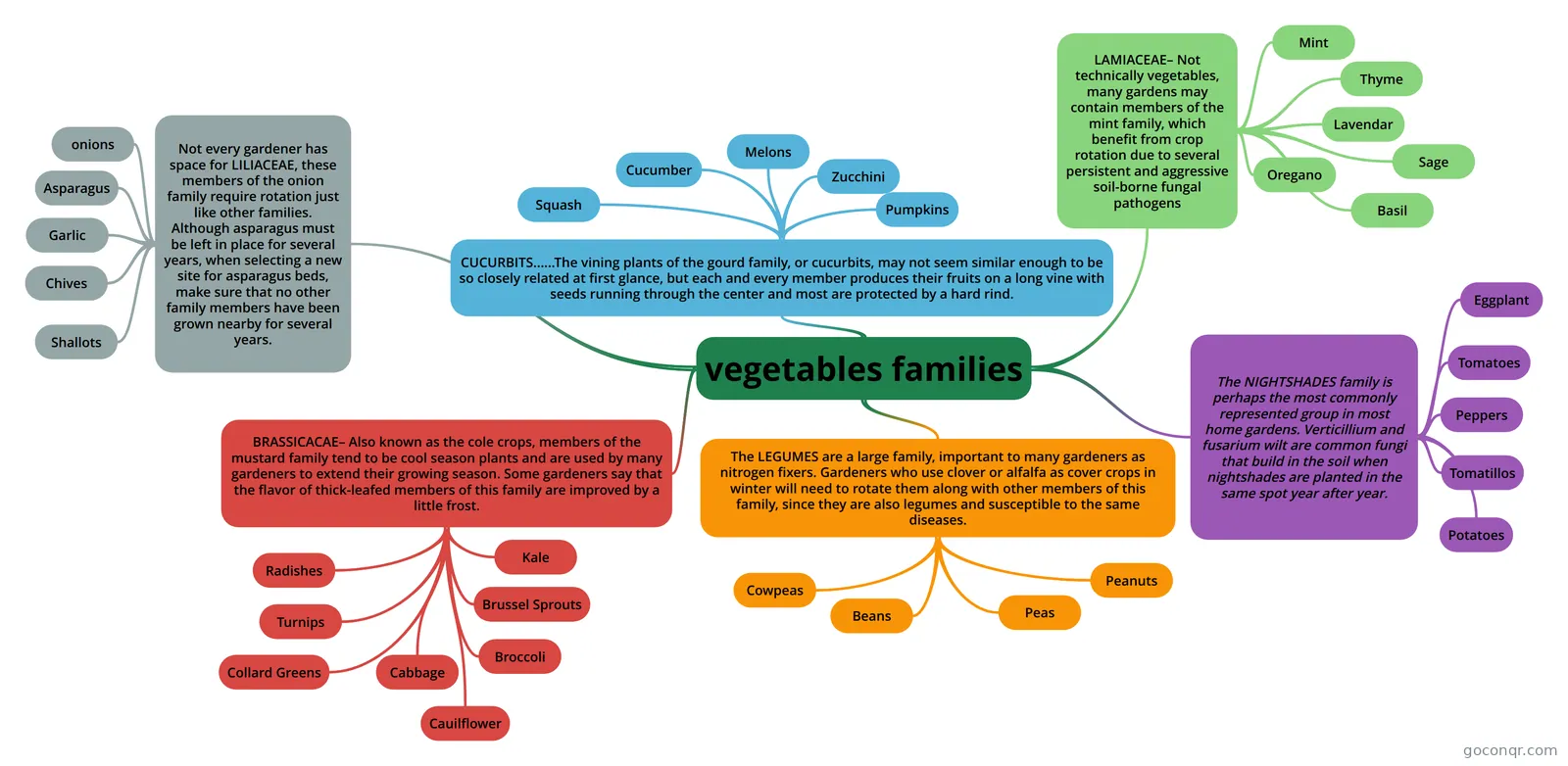
Mind map: vegetable families
Map content
vegetables families
CUCURBITS......The vining plants of the gourd family, or cucurbits, may not seem similar enough to be so closely related at first glance, but each and every member produces their fruits on a long vine with seeds running through the center and most are protected by a hard rind.
- Cucumber
- Zucchini
- Squash
- Pumpkins
- Melons
The NIGHTSHADES family is perhaps the most commonly represented group in most home gardens. Verticillium and fusarium wilt are common fungi that build in the soil when nightshades are planted in the same spot year after year.
- Tomatoes
- Peppers
- Eggplant
- Tomatillos
- Potatoes
The LEGUMES are a large family, important to many gardeners as nitrogen fixers. Gardeners who use clover or alfalfa as cover crops in winter will need to rotate them along with other members of this family, since they are also legumes and susceptible to the same diseases.
- Peas
- Peanuts
- Beans
- Cowpeas
BRASSICACAE– Also known as the cole crops, members of the mustard family tend to be cool season plants and are used by many gardeners to extend their growing season. Some gardeners say that the flavor of thick-leafed members of this family are improved by a little frost.
- Broccoli
- Cauilflower
- Kale
- Brussel Sprouts
- Cabbage
- Collard Greens
- Turnips
- Radishes
Not every gardener has space for LILIACEAE, these members of the onion family require rotation just like other families. Although asparagus must be left in place for several years, when selecting a new site for asparagus beds, make sure that no other family members have been grown nearby for several years.
- onions
- Asparagus
- Garlic
- Chives
- Shallots
LAMIACEAE– Not technically vegetables, many gardens may contain members of the mint family, which benefit from crop rotation due to several persistent and aggressive soil-borne fungal pathogens
- Mint
- Thyme
- Lavendar
- Sage
- Oregano
- Basil
Information
- Description
- vegetables by family and nutritional value
- Created by
- Andrea Andrea
- Views
- 7
- Rating