
Mind map
Periods of English History
Map content
Periods of English History
1. Old English: Anglo-Saxon England
- Germanic tribes settled in England (Roman Empire) in the 5th century -> Great Migration (Völkerwanderung)
- in some areas occupied by these tribes ->
- Germanic languages (Germany, England)
- Vulgar Latin (France)
- these three tribes were: Angles, Saxons, Jutes (coming from today northeastern Germany & Denmark) their language: Saxon (=English) = Anglo-Saxons!
- culture was largely oral but had form of writing: runes carved into wood, bone, stone
- Anglo-Saxons were christianised in the 7th century by missionaries from Rome and Ireland. Brought also along: Roman alphabet, reading, writing (mostly Latin), bookmaking
- Anglo-Saxon Kingdoms attacked by Vikings from Norway and Denmark in 8th century, settled in northern and eastern England -> area was called Danelaw
- English-speaking Anglo-Saxons mixed with Old Norse from the Vikings, still Old-English
- Scandinavian loanwords: contact happend on a everyday level -> knife, bark, egg, root, sky
- some replaced English words: root for wyrt
- scandinavian and english word survived side by side: heaven/sky, sick/ill
- Latin loanwords: cheese - caseus, street - strata, wine - vinum
- after Vikings came monasteries: altar, angel, candle
- Latin = language of learning
- Anglo-Saxon Kingdoms attacked by Vikings from Norway and Denmark in 8th century, settled in northern and eastern England -> area was called Danelaw
- in some areas occupied by these tribes ->
- Germanic tribes settled in England (Roman Empire) in the 5th century -> Great Migration (Völkerwanderung)
2. Middle English
- Battle of Hastings: The Normans (Vikings who were settled in France) conquered all of England
- they French language and culture: upper class only spoke French then, all the others English -> although French official language
- over 10'000 French-loanwords out of church/religion, meals, art, learning, medicine etc.: table, dinner, art, etc.
- english stem + french affix = understandable
- words etablished very quick in English -> French endings were added to words (gentleman, gently)
- they French language and culture: upper class only spoke French then, all the others English -> although French official language
- different from Old English because its mixed vocabulary, internal changes -> loss of inflections
- loss of different endings, now: -s
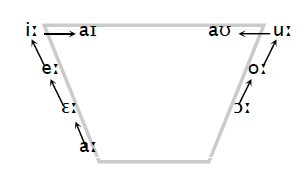
- Great Vowel Shift! (1400-1600), From Middle-, to Modern-English
- All long vowels of MidE: diphthongized or raised
- beginning of Standard English!
- Battle of Hastings: The Normans (Vikings who were settled in France) conquered all of England
3. Early Modern English
- no dramatic event like Norman Conquest but inventing of the printing press and the reformation -> language of renaissance!
- interest in classical antiquity -> borrowings from Greek and Latin (paradox, monopoly, explain) = inkhorn words (Tintenfasswörter) / hard words
- hard words: Germanic-Romance vocabulary, words learnt at school trough reading, meaning often not obvious. Native speakers today have to look up words!
- English voci very mixed: 1. wealth of synonyms (animal - beast, great - large)
- 2. Dissocation: mouth - oral -> only related in meaning, but not in form = dissociated
- hard words in English opaque, cannot be guessed from their components (Nas-horn in German transparent)
- English voci very mixed: 1. wealth of synonyms (animal - beast, great - large)
- hard words: Germanic-Romance vocabulary, words learnt at school trough reading, meaning often not obvious. Native speakers today have to look up words!
- interest in classical antiquity -> borrowings from Greek and Latin (paradox, monopoly, explain) = inkhorn words (Tintenfasswörter) / hard words
- no dramatic event like Norman Conquest but inventing of the printing press and the reformation -> language of renaissance!
Images and files in the map
Information
- Description
- Mind Map on Periods of English History, created by eiholzercristin on 27/05/2014.
- Created by
- eiholzercristin
- Views
- 37
- Rating