
Notes
Biochemistry May 13
Content of the notes (1)
Page 1
Biochemistry May 13
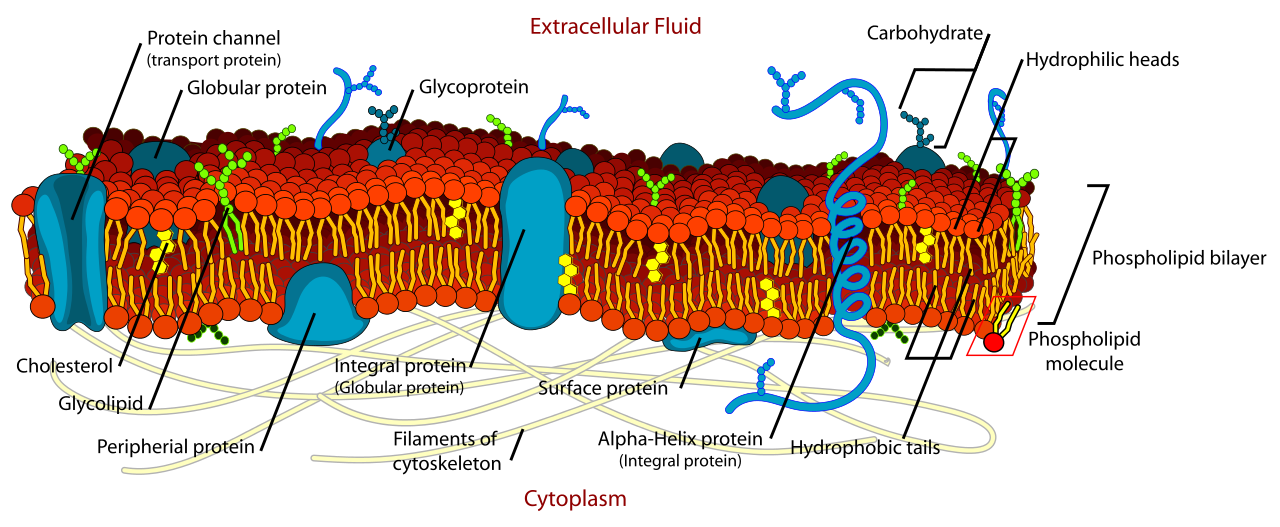
Draw a diagram of a typical cellular membrane.
Some membrane proteins act as channels or pumps to transport specific molecules or ions into the cell. Why are proteins needed to carry out this task?
Some ions are unable to pass through the membrane unaided and so require proteins to allow them to move into the cell. Proteins are able to pump specific ions across the membrane to ensure rapid transport.
Malonate is highly toxic to humans. Its chemical structure resembles that of succinate. Succinate is a tricarboxylic acid (Krebs’) cycle intermediate which is oxidised to fumarate in a reaction catalysed by succinate dehydrogenase.
Explain the molecular basis for the toxicity of malonate
Malonate will act as a competitive inhibitor and bind to the active site of succinate dehydrogenase rather than succinate. This will mean succinate will not be oxidised to fumarate and so the TCA cycle is distrupted and unable to continue effectively.
Would you expect malonate to be toxic to a bacterial species which undergoes only anaerobic metabolism? Briefly explain your answer.
No. the TCA cycle is not a part of anaerobic respiration and so malonate will not affect the anaerobic metabloism of the bacteria.
A succinate dehydrogenase enzyme has been discovered in the parasite that causes malaria.
Given that the enzyme activity follows Michaelis-Menten enzyme kinetics, please estimate, as accurately as you can, the constants Km and Vmax for the enzyme from the following experimental data:
(See paper for data)
Vmax= 6.56
Km= -2.86
If the ΔGo’ = -10.0 kJ. mol-1 at 25 °C, calculate the concentration of NADH at
equilibrium, if the initial concentration of both NAD+ and ethanol (after the substrates
are mixed) is 1M (R= 8.314 J.K-1.mol-1. 0°C = 273 K).
0.153M
With the aid of a diagram explain how “Sequential feedback inhibition” works.
Draw an annotated diagram of the pathway that adrenaline uses to modulate glycolytic flux in the heart cells, noting the key steps and stating the metabolic consequences
Using annotated diagrams show how glucose residues are bonded together in
(i) amylose,
(ii) amylopectin,
(iii) glycogen and
(iv) cellulose.
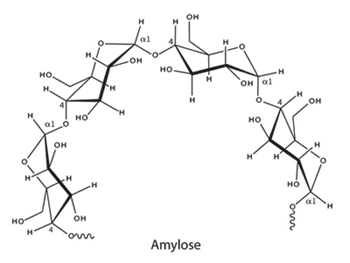
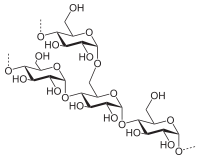
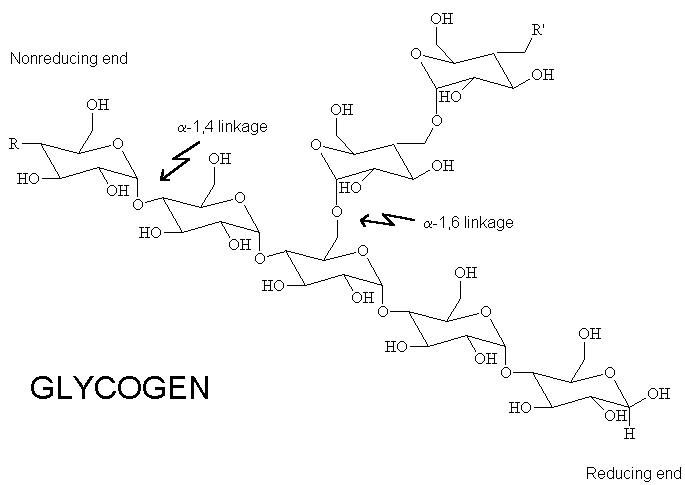
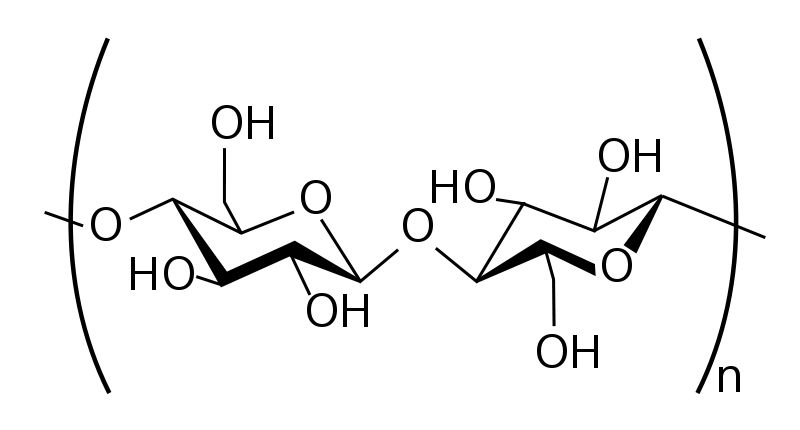
Explain the molecular basis for the remarkable physical strength of cellulose
Beta linkages form long straight chains, parallel chains interact through hydrogen bonding to generte a rigid supportive structure.
Make a table to compare and contrast the synthesis and degradation of glycogen in humans.
Rate of ATP turnover in human heart.
The human heart operating aerobically fills almost 100% of its ATP needs by oxidative phosphorylation. Each gram of tissue consumes oxygen at the rate of
10 micro mol/min, with glucose as the fuel source.
Calculate the approximate rate at which the heart muscle consumes glucose and produces ATP.
10/6 x 30= 50 micro mol/min per 1g of tissue
or 0.83 micro mol/s per 1g of tissue
For a steady-state concentration of ATP of 5.0 mol/g of heart muscle tissue, calculate the time required (in seconds) to completely turn over the cellular pool of ATP
5/0.83= 6s
Assuming mass of human heart is 300 g and molecular weight of ATP is ~500 g/mol calculate what is the mass (in grams) of total ATP pool in human heart?
5 micro mol per 1g of tissue
5x10-6 x 300 x 500= 0.75g
What is turnover rate of ATP in grams per day?
0.83 micro moles per second, so 72000 micro moles per day. 7.2x10-2 x 500= 36g per day per 1g of tissue. 36x 300= 10800g per day
Information
- Description
- Note on Biochemistry May 13, created by Matthew Ellis on 10/04/2015.
- Created by
- Matthew Ellis
- Views
- 11
- Rating