
Notes
Weaning from Ventilation
Content of the notes (3)
Page 1
Weaning Preparation
ETT sizing: Best size ET decreases airway resistance and work of breathing
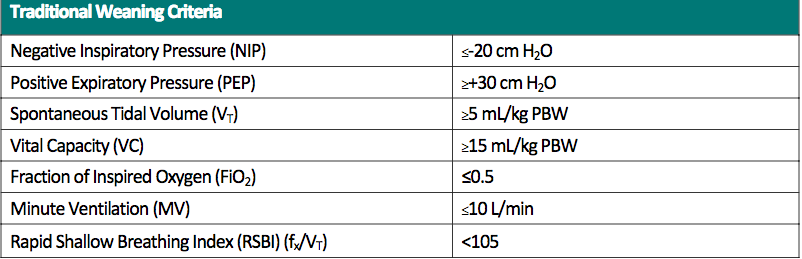
Weaning Parameters: evaluation of physio mechanics of ventilation and muscle strength, including lung vol and capacities should be done as a a baseline and then daily with SBT
Nutritional Support: Prevent muscle wasting and promote normal electrolyte balance- normal Phosphorus level is imp for diaphragm to function normally
Time on Ventilator: More than 3 days is long term, longer on vent indicates loss of respiratory muscle strength
Page 2
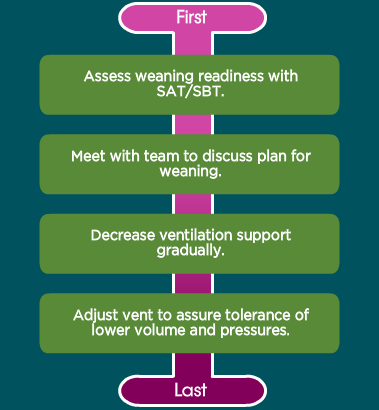
Weaning Approaches
T piece or Trach collar
May or may not be done through vent circuit
Frequent monitoring is essential as there are no alarms or back up for ventilation
CPAP
May be done through vent circuit
May be combined with PSV
Pt will continue to receive humidified oxygen and CPA will breathing at their own Vt and rate
SIMV
Vent rate is gradually decreased by 2-4 breaths every hour. Allows for increasing periods of time betwn vent-initiated breaths or decrease in number of vent supported breaths per min
CPAP (aka PEEP) and PS may be adjuncts to SIMV weaning.
PSV
pressure support level is dripped in small increments while still monitoring for consistent Vt. Pressure level needs to be set to allow for sufficient Vt with each spontaneous breath.
Minimal pressure support level is 5-7cm H20 and Vt remains consistent
PSV may be combined with CPAP for weaning
For long term ventilation weaning:
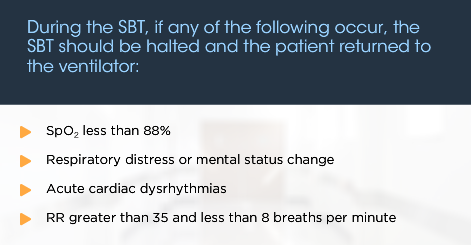
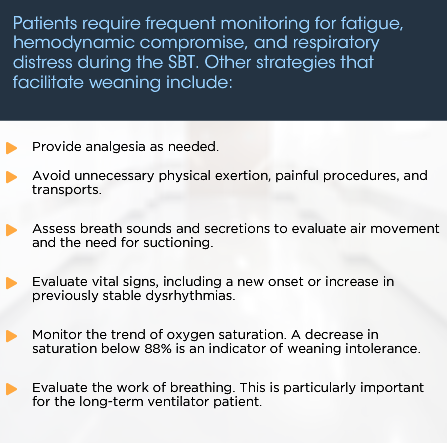
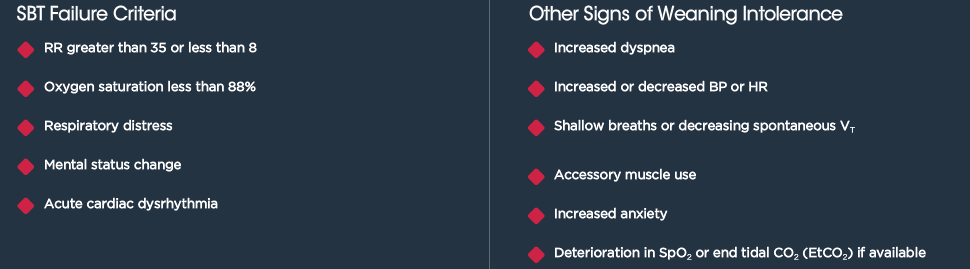
Weaning Intolerance
Page 3
Extubation
Removal of ETT
Patient care priorities:
Monitor VS
Monitor LOC
Auscultate lung fields
Observe for signs of respiratory distress
Decannulation
Monitor VS
Monitor LOC
Monitor for inc respiratory effort
Monitor for new onset of dysrhythmias with hemodynamic instability
Information
- Description
- Pulmonary ECCO (Managing the Ventilated Patient) Note on Weaning from Ventilation, created by Narda Carrion-Hernandez on 21/03/2017.
- Created by
- Narda Carrion-Hernandez
- Views
- 2
- Rating