
Notes
Current Electricity: Electric Current
Content of the notes (1)
Page 1
Electric Current
The flow of electric charge
Symbol = I
Scalar quantity
Unit = Ampere
Conventional current flows from positive to negative
Q = It
Q = charge
I = current
t = time
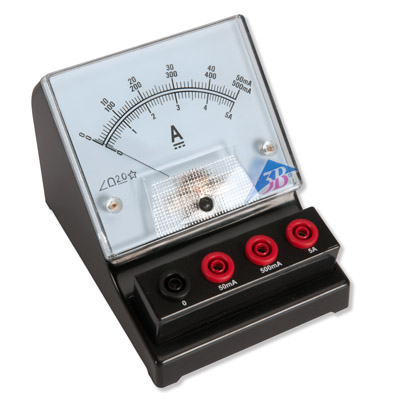
Ammeter
Used to measure current
Connected in series with the component that it is measuring the current of
Can be used to compare the conductivity of substances
Effects of an Electric Current
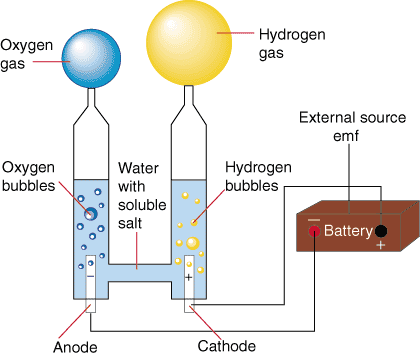
1. Chemical effect
Electrolysis
To demonstrate this, water can be broken up into its constituent elements, hydrogen and oxygen
Example: Electroplating - covering one metal with a thin layer of anoher
2. Magnetic effect
To demonstrate this, place a compass near to a circuit
When the switch on the circuit is closed and current is flowing, the needle of the compass moves due to the magnetic field created
Example: Electromagnets
3. Heating effect
Can be demonstrated by setting up a circuit with a heating coil immersed in water
Measure the temperature before and after the current flows
Example: Filament light bulb
Joules Law
The rate of heat production in a conductor is proportional to the square of the current provided its resistance is a constant
P = I²R
P = power
I = current
R = resistance
Direct current & Alternating current
D.C. - current from a battery - flows in one direction only
A.C. - current from the mains supply - continuously changes direction
W = I²Rt
W = energy
I = current
R = resistance
t = time
New Page
Information
- Description
- This note on electric current covers measuring current, calculating current from the formula and the three effects of an electric current. It also introduces you to Joule's Law. It is aimed at a leaving certificate student or someone who has an interest in learning more about current.
- Created by
- alex.examtime9373 · Jan 2014
- Updated
- Aug 3, 2017
- Views
- 561
- Tags
- Rating