
Quiz
ABC
Este quiz tem tipos de pergunta que abrem no player de sempre.
Perguntas do quiz (33)
1Where is the label at?
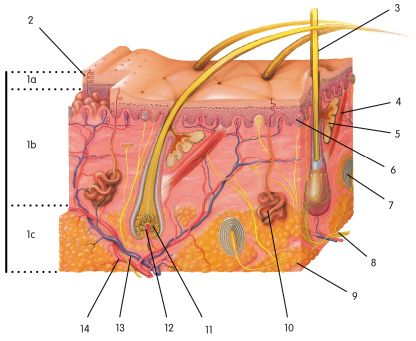
- ASweat Pores
- BHypodermis
- CHairs
- DDermal papilla
2Where is the label at?
- AMotor nerve fiber
- BHair follicle
- CHairs
- DSensory nerve fibers
3Where is the label at?
- ASweat pores
- BDermis
- CHair follicle
- DHair Bulb
4Where is the label at?
- ASensory nerve fibers
- BDermal papilla
- CMotor nerve fibers
- DHair follicle
5Where is the label at?
- AApocrine Sweat glands
- BDermal papilla
- CDermis
- DPressure receptor
6Where is the label at?
- ADermis
- BEpidermis
- CSensory nerve fibers
- DSweat pores
7Where is the label at?
- ADermis
- BEpidermis
- CHypodermis
8Where is the label at?
- APressure receptor
- BApocrine sweat glands
- CEpidermis
- DHair follicle
9Where is the label at?
- APressure receptor
- BSensory nerve fiber
- CDermal papilla
- DCutaneous blood vessels
10Where is the label at?
- ASensory nerve fibers
- BHair follicle
- CSweat pores
- DMotor nerve fibers
11Where is the label at?
- AHair follicle
- BPressure receptor
- CEpidermis
- DMotor nerve fibers
12Where is the label at?
- AHypodermis
- BHairs
- CDermis
- DEpidermis
13Where is the label at?
- ADermis
- BPressure receptor
- CSweat pores
14Where is the label at?
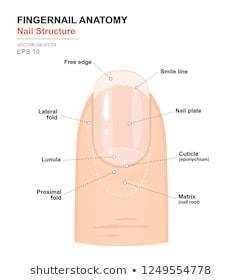
- ACuticle
- BFree edge
- CNail bed
15Where is the label at?
- ANail body
- BCuticle
- CNail bed
16Where is the label at?
(under the nail)- ACuticle
- BNail bed
- CLunula
17Where is the label at?
- ALunula
- BCuticle
- CFree edge
18Where is the label at?
- ANail body
- BNail bed
- CCuticle
19What is the life cycle of an epidermal cell?
- ABy the time the cells reach the outermost layer- called stratum corneum- all that’s left of the dead cells is their keratin. The newly arriving flattened cells called keratinocytes, they replace the dead cells that flake away with daily wear
As the cells are pushed upward, they stop dividing and instead produce keratin, a tough, fibrous protein. The keratin replaces the cytoplasm and nucleus in each cell. The cells flatten, and as they move further away from their blood supply, they die
The stratum basale, or basal layer, also called the stratum germinativum- is the innermost layer. It consists of a layer of columnar stem cells. These stem cells continually undergo mitosis, producing new skin cells. As new cells are produced, they push the older cells upward, toward the skin’s surface - BThe stratum basale, or basal layer, also called the stratum germinativum- is the innermost layer. It consists of a layer of columnar stem cells. These stem cells continually undergo mitosis, producing new skin cells. As new cells are produced, they push the older cells upward, toward the skin’s surface
As the cells are pushed upward, they stop dividing and instead produce keratin, a tough, fibrous protein. The keratin replaces the cytoplasm and nucleus in each cell. The cells flatten, and as they move further away from their blood supply, they die
By the time the cells reach the outermost layer- called stratum corneum- all that’s left of the dead cells is their keratin. The newly arriving flattened cells called keratinocytes, they replace the dead cells that flake away with daily wear - CAs the cells are pushed upward, they stop dividing and instead produce keratin, a tough, fibrous protein. The keratin replaces the cytoplasm and nucleus in each cell. The cells flatten, and as they move further away from their blood supply, they die
The stratum basale, or basal layer, also called the stratum germinativum- is the innermost layer. It consists of a layer of columnar stem cells. These stem cells continually undergo mitosis, producing new skin cells. As new cells are produced, they push the older cells upward, toward the skin’s surface
By the time the cells reach the outermost layer- called stratum corneum- all that’s left of the dead cells is their keratin. The newly arriving flattened cells called keratinocytes, they replace the dead cells that flake away with daily wear
- ABy the time the cells reach the outermost layer- called stratum corneum- all that’s left of the dead cells is their keratin. The newly arriving flattened cells called keratinocytes, they replace the dead cells that flake away with daily wear
20The epidermis is what layer of the skin?
- AInner, deeper layer
- BOutermost layer
- CBeneath
21The dermis is what layer?
- AInner, deeper
- BOutermost
- CBeneath the skin
22The hypodermis is what layer?
- AInner, deeper layer
- BOutermost
- CBeneath the skin layer
23What is the epidermis layer composed of and the function?
- At consists of stratified squamous epithelial tissues.
It contains no blood vessels; instead, it obtains oxygen and nutrients by diffusion from the dermal layer beneath it - BIt is composed of connective tissues that contain primarily collagen fibers (which strengthen the tissue), but it also contains elastin fibers (which provide elasticity) and reticular fibers (which blind the collagen and elastic fibers together).
It contains a large number of blood vessels in addition to sweat glands, sebaceous glands, and nerve endings - CIt is made up of loose connective (areolar) tissue and adipose tissue.
The hypodermis blinds the skin to the underlying tissue
Hypodermis that's composed mostly of adipose tissue is called subcutaneous fat this layer of fat helps insulate the body from outside temperature changes; it also acts as an energy reservoir
- At consists of stratified squamous epithelial tissues.
24What is the characteristic of the basal cell carcinoma?
- AArises in the epidermis and is slow-growing
Often occurs on the scalp, forehead, backs of the hand, and top of the ears
Has a raised, red, scaly appearance
Some forms may metastasize - BMost deadly of all skin cancers
Sometimes develops from melanocytes of a preexisting mole
Metazasizes quickly and is often fatal when not treated early
Risk is greatest in individuals who had severe sunburns as children - CThe most common type
Seldom metastasizes, it is the least dangerous
Arises from the cells of the stratum basale, typically on the nose or face
Lesion fist appears as a small, shiny bump; as it enlarges, it often develops a central depression and a beaded, “pearly” edge
- AArises in the epidermis and is slow-growing
25What is the squamous cell carcinoma characteristics?
- AMost deadly of all skin cancers
Sometimes develops from melanocytes of a preexisting mole
Metazasizes quickly and is often fatal when not treated early
Risk is greatest in individuals who had severe sunburns as children - BThe most common type
Seldom metastasizes, it is the least dangerous
Arises from the cells of the stratum basale, typically on the nose or face
Lesion fist appears as a small, shiny bump; as it enlarges, it often develops a central depression and a beaded, “pearly” edge - CArises in the epidermis and is slow-growing
Often occurs on the scalp, forehead, backs of the hand, and top of the ears
Has a raised, red, scaly appearance
Some forms may metastasize
- AMost deadly of all skin cancers
26What is the characteristics for the malignant melanoma?
- AArises in the epidermis and is slow-growing
Often occurs on the scalp, forehead, backs of the hand, and top of the ears
Has a raised, red, scaly appearance
Some forms may metastasize - BMost deadly of all skin cancers
Sometimes develops from melanocytes of a preexisting mole
Metazasizes quickly and is often fatal when not treated early
Risk is greatest in individuals who had severe sunburns as children - CThe most common type
Seldom metastasizes, it is the least dangerous
Arises from the cells of the stratum basale, typically on the nose or face
Lesion fist appears as a small, shiny bump; as it enlarges, it often develops a central depression and a beaded, “pearly” edge
- AArises in the epidermis and is slow-growing
27The main purpose of melanin?
- AA genetic lack of melanin
- Bgives a person their skin color and forms a cap over the top cell nucleus to protect it from the exposure to the harmful ultraviolet rays of the sun
- CImpaired liver function (such as from hepatitis or liver disease) that allow bile to accumulate, which stains the skin
- DThe breakdown of clotted blood under the skin
28What are the characteristics of a sweat gland?
- Akeep the skin and hair from drying out and becoming brittle sebum has a mild antibacterial and antifungal effect.
- Bthe most numerous of the skin glands
- CThey secrete waxy substance called cerumen, or ear wax.
29What are the characteristics of a Sebaceous gland?
- AThey secrete waxy substance called cerumen, or ear wax.
- Bopen into a hair follicle, secrete an oily substance called sebum.
- Cthe most numerous of the skin glands
30What are the characteristics of the ceruminous glands?
- AThey secrete waxy substance called cerumen, or ear wax.
- Bopen into a hair follicle, secrete an oily substance called sebum.
- Cthe most numerous of the skin glands
31What do First-degree burns classify as?
- AInvolves the epidermis as well as part of the dermis
Results in blisters, severe pain, and swelling
May result in scarring
May appear red, white, or tan - BInvolves only the epidermis
Causes redness, slight swelling, and pain
Often results from sunlight (sunburn) - CExtends through the epidermis and dermis and into the subcutaneous layer
May not be painful initially because of the destruction of nerve endings
May appear white or black and leathery
Often requires a skin graft
- AInvolves the epidermis as well as part of the dermis
32What do second-degree burns classify as?
- AInvolves the epidermis as well as part of the dermis
Results in blisters, severe pain, and swelling
May result in scarring
May appear red, white, or tan - BExtends through the epidermis and dermis and into the subcutaneous layer
May not be painful initially because of the destruction of nerve endings
May appear white or black and leathery
Often requires a skin graft - CInvolves only the epidermis
Causes redness, slight swelling, and pain
Often results from sunlight (sunburn)
- AInvolves the epidermis as well as part of the dermis
33What do third-degree burns classify as?
- AInvolves the epidermis as well as part of the dermis
Results in blisters, severe pain, and swelling
May result in scarring
May appear red, white, or tan - BExtends through the epidermis and dermis and into the subcutaneous layer
May not be painful initially because of the destruction of nerve endings
May appear white or black and leathery
Often requires a skin graft - CInvolves only the epidermis
Causes redness, slight swelling, and pain
Often results from sunlight (sunburn)
- AInvolves the epidermis as well as part of the dermis
Informações
- Descrição
- Quiz sobre ABC, criado por Kaysie Gonzalez em 15-11-2019.
- Autor
- Kaysie Gonzalez
- Idioma
- English
- Visualizações
- 29
- Etiquetas
- Avaliação
- Ainda sem avaliações Avalie este quiz