
Flashcards
Etruscans and Early Rome Test 2
Flashcards do conjunto (20)
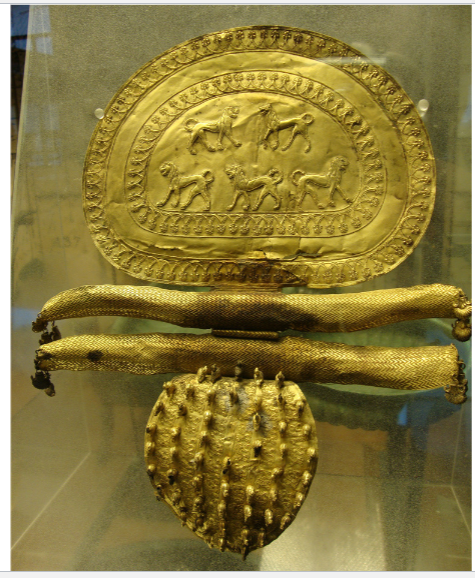
- 1—Regolini-Galassi Tomb Fibula
Caere, 650 BCE.
Rows of ducks and winged lions, lots of tiny gold detailing. (Granulation)
Highly impractical fibula, made only for the funeral. Huge amounts of wealth. - 2—Regolini-Galassi Tomb Cauldron
Caere, 650 B.C.E.
Protome decorations, griffin heads.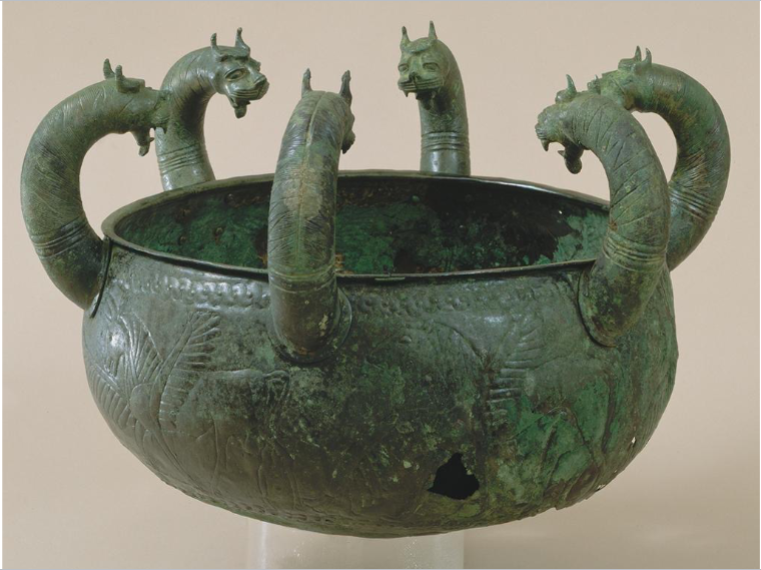
- 3—Larthia Silver Cup
Regolini Galassi Tomb, Caere
650 B.C.E.
Once thought it belonged to a woman. Mans name, "of Lars," in the genitive case.
So a final gift from a husband, either from before he died or before she did. Petra Amann. Women, while they mostly held responsibilities in the domestic sphere, held a special place in banquets and games. While this could be a final gift, this could also be a way to "show off" a husband's dedication to his wife at a public upper class banquet. Also helps shows the Onomastic naming system with the praenomen that the Romans adopt. (Rex Wallace)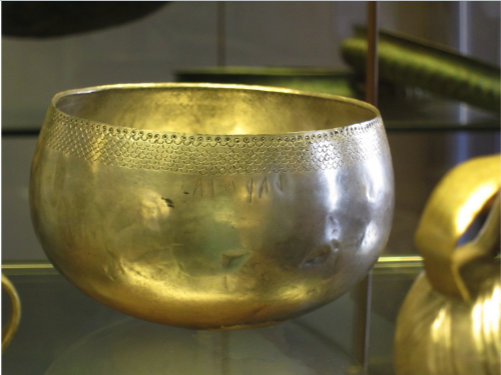
- 4—Ivory Pieces
Barberini Tomb, 7th Century
Imports from Phoenicia, sometime before the 7th Century. After the 7th century, Babylonians destroyed Tyre and Ivory became less prominent. These pieces were imported, whether that meant the great ivory workers from Phoenicia and Assyria or the items themselves. Lion with figure, eastern style, Mesopotamian motif.
Tusk, possibly glasswork from the Egyptians.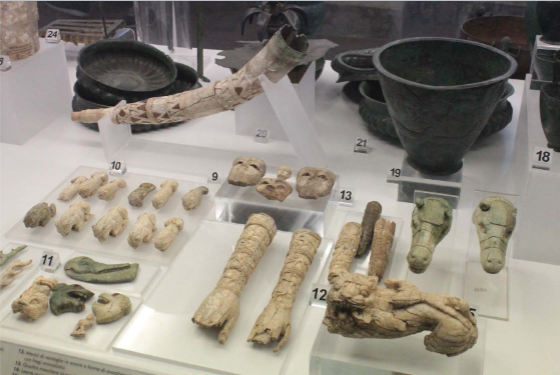
- 5—Silver Lebes with gold gilding
Bernardini Tomb, Praeneste, 675 B.C.
Snakes, waterfowl, date palms, horsemen, soldiers. All Egyptian Phoenician motifs. Shows the extent of the elite classes in the Orientalizing period.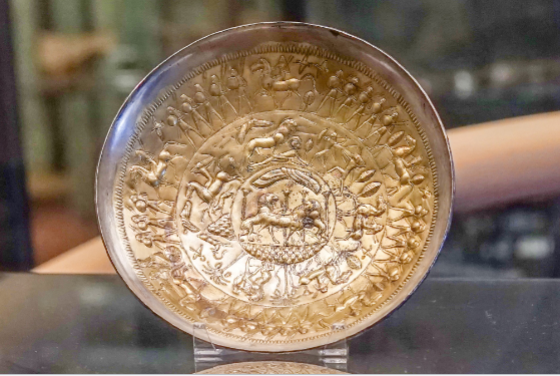
- 6—Bronze Lebes on Tripod.
675 BCE, Bernadini tomb, Praeneste.
Hooved feet on the bottom to stand on. While the bronze lebes comes from other Mediterranean cultures, the "fun" aspects the Etruscans add make it uniquely there's, i.e., the dogs peaking into the bowl or the hooved feet.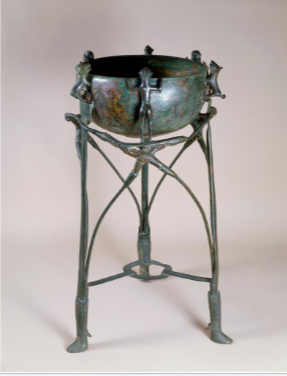
- 7—Tomb of the Bronze Chariot
650-600 BCE. Vulci.
Man riding a chariot, bronze head with silver hands. Possibly an effigy representation of the deceased. Horror Vacui, with someone needing to be in the chariot.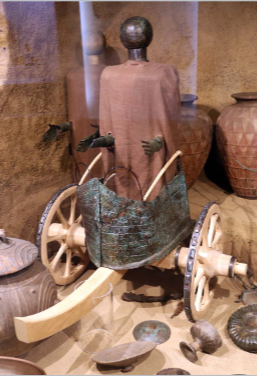
- 8—Fragmentary Sculpture of a Woman.
650-625 B.C. Pietrera Tumulus, Vetluna.
These limestone figures lined the hall leading to the central tomb. These were nearly life-sized, but only figures are left over. Koure figures, were they mourners, deities, servants?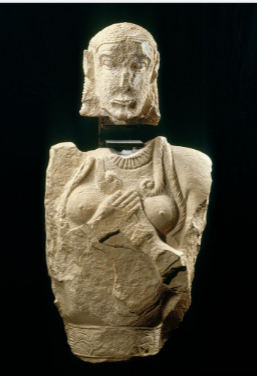
- 9—Zagreb Mummy, Liber Linteus.
3rd century, B.C. Found in Alexandria, Egypt, now kept in Zagreb, Croatia.
A form of ritual calendar, with 12 verticle columns separating the 12 months of the year. The book was cut into strips and used for a mummy in Alexandria. The longest known writing from the Etruscans.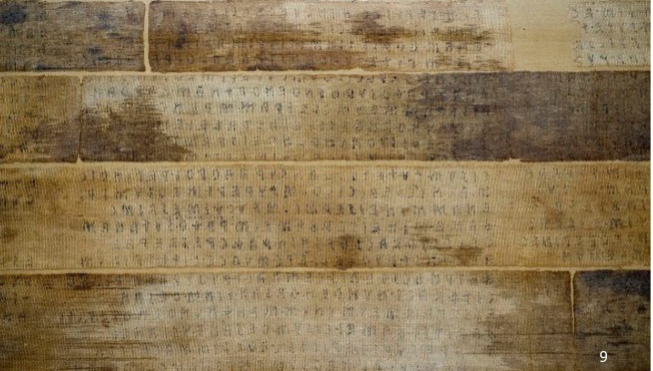
- 10—Earliest Abecedaria.
650 B.C., Marsiliana d'Albegna.
Ivory tablet/tray with the alphabet down the sides. Beeswax or clay would be poured into the tray and incised in with a stylus. Probably to learn writing, as the most common objects would be those that teach writing. Rex Wallace shows a number of examples where inscriptions in tablets were found as contracts.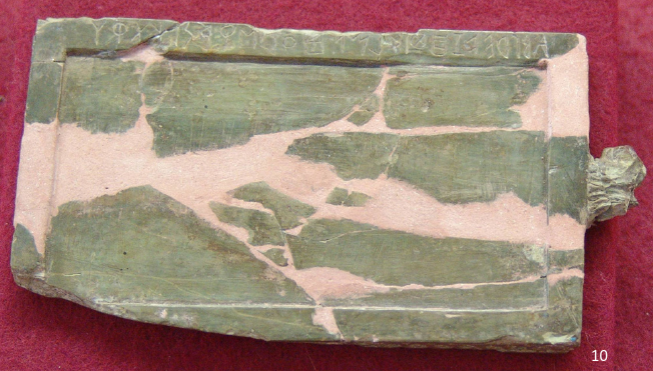
- 11—Tomb 2 Assemblage, Forum of Caesar, Rome, 11th-10th Century B.C.
Similar burial styles to the Via Sacra cemetery, though we don't know if it is the same cemetery or not. Concentric circles of burials. Two dividing points for burials; speaking age, and sexual maturity. The infants and children seemed to be buried in the Via Sacra cemetery, while those above the age of sexual maturity were born in the Forum of Caesar. Impasto cups, miniature wares. By the 10th century, huge jump in funerary evidence for Iron Age Rome. According to Fulminante, the Forums of Caesar and Augustus, as well as the Temple of Antoninus and Faustina show a huge increase in the size of Rome during the later half of the 9th Century.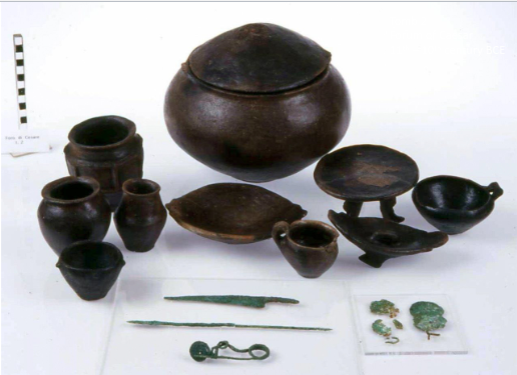
- 12—Hut of Romulus
Palatine Hill, Rome, 11th-10th century.
Post holes and water channels cut into the Tufo. Shows some form of a Palatine community. Could add proof to the myth of Romulus and Remus. By at least the 4th century B.C., the Romans are maintaining this hut. Fulminante reveals the arguments behind whether or not this is the real Casa Romuli, based on the writings of Varro, including a line about Rome being founded on a "balancing point."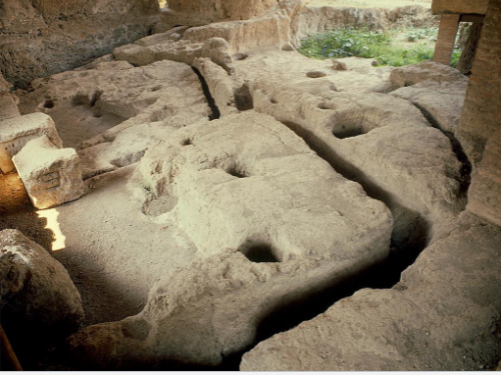
- 13—Portonaccio Sanctuary.
Veii, 500 B.C.
Etruscan sanctuary, wall surrounding the whole sanctuary, which sits on a hill. Altar with a couple of porticos to the east. The main temple with a pool to the west. It is unknown who the temple is dedicated to, one theory: Zeus, Hercules, Apollo. But then why is there a Minerva statue? Warden says the reason we know so much about the Etruscan religion is because it inspired the Romans. So the Capitoline Triad pictured here maybe?
Rasmussen, fancy in its amenities for the worshippers.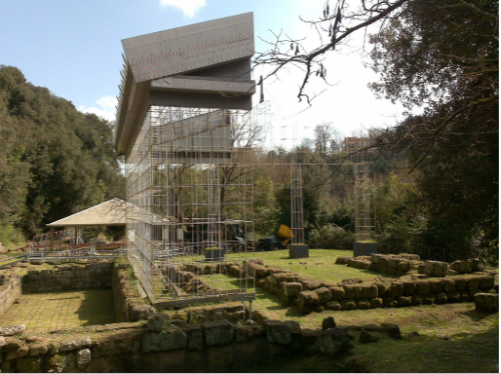
- 14—Portonaccio Sanctuary Roof Decoration.
Veii, 500 B.C.
Pierced crestings- weird squiggly things at the top.
Antefixes- the heads that line the sides.
Gregory Warden. "the sacredness
of the place may have been connected to the water sources that fed a pool within the sanctuary as well as to its location near the city entrance. the structure is most remarkable for the extensive series of ridge‐pole statues that decorated its roof: figures of divinities that literally walk the sky, setting up a tableau of human bodies that enact what were probably a series of divine narratives, but that would only have been understood when looked at from the sides of the temple."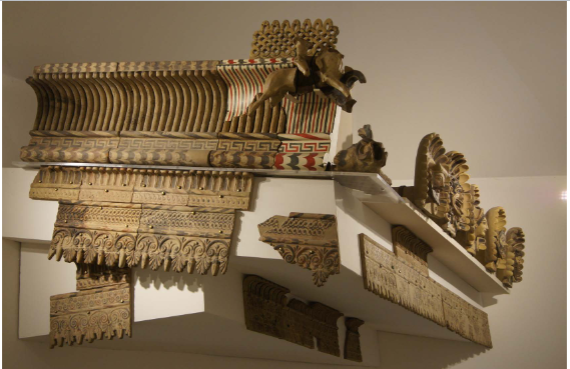
- 15—Gorgon Antefix.
Portonaccio Sanctuary, Veii, 500 B.C.
Apotropaic device. However, could also relate to the statues of Minerva found at the sanctuary. According to Gregory Warden, these antefixes told some form of story along with the statues on the top of the temple, which could only be viewed from the side. These statues were so well preserved because they were eventually ritually buried.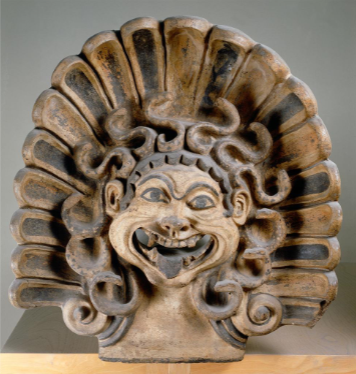
- 16—Aplu of Veii
500 B.C., Portonaccio Sanctuary, Veii
Striding, clothed unlike the naked Greek statues. Compared to the Kouros, very life like, striding forward. Archaic smile made to enliven the face. Shows a move away from the Orientalizing period. According to Gregory Warden, these antefixes told some form of story along with the statues on the top of the temple, which could only be viewed from the side. These statues were so well preserved because they were eventually ritually buried.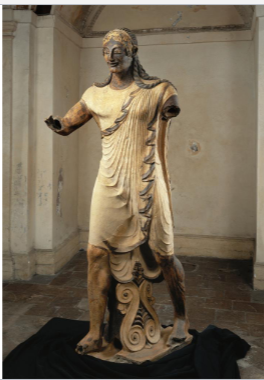
- 17—Hercules and Minerva Pair
Portonaccio Sanctuary, Veii, 500 B.C.
The presence of this pair could indicate who the temple was dedicated to, as both Hercules and Minerva show up in the Labors. Though who this temple is dedicated to may not matter as Gregory Warden argues that, if ritual is the "art" with which the Etruscan elite demands control, then ritual defined the space, while the space informed the ritual.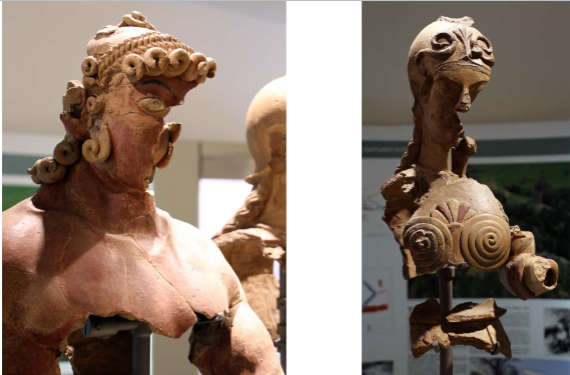
- 18—Hercules and Minerva pair.
Sant' Omobono, Rome, Late 6th century, 500 B.C.
Very complex, deep site, as it sat on the river, so it was prone to constant flooding. Earliest evidence shows it was a twin temple, most likely to Fortuna and Mater Matuta functioning until the late 5th century, 480 B.C.
Then, temple C is an archaic temple built over it. One cella instead of 2, with the Minerva-Hercules pair. John Hopkins believes this is the beginning of monumental architecture in Rome. In 2016, no one thought Temple C had much decoration, but John Hopkins argued otherwise. He pointed out Vitruvius' idea of Consuetudo Italica, or the Italian habit, which fused Italian temple styles with Greek.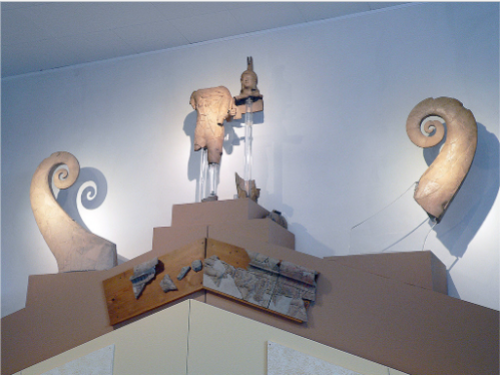
- 19—Temple of Jupiter Optimus Maximus
510-509 B.C., Capitoline Hill, Rome.
Underground foundation of Touffo stones, uneven cuts because they were unseen. Legendary story, it was vowed by Tarquinius Priscus during the war with the Sabines. Not finished until Tarquinius Superbus, and not dedicated until the Republic. Livy claims Vulca of Veii made the decorative facets, but this claim is mostly made up, but might refer back to the idea of itinerant Etruscan workmen (Gregory Warden believes Livy).
Voids- No stone work in certain areas, but not completely empty either. Just earth. Stamper tries to fill in the voids, but it doesn't work. Hopkins and Sommella keeps the voids and those are better made.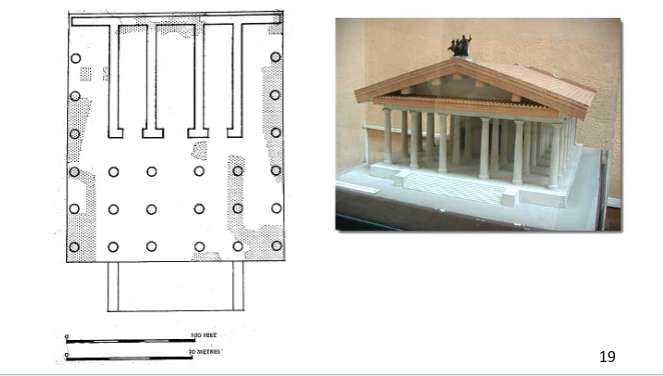
- 20—Temple of Jupiter Optimus Maximus Foundations
Capitoline Hill, Rome, 510-509 B.C.
Very big. Huge trenches to help with water drainage. On top of a hill, so the Temple was, presumably, visible from very far away, like Lady Liberty or the Superdome. Meant to impress.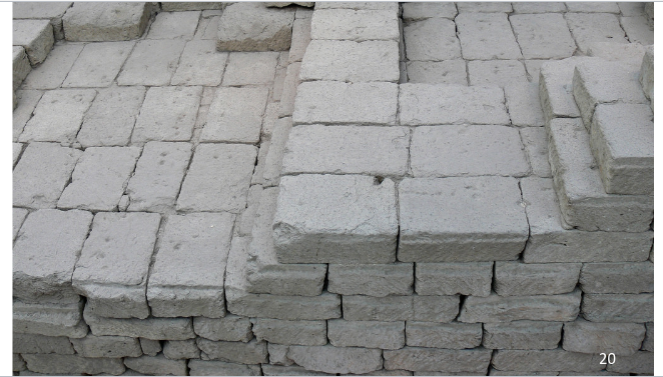
Informações
- Descrição
- Classics FlashCards sobre Etruscans and Early Rome Test 2 , criado por Bryce Oufnac em 14-10-2023.
- Criado por
- Bryce Oufnac
- Visualizações
- 8
- Tags
- Avaliação