
Flashcards
Math 12 - Logs and Rational Functions
Flashcards do conjunto (17)
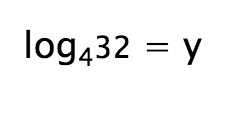
- 1Level: Basic Skill convert form: log_a (b)= ya^y=b
- 2Level: DifficultHave a little conversation with yourself.
How can we put 32 in terms of base 4 ?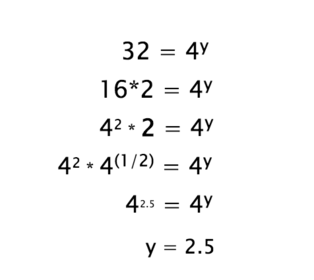
- 3Level: MediumHave a little convo with yourself.
Try something... perhaps with the squiggle trick? Or replacing something with "m" to make it a little nicer.
x= 263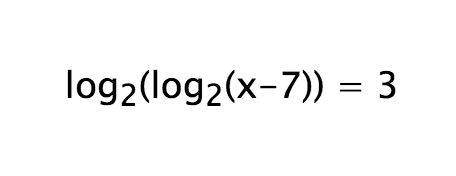
- 4This looks messy and scary. For your viewing pleasure, please put this into "Log" format. Level: MediumHave a little convo with yourself. What kind of math tricks do you have up your sleeve to make this look better?
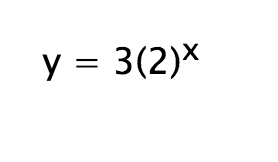
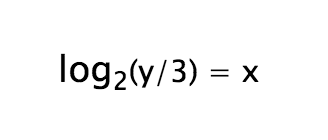
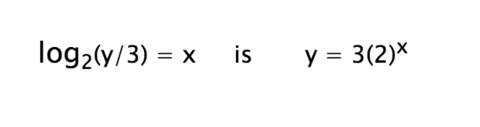
- 5How can you be "confident" that you just rocked the last question? (And I didn't make a mistake in the answer?) Level: EasyCheck whether left equation is EQUAL to right. This will show that I made "legal" math moves to get from one equation to the next.
- 6What are the "NPV"s or limitations of logs? For the equation below. Level: ImportantX> 0, Y>0 and
X cant be 1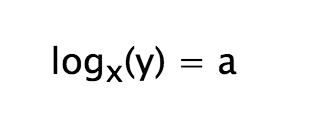
- 7What are rational functions? Do you think you can sketch f(x) = (x^2+3x)/(x^3+2) ? Yes you can =)An equation where there are "factors" on the top and bottom, that can be packed.
They can originally look like polynomials on top and bottom of the fraction. - 8What do TOPs on rational functions tell us? f(x) = (x-2)(x-1) / (3-x)TOPS make 1)Horizontal Asymptotes 2)ROOTS
- 9What do BOTTOMs on rational functions tell us? f(x) = (x-2)(x-1) / (3-x)1) "POD" 2) Vertical Asymptotes
- 10How do you know if there will be a 1)POD 2)Horizontal Asymptote 3) Vertical Asymptote?1) POD: IF there is a factor on bottom, that GETS cancelled
2) HA: On top, IF top and bottom has same degree
3) V.A.: IF there is a factor on bottom that DOESN'T cancel out - 11Given all that you know, sketch: (x-6)(x+1)/(3-x)...
- 12Given all you know, get the equation for this. (The y-intercept is -1/5)f(x) = 2x^2/ (x+5)(x-5)
but need to include y-intercept... when x=0, y = -1/5
f(x) = (2x^2 +5)/(x+5)(x-5)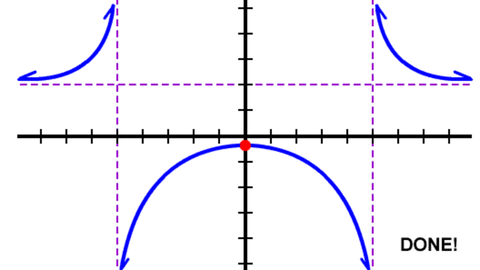
- 13What is the formula for logs, generally used in word problems?A=P(1+r)^t
- 14If this is the general formula for a real life log question, what does each thing kind of mean? A=P(1+r)^tA= Final amount
P= Initial amount
(1+R) = What is it doing to itself each time e.g. 'half-ing' itself each time would be 0.5
t = The number of times it (1+R)'s itself, like the number of times it "halves" itself. - 15What does a log graph generally look like, and what other "function" does it relate to, and what are some things to remember about logs?1. Climbing a hill. Invariant point at 1 with out translation. 2. INVERSE of an exponential function. (swap x and y)
3. Log of 1 is 0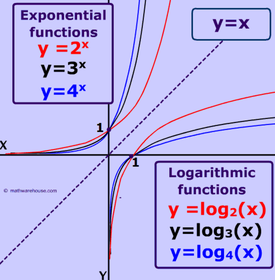
- 16How can I find the inverse of an exponential function y=2^x1. Swap x and y (like all inverses...)
x=2^y
2. Solve to get y= format... (but it's a variable in the exponent - so LOGS to the rescue)
3. answer: log2(x) = y - 17What is the general formula of a log, and what should I remember about vertical/horizontal shift and stretch for logs?y=alog(x-h)+k