
Flashcards
F215.1.2 Meiosis and Variation Biology Revision Cards
Flashcards do conjunto (39)
- 1What happens during prophase 1?The chromatin condenses and supercoils.
Chromosomes come together in their homologous pairs
Non-sister chromatids wrap around each other and attach at points called chiasmata (crossing over occurs). The nuclear envelope breaks down and spindle fibres form. - 2What happens in metaphase 1?The bivalents meet at the equator of the spindle and attach to spindle fibres by the centromeres. The bivalents are arranged randomly (random assortment).
- 3What happens during anaphase 1?Homologous chromosomes are pulled apart to opposite poles.
The centromeres don't divide and the chiasmata separate. - 4What happens during telophase 1?Two nuclear envelopes form and cell divides by cytokineses. The chromosomes then uncoil.
- 5What happens during prophase 2?The nuclear envelope breaks down again and the chromosomes condense and spindles form.
- 6What happens during metaphase 2?Chromosomes arrange at the equator of the spindle. Chromatids are randomly assorted.
- 7What happens during anaphase 2?The centromeres divide and chromatids are pulled apart to the poles. The chromatids randomly segregate.
- 8What happens during telophase 2?The nuclear envelope reforms.
- 9Allele (definition)A version of a gene
- 10Locus (definition)A point on the chromosome where a gene is found
- 11Phenotype (definition)The observable characteristics an organism expresses
- 12Genotype (definition)All the alleles that an organism has (the genetic make up).
- 13Dominant (definition)An allele in which only one is requires for the characteristic to be expressed, even if another allele of the same gene is expressed in the genotype.
- 14Co-dominant (definition)When an organism has two alleles for a gene and both are expressed in the phenotype.
- 15Recessive (definition)An allele that requires either two copies of that allele or the absence of another allele to be expressed in the phenotype.
- 16Linkage (definition)When genes for different characteristics are present at different loci on the same chromosome are linked.
- 17Crossing-over (definition)Non-sister chromatids exchange alleles during prophase 1 of mitosis.
- 18How does meiosis lead to variation?Crossing over results in different genes in cells. Genetic re-assortment due to random distribution of maternal and paternal chromosomes and segregation of sister chromatids. Also mutations.
- 19How does fertilisation lead to variation?Random combinations of two sets of chromosomes, one from each of two genetically unrelated individuals.
- 20What is sex linkage?When a gene is present on only one of the chromosomes (X chromosome) so if the males have the allele they will be affected.
- 21What is co-dominance and what is an example of it?When both alleles A and B are present in the genotype, the phenotype will be AB.
- 22What is epistasis?Epistasis is when one characteristic is affected by more than one gene at different loci. When one gene masks or effects the expression of another gene (requires one enzyme to work before the other one).
- 23What is recessive epistasis?When having two recessive alleles prevents the expression of another allele at a second locus. E.g. a flower must have dominant allele A to then have either alleles B or b.
- 24What is dominant epistasis?A dominant allele at one gene locus masks the expression of alleles at the second gene locus. When dominant allele A is expressed the flower must be white. For other colours there must be two recessive a alleles.
- 25What is the phenotypic ratio in breeding two heterozygous dihybrid organisms together?9 : 3 : 3 : 1
- 26What is the phenotypic ratio in recessive epistasis?9 : 3 : 4
- 27What is the phenotypic ratio in dominant epistasis?13 : 3
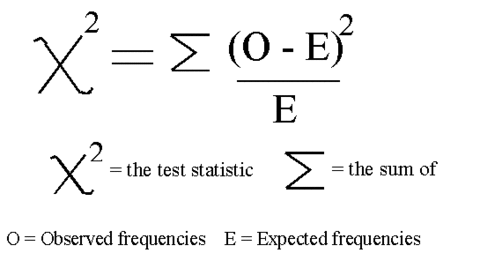
- 28What is the chi-squared test?
- 29What is discontinuous variation?Variation that falls into set categories that are clearly distinguishable with no intermediates. Qualitative differences.
- 30What is continuous variation?There is a wide range of variation within the species and there are no distinct categories.
- 31How does the number of genes/alleles influence discontinuous variation?Different alleles at the same locus have a large effect on the phenotype. Different gene loci have different effects on the trait.
- 32How does the number of genes/alleles influence continuous variation?Different alleles at the gene locus have small effects. Different gene loci have the same effect on the trait. Many gene loci have an effect in the trait.
- 33How does the genotype and the environment of an organism effect phenotypic variation?Genetic potential may be hindered by environmental factors which limit the expression of the gene.
- 34Why is variation essential in selection?So that way when the environment changes, some individuals will be better adapted to survive, passing on advantageous alleles to offspring, allowing the species to continue.
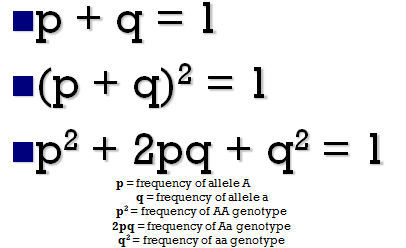
- 35What is the Hardy-Weinberg principle?
- 36What is directional selection?When an environment changes and so the selection pressure changes. This would increase the frequency of advantageous alleles as the organisms with them would survive better. This leads to evolutionary change and is an evolutionary force.
- 37What is stabilising selection?When a new allele/ phenotype does not provide an advantage, meaning it will not be selected/ passed on as the organism will not survive and the alleles will not be passed on.
- 38What is genetic drift? How does it cause large changes in small populations?Changes in allele frequency.
It affects a large population less than it does a small population. - 39How does an isolating mechanism cause the evolution of a new species?When two sub-populations are separated from each other they evolve differently, and genetic drift will occur. Eventually the populations will no longer be able to breed so will have become different species.
Informações
- Descrição
- A Levels Biology (A2 Biology) FlashCards sobre F215.1.2 Meiosis and Variation Biology Revision Cards, criado por Laura Perry em 31-03-2016.
- Criado por
- Laura Perry
- Visualizações
- 52
- Tags
- Avaliação