
Flashcards
ARLA Level 4 - Management
Flashcards do conjunto (58)
- 1What are Fayol's FIVE functions?* Planning
* Organising
* Commanding
* Coordinating
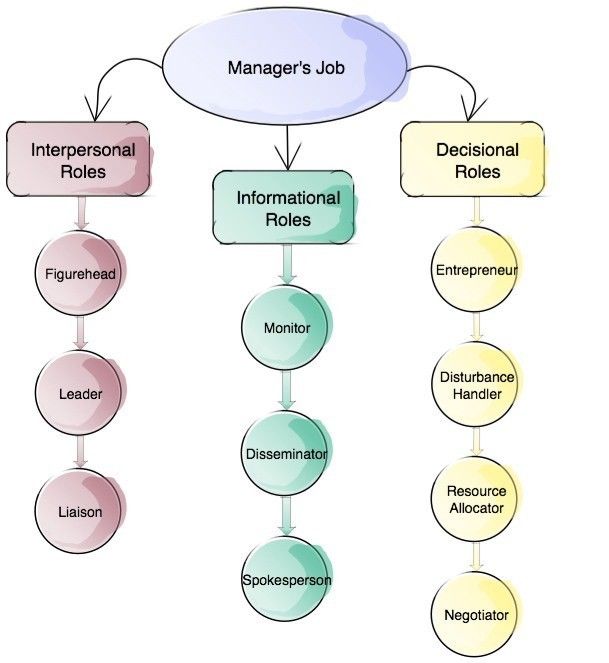
* Controlling - 2What are Mintzberg (1970s) behaviours? What is 'Management as a role'?* INTERPERSONAL
figurehead, leader, liaison officer
* INFORMATION roles
monitor, disseminator, spokesperson
* DECISION roles
Entrepreneur, disturbance, resource, negotiator - 3Douglas McGregor (1960s) theories of X and Y managers?X - people dislike work. Traditional management approach
Y - work is central to life. Modern management approach - 4What are Tannenbaum and Shmidt's continuum of mgt-leadership styles?'Continuum of management-leadership styles'
Stage 1 - Tell
Stage 2 - Sell
Stage 3 - Consult
Stage 4 - Join
Stage 5 - Delegate - 5What are 'visions' and 'values'Vision - clear idea about co's strategy
Values - code of practice of prof organisation, ombudsman scheme, RICS blue book - 6Core functions of management are - PLANNINGDeveloping the vision, what you want to achieve and how to get there
SMART objectives - Specific, measurable, achievable, relevant, time related - 7Core functions of management are - ORGANISINGResources =
People +
Finance +
Time required
Decide what resources needed to implement plans. Then implement. - 8Core functions of management are - MONITORING & CONTROLLINGQuantitative or qualitative eg profitability figures, KPIs
Recording and reporting - 9—Mintzberg's 'management as a role'
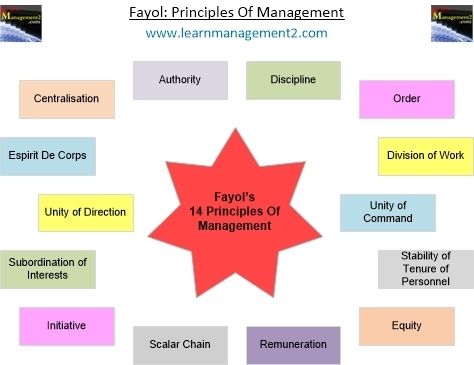
- 10—Fayol's 14 Principles of Management
- 11Characteristics of effective teams include...?- common goals
- individual roles/accountabilities
- high standards
- complementary talents
- communication, review regularly
- support and trust
- creative
- praise
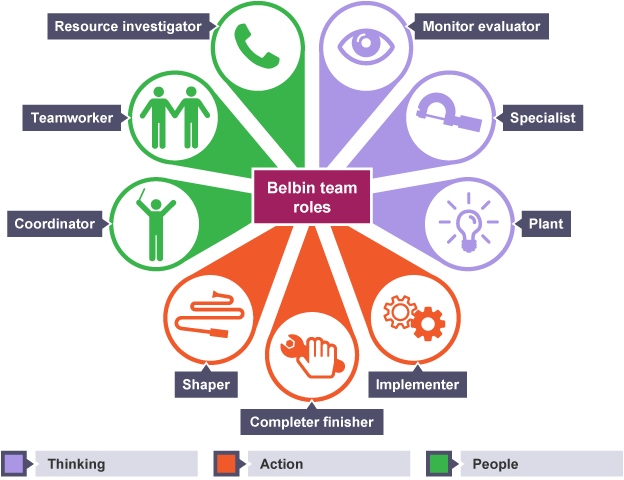
- Team more important than individual - 12Dr Meredith Belbin's (male) roles adopted by effective teams x 9 are ?- Plant. Creative problem solver
- Coordinator. Focus on job in hand
- Monitor/evaluator. Impartial judge
- Implementor. Practical
- Completer finisher. Quality
Resource investigator. Networker
- Shaper. Motivator
- Teamworker. Unites team
- Specialist - 13Bruce Tuckman - five key stages of forming teams?- Forming
- Storming
- Norming
- Performing
- Adjourning - 14—Bruce Tuckman - 5 stages of team forming
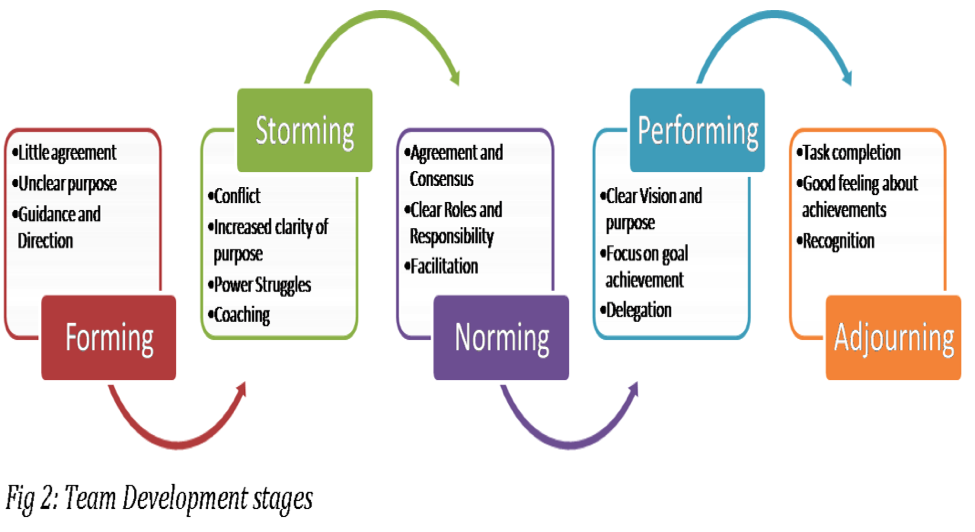
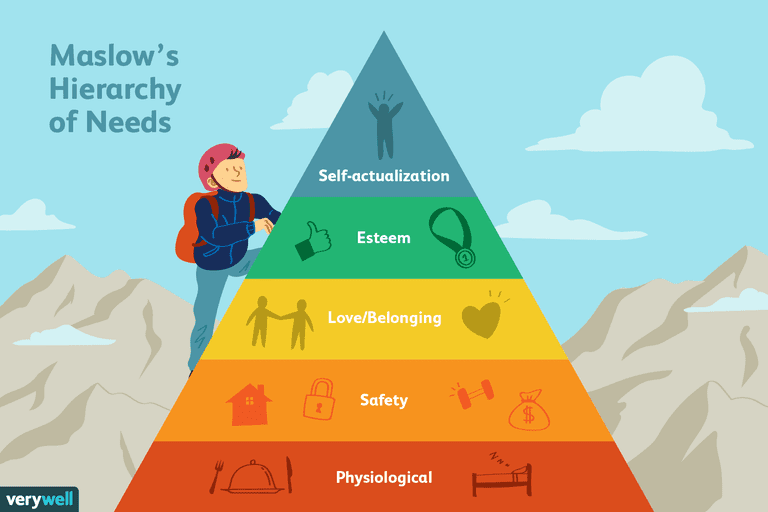
- 15—Maslow's Hierarchy of Need - theory of motivation:
Physiological
Safety
Love
Esteem
Self-actualisation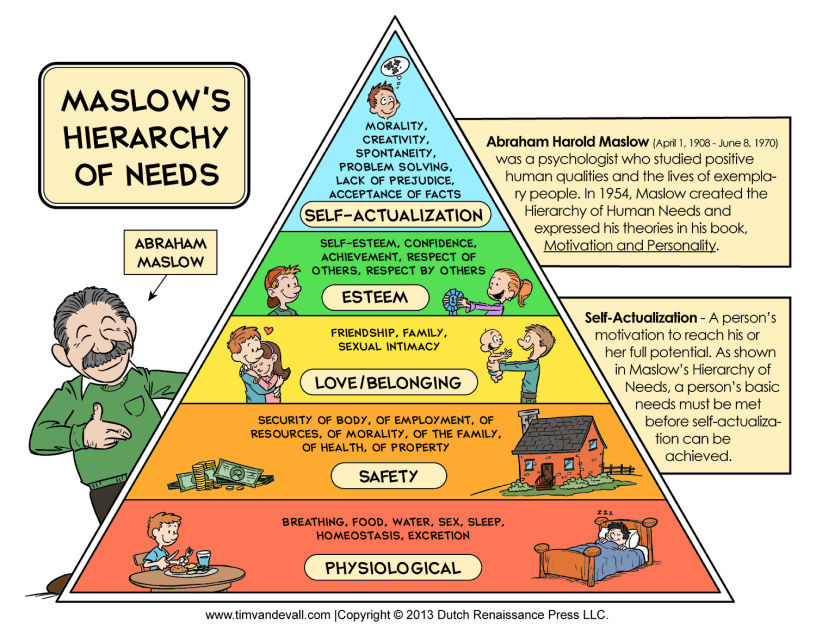
- 16Ways of motivating a team?- give it a name
- develop a logo!?!
- meet regularly
- Train as a team
- Praise individuals
- Reward
- communicate inside/outside team - 17Communication process is (message made...) and what are the problems?- Message made. Garbled, mixed message
- Message sent. Powerpoint
- Message rec'd. Perception, attention - 18What are the purposes of meetings (x 5)- Consult
- Inform
- Persuade
- Discuss
- Agree - 19How to delegate - 10 steps1 Decide what to delegate
2 Define objectives, targets, standards
3 Choose team member
4 Present task, check understanding
5 Listen to feedback
6 Offer help, training, resources
7 Encourage
8 Establish deadlines and monitor
9 Tell team members
10 Recognise and reward - 20—Belbin's roles
- 21—Maslow's hierarchy of need
- 22Define diary management?Diary management = Tasks + Time
- 23Tips for effective diary management x 10?- Plan for the week ahead
- Don't underestimate time - allow extra
- Space for unexpected things
- Don't get distracted by emails
- Rearrange diary during day
- Keep notepad to update diary
- Don't rely on 1 diary (rubbish!)
- Backup diary
- Account for other's completing task - 24Prioritising - 4 levels of priorityA - Important and urgent. Must do
B - Important, not urgent. Should do
C - Not important or urgent. Could do
D - Delegate
Then prioritise with a number - 25Problems for managers of unauthorised absence are?- Sick pay costs
- Finding replacement employees
- Impact on customer service
- Impact on team morale
- Getting it wrong. Employment tribunal - 26Key steps in tackling absence are?- Report in procedure
- Return to work interview
- Sickness policy
- Disability absence policy
Long-term sickness policy
- Trigger points control policy - 27Other ways to control absence?- Specialist industry advice
- Health professionals
- Flexible working arrangements
- Health initiatives
- Survey to find out why
- Attendance bonuses
- Private medical insurance
- Restricting company sick pay
- Create attendance standards - 28Assessing disaster risk calculation? Risk Business Impact Analysis RBIAScale of 1-5
Impact x probability = actual risk - 29What should be included in a business continuity plan?- Intro, why necessary
- Emergency and contingency planning
- Recovery plan
- Appendix
Backup systems - comms, energy, location
IT, equipment, documents, personnel, finance & insurance - 30Results of not keeping premises secure?- Uninsured losses
- increased insurance costs
- Security costs
- Downtime
- loss of customers and reputation
- loss of staff - 31How do you calculate the level of security risk?Consequence x Probability = Level of risk
Take into account steps taken to avoid - 32Issues to consider with controlling security risk - exteriors?Visibility, e.g. CCTV
Durability
Materials- fire proof
Stability - 33Issues to consider with controlling security risk - Premises access?Windows - grilles or shatterproof glass
Doors - BS standards
Alarms
Lighting - entrances & at night
Operational matters - key holders - 34Issues to consider with controlling security risk - Interior accessValuables locked away
Interior rooms secure
Minding the office
Visitor book - 35Dealing with anger/threats in the office - Plan A- Acknowledge problem
- Listen carefully
- get details
- How do they want to deal with it?/ obtain outcomes
- Agree to take action
- ID action
Get customer's agreement
- Follow up - 36Dealing with anger/threats in the office - Plan B- Sorry not satisfied
- Be helpful, how to proceed
- Assertively ask them to leave
- Business under surveillance
- Call police
- Press panic button - 37SIMPLE precautions from Suzy Lamplugh trust?S - stay alert
I - Invest in an alarm
M - make sure to avoid danger spots
P - plan ahead
L - Listen to instincts
E - Ensure precautions wherever - 38LOCOST method for dealing with angry phone calls?L - listen
O - Offer sympathy
C - clarify
O - Obtain OUTCOMES
S - Sort it
T - Thank - 39Customer service entails...?- being courteous
- being helpful
- listening to customers
- dealing with complaints
- keeping promises
- being enthusiastic
- being open
- communicating
- measuring customer performance - 40Public relations tools frequently used..?- Brochures, reports, handouts
- Presentations, DVDs
- Speeches and presentations at events
- Corporate ID materials
- Sponsorship of events
- Charity work - 41Major forms of advertising...?- Newspapers & magazines
- to let boards
- Leaflets, posters
- Mailshorts, newsletters, leaflets by mail
- TV radio
- Internet
Email and text - 42Legislation covering work equipment is?Provision and use of work equipment regulations (PUWER) 1998
- 43Layout of office?- access and walking routes
- areas, eg. reception, desks
- dumping
- storage
- 3D
- size eg large desks
- planning diagram - 44IT security includes protection against...?- Unauthorised access to data internally or externally
- Misuse of personal data (Data protection)
- Misc. IT threats, eg. copyright, piracy, bullying - 45What should the IT policy contain?- Overall policy statement, aims
- Individual policy objectives; data protected from unath. access, confidentiality, legal requirements, business continuity, employee training - 46Areas of IT risk are..?- Unauthorised access
- Misuse of personal data
- Poor hw/sw management
- Misc risk, eg offensive material, libel - 47Software controls to limit system vulnerability?User names & password
Content control and admin
File access control
Encryption
AV/spam/malware
Spam control
Firewalls - 48What is 'sensitive personal data?Relates to racial, ethnic origin, TV,, Sex life, medical, political, religion, criminal
- 49What makes 'fair and lawful' processing of personal data?- Data subject has given consent
- Processing needed for contract
- Needed for legal obligation e.g. tax
- To protect subject's interests
- In public interest, eg detect crime
- necessary for data controllers interests - 50What are the rights of data subjects?- Right of access
- Prevent processing causing distress
- Prevent direct marketing
- Compensation for damage/distress
- Right to accuracy - 51Hardware and software maintenance considerations?- Hw/Sw able to perform?
- Licences up to date?
- Security programs working?
- P/w maintenance?
- Website/social media protected?
Backup systems robust?
- Regularly maintained
- Staff trained - 52Who invented 'management as a role' in the 1970s?Mintzberg's 'management as a role'
1970s - 53Who invented - 5 stages of team forming?Bruce Tuckman
- 54Who invented 'roles adopted by effective teams'?Dr Meredith Belbin
- 55Who invented the 5 Functions? Management as a functionHenri Fayol
early 20th century - 56Who invented theory x and theory y managers?Douglas McGregor
1960s - 57Who invented the 'continuum of management-leadership' in 1957?Tannenbaum and Schmidt
1957 - 58What are the 4 core functions of management?1 Planning
2 Organising
3 Monitoring
4 Control
Informações
- Descrição
- ARLA level 4 Introduction to Office Management
- Criado por
- Katie Shellard
- Visualizações
- 103
- Tags
- Avaliação